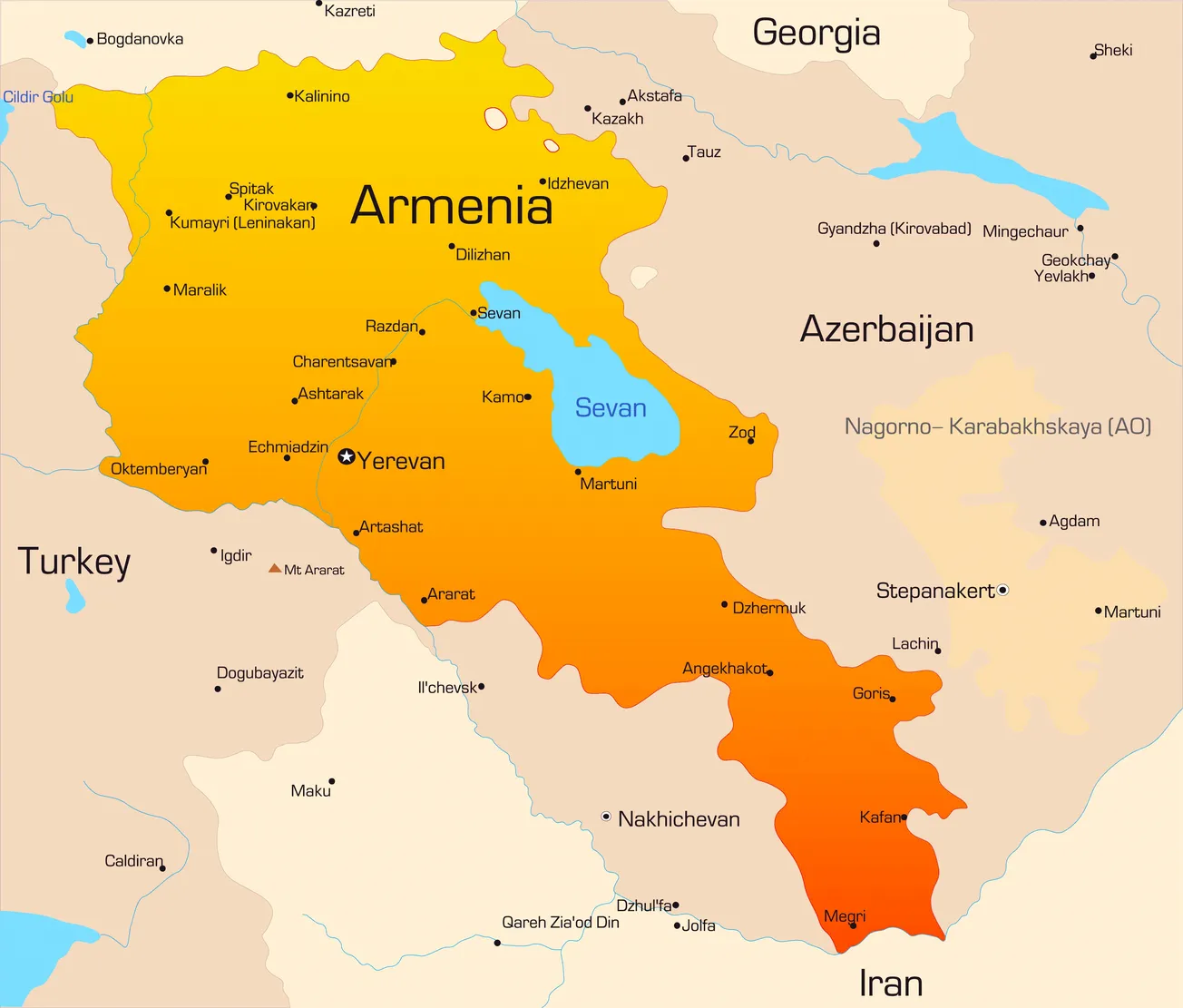
In a deal to secure peace between Armenia and Azerbaijan – ending almost four decades of conflict – the U.S has been awarded development rights to a strategic transit route on the Iran border.
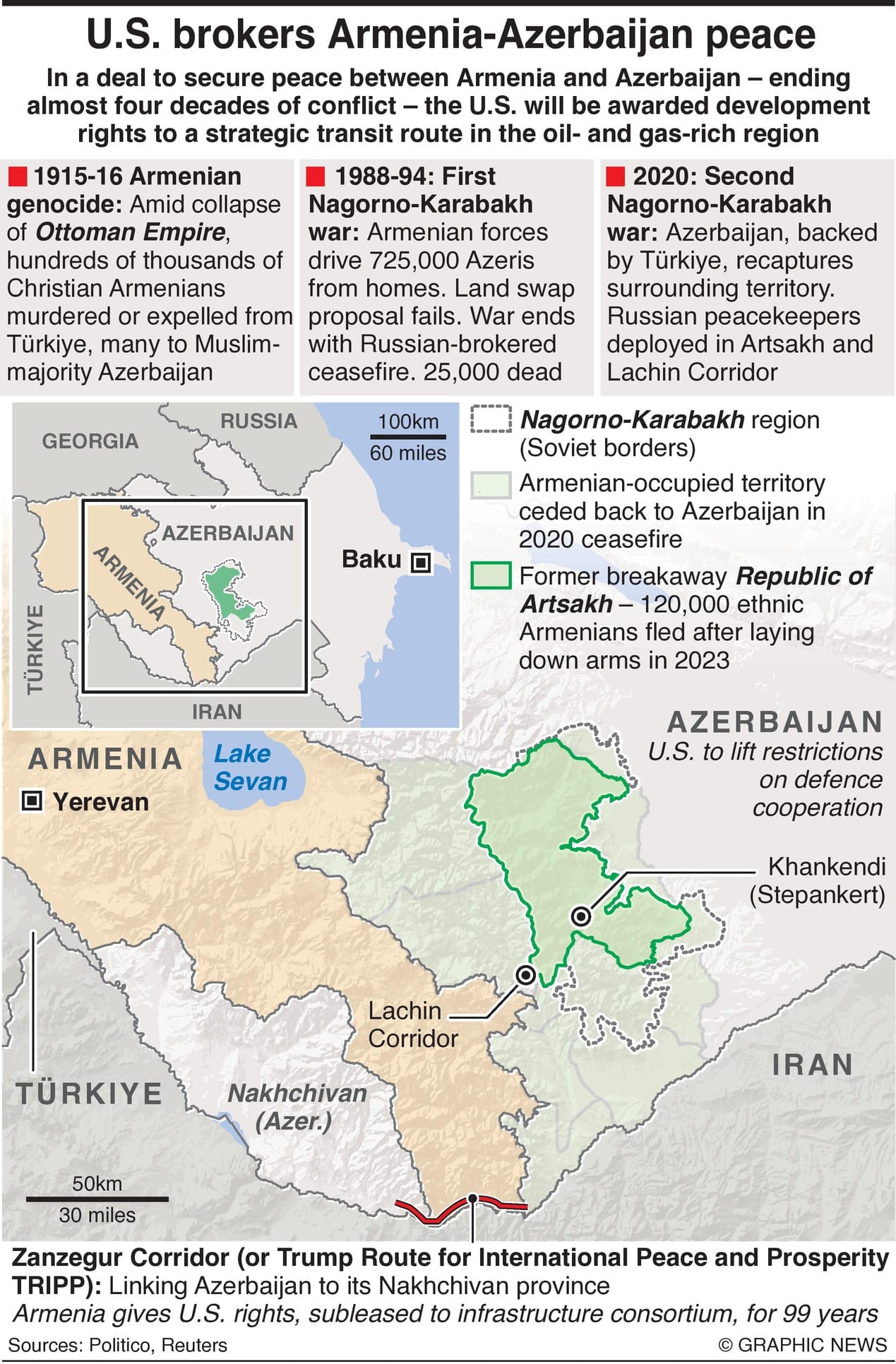
Armenian Prime Minister Nikol Pashinyan and Azerbaijani President Ilham Aliyev convened at the White House under President Donald Trump’s stewardship, to inaugurate what may signal a decisive end to nearly four decades of hostility over Nagorno‑Karabakh.
At the heart of the agreement lies the creation of the Trump Route for International Peace and Prosperity (TRIPP)—a strategic transit corridor through Armenia’s Syunik region, linking Azerbaijan to its Nakhchivan exclave. Under the terms, Armenia grants the United States exclusive development and sublease rights for 99 years, enabling a U.S.-backed consortium to build and manage infrastructure such as railways, pipelines, and fibre-optic networks—all under Armenian jurisdiction.
The accord effectively sidelines Russia’s long-held mediating role by dissolving the OSCE Minsk Group, which also included France and the U.S.. It also seeks to recalibrate energy and transit dynamics in a region traditionally shaped by the rivalries of Russia, Iran, and Turkey.
While supporters have hailed the deal as a triumph for regional integration and stability, unlocking economic potential and aligning Armenia and Azerbaijan with Western‑led infrastructure development, critics have warned that it legitimizes Azerbaijan’s forced expulsion of hundreds of thousands of Armenians and erodes Armenia’s sovereignty.
Related:
U.S. Secures Strategic Transit Route In Armenia-Azerbaijan Deal