This article is the second part of a two-part analysis. Read Part I: “The Dragon’s Fragility.”
China often behaves like a bully in its own neighborhood, regularly pressuring the Philippines, Japan, Taiwan, and India. Given that behavior, one might expect a sharper reaction to events in Iran. Yet Beijing has exercised remarkable restraint. Why?
Events in Iran are clearly not in China’s interest. Tehran has long been an important energy supplier to Beijing and a geopolitical partner willing to challenge Western pressure. Yet as the conflict has unfolded, Beijing’s response has been strikingly restrained.
Beijing has issued the expected diplomatic statements calling for calm and respect for sovereignty. But it has avoided the kind of sharp rhetorical escalation that might have been expected when one of its key partners was under direct military pressure.
This restraint reflects a deeper reality. Despite China’s expanding global influence, Beijing faces significant constraints that limit how aggressively it can respond to geopolitical shocks, particularly those far from home.
The first constraint is economic.
China’s economy is still grappling with the aftershocks of a prolonged property crisis, weak consumer demand, and slowing growth. Youth unemployment remains high, and foreign investors have grown increasingly cautious about committing capital to the Chinese market.
Under these conditions, stability is paramount. An aggressive geopolitical confrontation with Washington would introduce precisely the kind of uncertainty Beijing is trying to avoid.
Diplomacy also plays a pivotal role. The relationship between the United States and China remains tense but carefully managed. Both sides have strong incentives to prevent tensions from spiraling into a broader conflict that could damage the global economy.
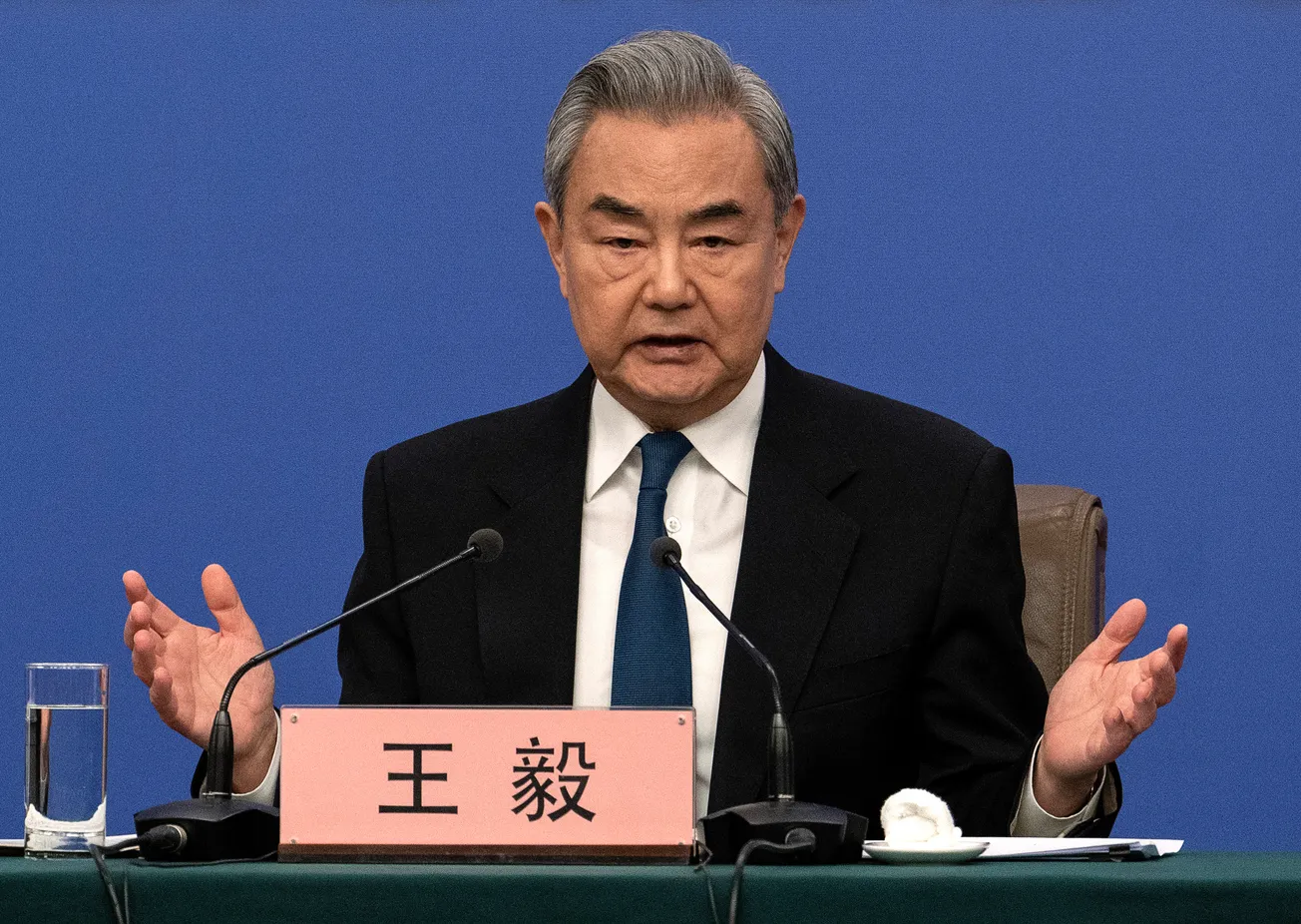
Beijing’s measured tone also reflects doctrinal consistency and high-stakes diplomacy. Speaking on March 8 on the sidelines of the National People’s Congress, Foreign Minister Wang Yi described the conflict as “a war that should never have happened” and one that “does no one any good.” He called for an immediate ceasefire, respect for sovereignty, and a return to dialogue, warning that the use of force only breeds hatred and new crises. This position aligns with China’s long-standing emphasis on non-interference and opposition to regime change. It also reflects practical considerations. With President Trump scheduled to visit Beijing from March 31 to April 2 for talks aimed at stabilizing trade and broader bilateral ties, Beijing has little incentive to escalate tensions over Iran at a moment when it is prioritizing economic recovery and its strategic focus in the Indo-Pacific.
Beijing’s diplomatic language has also revealed a clear contrast. Chinese officials swiftly condemned the U.S.–Israeli strikes on Iran as a violation of sovereignty. Yet when Iran launched attacks on several Gulf states, Beijing avoided directly naming Tehran as the aggressor, instead offering general appeals for restraint. The contrast reflects China’s delicate balancing act: defending its principle of non-interference while avoiding public criticism of a partner that remains economically important.
There is also a strategic dimension. For China’s leadership, the most important geopolitical objective remains Taiwan and the balance of power in the Western Pacific. Beijing has often preferred incremental pressure to sudden confrontation, advancing its strategic objectives through gradual coercion rather than dramatic escalation.
From Beijing’s perspective, the Middle East is not the central theater of competition with the United States. While China has key economic interests in the region, its long-term strategic focus lies much closer to home.
Opening a direct confrontation with Washington over events in Iran would divert resources and attention from that priority.
Finally, China still faces limits in its ability to project power far beyond its borders. China maintains only one undisputed permanent overseas military base in Djibouti. The United States, by contrast, operates a vast global network of military bases and facilities, with roughly 128 major installations and as many as 750 sites spread across more than 80 countries.
Over the past two decades Beijing has built an impressive global economic presence, but its military footprint abroad remains relatively small compared with that of the United States. Washington maintains alliances, bases, and naval deployments across the Middle East. China does not.
As a result, Beijing’s ability to shape events in the region is inherently limited.
For now, China appears content to watch the situation unfold while urging restraint from all sides. That approach may frustrate some of Beijing’s partners, but it reflects China’s broader strategic priorities.
The Iran conflict may expose vulnerabilities in China’s global network, as discussed in the first part of this analysis. But Beijing’s cautious response also reveals something else: while China may act like a bully in its own neighborhood, its power diminishes sharply when it ventures far from home.
👉 Show & Tell 🔥 The Signals
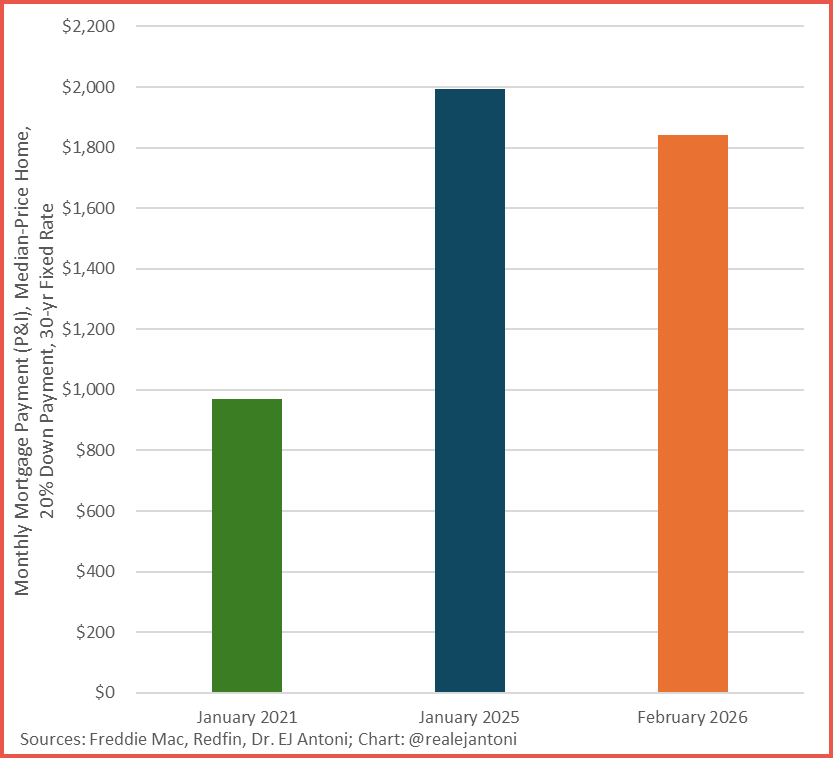
I. Housing Costs Remain Far Above Pre-Pandemic Levels
Monthly mortgage payments on a median-priced home have eased slightly from their 2025 peak but remain dramatically higher than just a few years ago. The typical payment in early 2026 is still about 90% higher than in 2021, reflecting the combined impact of higher home prices and elevated mortgage rates.
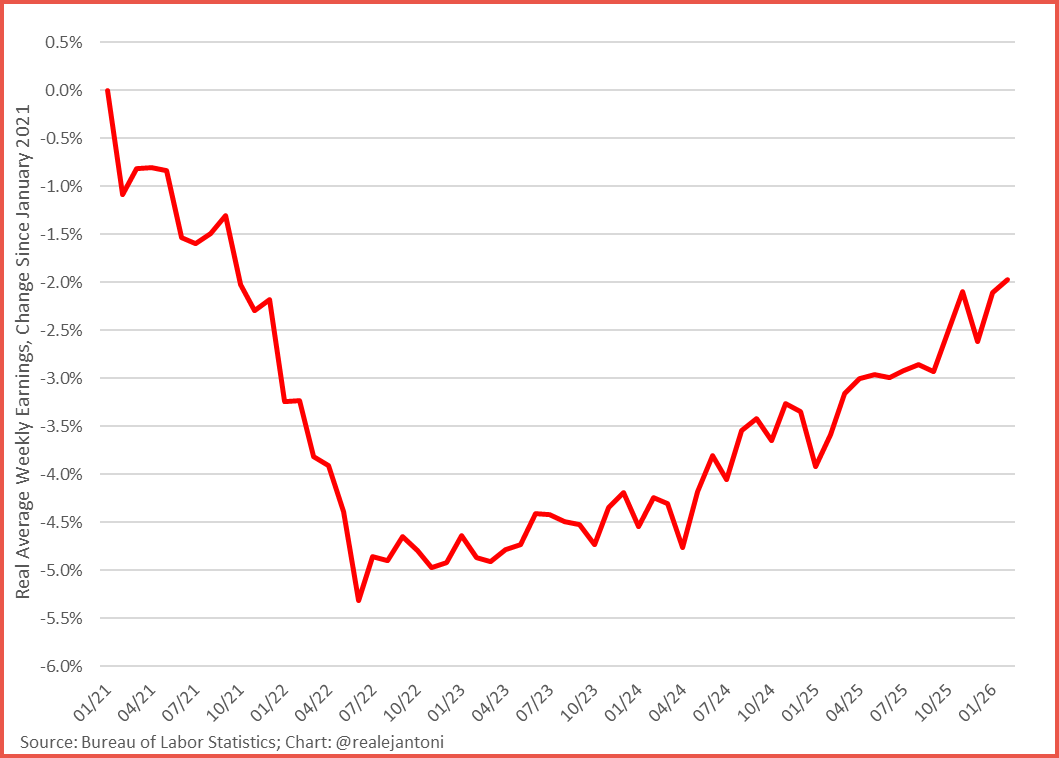
II. Paychecks Still Buy Less Than Before The Pandemic
Even with wage growth, inflation has eroded purchasing power. The average American weekly paycheck in early 2026 buys roughly 2% less than it did in January 2021, helping explain persistent frustration among households despite a strong labor market.
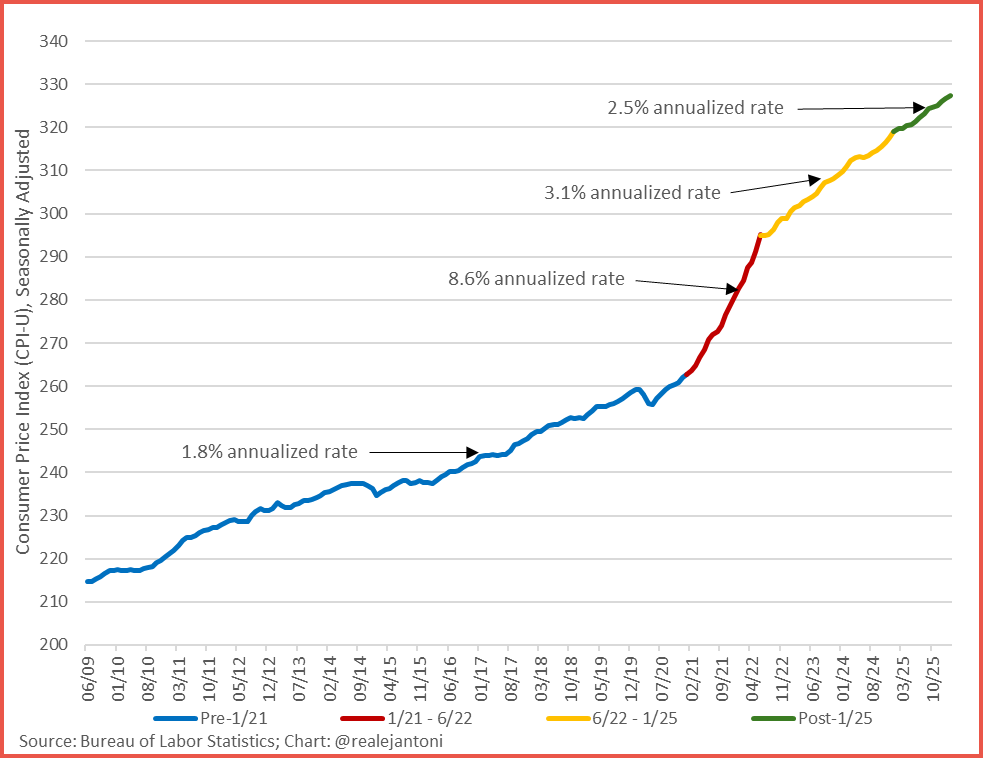
III. Core Inflation Has Cooled — But Not To Target
Underlying inflation continues to moderate but remains above the Federal Reserve’s goal. Core CPI rose about 2.5% year over year in February, the lowest reading since early 2021 but still above the Fed’s 2% target.
The TIPP Stack
Handpicked articles from TIPP Insights & beyond
1. Emails Reveal What US Officials Knew—And Feared—About Wuhan Lab— Fred Lucas, The Daily Signal
2. The MAHA Vote Could Decide The Midterms. What Can Trump Do To Secure It?—Elizabeth Troutman Mitchell, The Daily Signal
3. Trump Says Nothing — And Means Everything —Editorial Board, TIPP Insights
4. Are We Facing An AI Nightmare?—Raghuram G. Rajan, Project Syndicate
5. Failing Schools Place Politics Over Academics— Steve Cortes, The Daily Signal
6. What’s Next For DHS?— S.A. McCarthy, The Daily Signal
7. What If You Could Walk Through The World Of The Bible?— Katherine Matt, The Daily Signal
8. Why The Department Of Transportation Is Asking Americans To Travel In 2026— Katherine Matt, The Daily Signal
9. SILENCING PARENTS? Christian School Facing DEI Accusations Imposes Policy Seeking To Police Text Messages—Tyler O'Neil, The Daily Signal
10. Rothbard And War— Llewellyn H. Rockwell Jr., Mises Wire
11. OSU President Is Leaving After ‘Inappropriate Relationship’— Rebecca Downs, The Daily Signal
📊 Market Mood — Thursday, March 12, 2026
🟩 Oil Jumps Back Above $100 on Middle East Escalation
Crude surged again as attacks on ships near the Strait of Hormuz threatened a prolonged disruption to global oil flows.
🟧 Stocks Slip as Energy Shock Fuels Inflation Fears
U.S. futures edged lower as investors weighed the economic impact of rising oil prices and geopolitical risk.
🟦 Gold Steady but Dollar Strength Caps Safe-Haven Demand
Bullion stabilized near recent levels as inflation concerns lifted the dollar and pressured gold prices.
🟨 Adobe Earnings in Focus Amid AI Disruption Debate
Investors await Adobe results for clues on how AI tools are reshaping the software industry.
🗓️ Key Economic Events — Thursday, March 12, 2026
🟧 08:30 ET — Initial Jobless Claims
Weekly filings for unemployment benefits offer a timely read on layoffs and labor market conditions.
🟧 13:01 ET — 30-Year Treasury Bond Auction
Results show investor demand for long-term U.S. government debt and expectations for inflation and interest rates.
editor-tippinsights@technometrica.com