"It takes a diamond to cut a diamond" is an idiom that describes a scenario where two or more individuals are equally matched in terms of intelligence, cunning, or strategic thinking.
In the world of tech industry recruiting and the controversial H-1B visa, a tech solution has emerged to counter the deceptive hiring practices of big tech companies. There is now a new website similar to online job sites like Indeed.com, where prospective employees can search for and apply to thousands of jobs posted by employers.
However, this website, called Jobs.now, is different in one key aspect. It is a secondary site that employers and H-1B employees hate and MAGA types love.
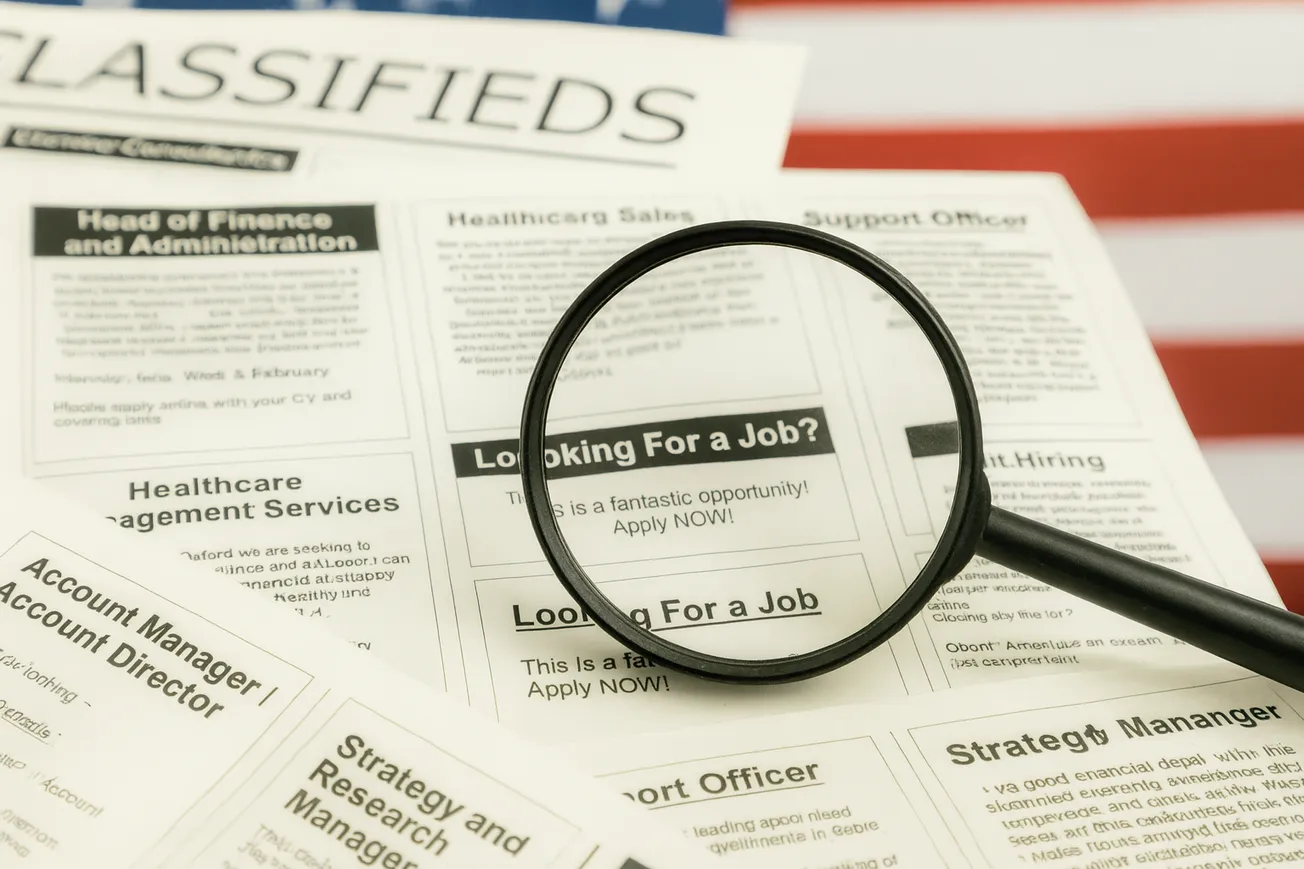
Jobs.now relies on MAGA grassroots enthusiasts to visit local libraries, scan hundreds of jobs primarily placed in the classified sections of Sunday newspapers, and report to the website. More than 1,000 jobs in engineering, data science, accounting, and finance are now featured on the site, the kind that are traditionally filled by those on H-1B visas, primarily from India. As of August 2025, Jobs.now reports facilitating over 35,000 applications from Americans to more than 1,000 companies.
Unlike the other commercial job sites, every one of these jobs is real. Unlike other commercial job sites, applicants are often required to send their paper resumes to the company's immigration department. Who even uses paper resumes these days? And why not have the resumes sent to Human Resources?
The truth is that the companies placing those ads already have a candidate in mind. In fact, the candidate has been actively employed by the company for years on an H-1B visa, is well-trained, and has extensive experience in the role. The candidate has expressed a desire to immigrate to the United States, a specialty feature available with the dual-intent H-1B visa. Although the employer initially petitioned the government to issue a non-immigrant visa to the beneficiary, Congress allows the employer to petition for the employee's status to be changed to that of an immigrant (Green Card).
Petitioning the government for such a change in status requires the employer to post jobs publicly and make a good-faith effort to recruit qualified Americans, if available. Known as PERM, this is the most crucial stage a prospective immigrant to the United States must navigate successfully.
Everyone involved in the PERM process — the company, the H-1B employee, the in-house corporate law department, external counsel specializing in immigration law, and even the United States Citizenship and Immigration Services (USCIS) — knows that this loophole has been traditionally exploited for the last 33 years. The employer does not want to hire an American replacement for a well-trained employee. The employee does not want to see Americans applying for his job, because the failure of a PERM application could mean that the employee has to return to his home country.
One of the oldest tricks in the book is for an employer to take the current job description of the employee and craft a job ad that is so narrow that practically no American could ever possibly apply and be considered for the position. Top law firms advise employers against engaging in such tailoring, but unlawful action is common, and enforcement is lax.
Support Independent Journalism — Just $99/Year
Your subscription powers investigative reporting and helps us expose the stories others overlook.
The labor market test is, by law, a local affair. A company advertising a PERM job in Lincoln, Nebraska, is only required to advertise in local Nebraska newspapers, the Nebraska workforce employment agency, and possibly in two national newspapers, such as The Washington Post or The New York Times (in the classified sections). An American developer in Orlando is unlikely to scan Nebraska job ads. Although eminently qualified and willing to move to the Upper Midwest, they do not apply because they are simply unaware of the opportunity. Meanwhile, all the players on the inside are relieved that the Orlando American is unlikely to apply. It is one less headache en route to winning USCIS approval of the PERM application, using the standard excuse: no Americans even applied for the position, or when an American did, they were unqualified.
According to the U.S. Department of Labor's (DOL) Office of Foreign Labor Certification (OFLC) Performance Data page, where quarterly disclosure data on PERM applications (and other programs) is published, there were 95,185 PERM applications certified and confirmed in FY 2025 to date. Only 2,213 applications were denied, representing approximately 2.3% of the total number of applications. It is hard to believe that more than 97% of the H-1B PERM applicants had such unique skills that no Americans could replace them.
Jobs.now attempts to entirely disrupt this corrupt process. The site brings thousands of these PERM jobs to the desktops of every American in the country without any fuss, including that Orlando developer. Every PERM application can now receive hundreds of responses from qualified American applicants. Of course, the company can reject all of them after going through a comprehensive selection process, documenting in detail why they are not as competent as the in-house H-1B employee. However, doing so is fraught with risks for the employer: the legal requirement is not for an applicant to clone the H-1B employee's profile; rather, the requirement is to demonstrate that the American applicant can perform the job effectively without hurting the company's commercial position. The bottom line is that if everyone plays by the rules, a qualified, unemployed American could be hired as a replacement for the H-1B employee, who would have to secure another position within the company or face termination.
The acting director of the United States Equal Employment Opportunity Commission, a federal agency tasked with eliminating discrimination in the workforce, has stated that she would utilize Title VII protections under the national origin clause to pursue companies that hire H-1B workers instead of qualified Americans. In an X post, she said:
EEOC announced a $1.4 million settlement involving national origin discrimination in favor of foreign workers. But the majority of our work is confidential, due to statutory requirements, until we announce a settlement or file litigation. Just because we're quiet doesn't mean we're not working. Stay tuned.
Many American college students who were drawn to the tech industry took out tens of thousands of dollars in loans to pursue technology training in college and are now being completely shut out of entry-level jobs. A recent New York Times article showcased the plight of so many students, including one from Oregon State University who sent out over 2,000 applications and has still not received an interview. Interestingly, the Times piece only discussed job displacement caused by AI. It conveniently overlooks the H-1B angle and the preordained nature of PERM hiring when an H-1B employee is preferred over American applicants.
The net result is that a recent American college graduate in computer engineering has a far higher unemployment rate than the rest of the country, including those students who pursue liberal and fine arts careers. This fact was documented by the Federal Reserve Bank of New York earlier in the spring.
Jobs.now provides a technology solution that enables American workers to pursue numerous authentic positions, placing employers in the uncomfortable position of denying them employment for lack of qualifications.
It does take a diamond to cut a diamond.
Each spring, the U.S. runs a lottery to award about 85,000 new H-1B visas. Demand far exceeds supply, with more than 446,000 registrations in 2024. Bloomberg’s analysis of federal data shows that staffing firms exploited this system by submitting multiple registrations for the same worker, a tactic officials describe as fraud.
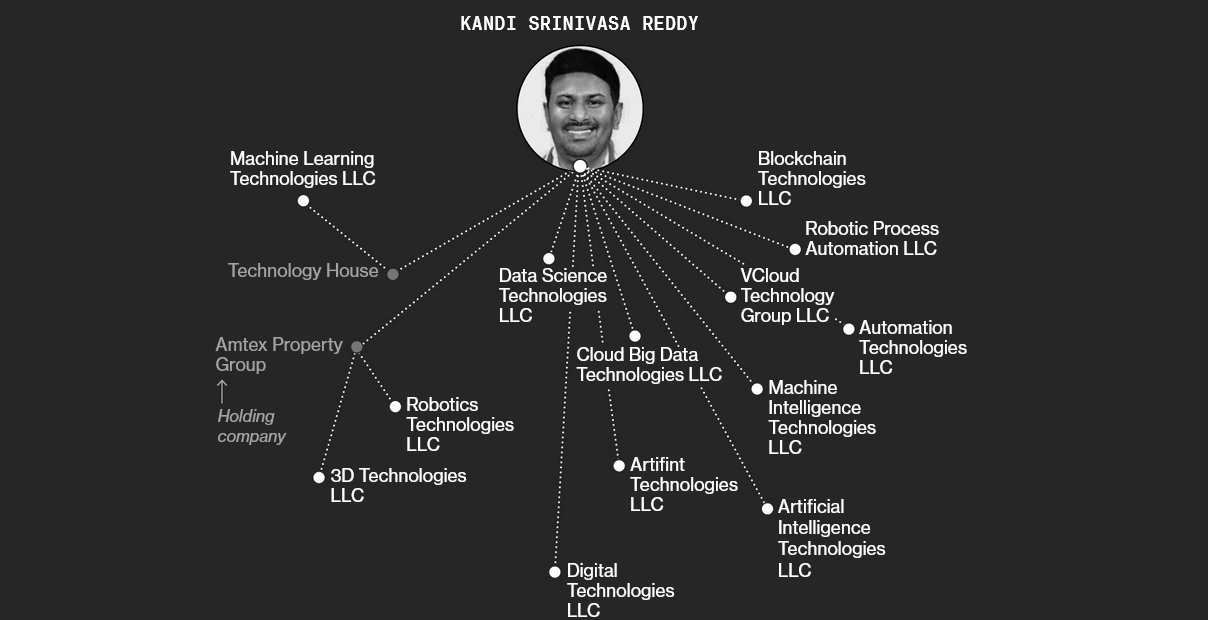
One example is Texas entrepreneur Kandi Srinivasa Reddy, whose network of more than a dozen shell companies filed over 3,000 registrations for just 288 workers in the 2020 lottery. His flagship firm, Cloud Big Data Technologies, and related entities went on to secure more than 300 H-1Bs since 2020. Once visas were obtained, the workers were leased to companies such as Meta and HSBC, while Reddy’s firms took 20–30% of their pay, often $15,000 or more per worker each year.
Although USCIS flagged this “multiple registration” practice as abuse, Bloomberg found Reddy’s companies continued receiving visas as recently as last year. The investigation concluded that while the lottery was designed to bring in top talent, loopholes have allowed middlemen to profit while locking out genuine applicants.