
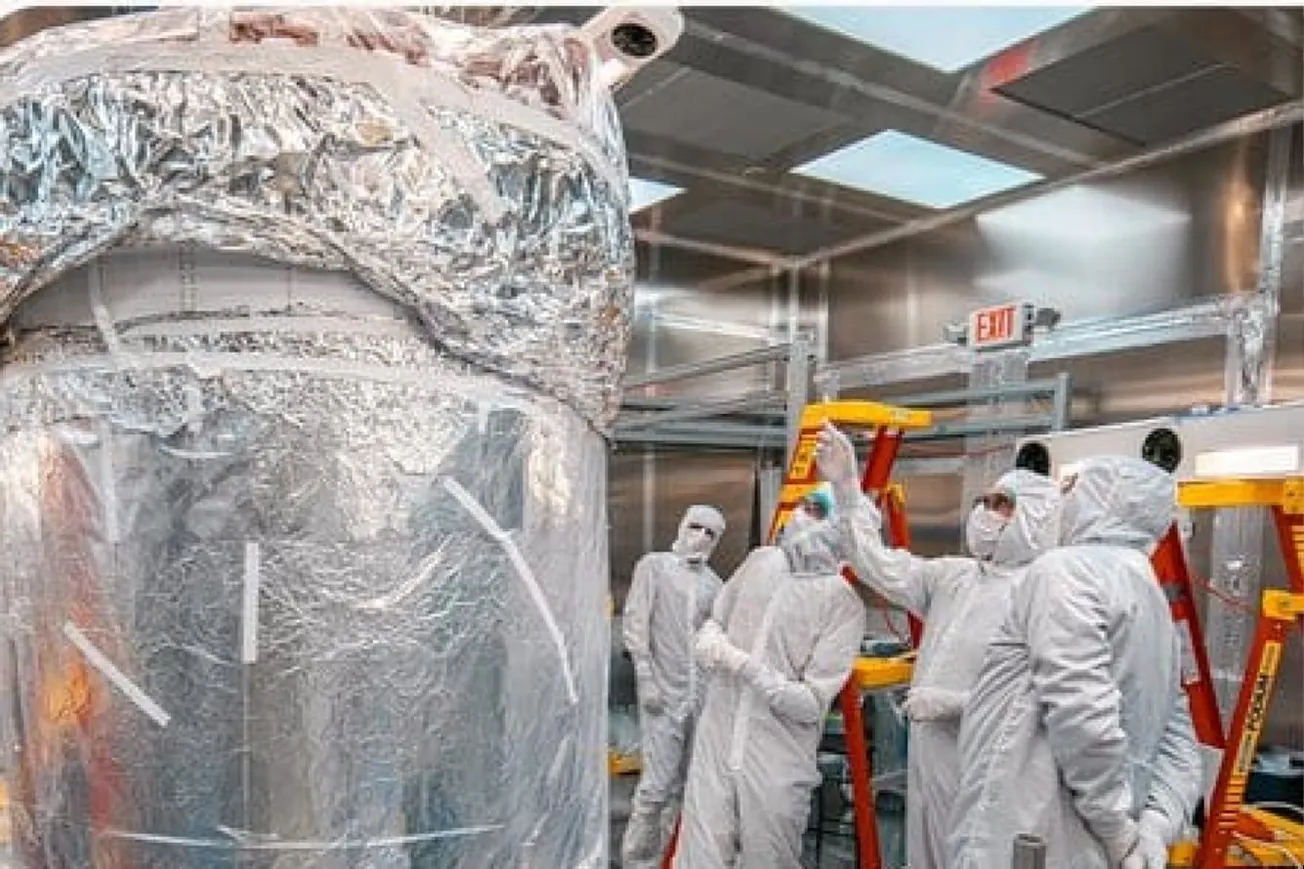
Physicists have reported a potentially significant clue in the decades-long search for dark matter after the LUX-ZEPLIN experiment detected an unusual particle interaction in June 2023.
The detector, located nearly a mile underground at the Sanford Underground Research Facility in South Dakota, uses about seven metric tons of liquid xenon to search for hypothetical particles known as WIMPs, a leading candidate for dark matter.
Scientists are reviewing roughly 700 days of data to determine whether the event represents dark matter or an unexplained background effect.
Independent experiments, including XENONnT in Italy and PandaX-4T in China, could provide additional evidence. A confirmed detection would help explain the nature of dark matter, believed to account for about 85% of matter in the universe.
Related Tweet:
An international team of scientists says it has detected an intriguing signal that could hint at evidence of dark matter, offering a clue that might bring the mystery of the elusive substance one step closer to a solution. https://t.co/h1AlLkFw9U pic.twitter.com/AbLkacwVWv
— CNN (@CNN) September 14, 2026
Also Read:
 TIPP Staff