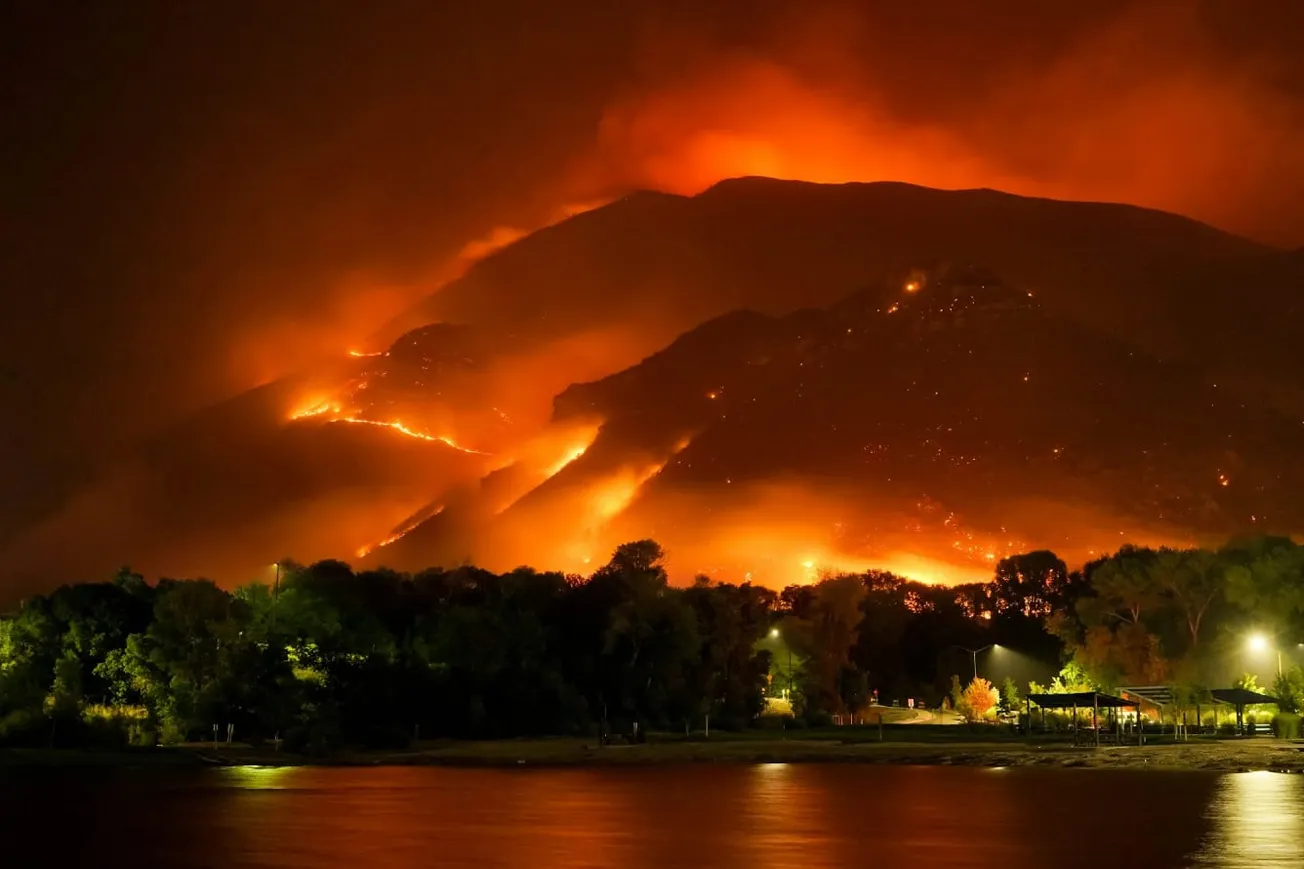
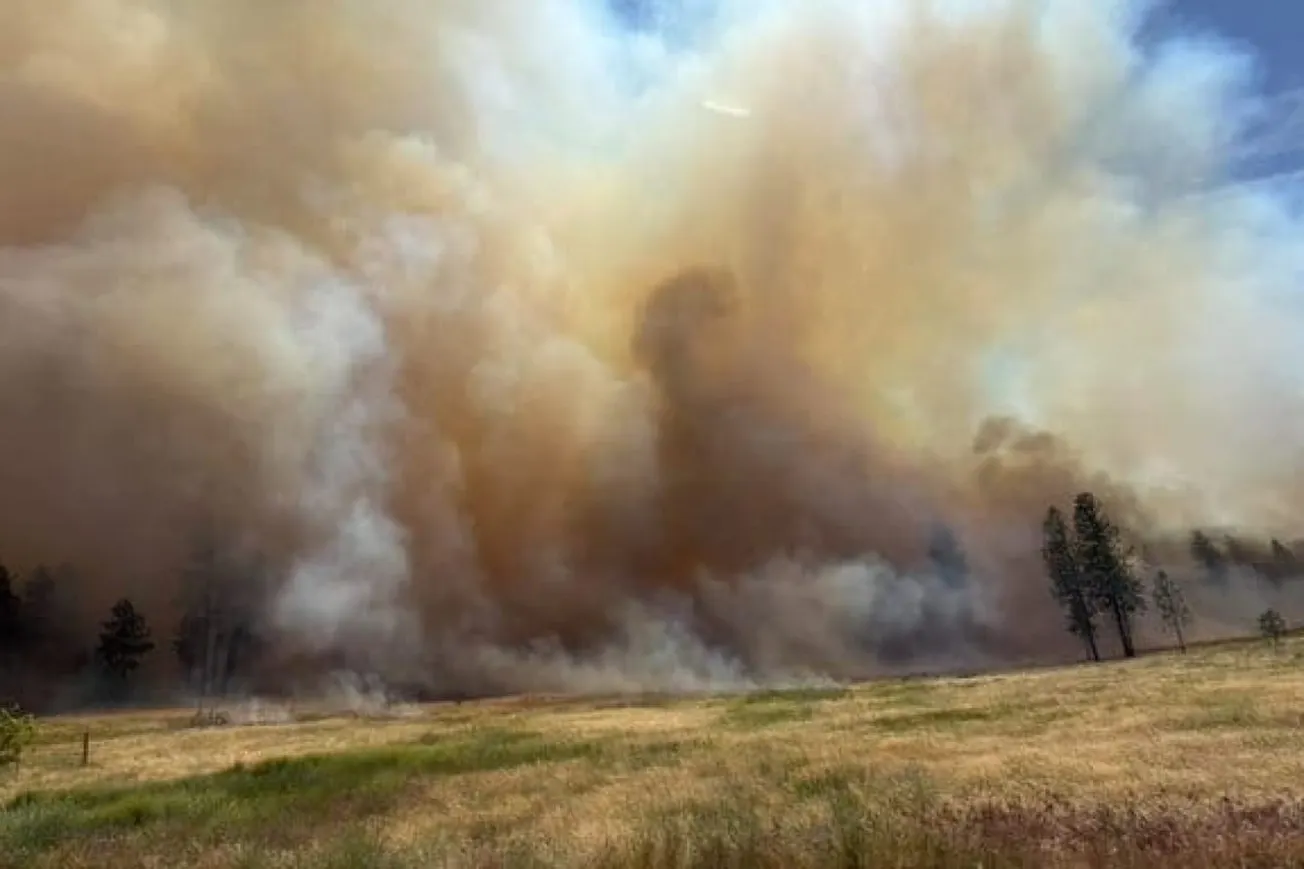
A fast-moving wildfire in eastern Washington has forced thousands of residents to evacuate, destroyed multiple homes, and prompted state officials to seek federal assistance as firefighters continue efforts to contain the blaze.
The fire erupted near the Camp Sekani area east of Spokane and rapidly expanded under the influence of strong winds, low humidity, and dry vegetation.
Authorities issued Level 3 evacuation orders for nearly 12,000 residents, warning people to leave immediately as flames advanced toward populated areas.
Fire officials reported that more than 300 personnel, supported by air tankers, helicopters, and other aircraft, were deployed to combat the wildfire.
By Tuesday evening, officials confirmed that at least five homes had been destroyed, while more than 2,300 structures remained at risk.
Emergency shelters were established to assist displaced residents, and relief organizations mobilized resources to provide temporary housing, food, and other essential services.
State and local officials emphasized that protecting lives and property remains the top priority as crews work to slow the fire's spread.
According to updates from fire management authorities, containment had reached approximately 10 percent by Wednesday morning.
However, officials cautioned that firefighting efforts are likely to continue for several days as crews confront challenging weather conditions and investigate the cause of the wildfire.
The incident highlights the growing wildfire risks facing communities across the western United States, where prolonged dry conditions and extreme weather continue to increase the likelihood of large and destructive fires.
Related Tweet:
Eastern Washington wildfire forces evacuations and destroys homes https://t.co/7i7WksXet1
— The Washington Times (@WashTimes) June 17, 2026
Also Read:
 TIPP Staff