
For decades, every serious energy briefing warned that the Strait of Hormuz was the single point where global markets could be squeezed. Roughly 20 million barrels of oil, about a fifth of global supply, move through that narrow stretch of water each day, along with close to 20 percent of the world’s LNG. Pipelines cannot absorb the volume. There is no real workaround.
When pressure hit this spring, the warnings turned into reality within hours. Traffic dropped. Insurers raised rates. Gas prices climbed roughly 50 percent over the course of the conflict. Iran never had to match the United States ship for ship. It only had to control the chokepoint everyone had spent decades writing memos about.
That is the lesson worth carrying back to Washington, to corporate boardrooms, to university trustee meetings, and to hospital systems. Every organization has a Strait of Hormuz. It is the supplier you cannot replace, the lender who can change terms overnight, the system no one fully understands until it fails, the decision no one wants to make. Leaders almost always know where it sits. They almost always defer.
The question is not whether you can see your chokepoint. The question is whether you fix it on your own timeline or wait for pressure to set the terms.
Congress Knows Its Chokepoint and Will Not Touch It
The national debt is approaching $39 trillion, with more than $31 trillion held by the public. Annual deficits run near $2 trillion and continue to climb. Net interest costs are on track to rival or exceed defense spending within the decade. Every American carries more than $100,000 in federal debt.
Lawmakers do not lack the numbers. They lack the will.
Senator Daniel Patrick Moynihan spent the 1980s and 1990s warning that Washington was masking the true size of the deficit by using Social Security surpluses to paper over red ink elsewhere in the budget. He put the math on the table. Washington filed it away. A decade later, Senator Tom Coburn published his “Wastebook” reports, naming billions in federal waste and forcing votes his colleagues wanted to avoid. The waste continued.
I saw the same fight inside the building. At Treasury in 2005, I helped advance a proposal to let younger workers invest a portion of their payroll taxes in personal accounts. The pitch was straightforward: ownership, higher returns, and long-term solvency, with current retirees protected. The politics killed it. Competing crises buried it. Three decades, one problem, every warning ignored.
That is how a chokepoint tightens. It does not announce itself. It quietly reduces the options leaders will have when the next downturn, the next war, or the next entitlement deadline arrives.
Higher Education Has Priced Itself Into a Crisis
The cost structure speaks for itself. At Penn State, in-state tuition ran around $8,000 a year in the early 2000s. Today, tuition and fees alone top $20,000, with the posted cost of attendance above $40,000. National student loan debt sits between $1.6 and $1.8 trillion. Families absorb the bill. Students carry it forward. Universities explain it. Few change anything underneath.
Mitch Daniels was the exception. As Purdue’s president, he froze tuition for more than a decade by cutting administrative growth, centralizing purchasing, and forcing every line of the budget to justify itself. He did not raise prices to cover his choices. He made choices that did not require raising prices.
Almost no other institution followed. Almost none who started have sustained it. The result is a sector entering an enrollment cliff with a cost base it cannot defend, watching graduates step into a tightening labor market carrying debt that will follow them for decades.
Business Has Cyber
Colonial Pipeline made the case in 2021. A single ransomware intrusion shut down the largest fuel pipeline on the East Coast. Supplies tightened across multiple states. Gas lines formed. Prices jumped. One compromised credential disrupted a regional economy.
The numbers since have only confirmed the pattern. IBM puts the average global cost of a data breach at $4.44 million, and the U.S. average above $10.22 million. Most leaders know exactly where their exposure sits: access controls, identity management, third-party vendors, untested response plans. Few address it before a breach forces them to.
This is the cleanest version of the lesson. The cost of fixing the chokepoint in advance is always lower than the cost of fixing it under attack. Companies that segment systems, lock down credentials, and run real tabletop exercises pay a manageable price now. Companies that wait pay an unmanageable one later.
Healthcare Sets the Terms and Patients Pay Them
Hospital systems, insurers, and pharmacy benefit managers have consolidated their grip on access and price. Roughly 100 million Americans have struggled with medical debt. At least 20 million adults owe medical debt today, totaling more than $200 billion. Health insurance premiums have more than doubled since the early 2000s, far outpacing wages. Medical bills drive a meaningful share of personal bankruptcies.
Patients do not negotiate. They pay or they go without. The system sets the terms because no one has been willing to break up the concentration that lets it.
Policy leaders and healthcare executives know the chokepoint. Force price transparency. Break up the dominant positions in hospital systems, insurer networks, and drug middlemen. Give families real choices instead of take-it-or-leave-it bills. Either leaders address it on their terms, or costs will keep doing it for them.
What the Leaders Who Get This Right Do
The leaders who handle these moments well are not improvising under pressure. They refused to defer when deferral was still available, and they did the unglamorous work that buys options later. They go to the source instead of relying on filtered briefings. They put real plans on paper with names and deadlines attached. They surface bad news on their own schedule, rather than waiting for it to surface them. They spend political capital before it depreciates. Most of all, they move before they feel ready, because every week of delay raises the price of every decision that follows.
That is the difference between leaders who shape outcomes and leaders who get shaped by them.
The Strait of Hormuz did not become a crisis because anyone missed it. It became a crisis because, for decades, no one wanted to pay the cost of resolving it. The same pattern is playing out right now in the federal budget, on university campuses, in corporate IT departments, and across the healthcare system.
Your organization has a Strait of Hormuz. You almost certainly know what it is.
Find it. Fix it now. Or wait, and let pressure decide for you.
Mark Pfeifle is a member of the TIPP Insights Editorial Board. He runs the crisis management firm Off the Record Strategies. He served as deputy national security adviser for strategic communications and global outreach at the White House from 2007 to 2009.
👉 Show & Tell 🔥 The Signals
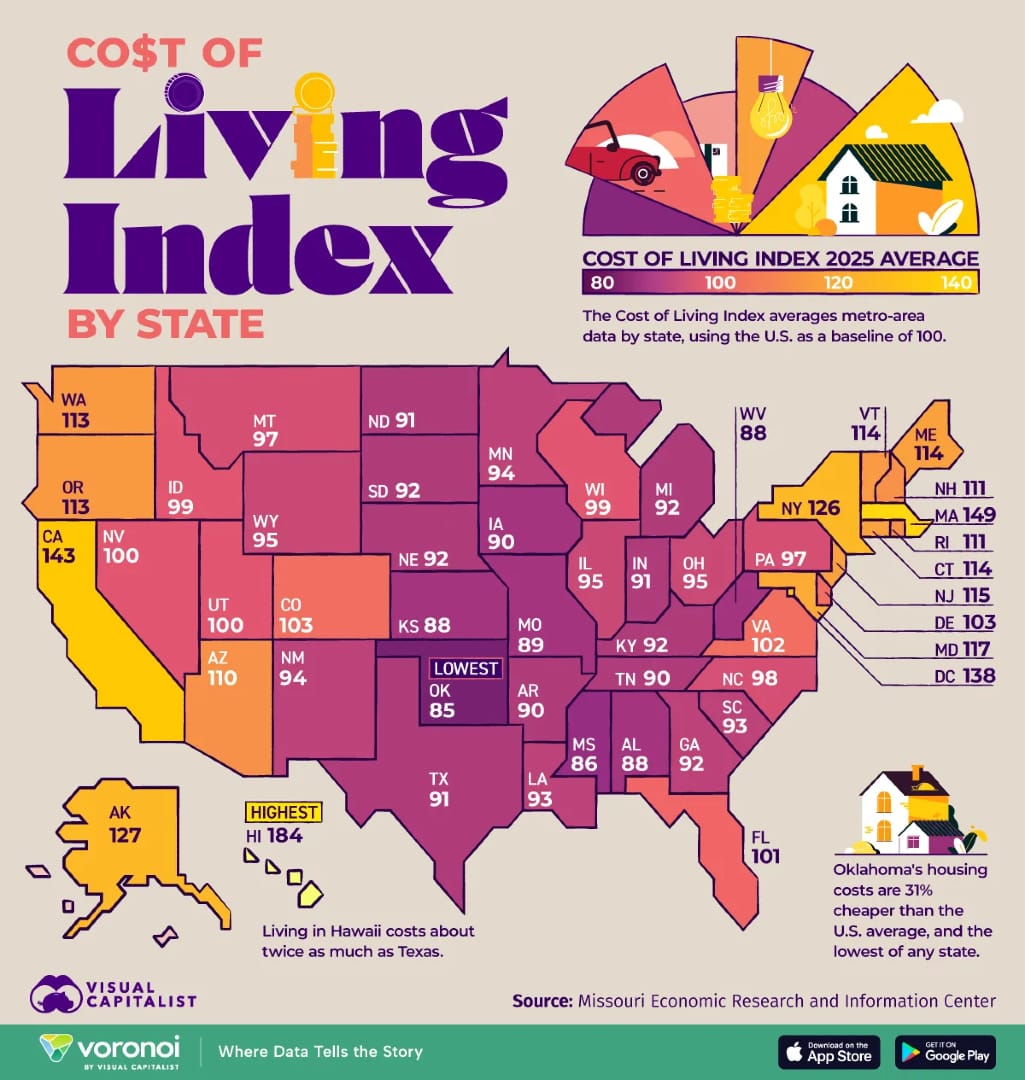
I. America’s Cost Divide Keeps Growing
The cost of living now varies dramatically across the U.S. Hawaii’s index stands at 184, nearly double Oklahoma’s 85, the lowest in the country. California (143) and New York (126) also remain far above the national baseline of 100.
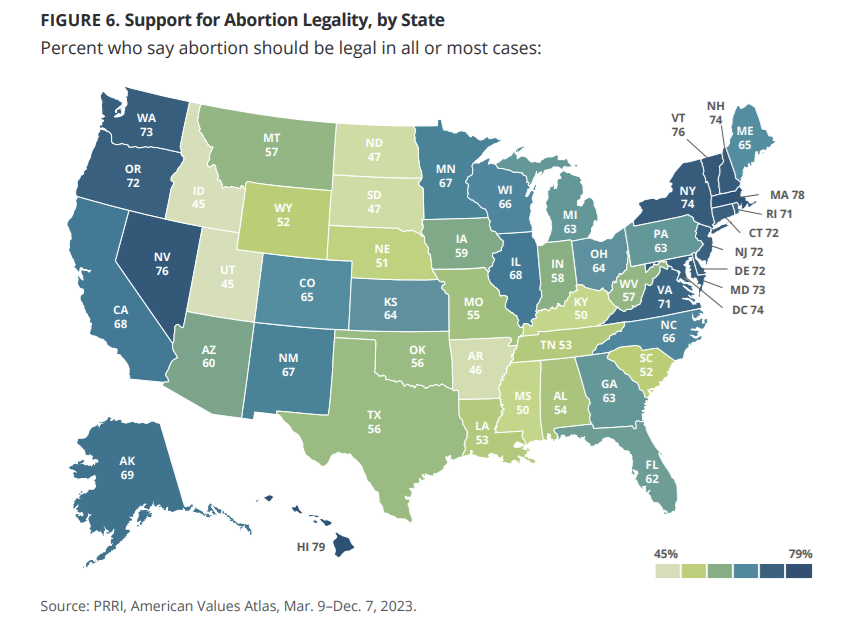
II. Views on Abortion Vary Widely Across States
A majority in many states say abortion should be legal in all or most cases, according to PRRI’s 2023 American Values Atlas. Support ranges from the mid-40s in some states to nearly 80% in others, underscoring how divided and geographically varied public opinion remains across the country.
📊 Market Mood — Thursday, May 7, 2026
🟩 Markets Push Higher on Iran Deal Optimism
U.S. futures climbed as investors bet a framework agreement could end the Iran war soon.
🟧 Oil Hovers Near $100 as Traders Weigh Peace Odds
Crude eased from recent highs, but energy markets remain tense over Hormuz reopening prospects.
🟦 AI Momentum Keeps Tech Rally Alive
Strong AMD and Super Micro results reinforced confidence in the AI spending boom.
🟨 Diplomacy and Inflation Risks Still Intertwined
Even with peace hopes rising, elevated oil prices continue to cloud the inflation outlook.
🗓️ Key Economic Events — Thursday, May 7, 2026
🟧 08:30 ET — Initial Jobless Claims
Expected at 205K (vs. 189K prior), offering a fresh snapshot of labor market conditions as investors monitor growth resilience.
Letters to the editor email: editor-tippinsights@technometrica.com
Subscribe Today And Make A Difference. Consider supporting Independent Journalism by upgrading to a paid subscription or making a donation. Your support helps tippinsights thrive as a reader-supported publication. Contact us to discuss your research or polling needs.
Reach our audience. For sponsorship and advertising opportunities, visit our Partner With Us page.