By Gordon Brown, Project Syndicate | September 22, 2025
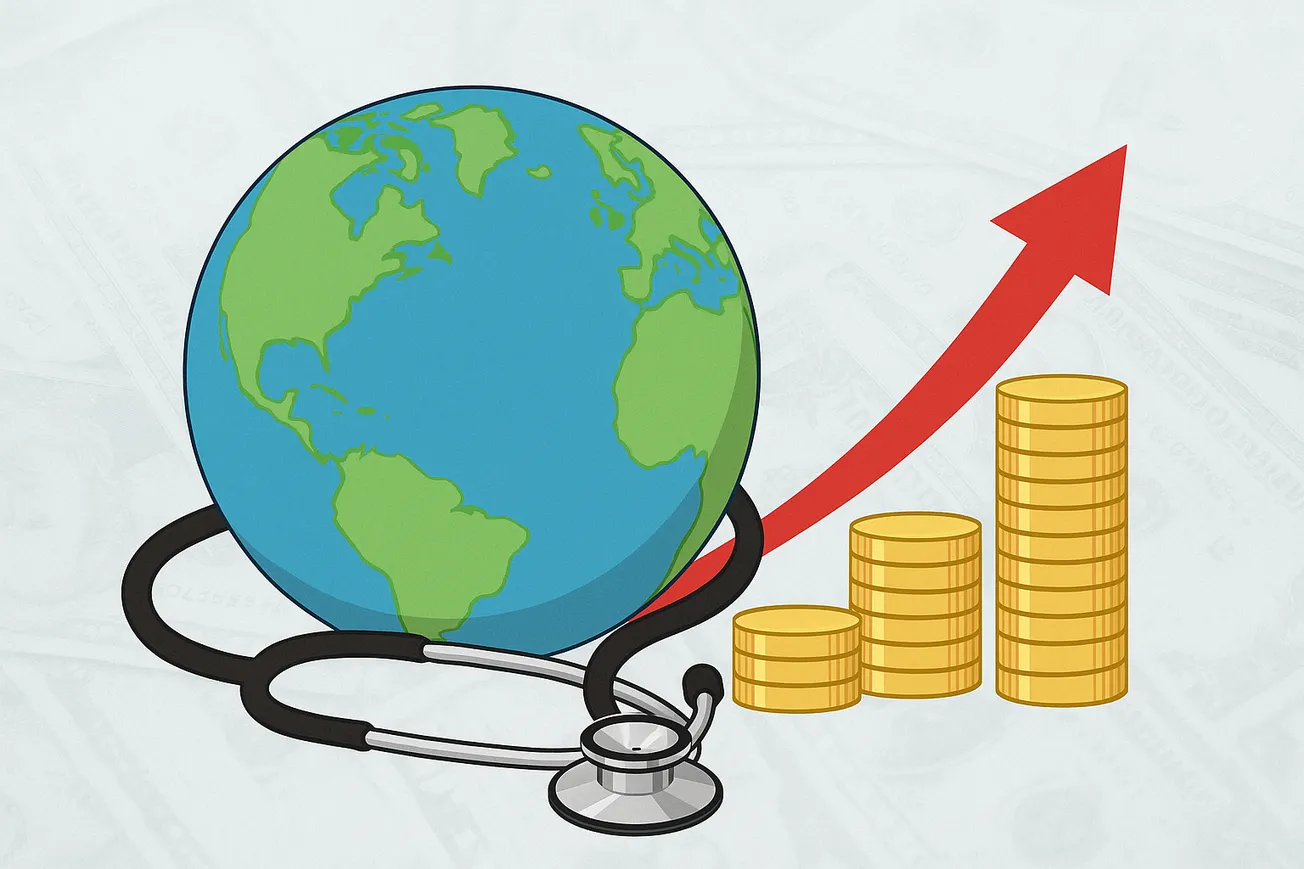
The sudden withdrawal of foreign aid has accelerated the shift toward self-sufficient health systems in Global South countries, even as they face a non-communicable disease epidemic. Fortunately, world leaders can address both issues by committing to health taxes at this week’s United Nations General Assembly.
EDINBURGH – Health systems around the world are overstretched and underfunded. In 2023, low-income countries spent just $10 per person annually on health – less than 15% of what is required to ensure access to essential services. Compounding the problem, global health investment is forecast to fall by 40% this year, from around $25 billion in 2023 to $15 billion, largely owing to recent aid cuts in the United States and Europe. The effects of these cuts are already being felt in the developing world: the dismantling of the US Agency for International Development alone has resulted in an estimated 500,000 deaths.
For many Global South countries, the sudden withdrawal of resources has accelerated the shift away from dependency on foreign aid toward self-sufficiency. Developing-country leaders have increasingly focused on building health capacity in every area, from vaccine production to health-care delivery. Chief among them are Ghanaian President John Dramani Mahama, who recently organized the Africa Health Sovereignty Summit; Rwandan President Paul Kagame, the African Union’s Champion on Domestic Health Financing; and former African presidents Olusegun Obasanjo and Ellen Johnson Sirleaf.
Pressure must be brought to bear on the governments that have slashed aid to reconsider their position. These governments must provide a timeline for when they will help finance capacity-building efforts in countries with historically aid-dependent health-care systems.
At the same time, the world is facing a rising non-communicable disease epidemic, fueled by the consumption of harmful products. Tobacco, alcohol, and sugary beverages kill more than ten million people each year. Urgent action is needed to reduce the deaths and disease caused by these products, especially in low- and middle-income countries (LMICs).
Addressing these twin crises requires identifying new funding sources for health-care systems and reducing the consumption of harmful products. Fortunately, there is a way to achieve both objectives: health taxes. As the United Nations General Assembly gathers in New York this week, world leaders must embrace this policy. It aligns not only with the World Health Organization’s goals but also with the recommendations for domestic-resource mobilization in the 2023 report by the G20 independent expert group co-chaired by Lawrence H. Summers and N.K. Singh.
According to a 2024 report from the Task Force on Fiscal Policy for Health, of which I am a member, taxes that increase prices for tobacco, alcohol, and sugary beverages by 50% could raise $3.7 trillion globally over five years. This includes $2.1 trillion in LMICs, which could use the revenue to increase health-care spending by 40%.
Moreover, if all countries raised taxes accordingly, more than 100 million people would quit smoking, and consumption of alcohol and sugary beverages would fall dramatically. This would save 50 million lives over the next 50 years, while millions more people would enjoy better health, easing the pressure on overstretched health systems.
Several countries have highlighted the benefits of health taxes. Tobacco excise tax hikes in the Philippines increased revenue from $1 billion in 2012 to $2.9 billion in 2022, which helped finance universal health coverage. In the 2022-23 fiscal year, Pakistan raised its excise tax on tobacco, resulting in a nearly 50% year-on-year increase in revenue from the levy.
📌 At a Glance
- In 2023, low-income countries spent about $10 per person annually on health — less than 15% of what is needed for essential services.
- Global health investment is forecast to fall 40% in 2024, from $25 billion to $15 billion.
- Tobacco, alcohol, and sugary drinks cause 10+ million deaths each year, especially in low- and middle-income countries.
- A global 50% price increase on these products could generate $3.7 trillion over five years and save 50 million lives over 50 years.
- Countries already using such measures include Philippines, Pakistan, Lithuania, and Mexico.
Likewise, after successive increases, alcohol taxes accounted for nearly 3% of the Lithuanian government’s total tax revenue by 2022. Alcohol consumption also declined over the same period, likely preventing related mortality and morbidity. Mexico’s 2014 sugary-beverage tax was so effective at improving health outcomes that every dollar spent on its implementation was estimated to save $4 in health-care costs.
But despite these successes, health taxes remain far too low in most countries, and harmful products like tobacco have become increasingly affordable as their prices fail to keep pace with inflation. Powerful corporate interests are the biggest barrier to implementing these levies, often working behind the scenes to delay or dilute policy. In 2022, the tobacco industry spent €19 million ($22.4 million) on lobbying European Union policymakers, contrary to the WHO Framework Convention on Tobacco Control.
We cannot allow well-funded lobbying efforts to obscure the reality that health taxes are highly effective, have few economic downsides, and enjoy broad public support. I urge world leaders attending the high-level meeting on non-communicable diseases at this week’s UN General Assembly to make a strong commitment to raising taxes on tobacco, alcohol, and sugary beverages.
The evidence is clear that these taxes generate much-needed government revenue and ease pressure on overburdened health systems. The question attendees must consider is how boldly they are willing to lead.
Gordon Brown, a former prime minister of the United Kingdom, is World Health Organization Ambassador for Global Health Financing.
Copyright Project Syndicate
TIPP Takes
Geopolitics, Geoeconomics, And More
1. NATO Forces Join Eastern Sentry Drone Shield - TIPP Insights
In the latest move to bolster its eastern flank, NATO is deploying forces for Operation Eastern Sentry, designed to counter the growing threat of Russian air incursions.

2. Putin Floats One-Year Extension Of Nuclear Treaty With U.S. - TIPP Insights
Russian President Vladimir Putin signaled Monday that he is open to a one-year extension of the New Strategic Arms Reduction Treaty (New START), the last major nuclear arms agreement between Washington and Moscow.

The pact, signed in 2010 by Barack Obama and Dmitri Medvedev, limits each side to 1,550 deployed warheads and 800 launchers, along with strict inspection rules.
New START is set to expire on February 5, 2026. Putin said Russia will adhere to the limits for another year if the United States reciprocates and avoids actions that undermine the balance of deterrence. He warned that abandoning the treaty could have “devastating consequences.”
3. Spain’s Prime Minister Sparks Outrage Over Alleged Nuclear Threat Against Israel – Fox News
The anti-Israel Prime Minister of Spain, Pedro Sanchez, is under fire from Israel and Spaniards alike for his alleged comments to use nuclear weapons against the Jewish state.

The socialist Prime Minister Sanchez, said in a speech last week that "Spain, as you know, doesn’t have nuclear bombs, aircraft carriers, or large oil reserves," adding, "We alone can’t stop the Israeli offensive. But that doesn’t mean we won’t stop trying. Because there are causes worth fighting for, even if winning them isn’t in our sole power."
4. Clashes Break Out As Italians Strike Demanding Action Over Gaza - BBC
Clashes broke out on Monday after thousands of Italians took to the streets in towns and cities across their country in a day of solidarity with Palestinians co-ordinated by trade unions.

Milan and Rome saw the biggest crowds, and tensions spilled over around the central station in Milan, where some 60 police were reported hurt.
Italy's prime minister, Giorgia Meloni, who has come under fire from political opponents for her position on Gaza, condemned the scenes in Milan as shameful.
5. More Nations To Recognize Palestinian State At UN Conference - TIPP Insights
A wave of countries recognizing Palestinian statehood around a special UN conference in New York is ramping up pressure on Israel and putting key allies at odds with the Trump administration.

6. N. Korea Open To Talks With U.S. If Denuclearization Demand Withdrawn: Kim - Kyodo
North Korean leader Kim Jong Un has said Pyongyang could resume talks with Washington if the United States does not seek its denuclearization, adding he personally has "good memories" of U.S. President Donald Trump, state-run media said Monday.

Kim said in a speech delivered Sunday at a session of the Supreme People's Assembly, the country's legislature, that there is "no reason" for North Korea and the United States to avoid dialogue if Washington wants peaceful coexistence, the official Korean Central News Agency said.
7. Venezuela Confirms It Sent Letter To Trump Calling For Dialogue - UPI
Venezuelan Vice President Delcy Rodríguez confirmed that President Nicolás Maduro sent a letter to U.S. President Donald Trump, saying he was willing to hold direct talks with Trump's special envoy, Richard Grenell.

"The letter was delivered Sept. 6 to a South American intermediary to be passed on to its recipient. ... In it is reflected Venezuela's irrefutable truth: We are a territory free of illicit activities, peaceful and secure," Rodríguez said on Telegram, where she also published the letter.
8. Nvidia Commits $100 Billion To OpenAI Data Center Expansion - TIPP Insights
Nvidia will invest up to $100 billion in OpenAI as the artificial intelligence firm prepares to build massive data centers powered by the chipmaker’s processors, both companies said Monday. The plan involves systems requiring 10 gigawatts of power—equal to 4 to 5 million GPUs, according to Nvidia CEO Jensen Huang.

Calling the effort “a giant project,” Huang said the partnership underscores the deep ties between Nvidia and OpenAI, whose release of ChatGPT in 2022 ignited demand for Nvidia’s chips. OpenAI now reports 700 million weekly users and is pushing to expand capacity.
9. White House: Oracle To Control TikTok Algorithm Under U.S. Deal - TIPP Insights
The White House confirmed Monday that Oracle will oversee TikTok’s U.S. algorithm once the social media platform’s sale is finalized. A senior official said the app’s recommendation system will be operated entirely in the United States, under continuous monitoring to ensure security.

The deal creates a U.S.-based joint venture with majority American investors and a board of directors. Oracle and Silver Lake will be lead investors, while others, including Fox Corp., may also take part. ByteDance, TikTok’s Chinese parent, will retain less than a 20 percent stake.
10. Tylenol Maker Shares Sink After Report Says RFK's HHS Will Link Drug To Autism – Fox News
Kenvue, which was spun-off from Johnson & Johnson, was down over 5% ahead of a 4 p.m. ET announcement which President Donald Trump teased during his remarks at Charlie Kirk's memorial.

"We're going to have one of the biggest announcements, really medically, I think, in the history of our country....I think we've found an answer to autism." he said.
The Washington Post reported on the announcement, which followed the Wall Street Journal's similar report in early September, that Kennedy's HHS is expected to release a report this month on potential causes of autism that is likely to show Tylenol taken during pregnancy and low levels of the vitamin folate, according to people familiar with the matter.
📊 Market Pulse — September 22, 2025
📈 S&P 500 — 6,693.75 ▲ +0.44%
Stocks extended record highs, supported by Fed easing optimism and anticipation of tech earnings this week.
📉 10Y Treasury — 4.14% ▲ +0.0 bp
Yields ticked higher, reflecting a cautious bid for safety while markets weigh the Fed’s policy path.
🛢️ Crude Oil — $62.40 ▼ –1.84%
Oil slid on demand concerns, giving back recent gains despite a supportive rate environment.
💵 US Dollar — 97.33 ▼ –0.32%
The dollar slipped, pressured by expectations of looser Fed policy and strength in alternative assets like gold.
🪙 Bitcoin — $112,170 ▼ –0.9%
Bitcoin eased slightly, consolidating after recent gains while risk appetite softened.
💰 Gold — $3,684.75 ▲ +1.12%
Gold surged to fresh highs, buoyed by rate-cut expectations and safe-haven flows.