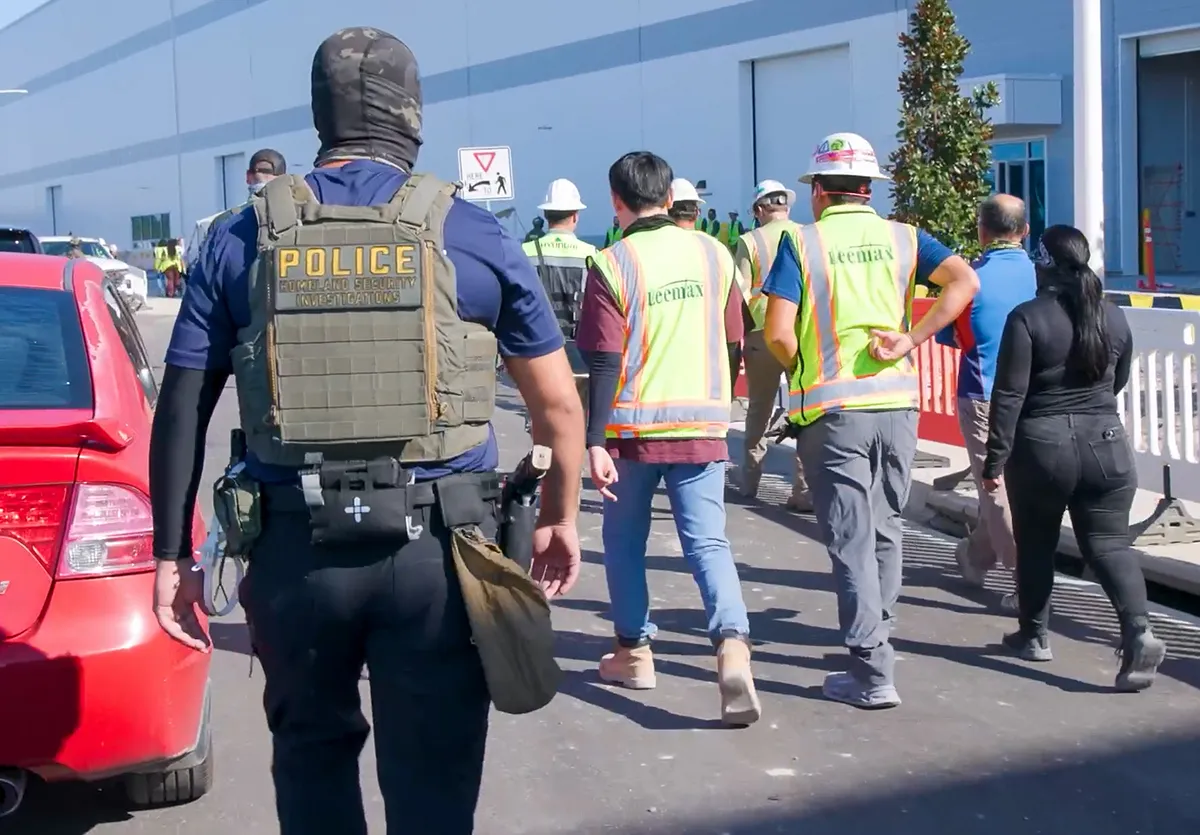
The immigration raid on a Hyundai–LG battery plant near Savannah, Georgia, dominated headlines last week. In what Homeland Security officials described as an unprecedented and significant action at an American workplace, nearly 475 workers, primarily South Korean, were arrested at the plant for working there illegally. Later, the numbers were revised upward to almost 550 arrests. Most of them are still being held in a Georgia facility.
CNN, headquartered in Atlanta, led the coverage, providing a play-by-play description of what happened. The media's talking points, presented in both online and television formats, struck a familiar and broadly similar theme. The first was, obviously, immigration enforcement, which the media has been battling since President Trump took office in January. The second has drawn an even larger focus as President Trump imposes his Liberation Day tariffs on trading partners. In the Hyundai story, these two themes intersected and merged.
How could the Trump administration be so reckless in attacking Hyundai and LG, global icons of South Korean industrial dominance? The president of South Korea was recently at the White House, shaking hands and smiling for the cameras. Why would Trump poke a reliable ally in East Asia at a time when North Korea is openly in the embrace of Russia and China?
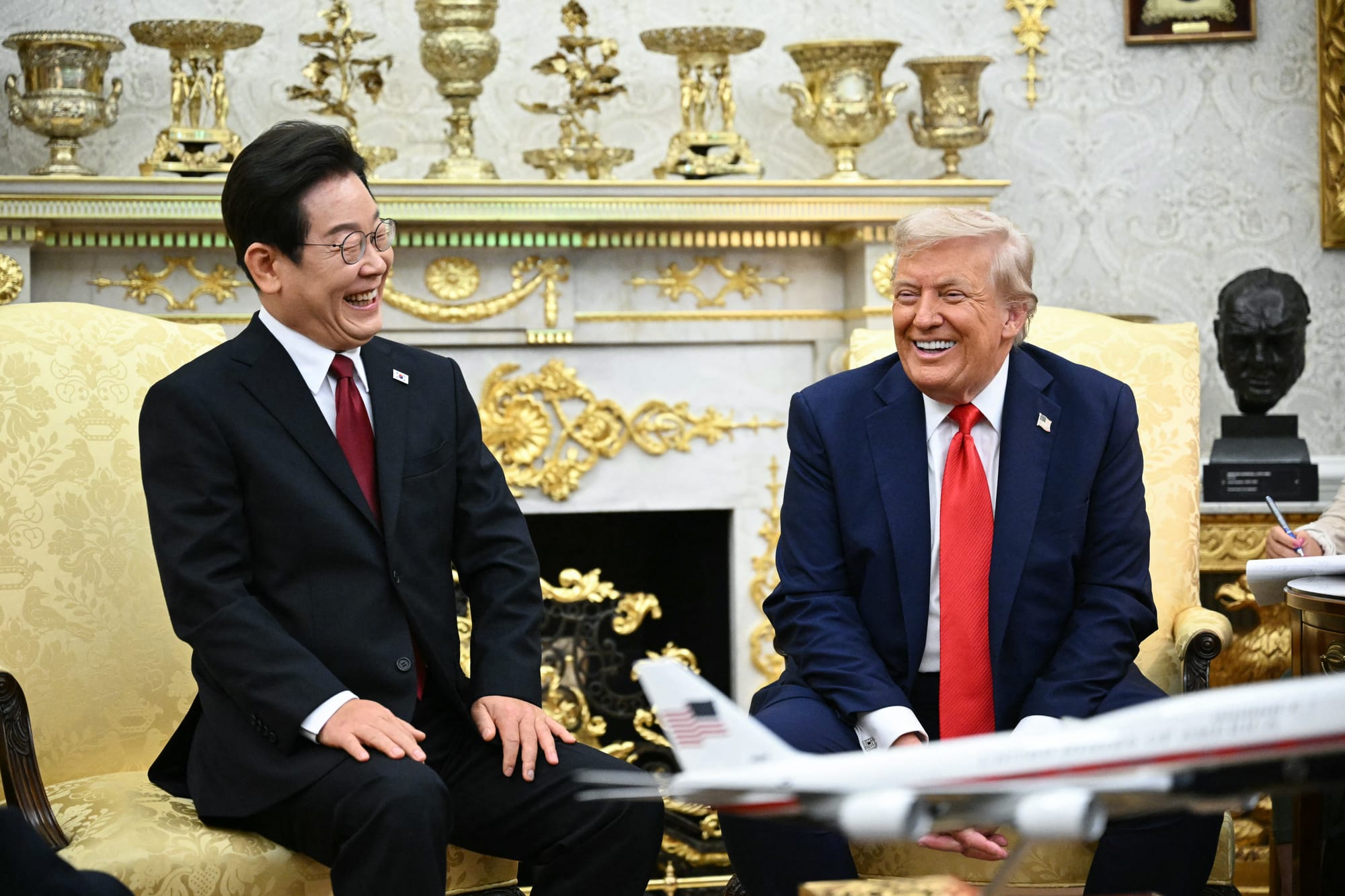
President Trump posted the honest answer on his social media platform, Truth Social. South Korea, which recently announced a $350 billion investment agreement to secure a favorable deal with the United States, is welcome to build plants, factories, and facilities in America. However, the purpose of these investments is to revitalize American manufacturing and encourage the hiring of American workers. Any action by South Korea that violates American immigration laws is therefore a no-no.
In Hyundai's defense, none of the workers arrested were direct employees of the company. LG, however, was exposed because more than 75 employees of the company were working there without proper work authorization.
More than any other country on the planet, the United States offers visas under various programs. The menu is an alphabet soup of visa categories, ranging from A to V. Each visa stipulates clear definitions of the benefits granted to the holder and the responsibilities associated with being in the United States.
When a visa with more benefits, such as the ability to live and work and possibly apply for permanent residence in America, is requested, the United States justifiably conducts a much higher level of scrutiny throughout each stage of the approval process. One of the reasons the H1B specialty occupation visa has come under so much criticism is that it is mainly granted based on a lottery. The usual steps regarding subjecting the applicant to additional scrutiny are still in place; however, the initial grant is made to foreign workers based on very minimal standards, such as having a bachelor's degree and earning a minimum wage for the occupation as published by the United States Department of Labor.
The South Koreans were in the United States on B1/B2 visas (or the Visa Waiver Program, which grants citizens of certain countries permission to visit America for periods of up to 90 days without a visa). Such visas have the most stringent restrictions applied to them. A visa holder is not permitted to attend a school or college, as there is a separate set of visas for international students, such as the F1 or the J1. B1/B2 visa holders are explicitly forbidden from engaging in gainful employment, which is precisely what all the workers caught in the immigration sting operation were doing.
📊 By the Numbers: Immigration & Work
- 9.7 million unauthorized immigrants are in the U.S. workforce (5.6% of all workers).
Source: Pew Research Center, 2023 - 3.04% suspected overstay rate for B1/B2 tourist/business visas in FY2023.
Source: U.S. DHS, Entry/Exit Overstay Report (August 2024)
The B1/B2 visa is for individuals who wish to visit America for a short duration, primarily for business or pleasure. Parents visit their American-settled children; college students visit America to hike the Grand Canyon; pilots of foreign airline carriers come to Seattle to train at Boeing and fly back a gleaming plane. Business executives come to the United States to either buy from or sell to American companies. Many go to Wall Street to raise capital.
Truth without compromise. Join us for $99/year.
Decades ago, in 1964, Justice Potter Stewart of the United States Supreme Court defined pornography as something that does not really need a definition. He famously uttered the phrase, "But I know it when I see it," in his 1964 concurring opinion in the Supreme Court case of Jacobellis v. Ohio.
The benefits and restrictions of a B1/B2 visa are so straightforward that anyone with basic common sense can easily understand them. In the alphabet soup of visas, it has the lowest entry point in terms of qualifications. As long as the person demonstrates that they have sufficient funds to support their travel to the United States and can prove a family connection in their home country, the visa is granted. For many visa holders who have previously been to the US and returned, some consulates do not even require an in-person interview for visa renewal.
These South Korean workers violated U.S. immigration law. Camping out in the United States for months in hotels or under short-term apartment leases, these workers drove to the plant every day, just like any other factory employee. They would put in a solid eight-hour shift, earning a paycheck back in South Korea. Each such paycheck meant Georgia did not collect state income tax revenue, and the United States Treasury missed out on income and employment taxes. Yet, nearly 550 people were freely roaming the areas near Savannah, consuming public infrastructure without paying for it.
The South Koreans violated US immigration laws because obtaining other kinds of temporary work authorizations would be either more expensive or more time-consuming. Hyundai and LG could have publicly bid for construction companies here and awarded the contract to an American firm that strictly adheres to immigration laws, such as hiring workers who have passed the I-9 verification, which proves they are legally qualified to work in the United States. Doing so would have prompted the American construction company to increase hiring at a time when the economy is struggling to add jobs.
The one media mantra we have heard repeatedly during the Trump years is that no one is above the law. Not even the friendly Koreans who want to invest $350 billion in America.
📊 Market Mood — Tuesday, September 9, 2025
🟢 Futures Edge Up: U.S. stock futures tick higher, with the Nasdaq hitting a fresh record, as rate-cut hopes fuel optimism.
🟡 Jobs Data Watch: Traders await preliminary nonfarm payrolls revisions, which may show as many as 1M fewer jobs, reinforcing signs of a cooling labor market.
🟣 Fed Cut Bets: Markets now price a near-certain 25 bps cut at next week’s meeting, with rising odds of a deeper 50 bps move.
🟠 Earnings Spotlight: Oracle reports after the bell with AI momentum in focus; GameStop also reports following a rough year-to-date slide.
🔵 Apple Event Buzz: Cupertino event expected to unveil the iPhone 17 “Air,” new Apple Watch models, and AirPods Pro 3.
🟢 Crude Climbs: Oil rises after OPEC+ opts for a smaller October production hike; speculation builds over tougher U.S. sanctions on Russian energy.
Market round-up in 5 minutes. We bring you up to speed. Subscribe to TIPP Insights for $99/year.
📅 Key Events Today
🟨 Tuesday, September 9
None today