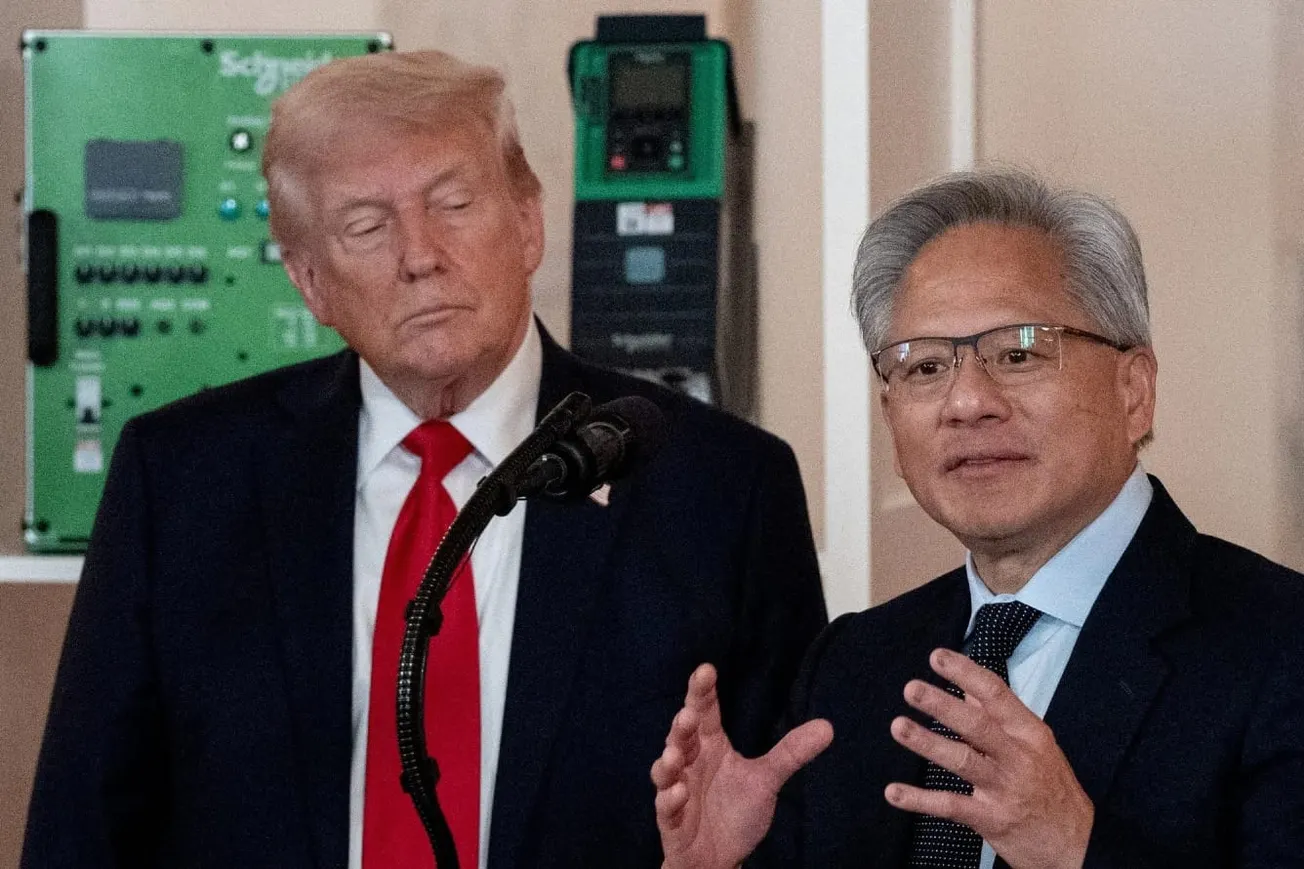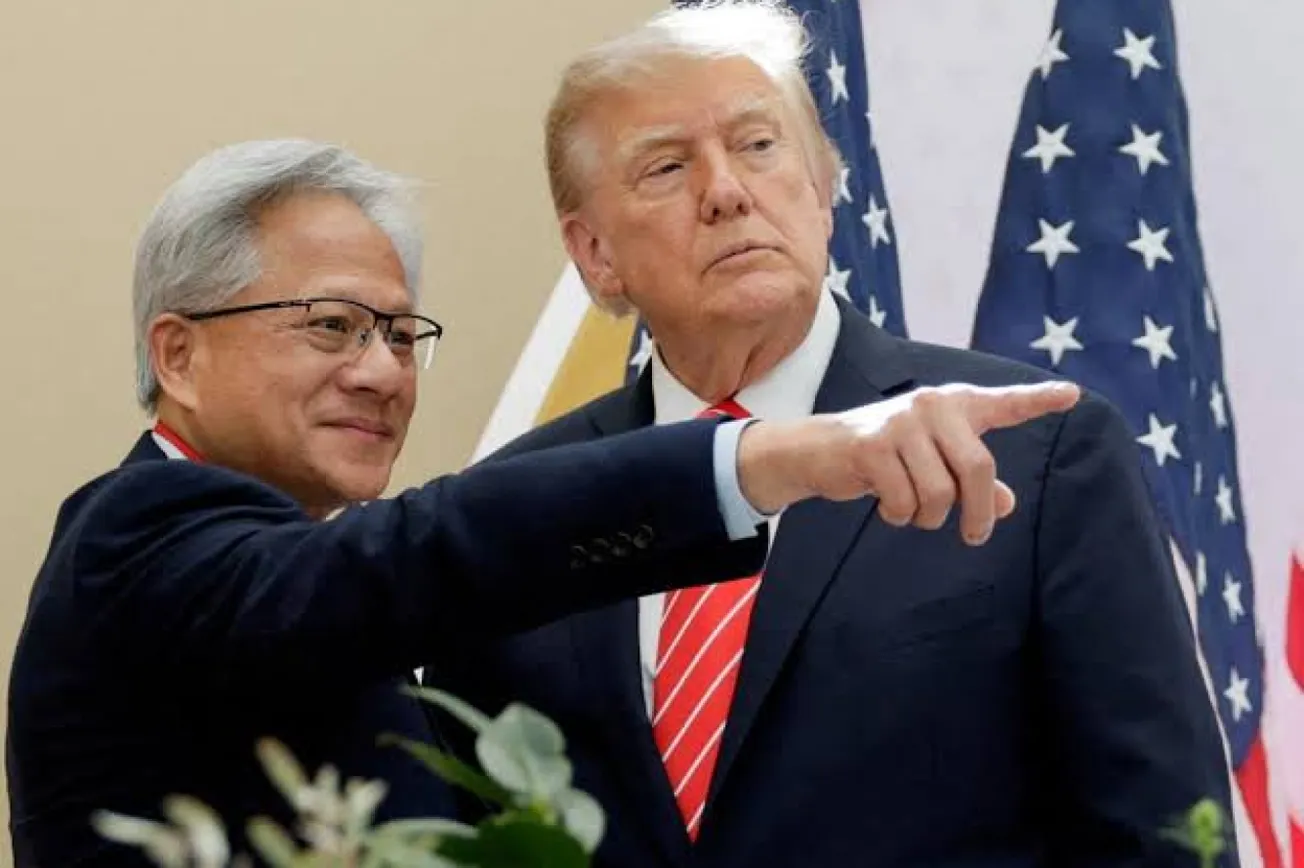
Jensen Huang is back. On Monday, Nvidia announced that its board had voted unanimously to reinstate him as chief executive of the company he co-founded in 1993, less than two weeks after he stepped down. Shares rose 31.5%, restoring more than $900 billion in market value.
Only six days earlier, board chair Harvey Jones had said the board did not intend to bring Huang back. Investor pressure, industry support, national security assurances, and the direct intervention of President Donald Trump changed its mind.
Reinstating Huang was the right decision. Holding him accountable remains essential.
The value of one man
Huang spent 33 years building Nvidia, and one of his most consequential bets came long before artificial intelligence became a household term. In 2006, Nvidia introduced CUDA, software that let developers use graphics processors for general-purpose computing. The ecosystem that grew around it put Nvidia in position to capitalize when AI took off.
Few executives are willing to commit that heavily to a technology years before it pays off. Huang was, and his knowledge of the industry and his relationships across the semiconductor supply chain took just as long to build.
That record explains the support he drew after his resignation. Investors Brad Gerstner and Gavin Baker urged the board to keep his return on the table, and technology leaders, including Elon Musk, backed it publicly. A petition for his reinstatement drew more than 182,000 signatures, although that count has not been independently verified.
Markets are not arbiters of personal conduct or national security. Still, Monday’s rally offered a rough measure of what investors believe Huang’s leadership is worth. The larger cost of losing him would have come over years, in the long-term bets Nvidia might no longer have made.
The national interest
None of this means the allegations against Huang can be brushed aside. One of his reported extramarital affairs involved a Chinese businesswoman whom U.S. intelligence officials reportedly suspect of links to Beijing’s intelligence services. She previously ran Megaspeed, a Singapore-based company under U.S. investigation for allegedly diverting advanced chips to China. Megaspeed denies the allegations. The Justice Department has said it had no evidence of wrongdoing by Huang or Nvidia.
Given Nvidia’s place in America’s technology base and the export restrictions on its most advanced chips, these are serious matters.
Trump, for his part, made no secret of his role. In an interview with CNBC on Monday, he said he had convinced the board to reinstate Huang and had given it assurances on national security.
“People say, is it a threat to have him? No, it’s a threat to lose him,” Trump said. Asked whether the market sell-off had influenced his thinking, he replied, “Probably so, but the bigger impact was the long term.”
America’s technological competition with China depends not only on factories and capital but also on retaining the minds that drive innovation. On that point, Trump was right to recognize the strategic value of Huang’s expertise.
At the same time, The Washington Post reported that Trump held between $13 million and $62 million in Nvidia stock at the end of August. That warrants disclosure, but ownership alone does not establish a financial motive. The strategic and economic case for Huang’s reinstatement should be judged on its merits.
Nvidia’s board, meanwhile, said it had received input from senior levels of the U.S. government and was confident that Huang’s return posed no national security risk. That assurance matters. However, it is no substitute for completing the company’s independent investigation.
Accountability after reinstatement
The strongest objection to Huang’s return is that the board reversed itself before that investigation was finished. Lawmakers from both parties have also raised concerns about export controls, corporate governance, and national security.
Still, reinstatement is not exoneration. Bringing back a leader need not stop investigators from establishing the facts, or stop the board from acting on what they find. If the investigation identifies lapses, the board must address them promptly, strengthen safeguards and ensure full compliance with U.S. export controls.
Nvidia has created a committee to oversee national security and export controls, chaired by Suzanne Nora Johnson, a former Goldman Sachs vice chair. Its credibility will depend on whether it can halt questionable transactions, investigate potential violations independently, and disclose material findings to shareholders.
The first test comes on Dec. 1, when Huang is scheduled to sit for transcribed interviews with three House committees. He is also scheduled to testify publicly before the Senate Banking Committee on Dec. 3. He should give a full account of what he knew about the alleged diversion of chips, when he knew it, and what Nvidia has done to prevent export-control violations. The board, in turn, must ensure the independent investigation proceeds without interference and then act on its findings.
America has an enormous stake in keeping exceptional talent. It has an equally large stake in the integrity of its institutions. Neither should come at the expense of the other.
Loved it, hated it, or somewhere in between — tell us. Grade this article here and help shape what lands in your inbox next.
🧭 Power & Capital · November 24, 2026
Where state power meets the boardroom.
🔷 US Moves To Blacklist Singapore-Based Chip Firm Linked To Nvidia Scandal – TIPP Staff
🔷 OpenAI Chief Scientist Proposes Industry-Wide Limits On Powerful AI Models – TIPP Staff
🔷 EU Opens Antitrust Investigation Into Coca-Cola Bottler CCEP – TIPP Staff
🔷 US Seeks To Recover More Than $1 Billion In Crypto Stolen From Binance – TIPP Staff
🌍 Global Affairs
The world's flashpoints, in motion.
🟥 US Seeks Extradition Of Captured Mexican Cartel Leader – TIPP Staff
🟥 US Considers Training Syrian Forces In Demining Operations – TIPP Staff
🏛️ National Affairs
The fights shaping America right now.
🟫 Rep. Jimmy Gomez To Resign After Ethics Panel Finds Evidence Of Sexual Misconduct – TIPP Staff
🟫 Mamdani Releases 84,000 More Records On September 11 Attacks – TIPP Staff
🟫 How Hidden Cost Of Failed Homeless Policy Impacts Affordability – Fred Lucas, The Daily Signal
🟫 US Army Plans Controlled Detonation Of Nearly Five Tons Of Explosives In Iowa – TIPP Staff
🟫 Amtrak Passengers Evacuated After Train Hits Stuck Bulldozer Truck – TIPP Staff
🟫 Pennsylvania Reports Ninth Measles-Related Death As Cases Reach 1,638 – TIPP Staff
🟫 Fire Breaks Out At Will Smith And Jada Pinkett’s $42 Million California Estate – TIPP Staff
🌙 Last Evening
The best of last night’s edition, in case you missed it
🟦 Dem, GOP Voters Back Expanding U.S. Supreme Court, But Indie Voters Oppose It: I&I/TIPP Poll – Terry Jones, TIPP Insights
🟦 How Did Ukraine Sink A Russian Warship Docked In Libya – TIPP Staff
🟦 Trump’s Meme Coin Dinner Offers VIP Access To Top Cryptocurrency Holders – TIPP Staff
🟦 More Than 99% Of Gaza Faces Potential Contamination, Oxfam Report Finds – TIPP Staff
🟦 Why Did The COP31 Climate Summit End Without A Major Agreement – TIPP Staff
🟦 Democrats Set 12-Debate Schedule For 2028 Presidential Race – TIPP Staff
📊 Market Mood · November 24, 2026
How the trading day is setting up.
🟩 Jensen Huang's return to Nvidia has reignited the AI rally. Nvidia shares surged more than 31% Monday, lifting the S&P 500 by 4.7% and the Nasdaq by 6.5%.
🟦 Asian technology stocks are extending the rebound. Taiwan's benchmark jumped nearly 9%, South Korea's Kospi gained 6.3%, and U.S. futures are edging higher this morning.
🟧 Oil prices have fallen to three-month lows. Brent is trading below $89 a barrel as rising global supplies outweigh continuing risks to shipping through the Strait of Hormuz.
🟨 Inflation and interest rates remain key concerns. The dollar is near a 19-month high as investors await Wednesday's PCE inflation and GDP reports ahead of the Thanksgiving holiday.
🗓️ Key Economic Events
On today's U.S. data calendar.
🟧 10:00 a.m. ET — Conference Board Consumer Confidence
Forecast: 92.1 | Previous: 91.7
Consumer confidence is expected to improve slightly despite persistent inflation, elevated borrowing costs and recent stock market volatility.
Letters to the editor email: editor-tippinsights@technometrica.com
Subscribe Today And Make A Difference. Consider supporting Independent Journalism by upgrading to a paid subscription or making a donation. Your support helps tippinsights thrive as a reader-supported publication. Contact us to discuss your research or polling needs.
Reach our audience. For sponsorship and advertising opportunities, visit our Partner With Us page.