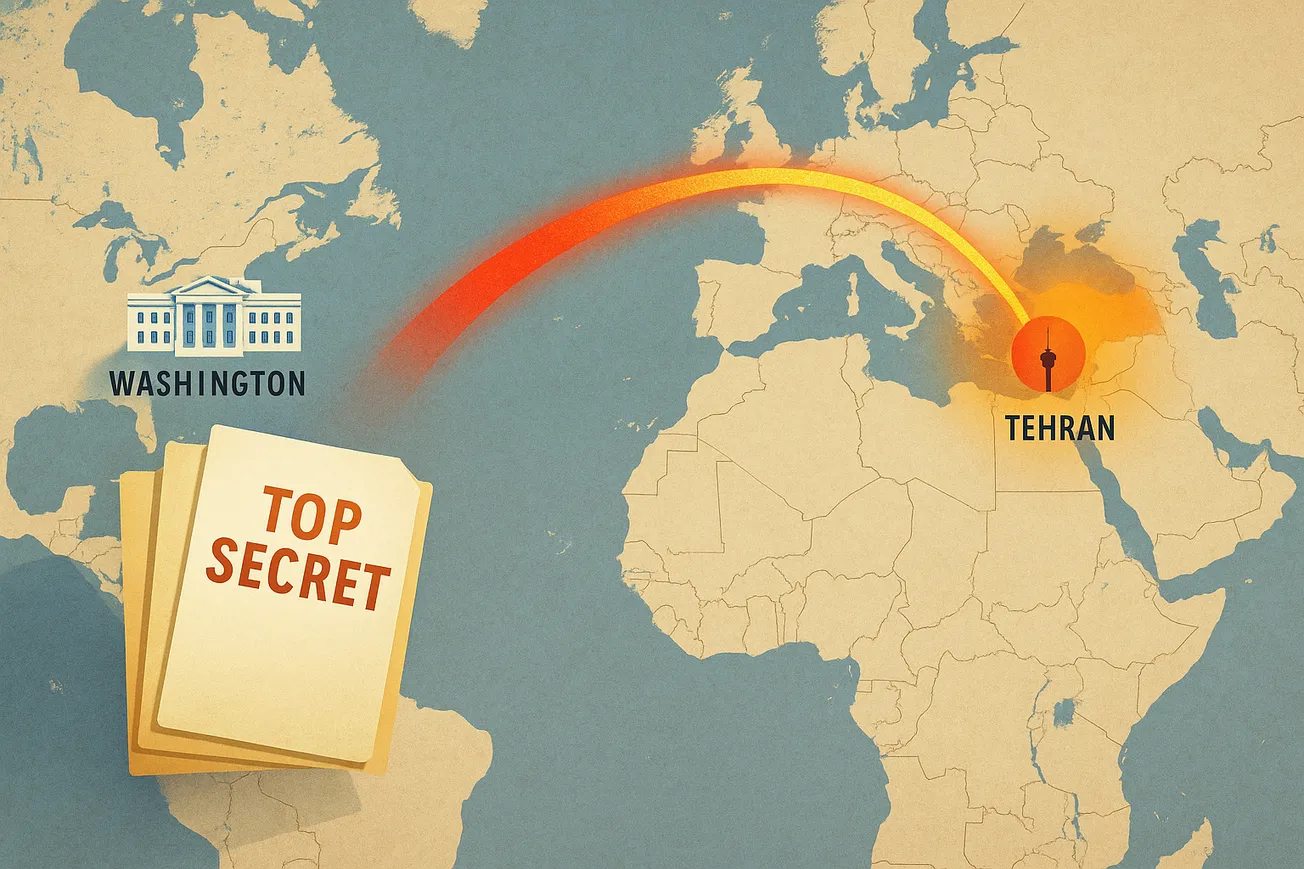
A federal grand jury in Maryland returned 18 charges against former National Security Adviser John Bolton during the first Trump administration.
National Security Advisers are often the first person a president sees each day and the last person each night. They are always within arm's length of all presidential meetings involving foreign leaders, and they accompany the president on every trip.
First established in 1953 under President Dwight D. Eisenhower, the role was intended to coordinate national security policy, following the National Security Act of 1947, which established the National Security Council. Two years after the end of World War II, Congress decided that America needed to do a better job of responding to threats before they emerged.
With the advent of the Cold War, the role intensified in its prominence. The deepest secrets of the nation, some of which even the president is not aware of, continue to flow up the chain to the National Security Adviser to this day.
A fixture in the Beltway's foreign policy establishment and a product of one, Bolton understood the enormity of the role to which he was entrusted. Yet, in a mark of arrogance characteristic of senior Beltway insiders who frequently step in and out of senior government roles, Bolton was charged with violating the most basic security edict: Don't forward official emails to your private account.
The grand jury found that Bolton had sent his "diary" notes as the National Security Adviser to President Trump - consisting of more than 1,000 pages, including top-secret details - to two family members who did not have security clearances. Bolton also used a messaging app to communicate government secrets with these outsiders.
Whether driven by arrogance, stupidity, carelessness, or malice, Bolton’s actions shattered the trust at the heart of national security.
Intent matters a lot in national security cases, and the arguments in court from both sides will likely remain classified as the case unfolds. However, prosecutors already know that the damage to America has been profound.
The government of Iran hacked Bolton's emails, and long after Trump left office and Iran was trying to get the JCPOA deal back on track, a hacker sent Bolton a message hinting at blackmail by threatening to inform the FBI. "This could be the biggest scandal since Hillary's emails were leaked, but this time on the G.O.P. side! Contact me before it's too late."
While it is true that Bolton turned on Trump and became an avid Never-Trumper in the same mold as Liz Cheney, Bolton's statements when President Trump was charged with mishandling classified secrets were especially caustic. "...Trump has committed very serious crimes. This is a devastating indictment ...and it should be the end of Donald Trump's political career."
The hypocrisy was striking: the same man who called Trump’s handling of classified documents a ‘devastating crime’ had himself committed a far graver breach.
Unlike a president, who has constitutional authority over classification and declassification decisions, Bolton had no such power and no legal shield. His decision to transmit more than 1,000 pages of top-secret material to unauthorized recipients stands alone as a clear breach of duty.
No constitutional protections are granted to staff who serve at the pleasure of a president, other than executive privilege, which is not relevant in this case. And unlike Trump, whose case was dismissed on constitutional grounds, Bolton faces no such protections.
Each of the 18 Bolton counts carries a maximum statutory penalty of 10 years in prison, plus potential fines up to $250,000 per count and forfeiture of related property. If convicted on all counts without reductions, Bolton could face up to 180 years in prison. However, Bolton is already 76 years old, and sentencing guidelines could drastically reduce his penalties.
Even if Bolton were to face a token penalty and spend a few months in prison, he will never be able to obtain security clearance again. That's a stinging rebuke to someone who once served as the hub of the nation's secrets with an office adjacent to the Oval Office. A humiliating fall for a man once entrusted with the nation’s deepest secrets, and a cautionary tale of hubris brought to ruin.
📊 Market Mood — Friday, October 17, 2025
🟢 Bank Jitters Pressure Markets
U.S. stock futures fell as renewed concerns about the health of regional lenders weighed on sentiment. A negative credit update and sharp share declines among mid-size banks reignited fears of broader financial stress, though analysts said most credit quality remains solid.
🟡 Oracle Unveils Bullish AI-Driven Outlook
Oracle projected strong long-term revenue and profit growth fueled by surging demand for AI-enhanced cloud services. While the forecast exceeded Wall Street expectations, shares slipped as investors digested guidance that included slightly lower margins amid heavy AI-related spending.
🔵 CSX Tops Estimates Despite Profit Drop
Rail operator CSX reported a sharp year-over-year profit decline but still beat forecasts when excluding one-time charges. Merger speculation continued to swirl after its new CEO hinted at strategic options, including potential partnerships or tie-ups with other major railroads.
🟣 Micron to Halt Server Chip Sales to China
Micron plans to stop supplying server chips to Chinese data centers following a 2023 government ban, though it will continue sales to automotive and mobile sectors. The move highlights ongoing tech tensions as chip technology remains central to AI development.
🟡 Gold Rally Extends to New Records
Gold climbed toward $4,400 per ounce, marking a ninth straight weekly gain as Fed rate-cut bets, central bank buying, and geopolitical tensions spurred demand for safe-haven assets.
Market round-up in 5 minutes. We bring you up to speed. Subscribe to TIPP Insights for $99/year.
📅 Key Events Today
🟧 Friday, October 17
No major economic releases scheduled.
Access our Featured Stocks and TIPP Top-20 archives — exclusive to paid subscribers. Subscribe now → $99/year.