Skip to content

Profiles In Weakness At The Trump-Xi Meeting

Getty Images

By Harold James, Project Syndicate | October 29, 2025

While most people regard the Sino-American rivalry as a new cold war between two world-bestriding giants, the truth is that both countries are tightly constrained. Presidents Donald Trump and Xi Jinping each sense the other side's vulnerabilities, which means they cannot hide their own.


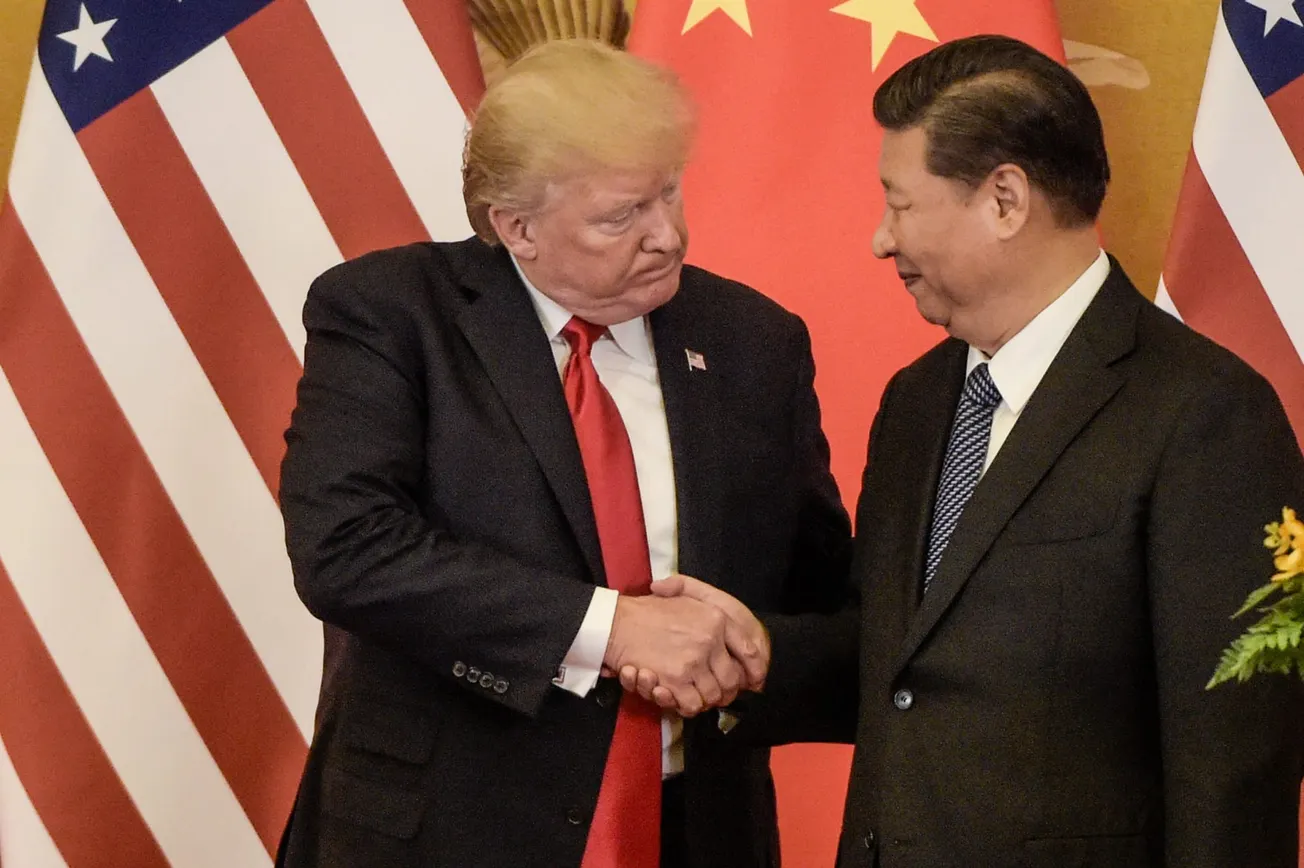
PRINCETON – The world has awaited this week’s meeting between US President Donald Trump and Chinese President Xi Jinping with bated breath. Can a face-to-face encounter – this time at the Asia-Pacific Economic Cooperation Summit in South Korea – resolve a conflict that has generated increasingly alarming headlines this year?

While most people regard the Sino-American rivalry as a new cold war – a struggle for global preeminence, with each side seeking to extend its financial, trade, and military influence to every corner of the world – the truth is that both countries are tightly constrained.

True, their leaders’ rhetoric supports the Financial Times columnist Martin Wolf’s contention that we are witnessing a clash between two predatory superpowers in a new age of polarization and simmering conflict. Xi regularly speaks of “great changes unseen in a century,” by which he means that the United States is declining and China is rising, whereas US Treasury Secretary Scott Bessent views China’s recent export controls as “a sign of how weak their economy is.”

Both sides are right. China knows that America is highly dependent on Chinese critical minerals and rare earths – from gallium and germanium to dysprosium and samarium. Any disruption to the supply of these materials could halt US production of advanced semiconductors and other technologies. While mining and processing capacity could eventually be developed elsewhere, including in the US, that will not happen quickly or cheaply. For the time being, the US is locked in its dependency, with little choice but to compromise.

But China also has vulnerabilities. It still needs exports to drive its economy’s growth, and thus cannot afford a collapse in world trade. This fact alone undercuts the argument that we are in a new cold war: the original Cold War involved almost no economic dependence between the US and the Soviet Union. They might not like it, but today’s cold warriors are being pushed toward some sort of truce, on the way to some sort of longer-term commitment.

Such an agreement comes with its own problems, though, given both sides’ hostile rhetoric. Over the past decade or so, US Democrats and Republicans alike have come to see China as a fundamental threat, and Chinese authorities have painted a similar picture of America. What will domestic audiences in both countries think if their leaders start pursuing rapprochement with a supposedly hostile power?

The likely revulsion would be very different from the end of the Cold War, when Americans were no less heartened than Russians to see Ronald Reagan and Mikhail Gorbachev shake hands at their 1986 summit in Reykjavik. For that generation, military competition had come to look foolish; but for ours, rivalry still feels natural and inevitable. Under the circumstances, the political risks of doing a deal are huge.

Both powers’ longer-term worries are even more intractable. America’s debt levels, for example, are on track to overtake those of Greece and Italy by the end of the decade, and China is facing its own economic cliff as a result of rapid aging and demographic decline. Given the scale of these challenges, today’s would-be hegemons look like giants with heads of iron but feet of clay.

Both see no other choice but to gamble, and both are making the same bet. Perhaps, with sufficient investment, AI will resolve their respective difficulties. After all, those hyping the technology promise a dramatic rise in productivity. In the US, that would mean faster economic growth, automatically reducing the debt-to-GDP ratio. In China, AI, coupled with robotics, might resolve the problem of having to support a growing elderly population (not to mention supercharging the current regime of surveillance and social control).

But there is no guarantee that AI investments will pay off. Both countries assume that the gains from AI will accrue primarily to the successful early mover. But this is not the only possible scenario. With a substantial advantage in advanced chips or in the equipment used to produce them, the US may well remain at the cutting edge of AI innovation; or it may not. We simply do not know how far China has gone toward developing an alternative AI system.

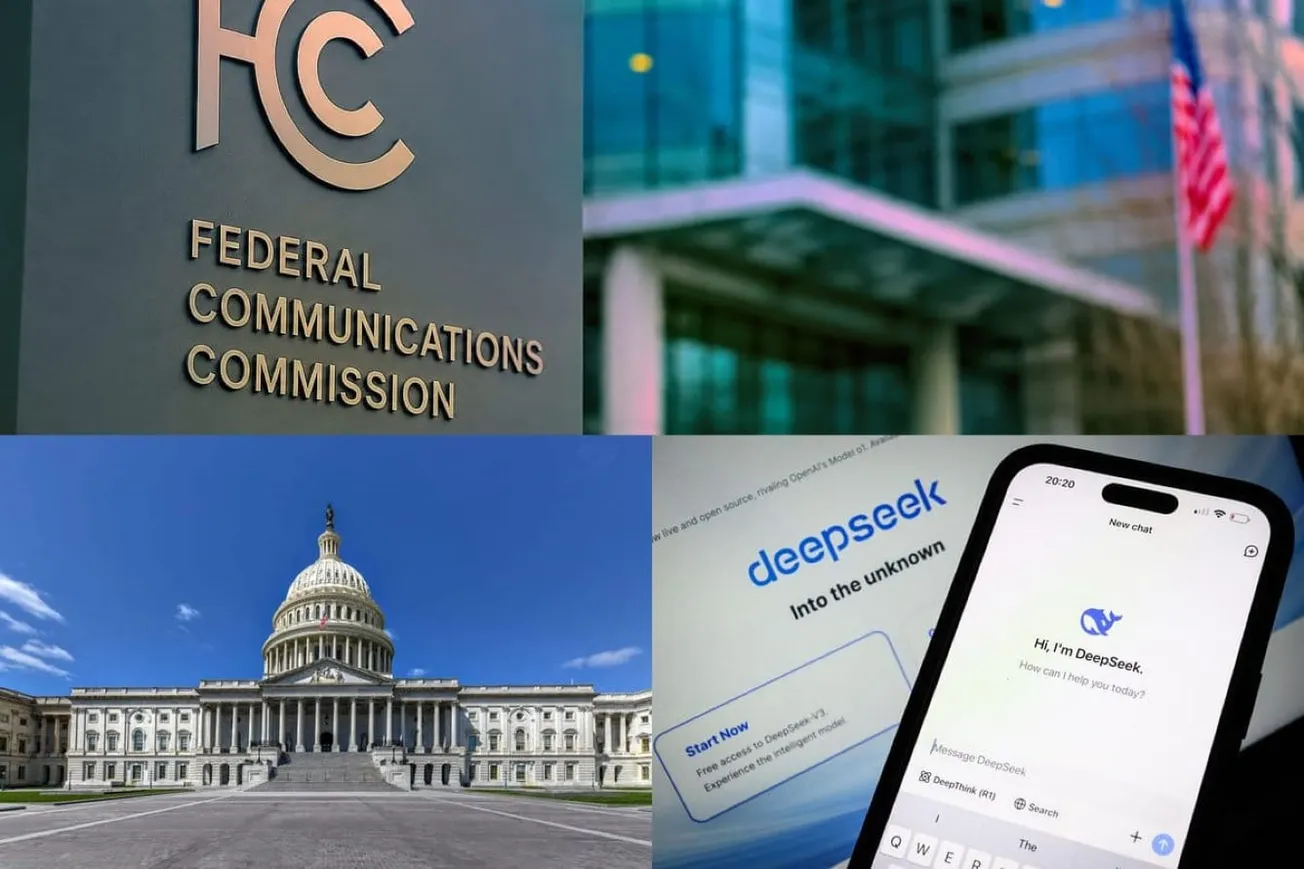
The sudden appearance of DeepSeek – when a Chinese start-up released a high-performing generative AI model reportedly developed at a fraction of the cost of its US rivals – suggests that piggybacking is easy. With the rise of an educated, hardworking global middle class, the traditional barriers to catching up are falling away. The institutional forces that made advanced technology the exclusive preserve of advanced economies have eroded. It is all too easy to imagine big advances and breakthroughs coming from smaller countries, which would then have greater means to resist pressures from predatory superpowers.

Gambling can be highly addictive. Trump has made many big bets – on peace in the Middle East, on bombing Iran, and in Ukraine – and some of them may pay off. The most recent, a $20 billion US lifeline to Argentina, was spectacularly risky, given that polls were predicting a midterm humiliation for his ideological ally, Argentine President Javier Milei. But Milei overcame the odds – for now.

Trump should be careful, though. Nothing drags a gambler deeper into addiction like a big early win. If Trump and Xi are both feeling lucky, a personal encounter may lead both to raise the stakes. But if both see no other option than betting all their chips on AI, that is more a sign of desperation than of confidence.

Harold James, Professor of History and International Affairs at Princeton University, is the author, most recently, of Seven Crashes: The Economic Crises That Shaped Globalization (Yale University Press, 2023).

Copyright Project Syndicate

Your feedback is incredibly valuable to us. Could you please take a moment to grade the article here?

TIPP Takes

Geopolitics, Geoeconomics, And More

1. U.S. Intel: Putin More Entrenched Than Ever As Trump Pushes For Ukraine Peace - TIPP Insights

A new U.S. intelligence assessment concludes that Russian President Vladimir Putin is showing no willingness to compromise in the war on Ukraine, despite President Donald Trump’s ongoing push for peace talks.

The report, shared with Congress this month, finds Putin more entrenched than ever as he seeks to justify heavy troop losses and economic damage by expanding Russia’s territorial control.


2. Which Issues Will Dominate Trump-Xi Talks: Taiwan, Trade, Or Tariffs? - TIPP Insights

President Donald Trump is set to meet Chinese President Xi Jinping this week during his Asia tour across Malaysia, Japan, and South Korea, with trade and Taiwan expected to dominate talks.

Markets are closely watching for updates on tariffs and export controls, while the Taiwan question looms large amid concerns over Beijing’s potential move by 2027 — the so-called “Davidson window.”


3. Israeli Maintaining Control Deeper Inside Gaza Than Expected - TIPP Insights

The Israeli military is exerting control over more of the Gaza Strip than expected under the ceasefire deal with Hamas, a BBC analysis has found.


4. Fed Cuts Rates As Shutdown Hides Full Jobs Picture - TIPP Insights

The Federal Reserve cut interest rates by a quarter point on Wednesday, marking its second rate reduction this year as it seeks to prevent a spike in unemployment amid slowing job growth.

The move lowers the benchmark lending rate to between 3.75% and 4%, the lowest level in three years.

Related Editorial:

50-Basis-Point Rate Cut Now


5. What Drove Nvidia To Become The World’s First $5 Trillion Company - TIPP Insights

Nvidia has become the world’s first $5 trillion company, marking a historic milestone for the tech and AI industries.

The California-based chipmaker’s market value surged past the record at Wednesday’s market open, just three months after hitting $4 trillion.


6. France Unveils Bold Plan For State-Backed Bitcoin Strategic Reserve - TIPP Insights

France has introduced a landmark bill to purchase 2% of Bitcoin’s total supply, aiming to establish Europe’s first national Bitcoin Strategic Reserve.

The bill, set to be presented by UDR President Éric Ciotti to the French National Assembly, proposes that the government acquire roughly 420,000 BTC over the next seven to eight years to strengthen financial sovereignty and hedge against global monetary instability.

The proposal also outlines plans to power Bitcoin mining with France’s nuclear and hydroelectric energy, aligning with the country’s clean energy goals. France’s Capital B treasury, which already holds over 2,200 BTC, is positioned to lead the initiative.

Related Editorials:

The Great Repricing

The Great Gold Rush


Market Pulse

Credit: Barchart.com
📧
Letters to the editor email: editor-tippinsights@technometrica.com
📰
Subscribe Today And Make A Difference. Consider supporting Independent Journalism by upgrading to a paid subscription or making a donation. Your support helps tippinsights thrive as a reader-supported publication. Contact us to discuss your research or polling needs.

Comments

Latest