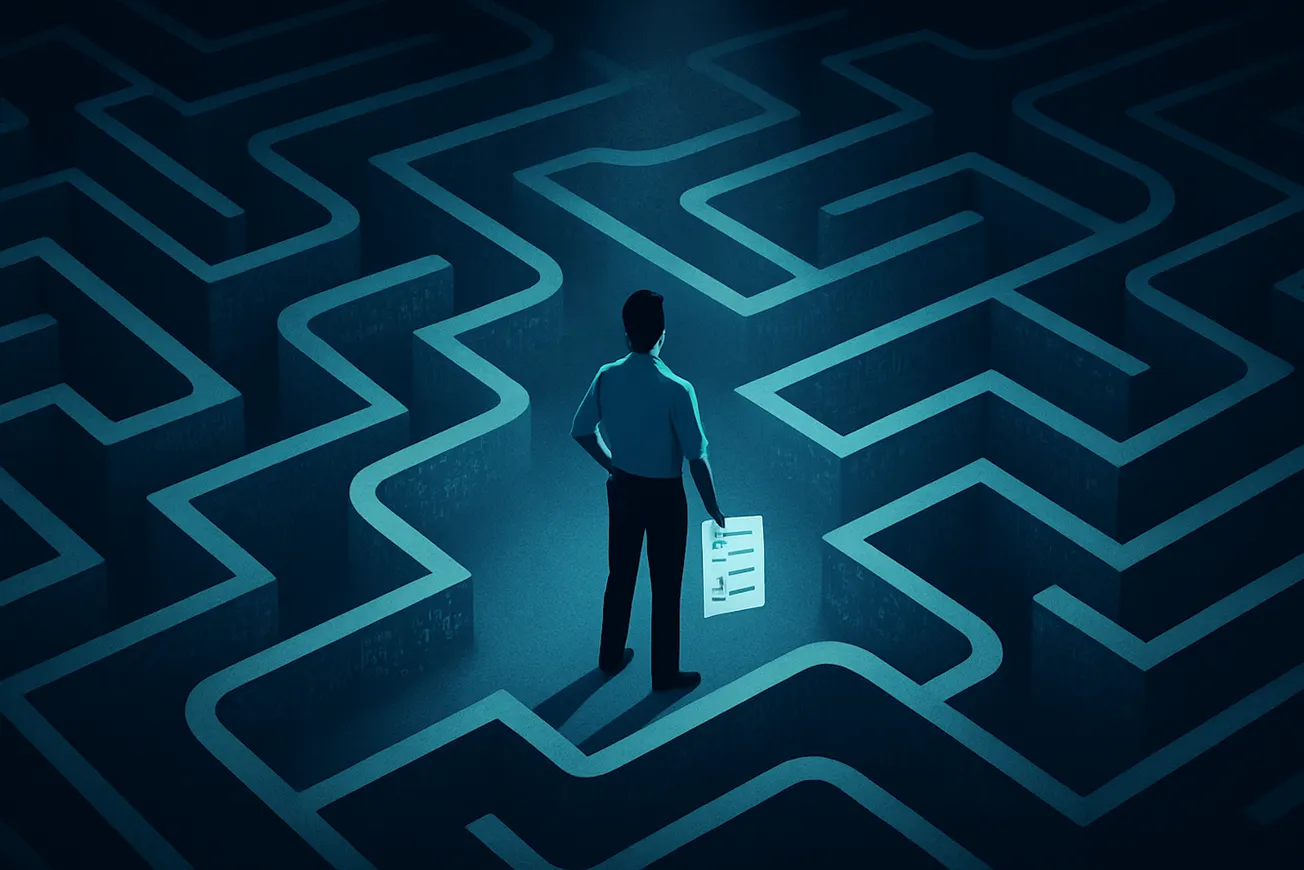
Politics in a democracy should operate like a competitive sport. Candidates present their vision, and voters assess these offerings and then make a clear choice between the best contenders. For centuries, American elections followed this principle through a binary system. Primaries serve to filter out fringe candidates, leaving the two most viable to face off in the general election.
Consider the structure of the NFL. Dozens of teams battle through a long regular season. Only the best make it to the playoffs, where direct elimination determines who advances. In the final game—the Super Bowl—the top two teams face off. The system is fair, simple, and designed to reward excellence.
Ranked-choice voting, now in use in places like New York City, abandons this clarity. Introduced during the chaos of the COVID-19 pandemic, this system was designed mainly by theorists in academic circles, not by practitioners grounded in electoral realities. Though the outcome still presents a winner, the journey there is convoluted and increasingly undemocratic.
In this system, voters rank up to five candidates in order of preference. If no one wins a majority of first-choice votes, the candidate with the fewest is eliminated. The votes from that candidate's supporters are redistributed to their next choice. This process continues, with eliminations and redistributions, until one candidate surpasses 50%.
This method may look elegant and straightforward in a textbook. But in practice, it distorts voter intent and undermines the basic principle of representative democracy.
Imagine five candidates: A, B, C, D, and E. Suppose candidate D is voter Johnny's first choice—he supports D by 90%, and his support for B, his second choice, barely registers at 4%. Suppose that D ranks last when all the votes are counted. According to the ranked-choice rules, D is eliminated.
The system now transfers Johnny's vote to B. It falsely equates mild preference with passionate support, all because a computer says so. Another voter, Sally, who chose D and A as her first and second choices, respectively, now boosts A's tally. This digital redistribution continues, often through all five choices, until someone wins—not by widespread mandate but through algorithmic survival.
In New York City, every one of a voter's ranked preferences is guaranteed to count—whether that voter understands the process or not. In contrast, places like Maine stop redistributing once a candidate crosses the majority threshold. However, fairness isn't uniform under ranked-choice voting; it is algorithmically manipulated and regionally inconsistent.
Worse, this system opens the door for tactical collusion between candidates. Second and third frontrunners can publicly endorse each other as second-choice picks to box out the frontrunner rival. Such strategic endorsements would be considered outright collusion—and grounds for disqualification—both in professional sports and business under antitrust law. But in ranked-choice elections, this behavior is not only legal; it's rewarded.
This political maneuvering undermines the foundational principles of democratic fairness and transparency. Voters believe they are choosing a leader. Instead, they're offering a list of preferences to be reprocessed by a black-box system until someone emerges victorious—even, potentially, a candidate who was no one's legitimate first choice.
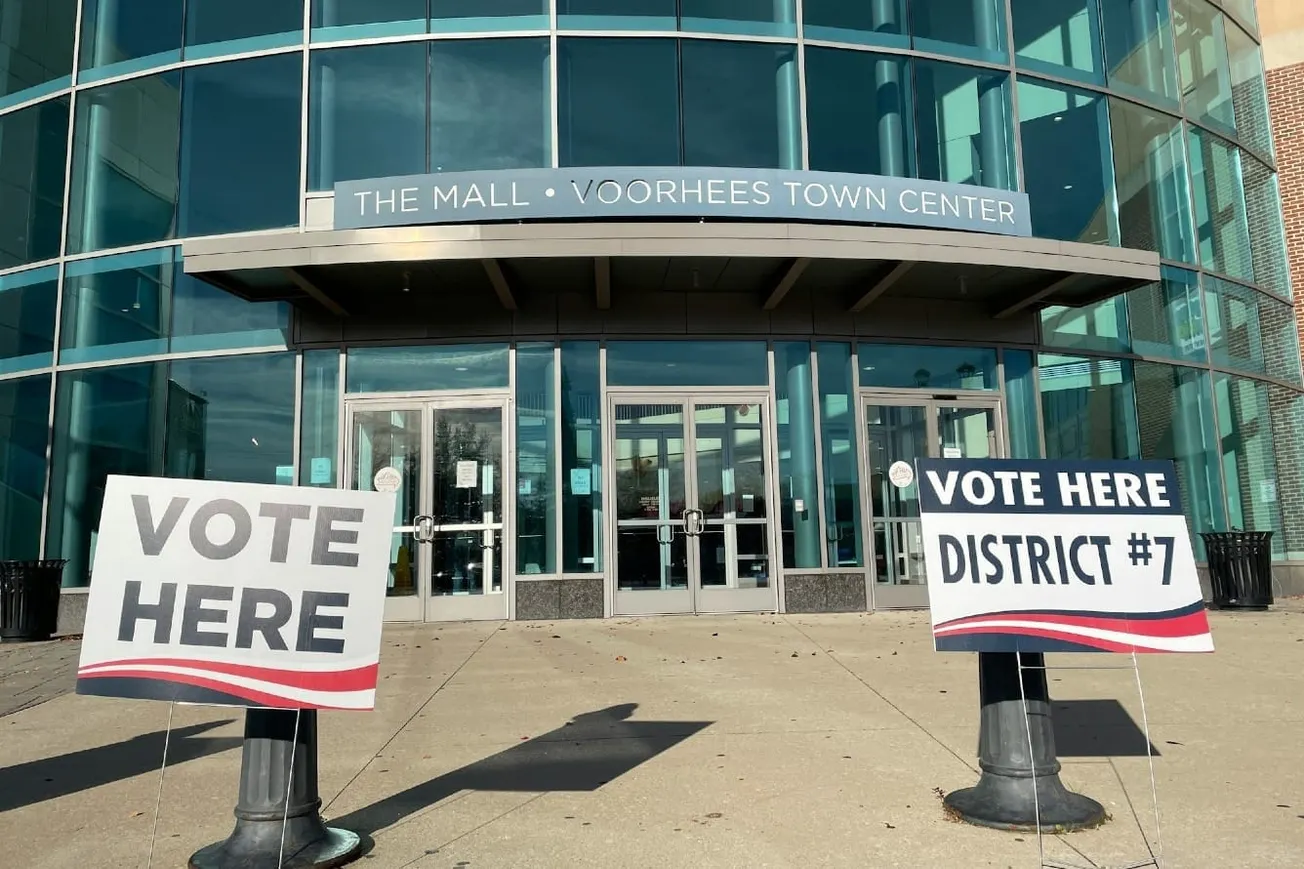
By the time this piece is published, voters will be busy casting their votes. Results are due out later tonight, when the Democratic nominee for a new mayor will be chosen for New York City using the ranked-choice method. New York City has an overwhelmingly liberal electorate, so the winner will likely win the general election on November 4.
Eleven candidates are competing for the Democratic nomination:
Adrienne Adams - New York City Council Speaker; Andrew Cuomo - former New York Governor (2011–2021); Brad Lander - New York City Comptroller; Zohran Mamdani - State Assemblymember and Democratic socialist; Zellnor Myrie - State Senator from Brooklyn; Jessica Ramos - State Senator; Scott Stringer - former New York City Comptroller; Michael Blake - former state legislator and political consultant; Whitney Tilson - businessman and education activist; Paperboy Love Prince - content creator and community activist; and Jean Henry Anglade. Most voters couldn't name five of these contestants, let alone order them by rank.
Mamdani, who has received endorsements from Congresswoman AOC and Bernie Sanders, has already colluded with Lander to cross-endorse each other. At 33 years old, with only four years as a state assemblyman, he would be the most inexperienced person ever to run America's largest city, with a budget of $115 billion. Mamdani has campaigned on ultra-left positions, including free city buses, public childcare, city-owned grocery stores, a rent freeze on rent-stabilized units, and a $30 minimum wage by 2030. He is also an outspoken critic of Israel, supporting the Boycott, Divest, Sanctions (BDS) movement and advocating to "globalize the intifada," positions taken by Palestinian supporters on various college campuses.
If Mamdani wins Tuesday night, it is only because of ranked-choice voting.
A new Emerson College Polling/PIX11/The Hill poll of 729 voters shows Mamdani and Cuomo neck and neck, with Cuomo slightly ahead in the first round. Mamdani may have been the first choice of fewer than a third of all voters. However, after eight rounds of computer-reallocated votes, Mamdani could win the race, as is shown in this ranked-choice voting simulation. So, he would be crowned not by a clear mandate but by the machinery of a system more interested in theory than democracy.
Ranked-choice voting is not progress. It is a regression masked by academic idealism, undermining the simplicity and fairness that once defined American electoral integrity.
TIPP Takes
Geopolitics, Geoeconomics, And More
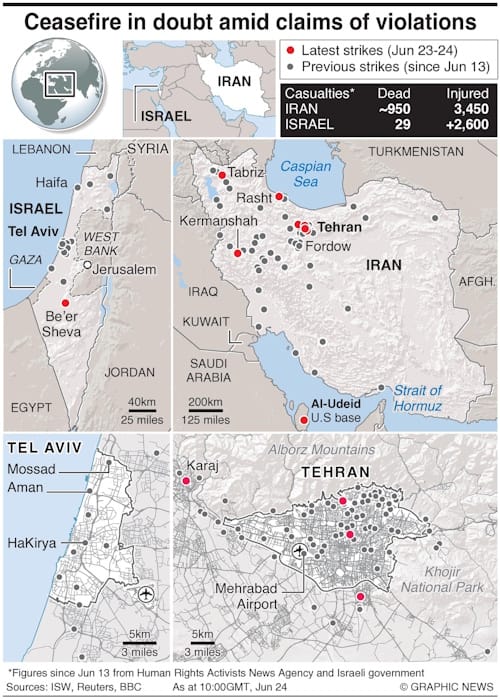
1. Renewed Attacks Put Ceasefire In Doubt - TIPP Insights
Despite the ceasefire announced by U.S. President Donald Trump, doubts remain over whether it will hold as Israel accuses Iran of a missile launch, violating the deal.
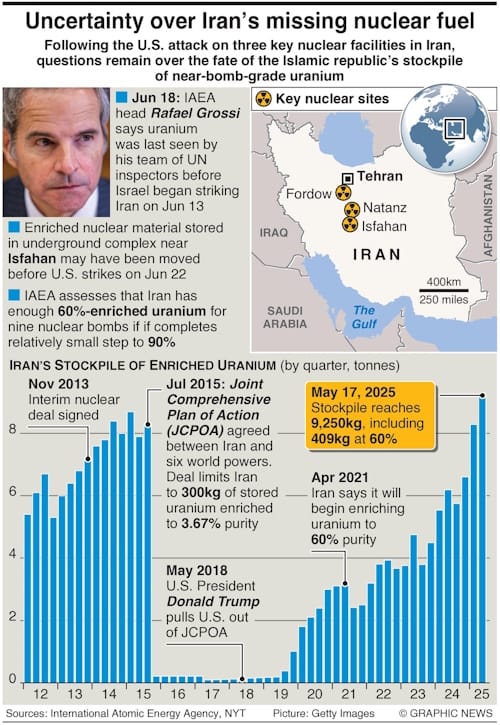
2. Uncertainty Grows Over Iran’s Missing Uranium Fuel - TIPP Insights
After the U.S. struck three key uranium enrichment facilities in Iran, questions remain over the fate of the Islamic Republic’s stockpile of near-bomb-grade uranium.
3. Israel-Iran Ceasefire Appears To Hold After Trump Outburst At Both Sides - BBC
President Donald Trump lashes out at Israel and Iran, using an expletive as he accuses both sides of violating the ceasefire.
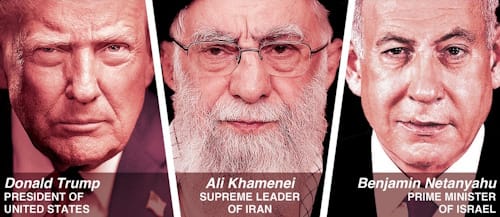
Israel says it has hit an Iranian radar but has "refrained from further attacks" after PM Benjamin Netanyahu spoke to Trump. Iran's president says Tehran will respect the truce provided Israel does not break it. While on Air Force One, the president shared a message from NATO chief Mark Rutte, who congratulated him for taking "decisive action" in Iran.
4. Israel Set Back Iran’s Nuclear Program ‘By Years’: Military Chief - Al Arabiya
“We’ve set Iran’s nuclear project back by years, and the same applies to its missile program,” Israel military’s Chief of Staff Eyal Zamir said in a statement.
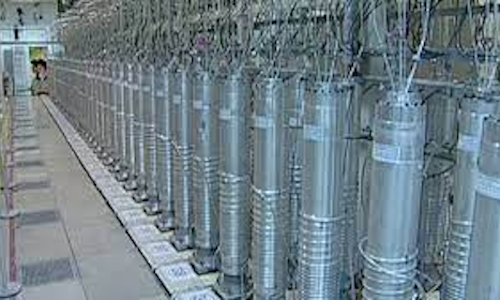
He said the campaign against the country was now “entering a new phase.” Zamir added that the military’s focus was on returning to Gaza to bring back Israel’s hostages and to “dismantle Hamas’ rule.”
5. Plans To Assassinate Zelensky In Kyiv, Airport In Poland Disclosed - UPI
Details of two separate assassination plots against Ukrainian President Volodymyr Zelensky last year were described by the head of Ukraine's security service.

Two colonels assigned to protect Zelensky were working for the Russian FSB and plotting to assassinate him, the head of Ukraine's security service, Lt. Gen. Vasyl Malyuk, told journalists. He also described assassination plans in Rzeszow, Poland, at the airport.
6. Trump Says China Can Continue To Buy Iranian Oil - AFP
“China can now continue to purchase Oil from Iran. Hopefully, they will be purchasing plenty from the U.S., also,” Trump wrote in a post on his Truth Social platform.
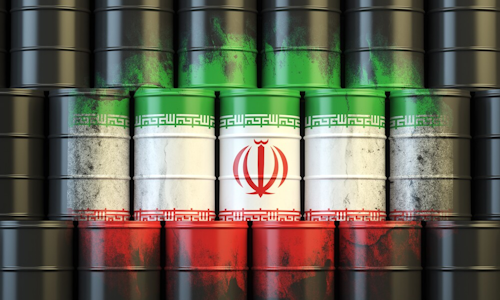
Last month the United States announced fresh sanctions on Iranian oil sales to Beijing, however, as Trump’s administration continued its “maximum pressure” campaign against Tehran. Beijing buys more than 90 percent of Iran’s oil exports, according to the analysis firm Kpler.
7. China Reaches For Insurance As Last Piece To EV Dominance - Nikkei Asia
When it comes to the auto industry, China has built up some of the world's most advanced vehicle manufacturing and software. Now it is making moves in another area crucial to success: finance.
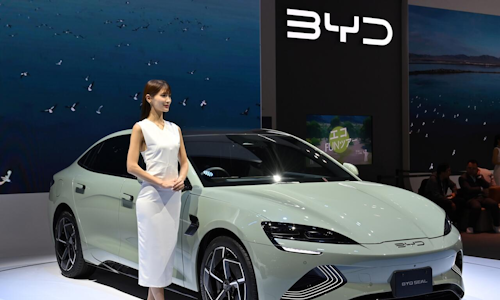
Last year, top Chinese electric vehicle maker BYD made headlines when it achieved its long-sought goal of entering the auto insurance business, acquiring a Chinese insurer.
8. Japan Teams With NATO To Counter China, Russia Cyber Threats - Nikkei Asia
Japan has begun sharing intelligence related to cyberattacks with NATO member countries, Nikkei has learned, exchanging information about malware used by China, North Korea, Russia, and other countries with the aim of improving cyberdefense.

Japan's Defense Ministry and Self-Defense Forces have joined NATO's Malware Information Sharing Platform (MISP), a framework created in 2013. South Korea also participates as a non-NATO member.
9. Oil Prices Tumble After Israel Agrees To Iran Ceasefire - BBC
Brent crude, the international benchmark for oil prices, initially fell to $68 a barrel though it then recovered some ground after Iran and Israel accused each other of violating the ceasefire within hours.
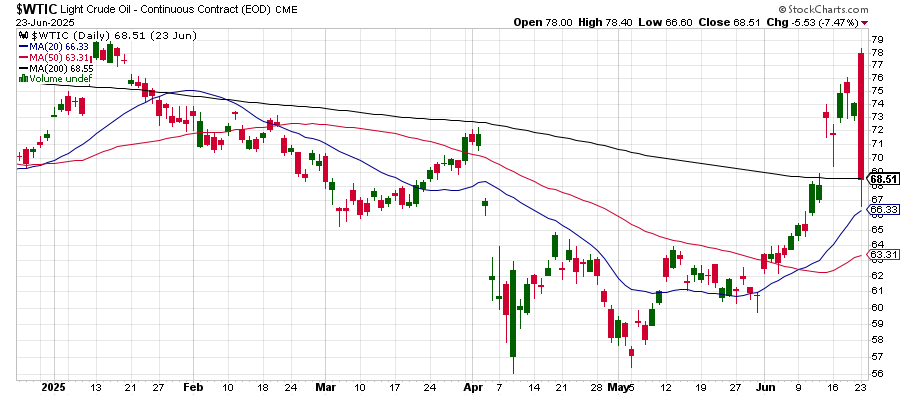
Prices had spiked in recent days as concerns grew that Tehran could disrupt global supplies by blockading the Strait of Hormuz, a key shipping route for oil and gas. Oil prices have soared to as much as $81 a barrel since the missile strikes began.
10. Trump Warns Oil Producers: 'Don't Play Into Enemy Hands' - TIPP Insights
President Donald Trump warned oil producers against price hikes following U.S. airstrikes on Iran’s nuclear sites over the weekend.

The remarks come despite the White House playing down market concerns. National Economic Council Director Kevin Hassett told CNBC that the strikes “have not really disrupted global oil markets,” citing ample reserves. The president’s demand to boost U.S. oil production appears aimed at containing any potential price spikes amid mounting tensions in the Middle East.
11. Hungary's Veto Casts Shadow Over EU Enlargement Talks- RFE/RL
A day after the NATO summit in The Hague ends, EU leaders will meet on June 26 in Brussels for their regular summer European Council.
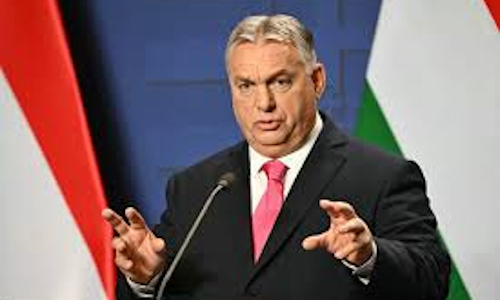
When Poland took over the six-month rotating presidency of the Council of the European Union at the start of the year, the stated goal was that formal EU accession talks would start with Ukraine and Moldova. Hungary has persistently blocked any move to this effect, even conducting a widely criticized consultative referendum on Ukrainian EU membership.
12. EU Endorses Proposal For Environmental Deregulation - UPI
The European Union is set to amend its current ethical supply chain rules after its ambassadors endorsed a simplification bill from the Council of the EU.
"Today we delivered on our promise to simplify EU laws," said EU Minister of Poland Adam Szlapka in a press release. The bill would impact current environmental laws with the intention of shrinking the regulatory pressures on businesses in order to juice up the EU's economy. Two such green rules are the EU's Corporate Sustainability Reporting Directive and the Corporate Sustainability Due Diligence Directive.
13. U.S. To Extend National Emergency Declaration Over N. Korean Threats For Another Year - Yonhap
The United States plans to extend a long-running executive order declaring a national emergency over an "unusual" and "extraordinary" threat posed by North Korea, a White House document showed.
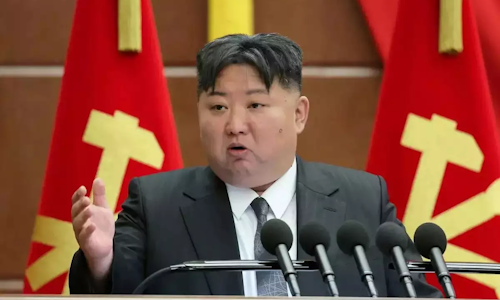
The planned extension comes as Pyongyang has been doubling down on its nuclear and ballistic missile programs with its regime emboldened by its deepening cooperation with Russia.
14. Latin America's Identity Documents Are Highly Vulnerable - UPI
The vulnerability of identity documents has become a critical challenge for Latin America amid rising migration and regional security crises.

Problems ranging from document fraud to the lack of birth registration are putting millions at risk and complicating governance across the region. Thousands of people in rural and Indigenous communities still are not registered at birth, leaving them without legal identity and vulnerable to crimes such as exploitation and human trafficking, particularly children and teens.
15. Amazon Announces Plan To Invest $54 Billion Into The U.K. - UPI
This is also part of a previously announced $10 billion investment in September 2024 to support the U.K.'s ambition to create AI compute capacity, and help the U.K.'s digital economy.
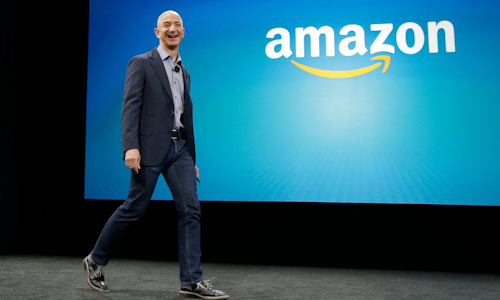
The investment over the next three years will look to expand Amazon's existing 75,000-person U.K. workforce as it aims to build four new fulfilment centers, new delivery stations nationwide in addition to upgrading and expanding ts network across the country, and creating thousands of jobs.
16. Scientists Use Bacteria To Turn Plastic Waste Into Paracetamol - The Guardian
Chemists have discovered E coli can be used to create paracetamol, also known as acetaminophen, from a material produced in the laboratory from plastic bottles.
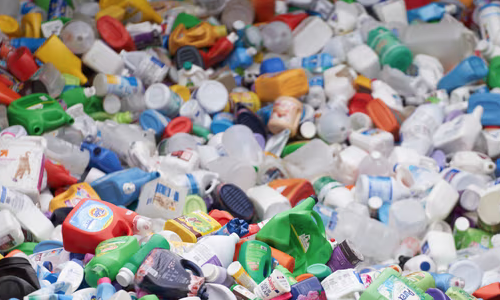
“People don’t realise that paracetamol comes from oil currently,” said Prof Stephen Wallace, the lead author of the research from the University of Edinburgh. “What this technology shows is that by merging chemistry and biology in this way for the first time, we can make paracetamol more sustainably and clean up plastic waste from the environment at the same time.”
17. Blood Test Might Predict Symptoms Relapse In MS Patients - HealthDay News
Blood levels of a protein called neurofilament light chain rise significantly in MS patients up to a year before they have a relapse, researchers reported at a meeting of the European Academy of Neurology.
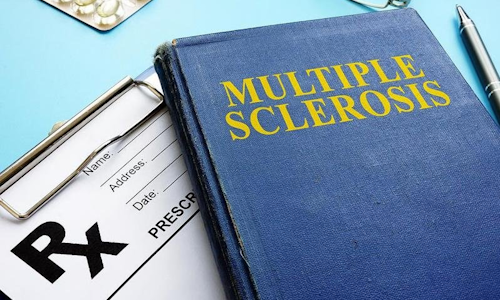
MS occurs when the immune system starts attacking the protective sheath that covers nerve cells, which is called myelin. This causes a wide-ranging and irreversible damage, impairing people's ability to move, damaging their vision and causing problems with mood and memory. People with early MS often will enter long periods of remission, with weeks or months of recovery between symptom flare-ups.