By Taniguchi Tomohiko, Project Syndicate | February 9, 2026
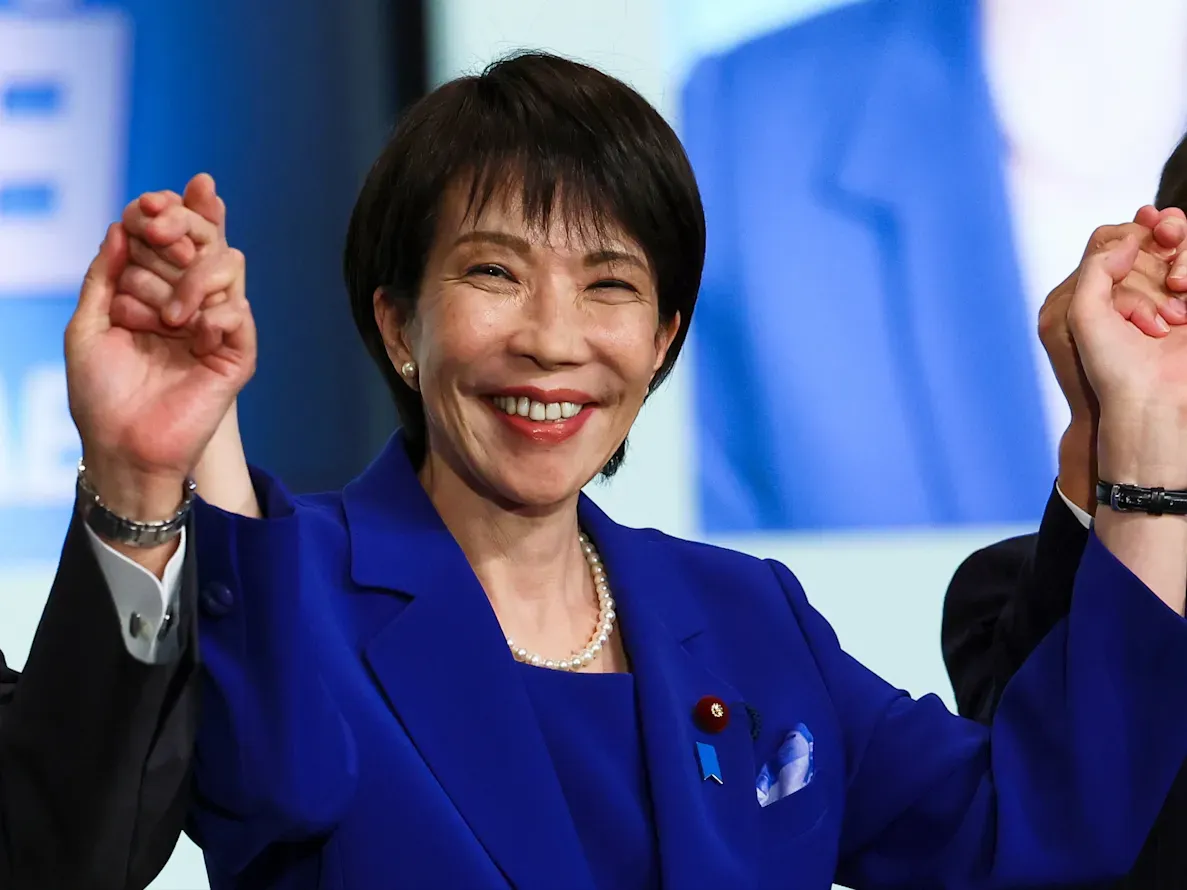
Japanese Prime Minister Takaichi Sanae gambled big when she called an early election to strengthen her mandate. Now that her bet has paid off with an overwhelming victory and a huge majority in the Diet's lower house, what will she do next?
TOKYO – Japanese Prime Minister Takaichi Sanae has just scored an unprecedented victory in the country’s general election. The ruling Liberal Democratic Party (LDP), which she leads, won 316 seats in the 465-member House of Representatives (the Diet’s lower house), up sharply from 198. The combined strength of two parties that had merged hastily – despite their fundamentally opposing platforms – in an effort to bring Takaichi down fell from 167 seats to just 49. The LDP, which celebrated its 70th anniversary last year, has never looked more robust.
Only moments after Takaichi became the LDP’s president last October, the party’s coalition partner of a quarter-century, Komeito, abruptly defected. With that, there was no guarantee that she could secure a majority in the lower house to become prime minister. Then, after she dissolved the chamber and called a general election in order to obtain a stronger mandate, Komeito, backed by disciplined religious voters, quickly merged with the largest opposition force, the liberal Constitutional Democratic Party of Japan.
Takaichi survived the first shock by forming a new coalition with a smaller party closer to her own policy line. She crushed the second challenge by setting the period for election campaigning to an unprecedentedly brief 16 days, leaving the new opposition alliance scant time to build name recognition.
The prime minister is herself something of a newcomer, having risen to the party presidency in a political culture that long assumed that a politician, and certainly a national leader, must be male. Rather than relying on the usual social circles that fostered the careers of her senior colleagues, she nurtured her ambitions on her own.
Casting herself as the lead actor, she wrote the script and directed the plot to stage an election in which a maverick heroine clears one obstacle after another, growing stronger each time, before finally reaching an apparently invincible position. Voters seemed captivated by the narrative. Even seasoned commentators failed to foresee how many first-time voters would turn out.
Takaichi now plans to overhaul the way Japan drafts its national budget. During the campaign, she repeatedly stressed that she needed political capital precisely for that purpose. For decades, the country has relied on a two-step process: a modest initial budget at the start of the fiscal year, followed by a supplementary budget six months later to cover shortfalls. Takaichi wants to abolish this practice and rely on a single budget at the start of the year. With the end of routine supplementary budgets, the fiscal stance would shift away from the austerity regime that has shaped the economy for three decades.
Japan has no time, she warned throughout the campaign. Whether the challenge is to reduce dependence on China for critical minerals, build advanced crop factories to strengthen food self-sufficiency, or update military platforms to match the technologies revealed in Ukraine to be essential to warfighting, Japan must act or risk losing the opportunity to do so in the future. A country that stops addressing its challenges, she argued, has no future. Voters appear to have embraced that ambitious vision.
Even so, this is only the beginning. Unlike the lower house, the Diet’s upper house cannot be dissolved by the prime minister. Its next regular election is not due until 2028. If the LDP, now still a minority faction there, can strengthen its position as decisively as it has in the lower house, it could secure the two-thirds majorities in both chambers that are required to initiate constitutional change, a cause which Takaichi inherited from her mentor, the late Abe Shinzō. To win any subsequent national referendum on constitutional reform, the government will need strong backing from both houses.
Japan’s constitution has never been amended, an extraordinary exception among democracies. A clause renouncing the possession of the means of war has long functioned as a convenient fiction. Takaichi wants to correct this, and she has made explicit recognition of the constitutionality of Japan’s armed forces central to the LDP’s identity. But achieving that goal will require at least three more years of sustained commitment.
Whether an aging Japan can transform itself in short order under a maverick prime minister remains uncertain. Yet some economists argue that the demographic clock may not be as unforgiving as often assumed. If female and elderly labor-force participation were each to rise by ten percentage points, and if the productivity gains expected from artificial intelligence are added to the equation, Japan could offset much of its demographic drag without relying heavily on immigration. While this possibility (still debated) does not eliminate the urgency of reform, it does suggest that the country retains more room for maneuver than is commonly believed.
For now, Takaichi is wagering that voters are ready for a more assertive course. If she can convert electoral capital into sustained structural change, her victory may mark the start of a new political cycle in Japan. If not, it will be remembered as a spectacular but fleeting moment. We will soon find out which future will prevail.
Taniguchi Tomohiko, a former special adviser to Prime Minister Abe Shinzō, is Chairman of Nippon Kaigi (Japan Conference), a conservative lobbying organization.
Copyright Project Syndicate
Japanese PM Takaichi Wins Landslide Election Victory
Prime Minister Sanae Takaichi will be pressed to honor promised tax cuts and spending plans after a historic win in Japan’s snap general election.
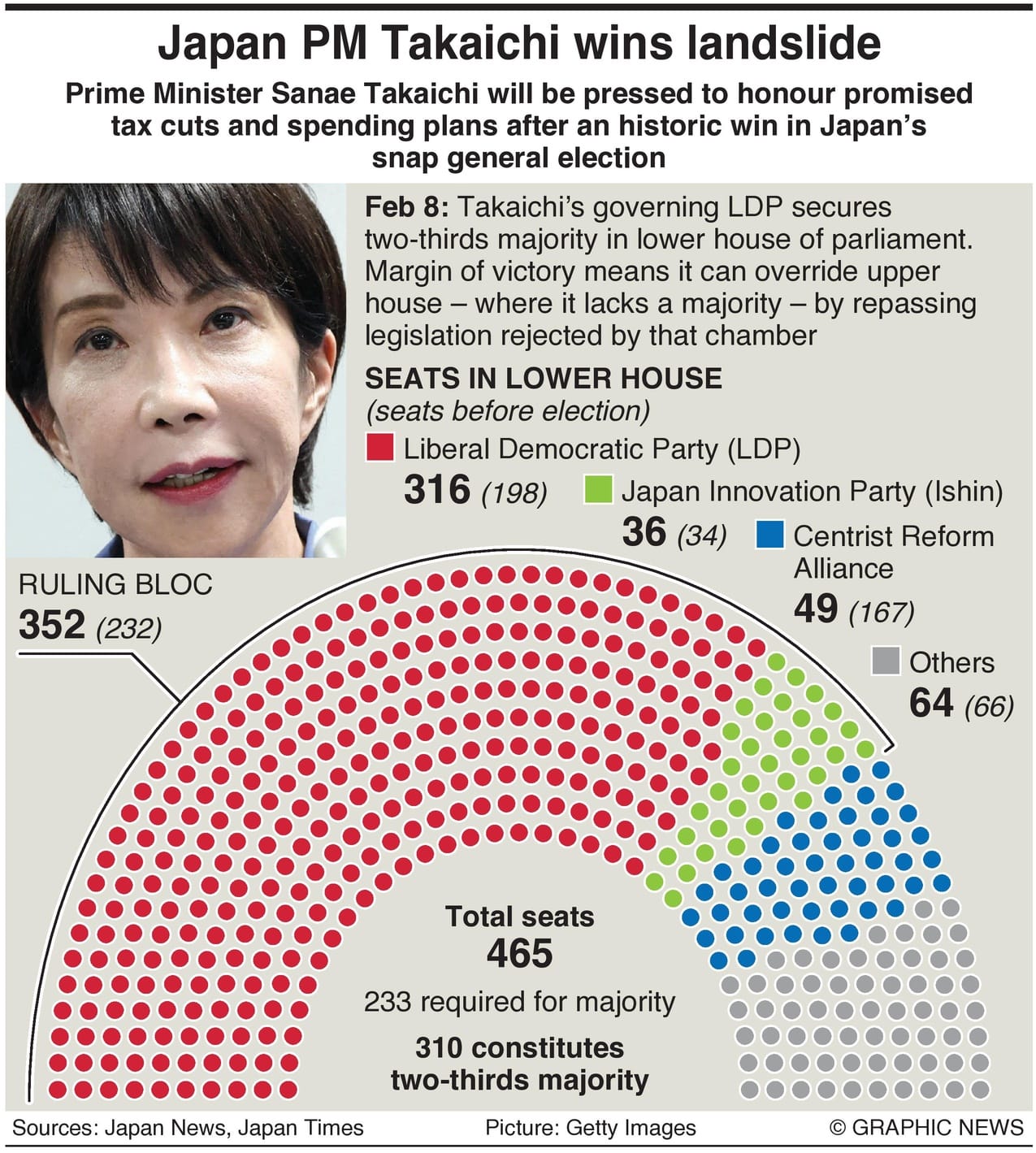
Takaichi’s ruling Liberal Democratic Party (LDP) romped to victory in Sunday’s poll, helped by a pledge to ease household living costs by suspending the 8% food sales tax for two years – a move she has described as her “long-cherished dream.”
Investors have baulked at the lack of clarity over how Japan, which has the highest debt burden in the developed world, would fund the proposal. The uncertainty has triggered a selloff in government bonds and pushed the yen towards historic lows against other currencies.
Some analysts suggested that Takaichi’s strong mandate might give her leeway to retreat from the plan, while opposition parties advocating even bolder tax cuts suffered heavy defeats at the ballot box.
But the premier pushed back against that view in a series of brief television interviews as results rolled in on Sunday, saying she would move with speed to realize the LDP’s pledge to suspend the levy, according to Reuters.
Who Might Succeed Starmer As UK Prime Minister?
Discontent over UK Prime Minister Keir Starmer’s decision to appoint Peter Mandelson – a friend of Jeffrey Epstein – as U.S. ambassador has members of the Labour Party contemplating a change of leader.
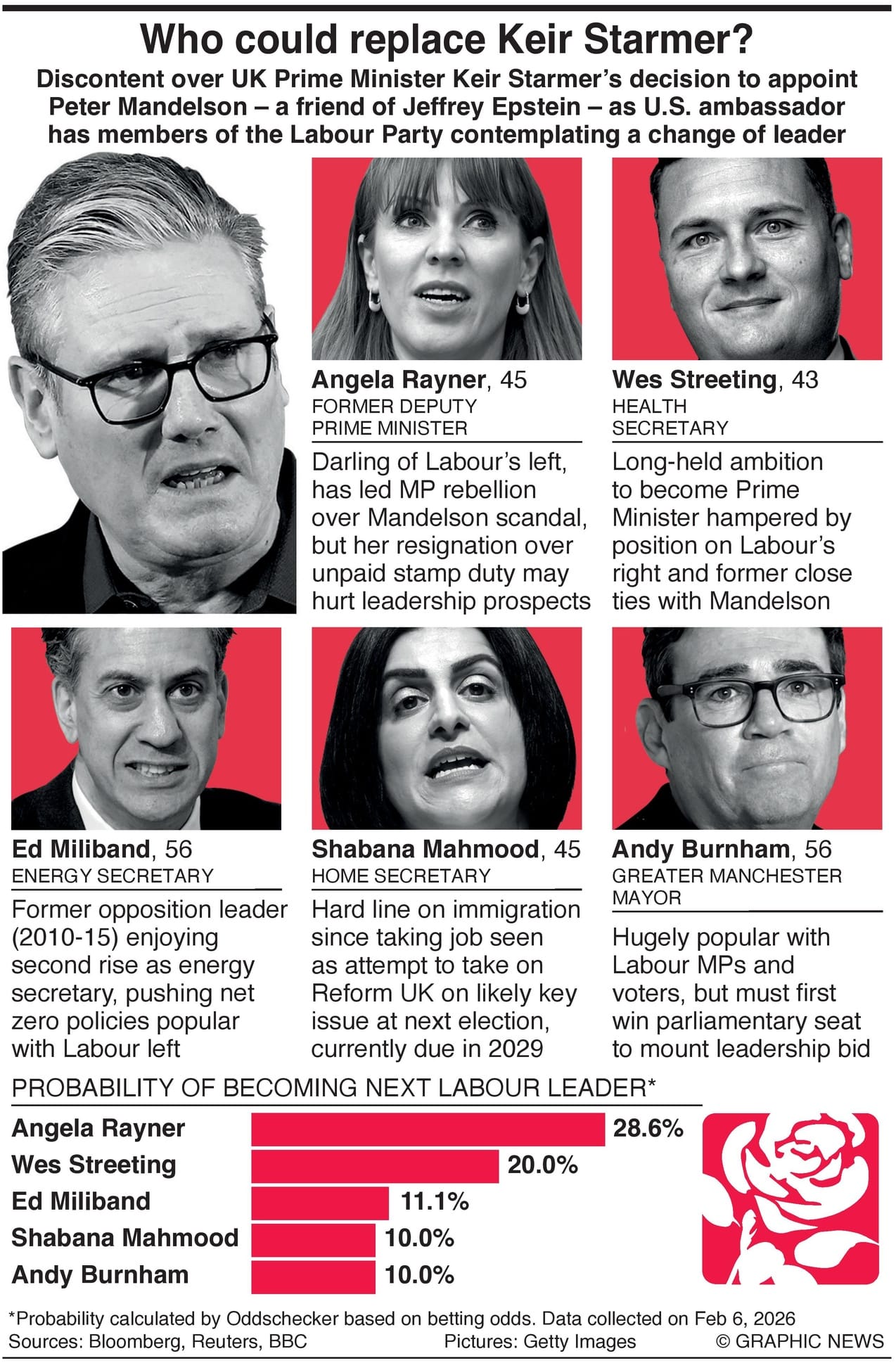
The controversy erupted after files released 10 days ago revealed the depth of Mandelson’s ties to the late sex offender Jeffrey Epstein. The disclosures have raised serious questions about Starmer’s judgement, while opinion polls suggest the prime minister’s popularity has fallen sharply just 18 months after Labour swept to power in a landslide election.
As unrest grows, speculation is mounting over potential successors. Names being discussed include former deputy prime minister Angela Rayner and health secretary Wes Streeting, among others seen as possible challengers should a leadership contest be triggered.
Under Labour Party rules, a leadership challenge would require nominations from 20% of Labour MPs –currently 81 members of the parliamentary party. Any candidates meeting that threshold, along with Sir Keir himself, would then face a vote of the wider Labour membership, including affiliated supporters such as trade unions, in a ballot involving around 250,000 people.
Catch up on today’s highlights, handpicked by our News Editor at TIPP Insights.
1. What Russia’s Latest Energy Attack Means For Ukraine
2. What Is Driving Tensions Over China’s Nuclear Arsenal
3. China Pressure Backfires As Takaichi Wins Historic Japan Elections, Analysts Say
4. Japan Election Result Gives Takaichi Historic Supermajority
5. Sydney Protests Erupt Over Israeli President’s Australia Visit
6. Epstein Files: British Police Review If Prince Andrew Shared Trade Secrets
7. Internal DHS Data Challenges Claims On ICE Targeting Worst Criminals: Report
8. Why Trump Slammed Bad Bunny’s Super Bowl Performance
9. Olympics Committee Probes Medal Defects After Athlete Complaints
10. Epstein Investigation: Maxwell Pleads The Fifth, Says Nothing In Congressional Inquiry
11. Maxwell Says She Will Testify Only If Trump Grants Clemency
12. Why SpaceX Shifted Its Focus From Mars To A Moon City
13. Data Center Construction Booms As Office Building Slows
14. France Leads Global Data Center Investment In 2025
15. Big Tech Ramps Up Spending On AI Infrastructure
16. OpenAI Signals Strong Momentum As $100 Billion Funding Nears
editor-tippinsights@technometrica.com