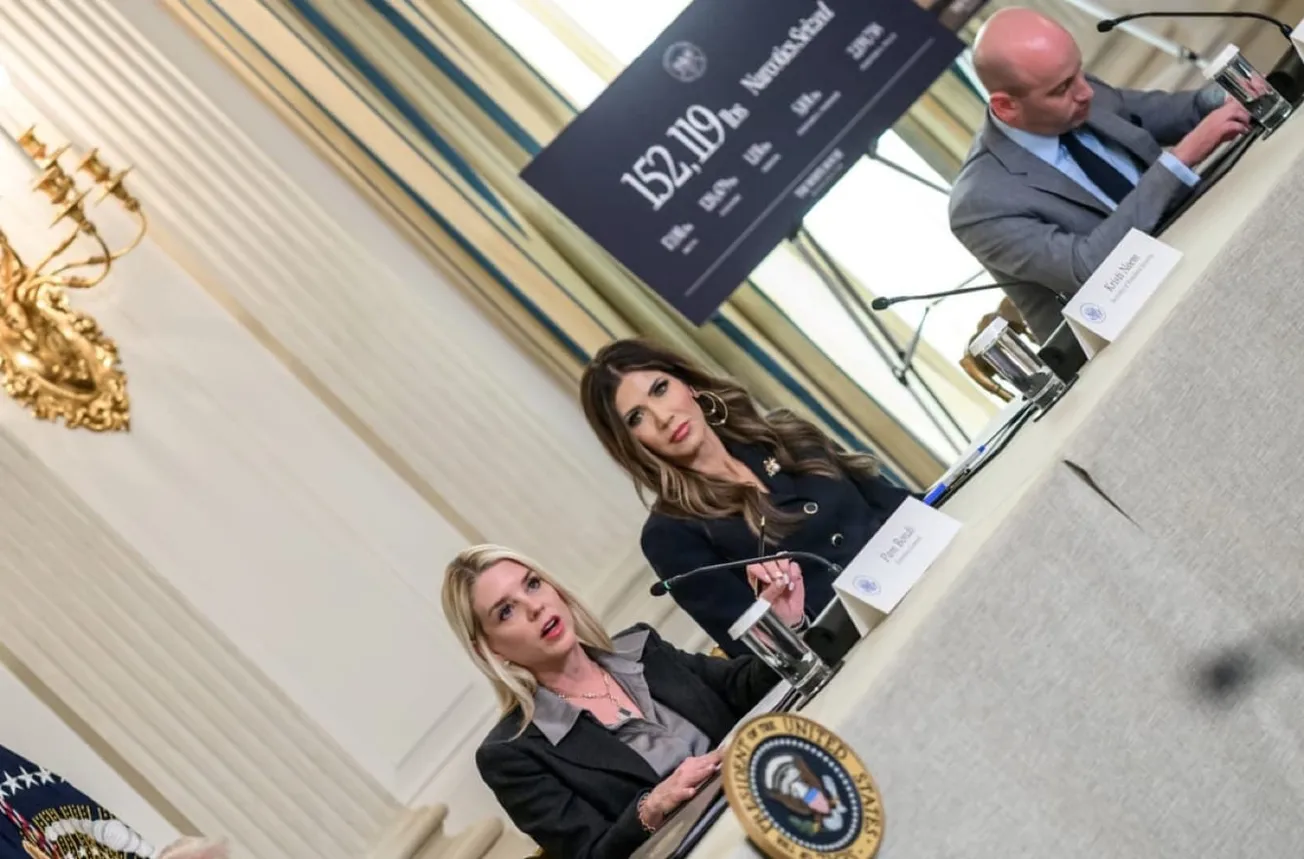
The federal government has been shut since October 1. Both parties blame the other for the impasse.
Senate Minority Leader Chuck Schumer directly blamed President Trump during a September 24, 2025, news conference on Capitol Hill:
We Democrats are ready to work together to keep the government open for the good of the country and the good of the American people, but Donald Trump is simply ducking his responsibility as president.
House Minority Leader Hakeem Jeffries also blamed President Trump during a press conference a few days later:
Donald Trump just said he wants to shut the government down. Republican extremists have created a healthcare crisis in America. And they have zero interest in fixing it.
Meanwhile, the Trump administration is standing its ground, holding the Democrats responsible. "The Democrat shutdown is now jeopardizing our national security," White House spokeswoman Taylor Rogers told Fox News Digital Friday afternoon. "This is reckless and could be completely avoided if the Democrats simply voted to reopen the government and stopped holding the American people hostage."
Behind all the soundbites are fundamental policy differences between the two sides. Our analysis indicates that the Trump administration's characterization of the situation as the Schumer shutdown, or more broadly, the Democratic shutdown, is accurate.
Before we unpack the numbers, it is interesting to recap how we got to this appropriations and budget mess.
The federal appropriations process starts with the President's budget request in February. The House and Senate Budget Committees set a non-binding budget resolution, guiding the Appropriations Committees to pass respective budget bills for specific agencies and programs.
These bills are then combined, reconciled by both chambers, and sent to the President for approval before the fiscal year begins on October 1. At least, this is the way it is supposed to work.
The last time the U.S. Congress followed the appropriations process strictly—passing all regular appropriations bills individually (without bundling them into omnibus packages) and on time before the fiscal year started—was fiscal year 1997. Since then, omnibus bills or continuing resolutions have been used annually to complete funding.
Two things happened this year that made it more challenging for the lazy Congress to act in a timely fashion.
First, President Trump's priorities were signed into law when both Congressional chambers passed the Big Beautiful Bill in July. It meant that all future budgets had to align themselves within the guardrails established by BBB, unless a new law was passed.
Second, as Congress hurtled towards October 1 with no budget in place for Fiscal Year 2026, at least the House, thanks to Speaker Johnson, managed to eke out a Continuing Resolution (CR) with 218 votes. Only one Democrat voted for this bill (215 Democrats voted against it), but the CR was clean, meaning that Washington would continue to spend at the same levels as all of Fiscal Year 2025 until November 21.
This arbitrary date, the week before Thanksgiving, was chosen to give the lazy Congress an extra 50 days or so to pass the 2026 budget. The whole maneuver was akin to a high school student asking a teacher for additional time to submit homework. As in the years going back to 1997, the 2026 budget too would be one big omnibus bill with everything packed into it.
The spotlight then moved to the Senate. All 53 Republicans voted to adopt the clean CR passed by the House. However, because the bill involves money, 60 votes are needed in the Senate. Majority Leader Schumer lobbied his delegation of 47 Democrats not to vote for the House Bill.
The government shut down on October 1.
The core issue involves Obamacare health care tax credits, the so-called premium credits - which were vastly expanded during the pandemic under President Biden. These are set to expire on December 30.
The Democrats are only willing to pass a CR if these credits are made permanent, at a cost of over $1 trillion. The Democrats contend that doing so would protect over 4 million people from losing healthcare coverage starting next year, and premiums would go up for about 20 million more.
We put together some numbers to help illustrate the issue. Under Obamacare, people earning up to 400% of the Federal Poverty Level ($32,150) qualify for a subsidy to pay monthly premiums. This was the law until 2021.
Consider a family of four living in New York City at 400% of the Federal Poverty Level. Their income would be $128,600.
The benchmark Obamacare plan is always the second-lowest-cost Silver plan (SLCSP). The average market price premium for this plan for all five boroughs of New York City is $2,191 a month, which, when multiplied by 12 months, equals $26,292/year.
Obamacare requires this family to pay 8.5% of its income towards the premium. That is 8.5% × $128,600 = $10,931/year.
The government picks up the balance. That is, the premium tax credit covers the difference between the full benchmark premium and the family's capped contribution: $26,292 − $10,931 = $15,361.
Many people would consider the above subsidy to be reasonable.
However, during the massive spending that occurred during the Biden administration, Congress lifted the 400% cap on the Federal Poverty Level altogether. Subsidies were available as long as the benchmark Silver plan premium exceeded 8.5% of household income. In New York City, subsidies were available to a family of four making nearly $310,000 a year. The Inflation Reduction Act later extended this through 2025.
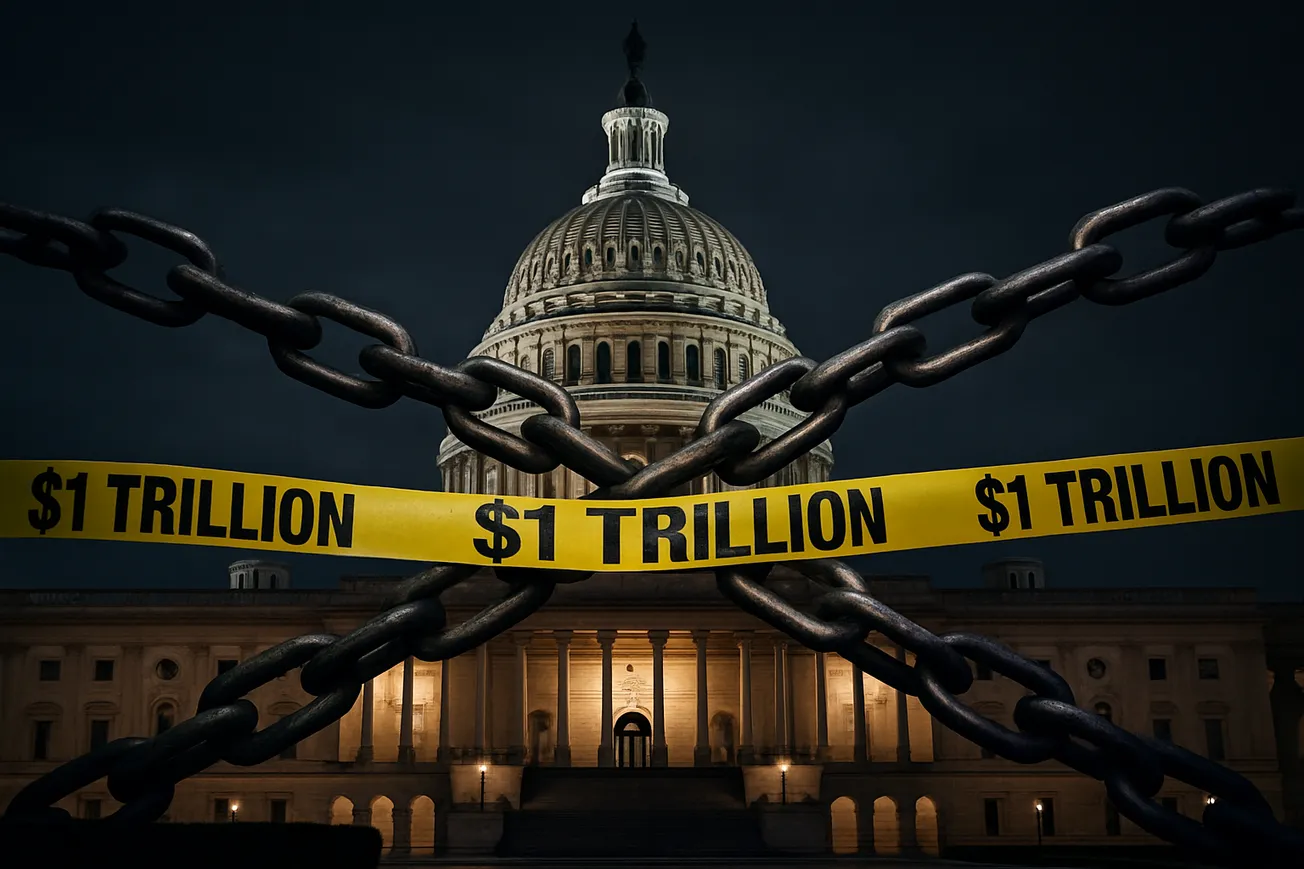
The Democrats are trying to negotiate with President Trump to make the premium tax credit permanent. Under the excuse of protecting healthcare, the Democrats want to give tax breaks to families making over $300,000, adding $1 trillion in deficit spending. America already faces a debt of $37 trillion.
Moreover, adding $1 trillion to a CR does not make it a clean CR. If the Democrats wanted this spending, they should have lobbied hard for it to have been included in the BBB, which passed in July.
Alternatively, they should have tried to sneak it into the omnibus bill for FY 2026 during the 50 days when Congress was supposed to work on its homework. Holding the government hostage and blackmailing the GOP to accept the increased spending as leverage to open the government is unconscionable.
Make no mistake: this is the $1 Trillion Schumer Shakedown.
Editor’s Note: We’re delighted to share that our Editorial Board member, Rajkamal Rao, has launched his own Substack with no subscription fees. Drawing on more than four decades of journalism experience, Rajkamal offers thoughtful perspectives on the economy, geopolitics, and sports. He will continue to serve on our Editorial Board even as he shares his insights on this new platform. We invite you to explore his work here.
📊 Market Mood — Monday, October 20, 2025
🟢 Futures Rise on Trade Optimism
U.S. stock futures pointed higher as signs of easing trade tensions between Washington and Beijing lifted sentiment. President Trump softened his tone on tariffs and confirmed an upcoming meeting with Chinese President Xi, while officials on both sides signaled a willingness to resume negotiations.
🟡 iPhone 17 Sales Surge Past Expectations
Apple’s latest iPhone 17 lineup outpaced its predecessor by 14% in the first 10 days of sales, driven by strong demand for the base model in China and robust uptake of the Pro Max in the U.S. Carrier subsidies and improved features helped fuel the surge, highlighting resilient consumer appetite for premium devices.
🔵 Kering and L’Oreal Strike €4 Billion Deal
Luxury group Kering agreed to sell its House of Creed unit and license major fragrance brands like Gucci and Balenciaga to L’Oreal as part of a €4 billion deal. The partnership, which includes a new joint venture in luxury wellness, is aimed at refocusing Kering’s portfolio amid sluggish growth in key markets.
🟣 China Growth Slows to Two-Year Low
China’s economy grew 4.8% in the third quarter, slightly above forecasts but the slowest pace in a year as disinflation and trade headwinds weighed on activity. The data highlights ongoing challenges for the world’s second-largest economy despite staying on track to meet Beijing’s 5% annual target.
🟡 Gold Holds Near Record Highs
Gold prices steadied after last week’s pullback, with traders weighing softer rhetoric from U.S. officials on trade talks. The metal remains near historic highs as safe-haven demand stays supported by geopolitical uncertainty and expectations for a dovish Fed policy path.
Market round-up in 5 minutes. We bring you up to speed. Subscribe to TIPP Insights for $99/year.
📅 Key Events Today
🟧 Monday, October 20
No major economic releases scheduled.
Access our Featured Stocks and TIPP Top-20 archives — exclusive to paid subscribers. Subscribe now → $99/year.