
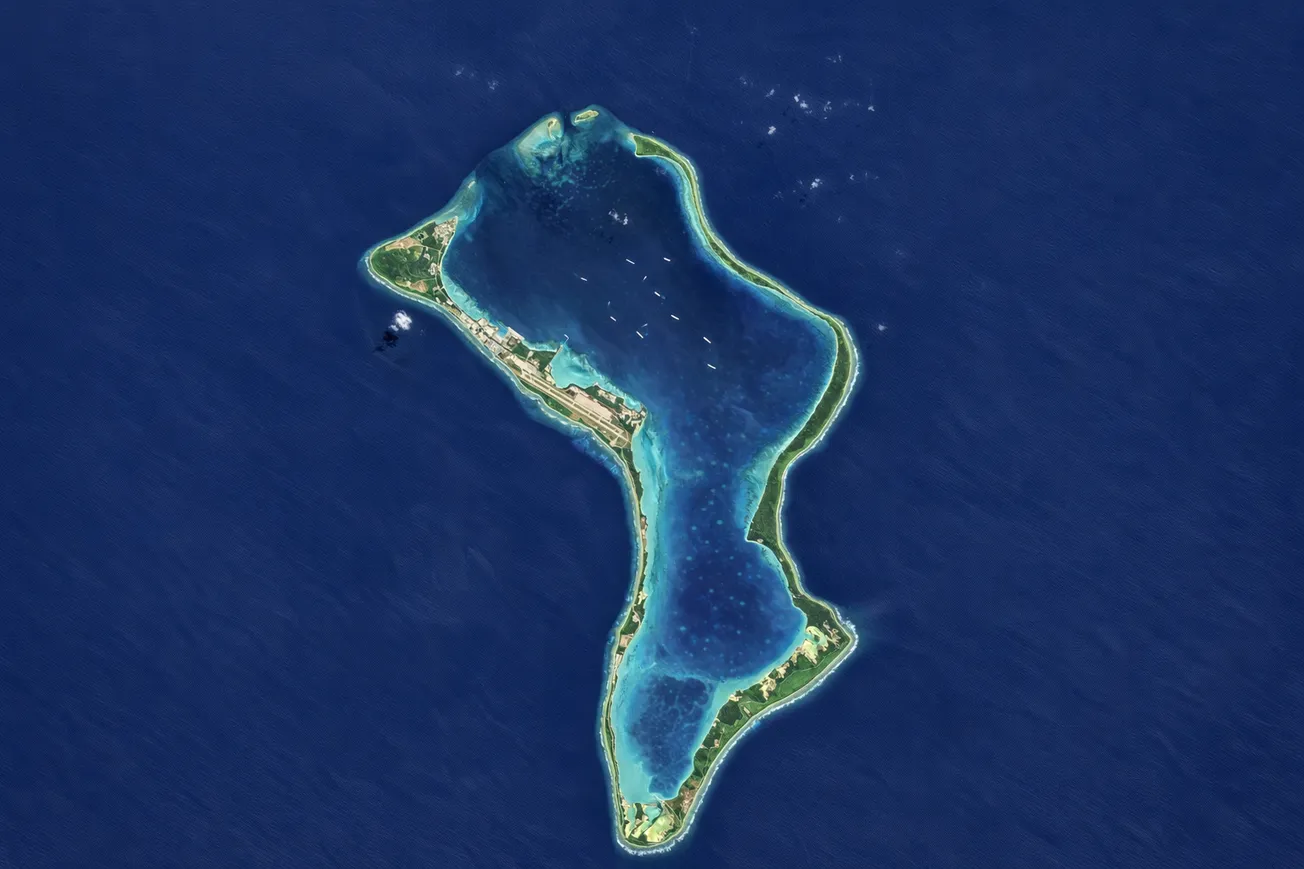
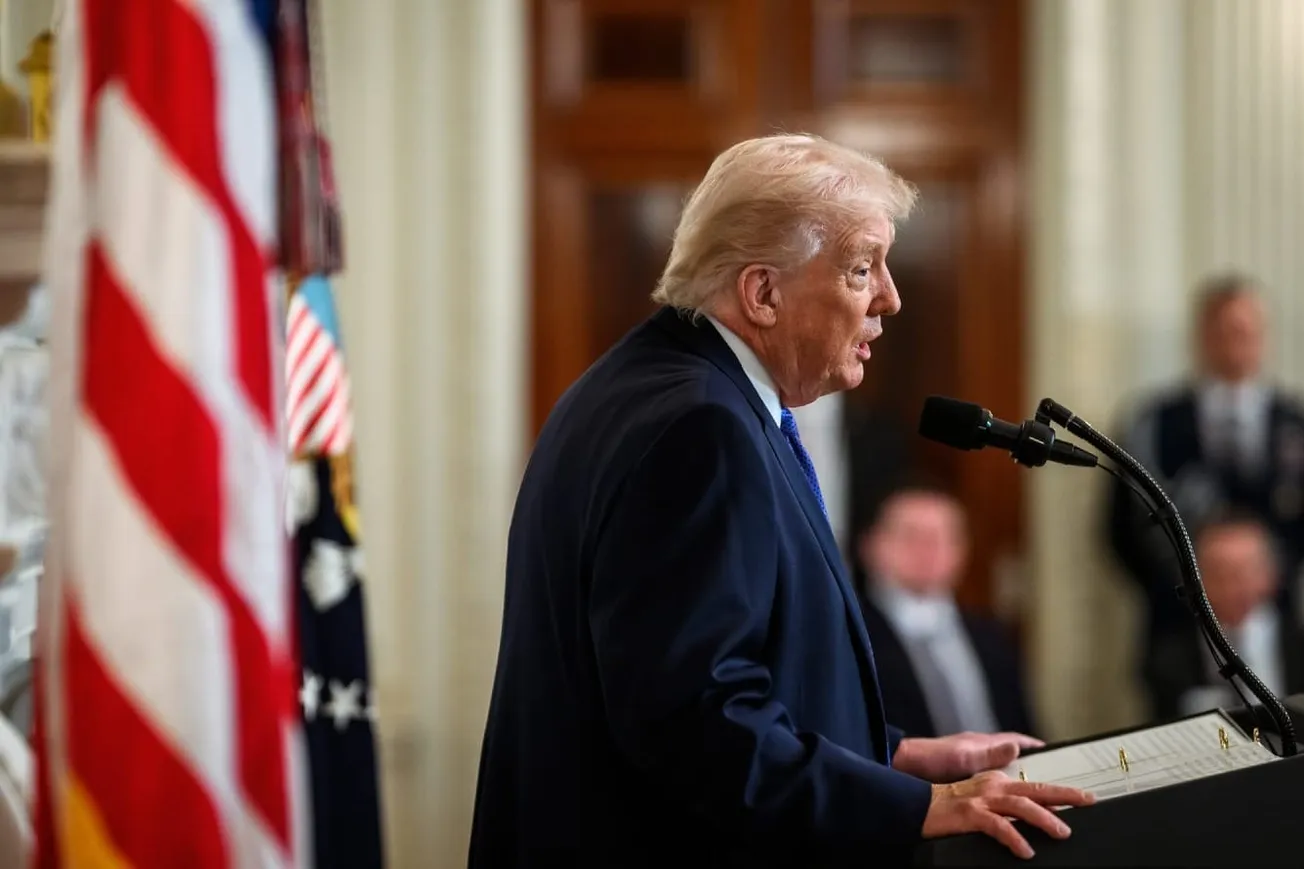
Diego Garcia, one of the world's most remote islands, is in the headlines after President Trump withdrew his consent to the United Kingdom’s proposal to return the Chagos Islands to Mauritius.
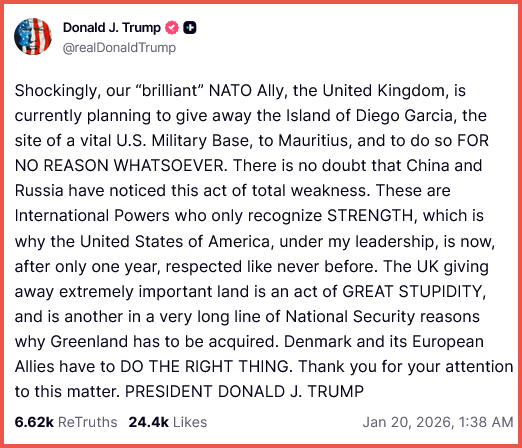
Little is known about the place that hosts a highly secretive UK-US military base. Only people with connections to the military facility or to the Territory’s Administration can visit. Considered among the top ‘restricted areas’ on the planet, few journalists have been permitted to enter the island after the military base was set up in the 1960s.
Geography
Diego Garcia is the largest and southernmost among the sixty or so islands that make up the Chagos Archipelago in the Indian Ocean. The 44 sq. km footprint-shaped atoll lies more than 1,000 miles away from the nearest landmass.
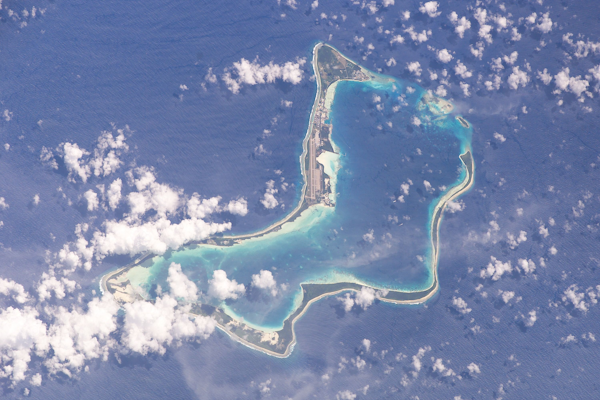
Located in the middle of the Indian Ocean, about halfway between East Africa and Indonesia, the stunning island is covered in lush greenery, swaying coconut palms, and breathtaking white-sandy beaches. Accessibility is severely restricted, as commercial flights are not permitted and boats (with special permits) are granted access only to the outer islands.
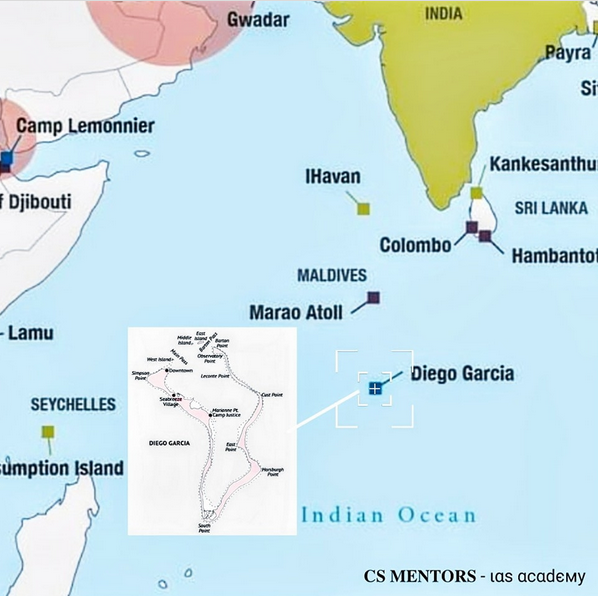
The island has no permanent population. It is dotted with military structures, has the “greatest marine biodiversity in the UK and its Overseas Territories, as well as some of the cleanest seas and healthiest reef systems in the world,” according to the British Indian Ocean Territory (Biot) website. Home to the world’s biggest terrestrial arthropod, the coconut crab, and nowadays, wild donkeys roam the atoll as a “ghostly remnant of the society that had been there for almost 200 years.”
History
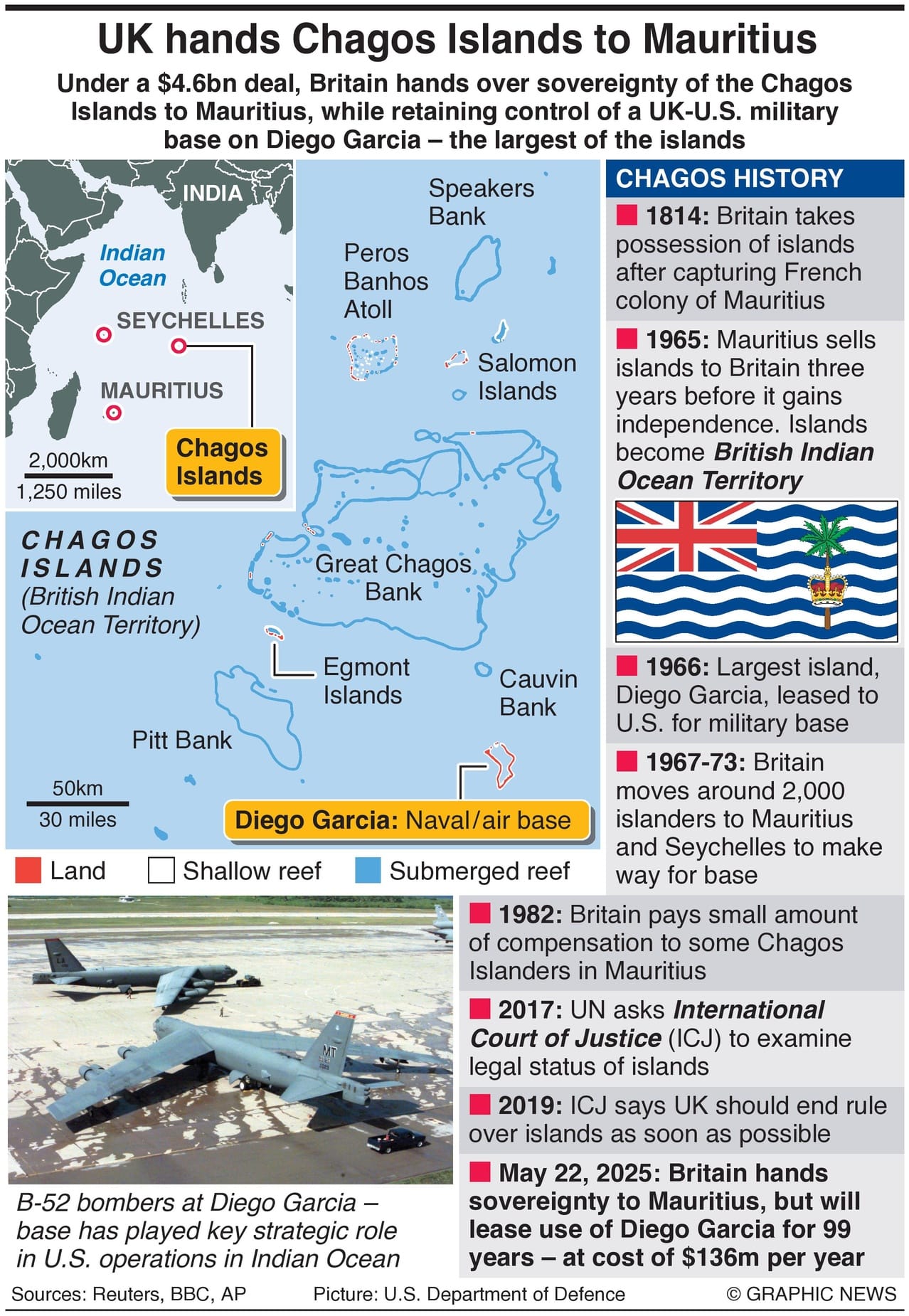
In 1965, the United Kingdom formally established the overseas territory of Diego Garcia after taking over the atoll from Mauritius, a former British colony. At the time, the sparsely populated island was home to about two thousand Chagossians.
During the French and British rule, slaves were brought to the Chagos Islands from Madagascar and Mozambique to work on coconut plantations. Over centuries, Chagossians developed their own unique language, music, and culture.
Soon after the takeover, in 1967, British authorities went about evicting the population, unceremoniously deporting them to Mauritius or the Seychelles, to make way for the UK-US military base. Decades later, in 2002, some of the islanders were granted UK citizenship, but many continue their fight to return home.
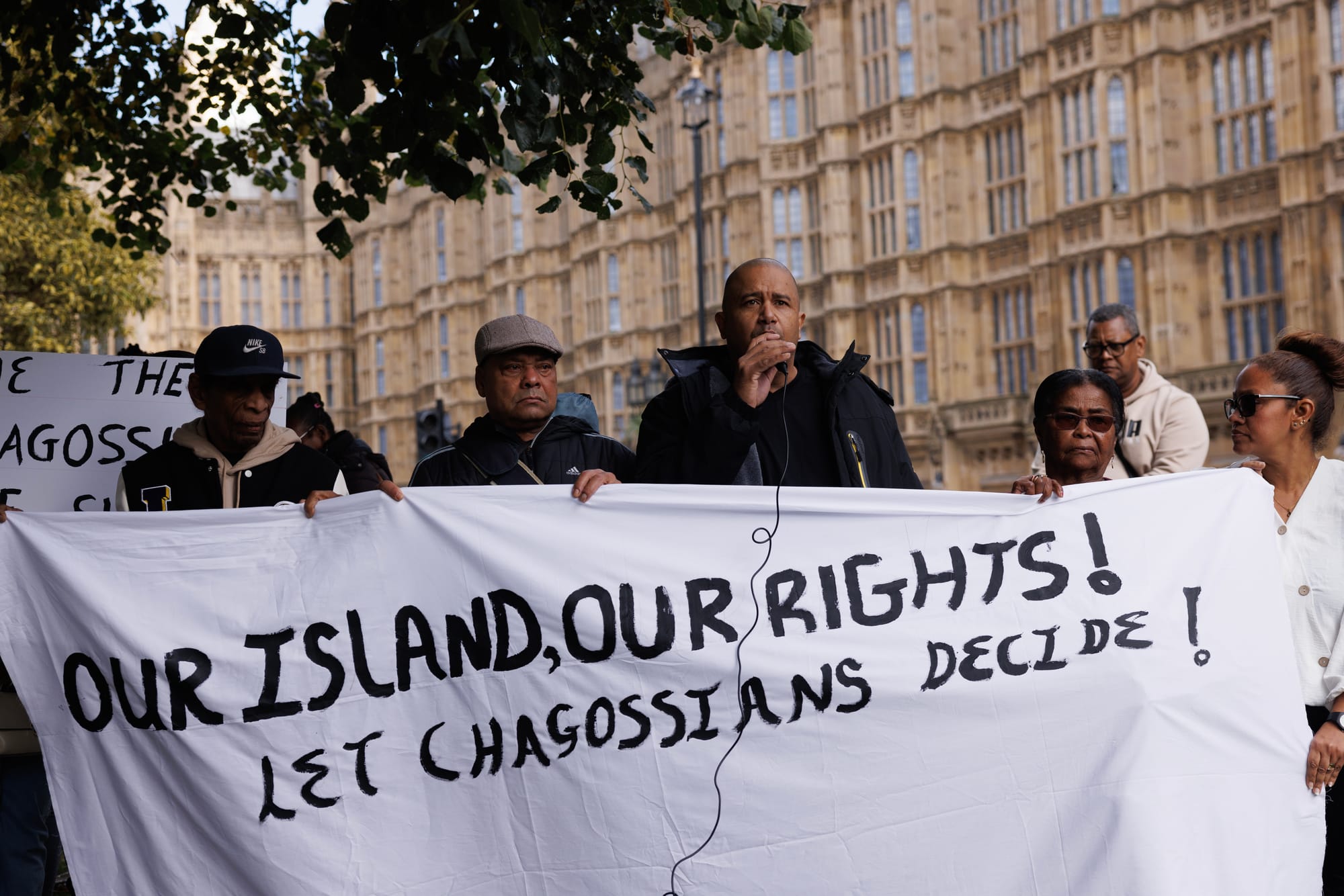
The events have resulted in a long-running territorial dispute between the UK and Mauritius. However, the prime location and the world powers' desire to maintain strategic military facilities far from their shores had so far rebuffed questions of legality.
A 1966 agreement granted the United States a 50-year lease on the island with an optional 20-year extension. The renewed lease is scheduled to expire in 2036.
Records show that Washington offered Britain a steep $14m discount on the purchase of American Polaris nuclear weapons in exchange for the extended lease and for expelling the native population from the island.
Military Base
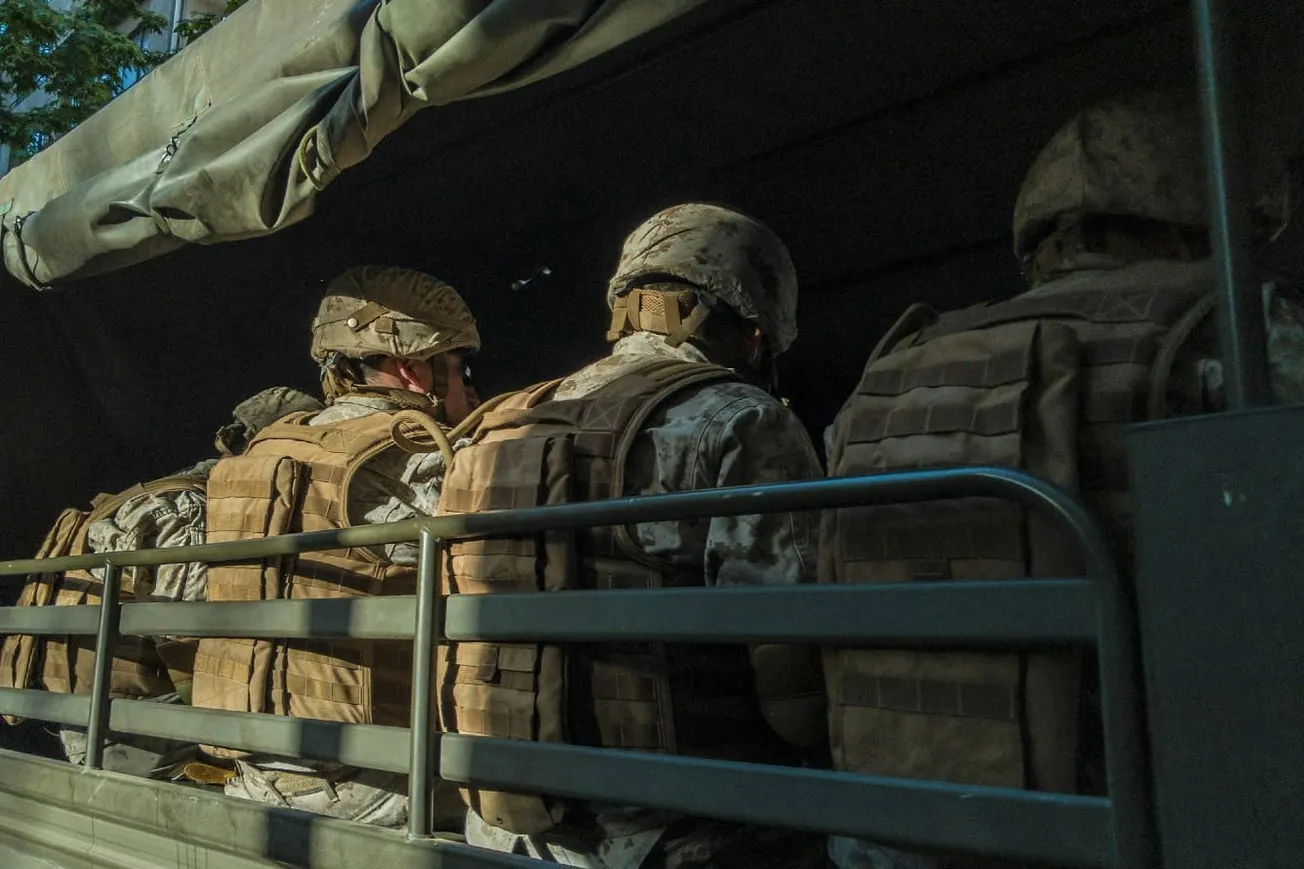
A joint UK-US military base was built by the US in the mid 1960s, but few details of the facility are available in the public domain. The island is administered from London as a British Indian Ocean Territory (BIOT), one of 14 British Overseas Territories. However, much of the personnel and resources stationed there are under US control.
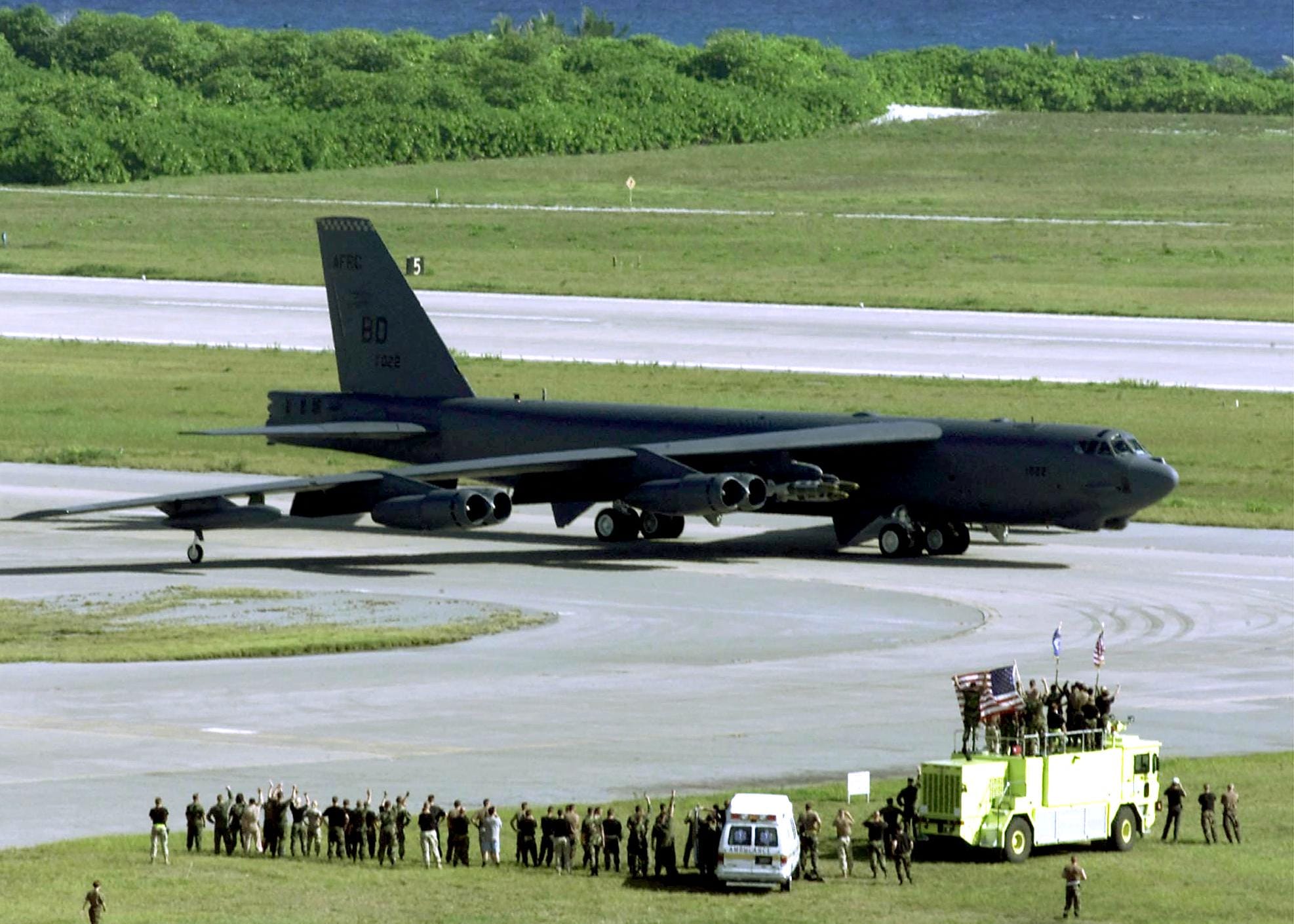
Shrouded in rumor and mystery since its inception, the island houses a full-fledged military base with a port that can accommodate aircraft carriers, storage facilities, and an airfield with a runway of over 12,000 feet. Washington is believed to have stashed considerable equipment and supplies to handle exigencies.
The island’s location makes it a coveted base. With American shores nearly 3,000 miles away, the military sciences director at the leading UK defense think tank RUSI, Matthew Savill, opines that the base is one of the few “extremely limited number of places worldwide available to reload submarines” with weapons such as Tomahawk missiles.
The level of secrecy surrounding the base has led many to believe that it is used for space tracking and other surveillance. It has long been speculated that the island is a CIA black site used to hold and interrogate terror suspects. Lawrence Wilkerson, chief of staff to the former US Secretary of State Colin Powell, disclosed that intelligence sources had revealed to him that the island had been used as a site “where people were temporarily housed and interrogated from time to time,” lending credence to such speculations. Further confirmation from London that rendition flights carrying terror suspects had landed at the military base has added weight to such rumors.
Legal Angle
The legitimacy of Britain’s claim to the island has long been contested. Mauritius has claimed the Chagos Islands as its own. In 2019, the United Nations ruled in an advisory opinion that the UK's continued presence was a "wrongful act." The International Court of Justice concluded that London’s administration of the territory is "unlawful" and must end to complete the UK's “decolonization.” Furthermore, human rights activists have highlighted the continued, illegal displacement of the island’s people.
After decades of claiming that Britain had every right to the islands and many attempts to ignore the UN advisory, bowing to mounting international pressure, the UK government agreed to open negotiations with Mauritius over the future of the territory in 2022.
An agreement was reached in May 2025, according to which Britain would return the sovereignty of the island to Mauritius and pay 101 million pounds ($136 million) annually to secure the future of the Diego Garcia military base under a ninety-nine-year lease, with an option for a 40-year extension.
What altered the political atmosphere around Diego Garcia was not the legal argument itself, but the context in which it emerged. As Mauritius deepened its economic and diplomatic engagement with China, including participation in Beijing’s Belt and Road Initiative, questions of sovereignty began to take on broader strategic implications. For Washington, the concern was less about immediate access and more about precedent—how commercial relationships can, over time, translate into political leverage.
Shifting Political Landscapes
Initially, Washington welcomed the deal and the President "expressed his support for this monumental achievement." U.S. Secretary of State Marco Rubio commented that the agreement "reflects the enduring strength of the US-UK relationship."
However, Mauritius’s growing diplomatic and trade relations with China, including its participation in the Belt and Road Initiative (BRI), have altered strategic assumptions. Chinese economic overtures and BRI projects are recognized as debt traps that ensnare development-hungry nations. Washington’s experience elsewhere suggests that Chinese maritime activity in the region could create opportunities for greater Chinese influence once Mauritius regains legal control.
From a power-politics perspective, Washington sees ceding the territory as counterproductive. Although the 99-year lease gives the impression of long-term continuity, absolute control is now shifting to conditional access. Continued access to a military facility as strategically crucial as Diego Garcia now rests on regular payments and political developments, leaving the door open to further negotiations.
Geopolitics is often as much about optics and perspective as it is about power. Some view the UK–Mauritius agreement as a victory for international legal mechanisms and institutional processes. Seen in this light, the agreement’s legal and institutional character does not exist in a vacuum: China is not peripheral to the Diego Garcia debate, but central to why a colonial-era arrangement imposed on Mauritius, and long tolerated by the international system, is now being reassessed. Others, however, see cause for unease: a small island nation with little military capacity has secured de jure control of a strategically vital base from a storied power like Britain—an outcome that could signal a broader shift in how power and legitimacy are exercised in the geopolitical arena.
👉 Quick Reads
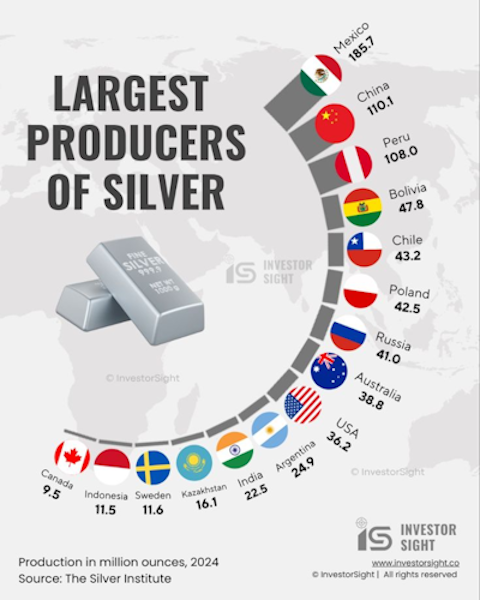
I. Silver Supply Is Concentrated In A Handful of Countries
Global silver production is heavily concentrated, with Mexico far ahead as the world’s largest producer, followed by China and Peru. A small group of countries—mostly in Latin America—accounts for a large share of global supply, while the U.S. and others play a secondary role. This concentration means geopolitics, mining policy, and local disruptions can have an outsized impact on global silver markets.
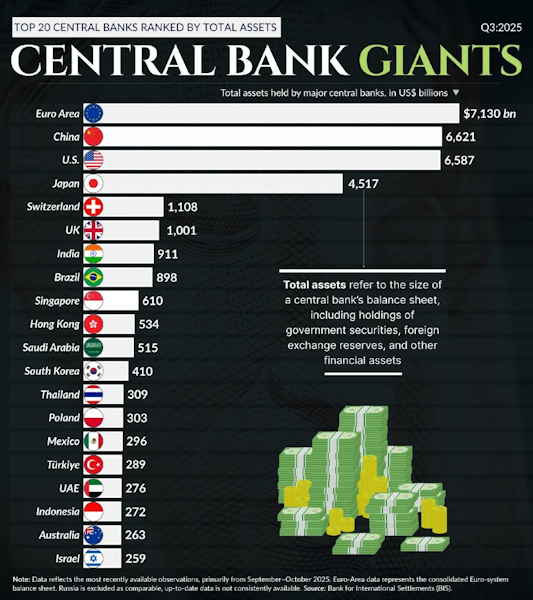
II. A Few Central Banks Dominate The World’s Money
The chart ranks central banks by the size of their balance sheets. The Euro Area, China, and the U.S. stand far above the rest, each holding trillions of dollars in assets, while Japan follows as a distant fourth. After that, balance sheets drop off sharply, showing how global monetary power is highly concentrated in just a handful of institutions.
📊 Market Mood — Friday, January 23, 2026
🟨 Futures Drift as Tensions Fade, Earnings Take Over
U.S. futures hover just below flat as markets refocus on corporate earnings and the Fed outlook, with Greenland-related geopolitical stress easing.
🟥 Intel Stumbles Amid AI Supply Crunch
Intel posts a fourth-quarter loss and warns of continued headwinds from AI-driven supply shortages, underscoring the gap with Nvidia and AMD in the chip race.
🟦 TikTok Deal Secures U.S. Operations
A Trump-brokered joint venture keeps TikTok running in the U.S., shifting control to American and allied investors while easing long-running national security concerns.
🟪 BOJ Holds, Signals More Hikes Ahead
The Bank of Japan keeps rates steady but upgrades growth and inflation forecasts, reinforcing expectations of further tightening later this year.
🟩 Gold Pushes Toward $5,000
Safe-haven demand lifts gold, silver, and platinum to record highs as Iran tensions resurface, keeping geopolitical risk firmly priced into markets.
🗓️ Key Economic Events — Friday, January 23, 2026
🟩 09:45 AM — S&P Global Services PMI (Jan, Preliminary)
A timely read on activity in the U.S. services sector, which makes up the bulk of the economy and signals demand and business confidence.
🟦 09:45 AM — S&P Global Manufacturing PMI (Jan, Preliminary)
Tracks factory activity, including output, new orders, and employment—an early pulse on industrial momentum.
editor-tippinsights@technometrica.com







.jpg?ref=tippinsights.com)