Taiwan has moved to fortify its home front quietly. This week, the government released an updated civil defense handbook, the third since 2022, detailing how citizens should respond to blackouts, disinformation, and potential invasion. It includes maps of shelters, lists of emergency supplies, and guidance on staying connected when the internet goes dark. Officials insist the guide is not meant to stir alarm, only to ensure readiness as pressure from Beijing intensifies.
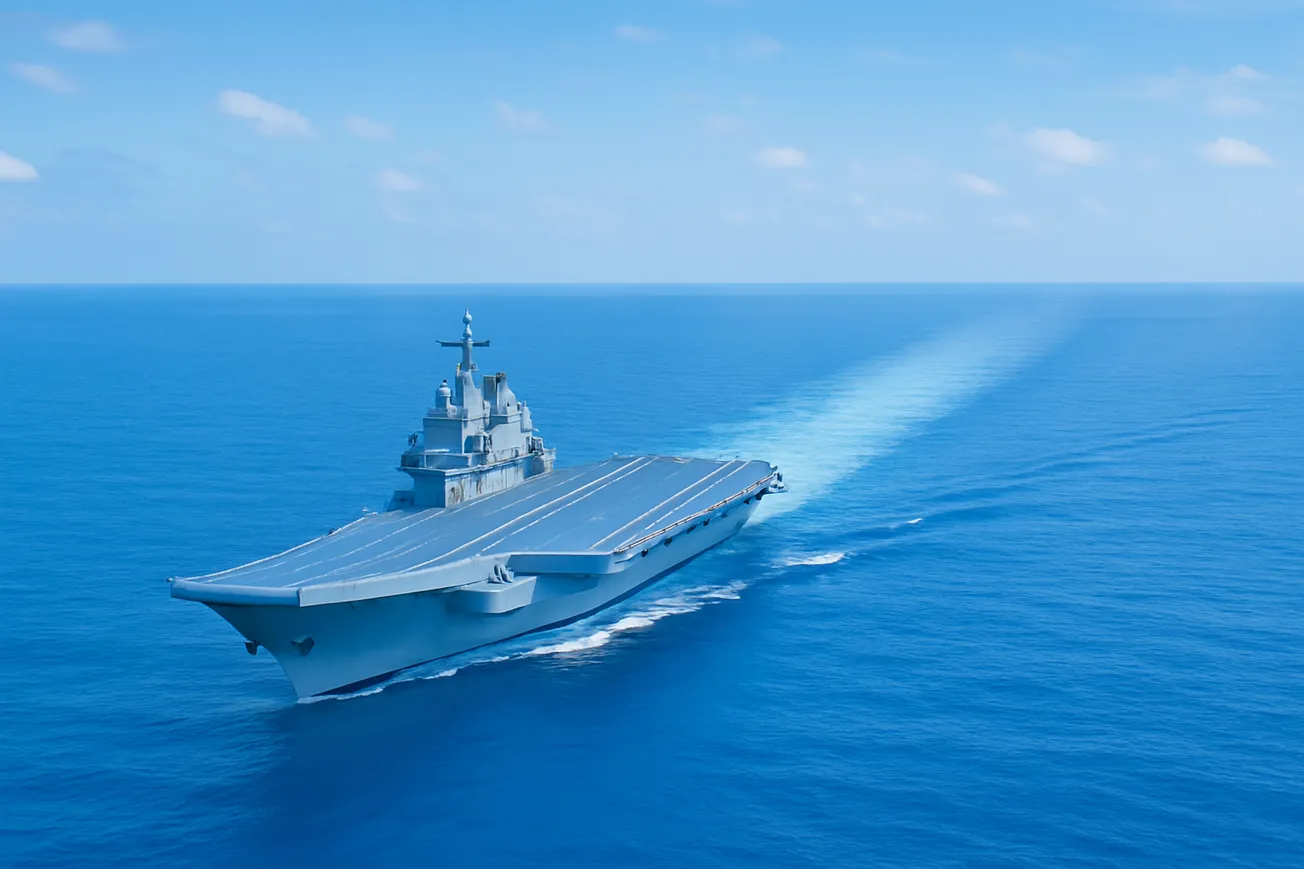
Almost in answer, China’s newest and most advanced aircraft carrier, the Fujian, slipped through the Taiwan Strait on its maiden passage. The transit was framed as a routine sea trial, but its timing carried a message. The juxtaposition was unmistakable: an island drilling its civilians to endure, and a rising power displaying steel on the water. For Washington, deeply reliant on Taiwan’s chips and committed, at least in spirit, to its defense, the stakes in this narrow strait have never felt so exposed.
Against this backdrop of quiet drills and silent displays of force, Taiwan stands not only as a flashpoint but as a keystone in the machinery of global power. What appears as a distant island on the map is, in truth, the hinge on which supply chains, security alliances, and technological dominance may turn.
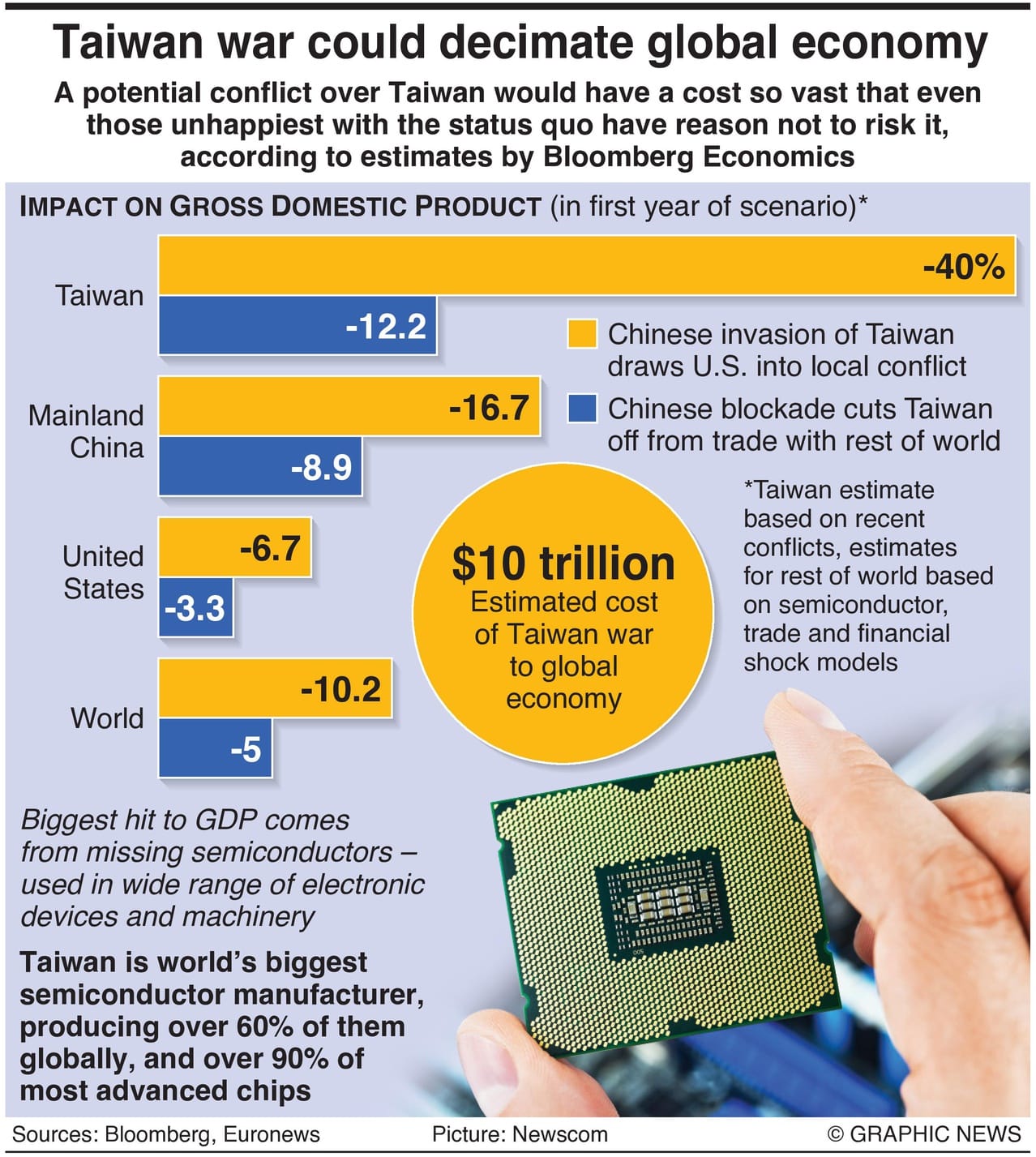
Home to the world's largest dedicated semiconductor foundry, Taiwan Semiconductor Manufacturing Company (TSMC), the island-state produces 90% of the world's most advanced chips. These cutting-edge electronics drive a vast array of industries, from healthcare and defense to smartphones, data centers, vehicles, and advanced AI systems.
Ranked as the eighth most economically competitive nation, Taiwan plays a vital role in global technology supply chains, ensuring the efficient production and distribution of key electronic components. As an export powerhouse, boasting advanced ports, airports, and ICT networks, the island serves as a gateway for businesses seeking access to Asian markets.
Taiwan-U.S. relations are broad-based and date back decades. Trade between the two was valued at $158.6 billion in 2024, making the island the United States' seventh-largest trading partner. The commerce included $42.3 billion in U.S. exports to Taiwan and $116.3 billion in imports from Taiwan. Besides trade, the U.S. also has significant direct investment in various Taiwanese firms.
U.S. industries rely heavily on TSMC semiconductors. Although plans are underway to produce advanced chips stateside, those industries will take time to establish and begin production. Meanwhile, any glitch in global chip supply will have broad and far-reaching implications for the U.S. economy and its technological leadership.
Bilateral cooperation has evolved to encompass economic, political, and security concerns. While Taipei looks to Washington for support in resisting Beijing's pressure, the United States views the democratic island as a buffer against potential Chinese military expansion in East Asia. Both parties are aware of the importance of the Taiwan Strait, through which a significant portion of global container traffic passes. Maintaining stability and free access to the sea route is critical for trade and peace in the region.
Gold standard polling meets the best China analysis. Join today for $99 per year.
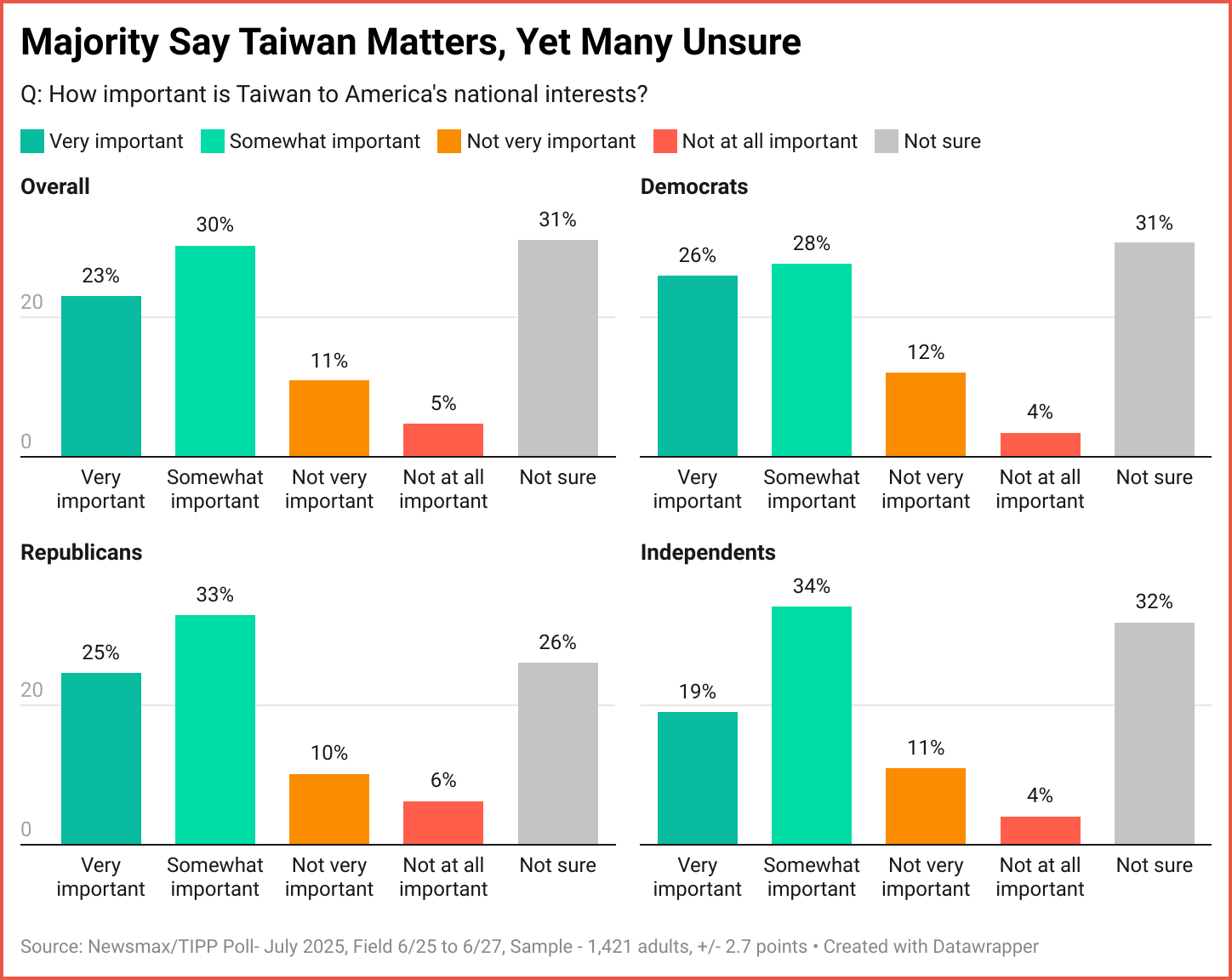
Interestingly, a recent nationwide Newsmax/TIPP Poll of 1421 Americans found that while slightly more than half (53%) perceive Taiwan as important to American national interests, almost a third (31%) were unsure of how the distant island mattered to the U.S.
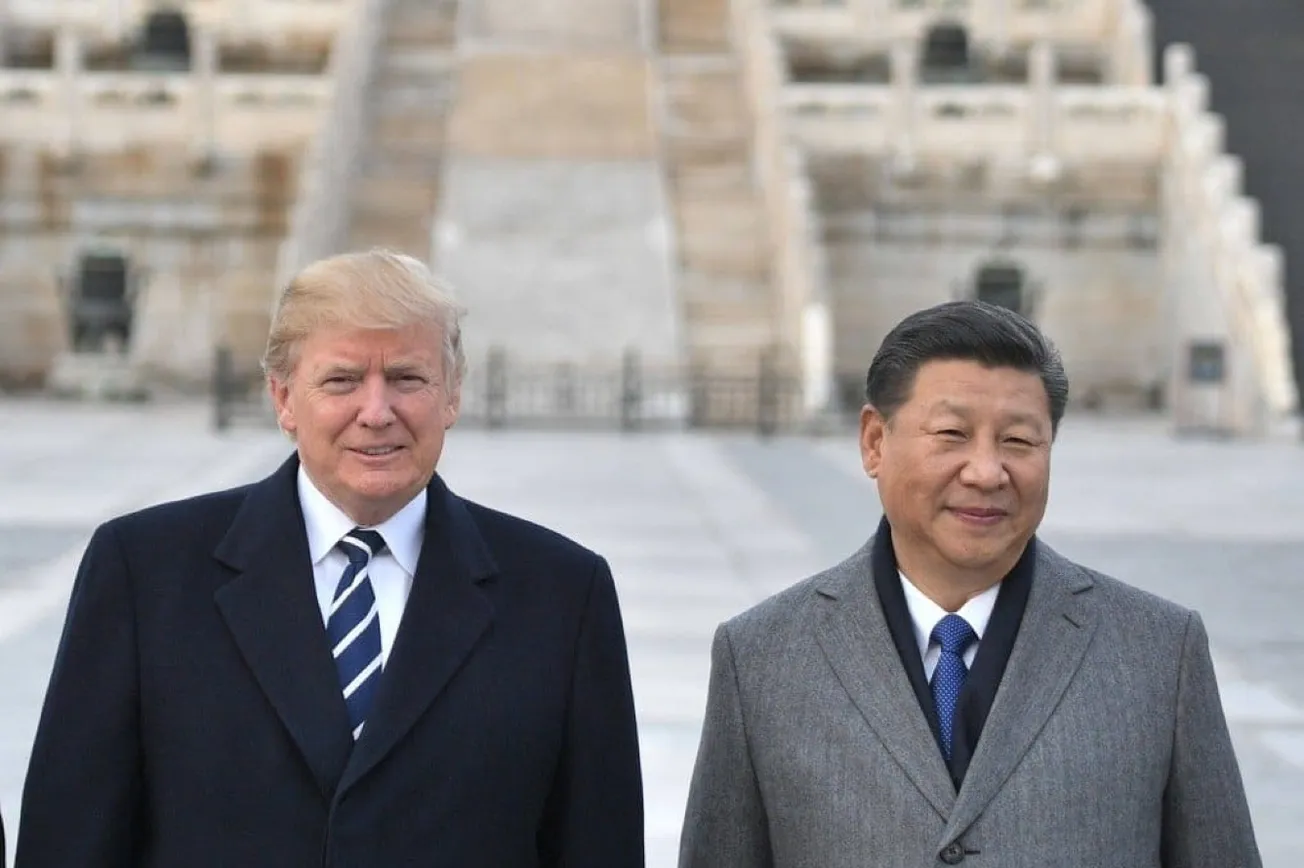
Chinese aggression toward and interference within Taiwan have been periodically making global headlines. Beijing feels threatened by the robust democracy shaping the island and the personal freedoms enjoyed by the Taiwanese, which are unheard of on the mainland. Uneasy with its economic success and unhappy with its political culture, Chinese President Xi Jinping has used every opportunity to inform the world that the People’s Republic of China considers the island an integral part of its territory. Some fear that the days of the “one country, two systems” approach are numbered.
While the U.S. has given security guarantees to Taipei and backs the island on the global stage, Washington has adopted a ‘strategic ambiguity’ stance on whether it would deploy military force in the case of a Chinese attack.
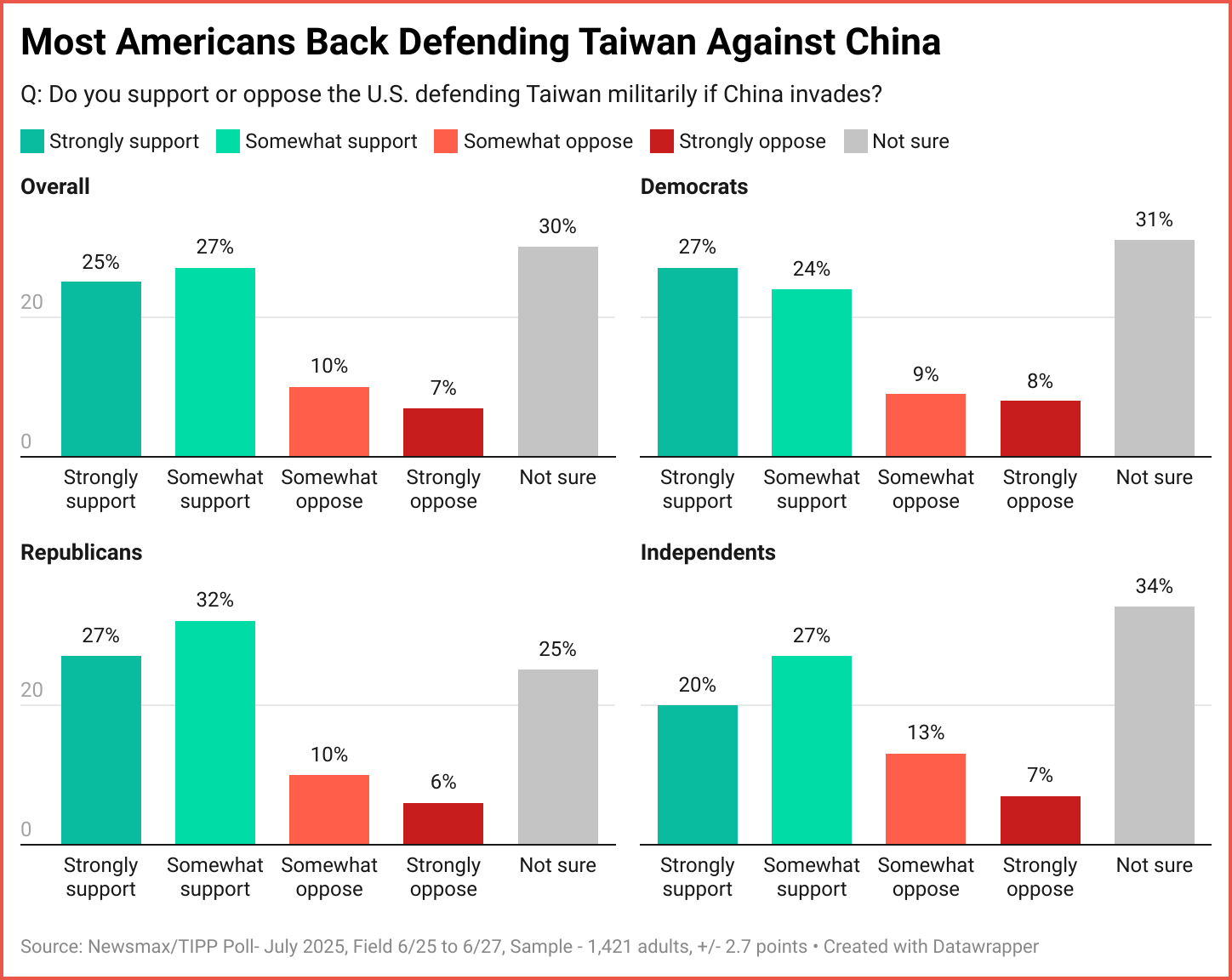
The Newsmax/TIPP Poll finds that while half (52%) approve of America defending Taiwan militarily if China invades the island, a sizable share (30%) is unsure, and about a fifth (17%) oppose such action.
For years, Taiwan has been attempting to break free from Beijing’s hold and establish itself as an independent state. So far, Taipei has managed to win and retain the support of only a dozen small countries. None of the global powers recognizes Taiwan as a sovereign state, and Beijing has been applying steady diplomatic pressure to preserve the status quo.
Given the current political climate and the aggressive rhetoric from President Xi, who has implied that he might use military might if necessary to bring Taiwan “back to the fold,” recognizing Taiwan’s sovereignty would be akin to invading China. While the call for independence grows louder on the island, the world is loath to upset the manufacturing and trade behemoth that is China.
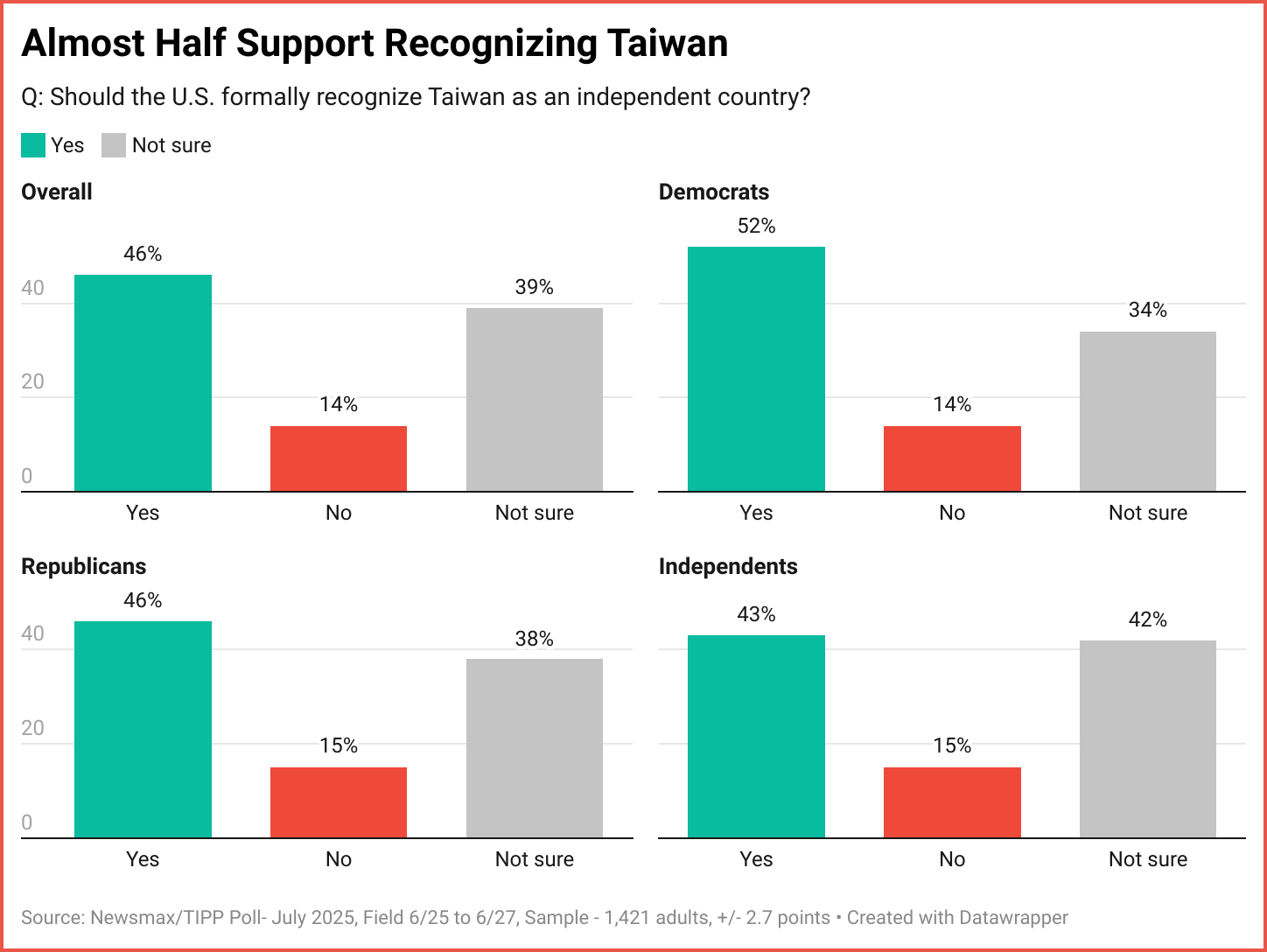
Americans, too, seem largely wary of the situation. Newsmax/TIPP Poll found that less than half (46%) were in favor of recognizing Taiwan as an independent country. Almost an equal share, 39%, were unsure of how to proceed, while 14% wanted no change.
As the U.S. navigates the delicate balance of walking a fine line with Beijing while bolstering Taiwan’s prospects, the pivotal role of the island in global commerce and the technology sector cannot be overstated. Even when forced to acknowledge China’s demands regarding the island, world powers are extending diplomatic support for Taiwan’s autonomy without jeopardizing their broader geopolitical interests. Taiwan’s self-rule and democracy are crucial not only for the 23 million inhabitants of the island; they are essential to maintaining stability and peace throughout the entire region.
📊 Market Mood — Wednesday, September 17, 2025
🟡 Futures Flat: U.S. futures are muted as traders tread cautiously ahead of the Fed’s rate decision later today, following Tuesday’s pullback in equities.
🔴 Fed Decision Looms: Markets are near-certain on a 25 bps cut, with slim odds of 50 bps. Powell’s tone and the new “dot plot” will shape rate expectations going forward.
🟠 U.K. Inflation Steady: U.K. CPI stayed at 3.8% YoY in August, nearly double the BoE’s 2% target, signaling the bank may hold rates steady at Thursday’s meeting.
🟢 General Mills in Focus: The packaged-foods giant reports before the bell, with investors watching for signs of demand resilience amid tariff-driven consumer caution.
⚪ Gold Eases: Gold dipped 0.6% to $3,667 after touching a record $3,702, as traders booked profits ahead of the Fed’s announcement; oil also edged lower on Russia supply worries.
Market round-up in 5 minutes. We bring you up to speed. Subscribe to TIPP Insights for $99/year.
📅 Key Events Today
🟧 Wednesday, September 17
10:30 – Crude Oil Inventories
Weekly change in U.S. crude stockpiles.
14:00 – FOMC Economic Projections
Fed outlook for growth, inflation, and rates.
14:00 – FOMC Statement
Policy stance and commentary from the Fed.
14:00 – Fed Interest Rate Decision
Target federal funds rate announcement.
14:30 – FOMC Press Conference
Remarks from Fed Chair Powell.