
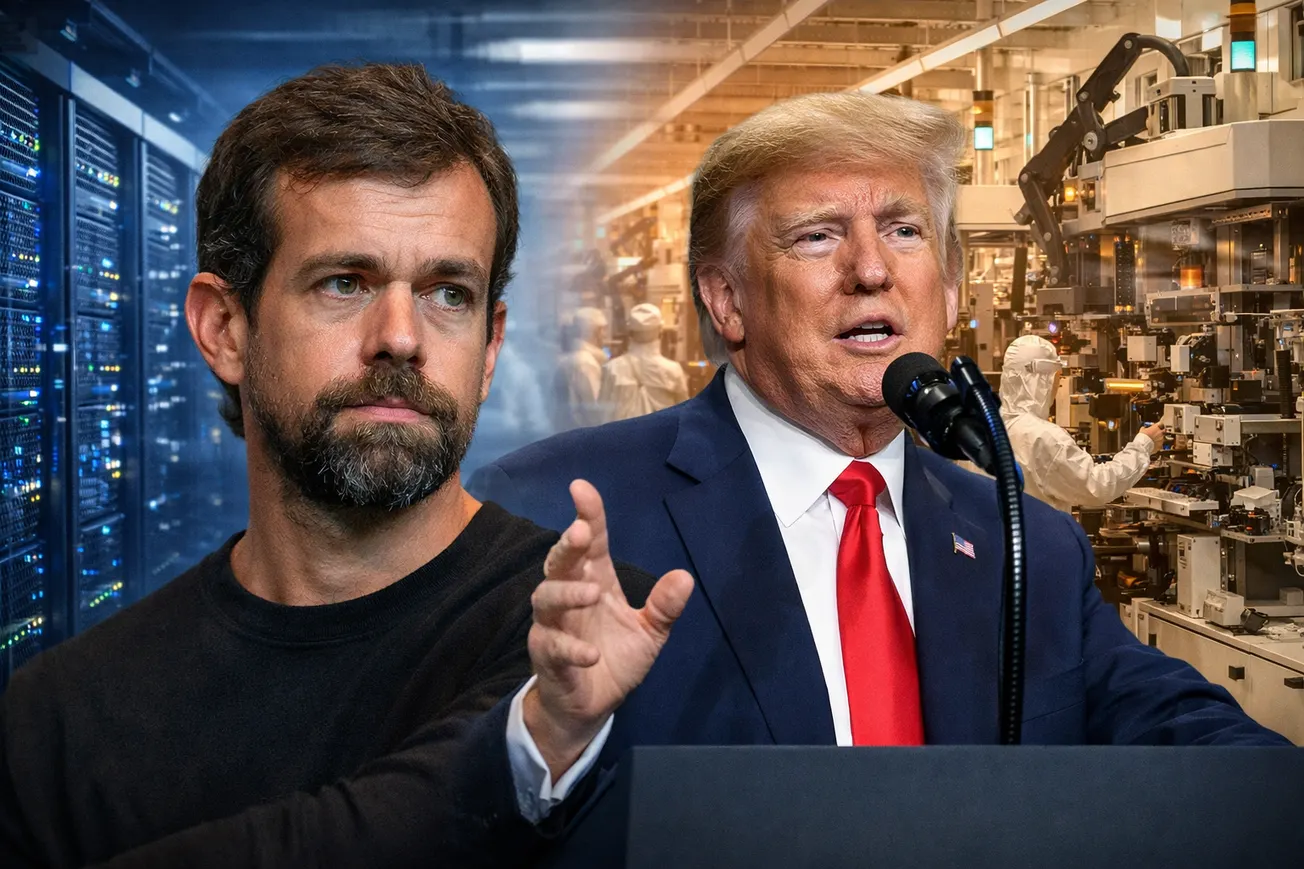
When a company that says it is doing well decides to cut 4,000 jobs, people should pay attention.
Jack Dorsey announced that Block would shrink from more than 10,000 employees to just under 6,000. He did not describe a crisis. Revenues are growing. Gross profit is up. The balance sheet is not flashing red. This was not a last-minute scramble.
It was a decision about how large the company should be now.
Dorsey’s explanation was direct. The intelligence tools Block is building and using now allow smaller, flatter teams to get more done. The way work is organized is changing quickly. If that is true, then keeping the old structure makes less sense.
Investors seemed to agree. Block's shares surged approximately 24% following the announcement, reflecting investors' belief that embedding AI into flatter, higher-output teams will enhance long-term profitability and growth, not despite the cuts, but because of them. Dorsey himself predicted that most companies will reach the same conclusion, suggesting that Block's move is less an outlier and more a vanguard signal in an accelerating shift toward AI-augmented organizations.
Dorsey has offered generous severance, which includes 20 weeks of base pay plus tenure add-ons, vested equity, healthcare extension, and $5,000 transition aid. They soften the blow and model a responsible transition amid disruption.
For years, the story of automation centered on factory floors and assembly lines. Industrial jobs were vulnerable. Office jobs were safe. The thinking was simple: the more abstract the work, the harder it would be to replace.
Artificial intelligence is complicating that assumption.
AI does not pour concrete or repair a turbine. But it can write software, review documents, draft reports, analyze large data sets, answer customer questions, and reduce the need for layers of coordination. It does not eliminate the need for talent. It changes how many people are required to produce the same output.
Block may be one of the first large firms to act on that logic this bluntly.
At the same time, the Trump administration has moved to position the United States at the center of this shift. Executive orders and the administration's AI Action Plan have focused on reducing regulatory barriers, encouraging open-source development, and promoting workforce readiness. The stated goal is to keep American firms at the front of the AI race while ensuring the economic benefits are felt domestically.
That posture has drawn significant private capital. Companies like NVIDIA and SoftBank have committed hundreds of billions of dollars to U.S.-based data centers, supercomputing infrastructure, and advanced manufacturing, promising six-figure job creation in the tech and industrial sectors. Whether those numbers fully materialize remains to be seen, but the directional bet is clear.
The administration has also tied AI policy to broader strategic goals: energy production, export competitiveness, and diplomatic leverage. If the logic holds, the result is a technology ecosystem that not only generates software efficiency but also anchors real infrastructure and production capacity within American borders.
These two developments are not at odds.
If companies need fewer layers of corporate staff as productivity tools improve, capital does not vanish. It moves. It moves toward infrastructure, hardware, automation, data centers, advanced manufacturing, and supply chains that sit inside national borders. The economy does not shrink. It rearranges itself.
That rearrangement will not feel abstract.
The people most exposed are not factory workers this time. They are mid-level managers, coordinators, analysts, and roles built around routing information from one group to another. When intelligence tools handle more of that flow, fewer people are needed to oversee it.
Dario Amodei, the chief executive of Anthropic, one of the most advanced AI firms in the world, has warned that entry-level white-collar roles are especially exposed. In recent remarks, he suggested that artificial intelligence could sharply reduce the number of junior positions across fields such as technology, finance, law, and consulting over the next several years. He has argued that both industry leaders and policymakers should be more candid about the scale of the coming disruption.
That candor needs to extend beyond diagnosis. If entry-level roles contract at the pace Amodei suggests, the question becomes who bears responsibility for building the bridge to what comes next. Companies benefiting from leaner teams will need to invest in retraining, not just severance. Policymakers will need to rethink workforce development pipelines, from university curricula to apprenticeship models designed for an economy that may no longer exist. The disruption Amodei describes is manageable, but only if preparation matches the speed of adoption.
That does not mean white-collar work disappears. It means the standard rises. Depth matters. Technical fluency matters. The ability to work directly with these systems or build them matters most.
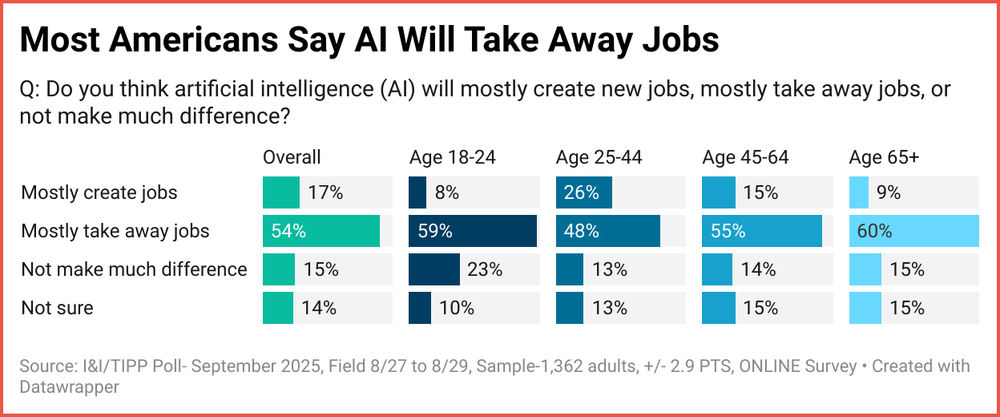
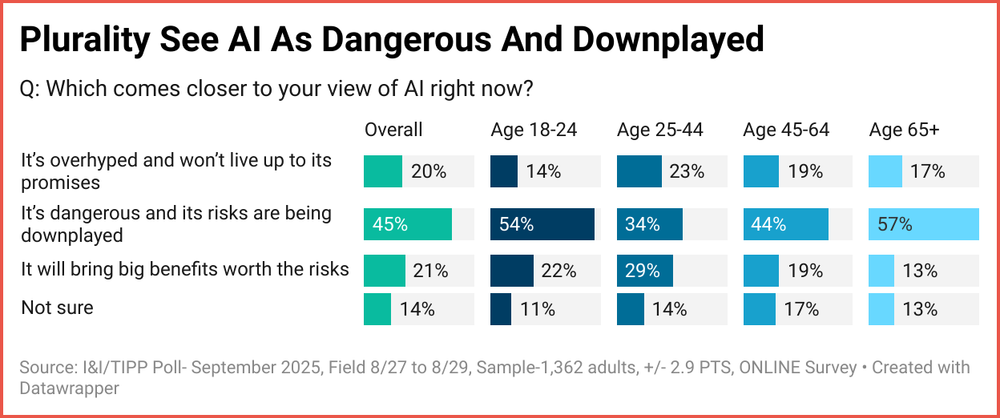
Recent polling suggests the public already senses this shift. A majority of Americans say AI is more likely to take away jobs than create them, and many believe its risks are being understated.
There is a broader point here.
For decades, a college degree and an office job were treated as a form of long-term security. That bargain is changing. Productivity gains are no longer confined to physical labor. They are reaching into professional services and corporate structures.
Dorsey’s move does not prove that every company should cut in half. It does suggest that executives are rethinking scale. If AI tools allow a smaller team to produce comparable output, pressure builds to adjust.
Meanwhile, Washington is pushing to expand advanced manufacturing and strategic production at home. That shift will create demand in areas that combine technical skills with tangible output, such as engineering, robotics, chip fabrication, and industrial automation. The dividing line ahead may not be blue-collar versus white-collar. It may be high-leverage skills versus roles that can be compressed.
None of this calls for panic.
When a profitable firm reduces its workforce by thousands and frames it as preparation for the future, the signal is hard to ignore. We are watching the early stages of a structural adjustment. Some companies will move quickly. Others will follow more cautiously. But the direction is clear.
The American workforce is not disappearing. It is being reallocated.
Those who adapt to tools that increase their leverage will do well. Those who assume the old corporate layers will remain untouched may find that the ground is shifting faster than expected.
Block’s announcement is less about one company’s headcount than about an economy adjusting its structure in real time. The recalculation is underway.
👉 Show & Tell 🔥 The Signals
I. Mortgage Rates Dip Below 6% — Is the Housing Freeze Thawing?
Mortgage rates have slipped below 6% for the first time since 2022. Many homeowners have been “locked in” to ultra-low rates and unwilling to move. As market rates approach those levels, listings, purchase applications, and transaction activity could begin to pick up. If that momentum builds over the next 6 to 8 weeks, housing turnover and related spending on renovations, furniture, and moving services may accelerate.

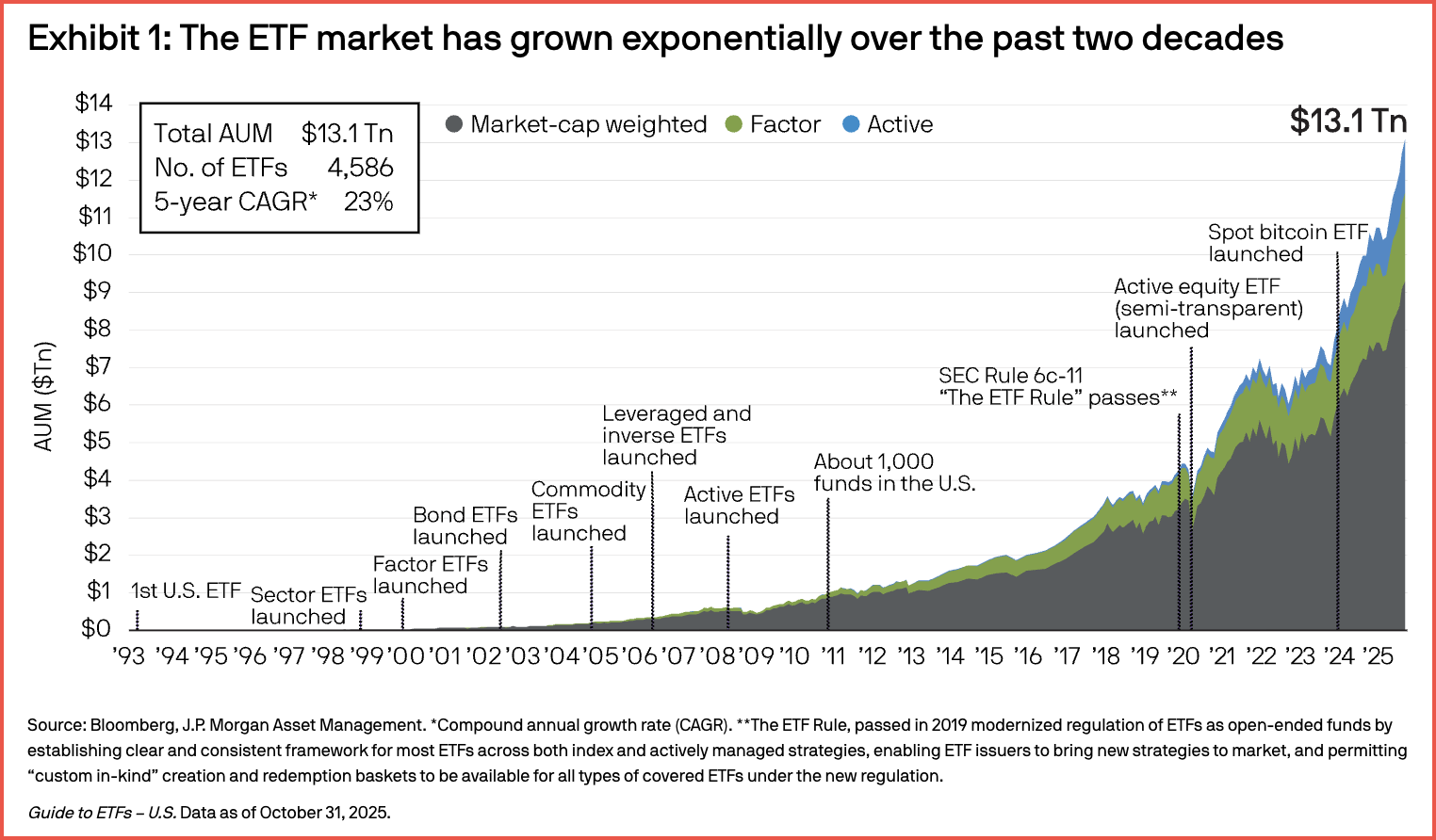
II. ETF Market Now Larger Than U.S. Stock Listings
There are now more exchange-traded funds than publicly listed companies in the U.S., with ETF assets totaling roughly $13 trillion across thousands of funds. The rapid growth reflects investors’ shift toward low-cost, diversified, and thematic investment vehicles over the past two decades.
The TIPP Stack
Handpicked articles from TIPP Insights & beyond
1. Glib Barista AOC’s Ignorance Front And Center At Munich Security Conference— Victor Davis Hanson, The Daily Signal
2. Who Can Halt The ‘America First’ Ambition Rolling Across The Globe? – China Can— Alastair Crooke, Ron Paul Institute for Peace and Prosperity
3. War With Iran On Hold… But For How Long?— Larry C. Johnson, Ron Paul Institute for Peace and Prosperity
4. ‘Incubator Babies’ Are Back, With Iran In Crosshairs—Tyler Durden, Ron Paul Institute for Peace and Prosperity
5. Are Negotiations Destined To Fail After Iran Accuses US Of ‘Big Lies’?—Virginia Allen, The Daily Signal
6. Trump Briefly Lays Out Case For Possible Attack On Iran In State Of The Union—Patricia Zengerle & David Brunnstrom, The Daily Signal
7. Trump’s Iran Buildup Is Based On A Lie—Connor O'Keeffe, Mises Wire
8. Republicans Fear Midterm Loss After Gonzales Denies Affair—Pedro Rodriguez, The Daily Signal
9. Emerging Markets Soar While Argentina Waits—Alejandro A. Tagliavini, Mises Wire
10. When Government Favors Big Business Over Small Enterprise—Ryan McMaken, Mises Wire
11. Capitalism Is Not To Blame For Wokeness— Wanjiru Njoya, Mises Wire
12. Roy Pushes Terrorist Designation For Mexican Drug Cartels— Pedro Rodriguez, The Daily Signal
13. Learning Economic Literacy Through Another Government Shutdown—Ted Tucker, The Daily Signal
14. Anarcho-Tyranny And The UK Grooming Gangs Scandal— Lipton Matthews, Mises Wire
15. Civics Crisis? New Presidential 1776 Scholarship Challenges Students To Know The Constitution—Katherine Matt, The Daily Signal
16. Trade Deficits And Sound Money—Joseph Solis-Mullen, Mises Wire
17. Winch Way Forward?— David Gordon, Mises Wire
18. What Causes Stagflation?— Frank Shostak, Mises Wire
19. When It Comes To The Fed, It’s Always A Rigged Game— Jonathan Newman, Mises Wire
20. At Olympics, Alysa Liu’s American Dream Comes True Against Wishes Of CCP— Virginia Grace McKinnon, The Daily Signal
21. The Climate Fox In The Judicial Henhouse— Jason Isaac, The Daily Signal
22. Why Britain’s Economy Is Sputtering— Lipton Matthews, Mises Wire
23. The Next Front In The Censorship War Against Christians— S.A. McCarthy, The Daily Signal
24. Cuba Says It Killed 4, Wounded 6 Others Aboard Speedboat, Including Wanted Cubans Who Came From US— Daniel Trotta, The Daily Signal
25. Trump’s SOTU: Celebrating America And Its Heroes—Brent Sadler, The Daily Signal
26. Trump’s SOTU Was A Defiant Commitment To American Self-Rule Over Ideology— Daniel McCarthy, The Daily Signal
27. The State Of The Union: Trump Comeback Is Bigger Than The Biden Setback— Kelly Loeffler, The Daily Signal
28. Trump’s SOTU: The Golden Age As Its Own Evidence— Allen Mendenhall, The Daily Signal
29. 5-Year-Old’s Near-Death Experience Moves Congress To Stop Illegal Aliens From Truck Driving— Pedro Rodriguez, The Daily Signal
30. Another Drug Lord Killed. Is The Drug War Now Over?— Jacob G. Hornberger, Ron Paul Institute for Peace and Prosperity
31. US Actions Toward Cuba Are Criminal— William L. Anderson, Mises Wire
32. Promises Made, Promises Kept: The Return Of An ‘America First’ Future— Greg Sindelar, The Daily Signal
33. Winners And Losers Of The State Of The Union— Tyler O'Neil, The Daily Signal
34. SOTU: The Economy Is Improving For Americans— EJ Antoni & Allen Mendenhall, The Daily Signal
35. We Deserve Better War Propaganda—Caitlin Johnstone, Ron Paul Institute for Peace and Prosperity
36. Elias-Backed Coalition Sues Trump Over Ouster Of LGBTQ, Climate Exhibits At Federal Parks, Museums—Fred Lucas, The Daily Signal
37. New York’s Hochul Administration Coddles Medicaid Fraud While Attacking Rural Hospitals—Jenn Pellegrino, The Daily Signal
38. Small Government vs. Big Crisis: The Conservative Dilemma—Reagan Campbell, The Daily Signal
39. ‘Judicial Activism’ Struck Down Trump’s Tariffs, GOP Supporters Of The Tariffs Say After Divided SCOTUS Decision—Virginia Grace McKinnon, The Daily Signal
40. The Trump Admin’s Refusal To Act On Mail-Order Abortion Drugs Is Personal For Me—Jessica Williams, The Daily Signal
41. Surviving Capitalism: The Scarcity Advantage—Shashank Shukla, Mises Wire
42. MoveOn’s Anti-SOTU Event Draws Crowd—Of Hecklers— Harold Hutchison, Daily Caller News Foundation
43. ‘Complex’: Senators Say Passing SAVE America Act Will Be A Challenge—George Caldwell, The Daily Signal
📊 Market Mood — Friday, February 27, 2026
🟩 Futures Slip as AI Volatility Persists
Markets edge lower after mixed tech earnings and continued debate over AI’s long-term winners and losers.
🟧 Paramount Wins Warner Bidding War
Paramount Skydance emerges as the likely buyer of Warner Bros. Discovery after Netflix walks away.
🟦 Block Surges on Major AI-Driven Job Cuts
Shares jump over 20% as Jack Dorsey’s Block slashes nearly half its workforce to boost margins through automation.
🟨 Oil Edges Higher as Iran Talks Continue
Crude ticks up, though weekly gains fade, as U.S.–Iran nuclear negotiations extend without a clear breakthrough.
🗓️ Key Economic Events — Friday, February 27, 2026
🟩 8:30 AM — PPI Inflation (January)
Producer Price Index measures wholesale inflation, offering an early signal of pipeline price pressures.
🟧 9:45 AM — Chicago PMI (February)
Regional business activity gauge providing insight into manufacturing and broader economic momentum.
editor-tippinsights@technometrica.com