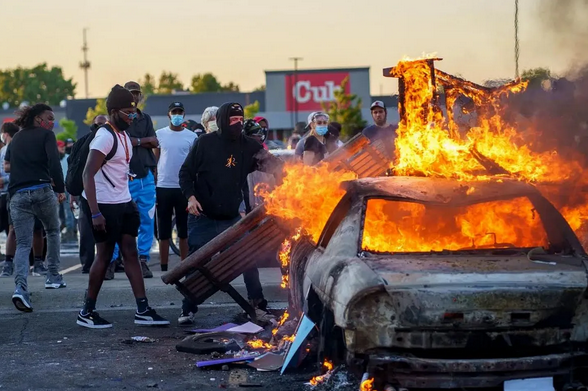
From the increasingly violent ICE protests – to the latest migrant mega-scams – to the billions borrowed and sent to Ukraine…one undeniable theme emerges: the Establishment prioritizes foreigners over Americans—both at home and across the globe.
Since President Trump’s magnificent election triumph, this harsh reality becomes even more evident. In a frenzied response to the America First mandate of November 2024, Leftists and globalists accelerate their shameful tactics. Though radicals like Zohran Mamdani and oligarchs like Larry Fink would never admit it, an unholy alliance exists between the extreme political Left and the titans of multinational corporations.
This unlikely convergence shares a common agenda: advancing the interests of foreigners over the prerogatives of American citizens. Whether it’s the haggard radicals at a Seattle protest or the manicured executives in Wall Street boardrooms, both factions work relentlessly to erode American sovereignty and prosperity.
Plenty of Establishment Republicans join in, too. For instance, the number three leader in the House GOP, Tom Emmer, who now pretends to be outraged about the Somali scandal. But in fact, for years as a Minnesota representative, Emmer has been a fervent advocate of mass migration from Somalia into his state.
And it’s not just neglect—it’s intentional stress. We are witnessing a strategy of controlled destruction, whereby American systems—immigration, welfare, law enforcement, even national identity—are deliberately overwhelmed. The goal? Chaos and disillusionment.
Andrew Breitbart saw this coming. In his book, Righteous Indignation, he traced how the Left, rooted in cultural Marxism, deliberately infiltrates and strains American institutions. He exposed strategies like the Cloward-Piven plan, which sought to overwhelm the welfare system to trigger federal control. In his words: “They don’t want to fix the system—they want to break it and rebuild it in their image.”
For the Left, flooding the U.S. with Third World migrants attempts to erase the dominant, patriotic culture they loathe. Obsessed with identity and race, they celebrate the dilution of heritage America and demonize those who resist.
For the elites, the invasion provides a steady stream of cheap labor that suppresses wages and fattens profits. These same elites also champion foreign interventions—profitable for the insider class but destructive for everyday Americans. No scheme serves their interests better than war. Hence, distant regional conflicts like Ukraine suddenly become “central” to American national life.
Meanwhile, American citizens are left to suffer. Inflation under Biden has crippled working families, who now rely on personal debt just to survive—while unwelcome and unvetted migrants from Somalia and elsewhere bring tribal scams to our cities.
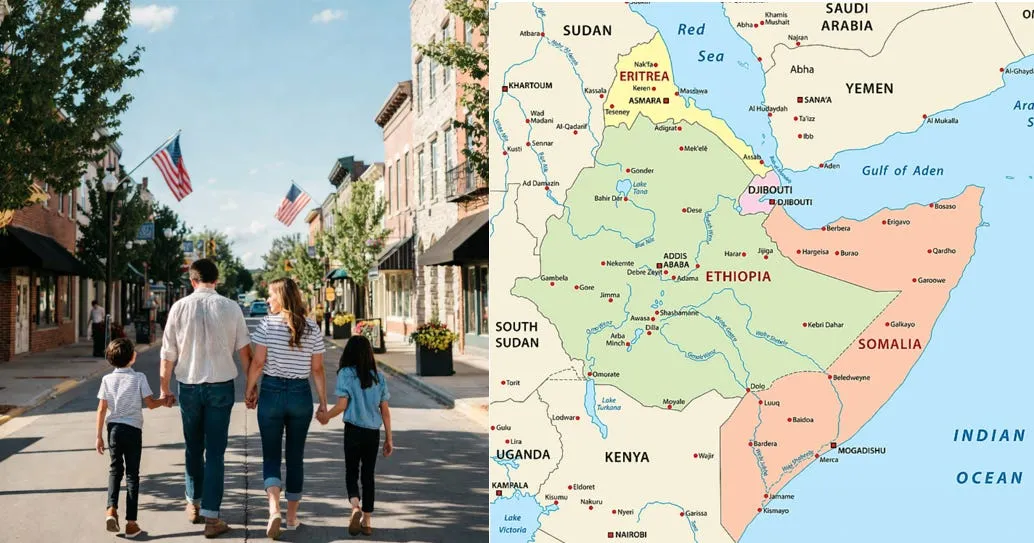
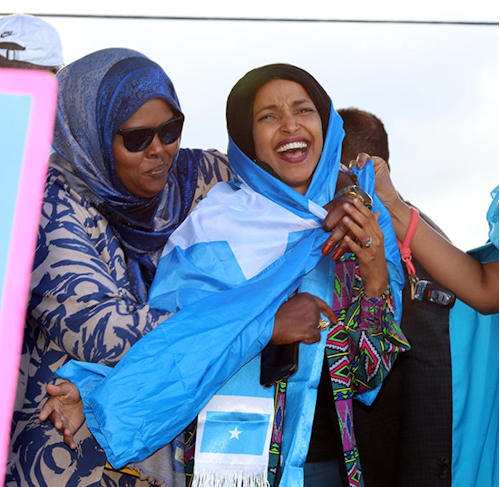
In places like Minneapolis, Minnesota, Columbus, Ohio, and Lewiston, Maine these migrants found political cover and a platform for fraud. Enabled by politicians like Governor Tim Walz and Somali native Representative Ilhan Omar, they’ve executed scams of shocking scale—a “Grand Theft Somalia.”
At the same time, far-left street militants use violence to thwart federal law enforcement’s efforts to secure the border. The Trump–Vance administration delivers on its promise to reverse the open-borders madness of the Biden years. The radicals, however, will not allow the will of the people to prevail. Instead of persuasion, they resort to street force – from attempting to run over ICE officers to inciting new riots in Minneapolis.
Why? Because to them, it’s always about the foreigners.
And if you object to this all-time record number of migrants—legal or illegal—you’re branded a “racist” by the ruling class, and expelled from polite society. So be it. We’re not here to win cocktail party invitations or to get invited onto The View – we’re patriots working to save our country.
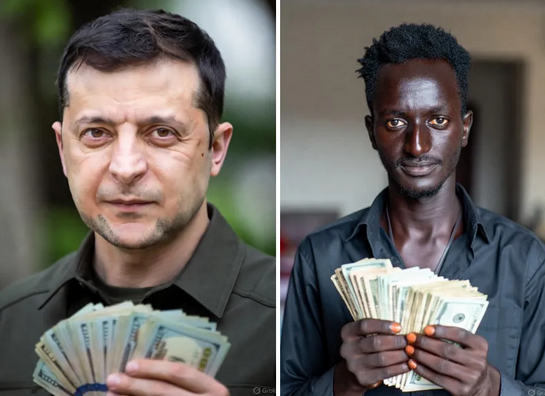
Similarly, we will not longer be robbed by foreigners whose schemes operate beyond our shores. So, the gravy train to Ukraine must stop. The people of the United States are waking up to a harsh truth about the centuries-old ethnic conflict in the Black Sea: this is not our fight, and corrupt President Volodymyr Zelensky sure as hell is not our fighter.
Young Americans, especially, cut through the lies. In a recent sweeping study I published on Gen Z voters aged 18–25, these patriots expressed deep skepticism toward American institutions—and a particular disdain for the DC foreign policy establishment. Overwhelmingly, they support an America First doctrine of realism and restraint.
When asked about America’s blank-check commitment to Ukraine, a supermajority of young voters said the U.S. should disengage if ongoing peace talks fail. Only 23% believe we should continue supporting Zelensky’s regional war.

So, as we begin this new year, let us welcome 2026 with clarity. This pattern is unmistakable: the Left and their ruling class partners prioritize foreigners, as an ideological north star. But our movement exists to protect and advance the interests of American citizens—first, always, and only.
We will secure our borders, prosecute foreign scam artists, and end the charity pipeline to foreign tyrants posing as allies. America is our country. We’re taking it back.
Steve Cortes is president of the League of American Workers and advisor to Catholic Vote.
He directs political campaigns on media, polling, and Hispanic outreach, including Trump 2016/2020 and Vance 2022 US Senate.
He is a former broadcaster for Fox News and CNN.
Major Mass Protests In Iran Since The 1979 Islamic Revolution
Every major wave of popular protest since the Shah’s overthrow in 1979 and the establishment of the Islamic Republic has sparked renewed talk of regime change – only to be met, each time, with a brutal response by the regime.
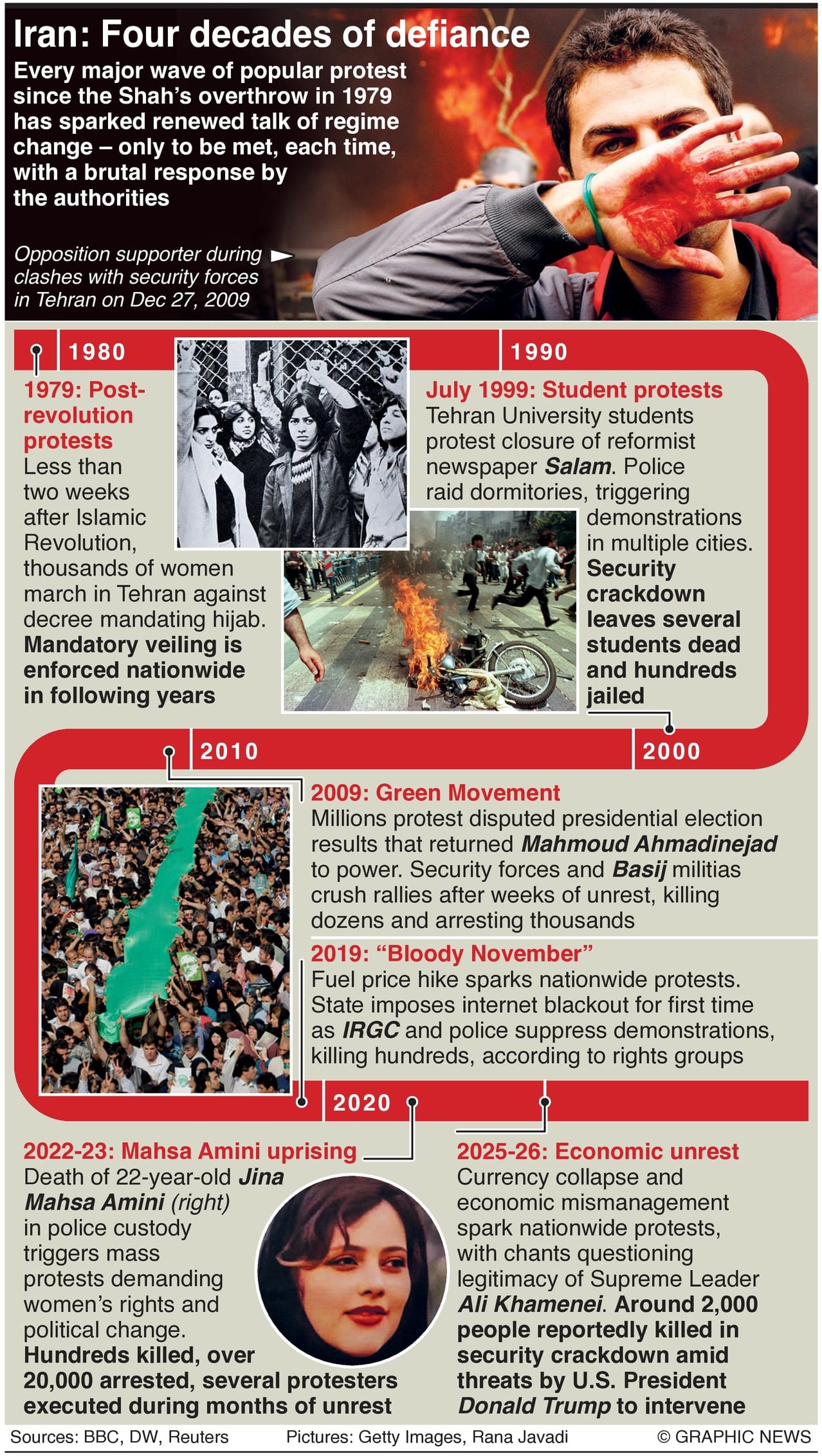
Less than two weeks after the 1979 revolution, thousands of women marched in Tehran against a decree mandating the hijab. The protests were swiftly suppressed, and compulsory veiling was enforced nationwide in the years that followed.
Two decades later, unrest resurfaced on university campuses. In July 1999, students at Tehran University protested the closure of the reformist newspaper Salam. A police raid on student dormitories triggered demonstrations in several cities before security forces moved in, leaving several students dead and hundreds imprisoned.
The most significant challenge to the system came in 2009, after disputed presidential election results returned Mahmoud Ahmadinejad to power. Millions joined what became known as the Green Movement, accusing authorities of electoral fraud. After weeks of mass rallies, security forces and Basij militias crushed the protests, killing dozens and arresting thousands.
Economic grievances drove the next major uprising. In November 2019, a sudden fuel price hike sparked nationwide protests. Authorities imposed Iran’s first near-total internet blackout as police and the Islamic Revolutionary Guard Corps suppressed demonstrations. Rights groups say hundreds were killed in what became known as “Bloody November.”
In 2022, unrest erupted again after the death of 22-year-old Jina Mahsa Amini in police custody following her arrest by the morality police. Protests under the slogan “Woman, Life, Freedom” spread across the country, demanding women’s rights and broader political change. Hundreds were killed, more than 20,000 arrested, and several protesters executed during months of unrest, according to activists.
Most recently, in 2025 and 2026, a collapsing currency and deepening economic crisis triggered fresh nationwide protests, with demonstrators openly questioning the legitimacy of Supreme Leader Ali Khamenei. Reports suggest around 2,000 people were killed in the ensuing crackdown, amid heightened international tensions and threats by U.S. President Donald Trump to intervene.
Great reads for insights on Iran — Inside a slow-motion breakdown.
The Economic Roots Of Iran’s Protests—Djavad Salehi-Isfahani
Why This Time Is Different for Iran—Vali Nasr
Over 1,000 Feared Dead In Iran Protests
Over 1,000 people have been killed in the protests erupting across Iran including over 100 security personnel, more than at any time since 1979 – but the regime has warned it will retaliate if attacked by the U.S.
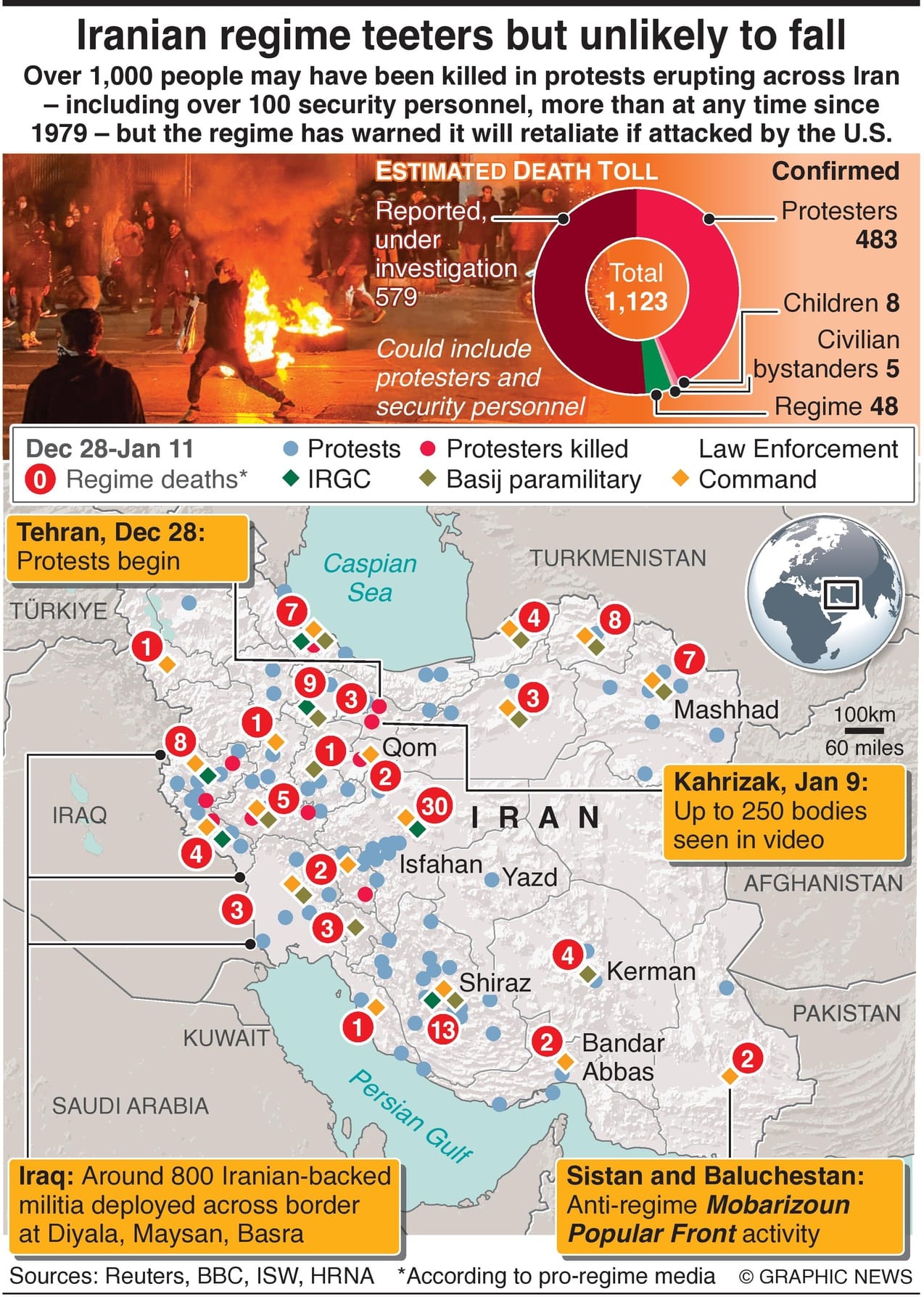
Amongst the 544 confirmed deaths so far, according to Human Rights Activists News Agency, there are 483 protesters, 8 children and five civilian bystanders. Another 579 deaths have been reported and are under investigation.
Pro-regime media report that at least 114 security personnel from the Law Enforcement Command (LEC), Basij paramilitary, and Iranian Revolutionary Guards Corps have died since protests began on December 28. In Isfahan province alone, 30 LEC and IRGC were killed, and, with other security personnel apparently missing from the official tally, the actual death toll is believed to be considerably higher. Over 70 regime security personnel died in the 2022-2023 Mahsa Amini protest movement.
Iran’s Opposition Struggles To Unite
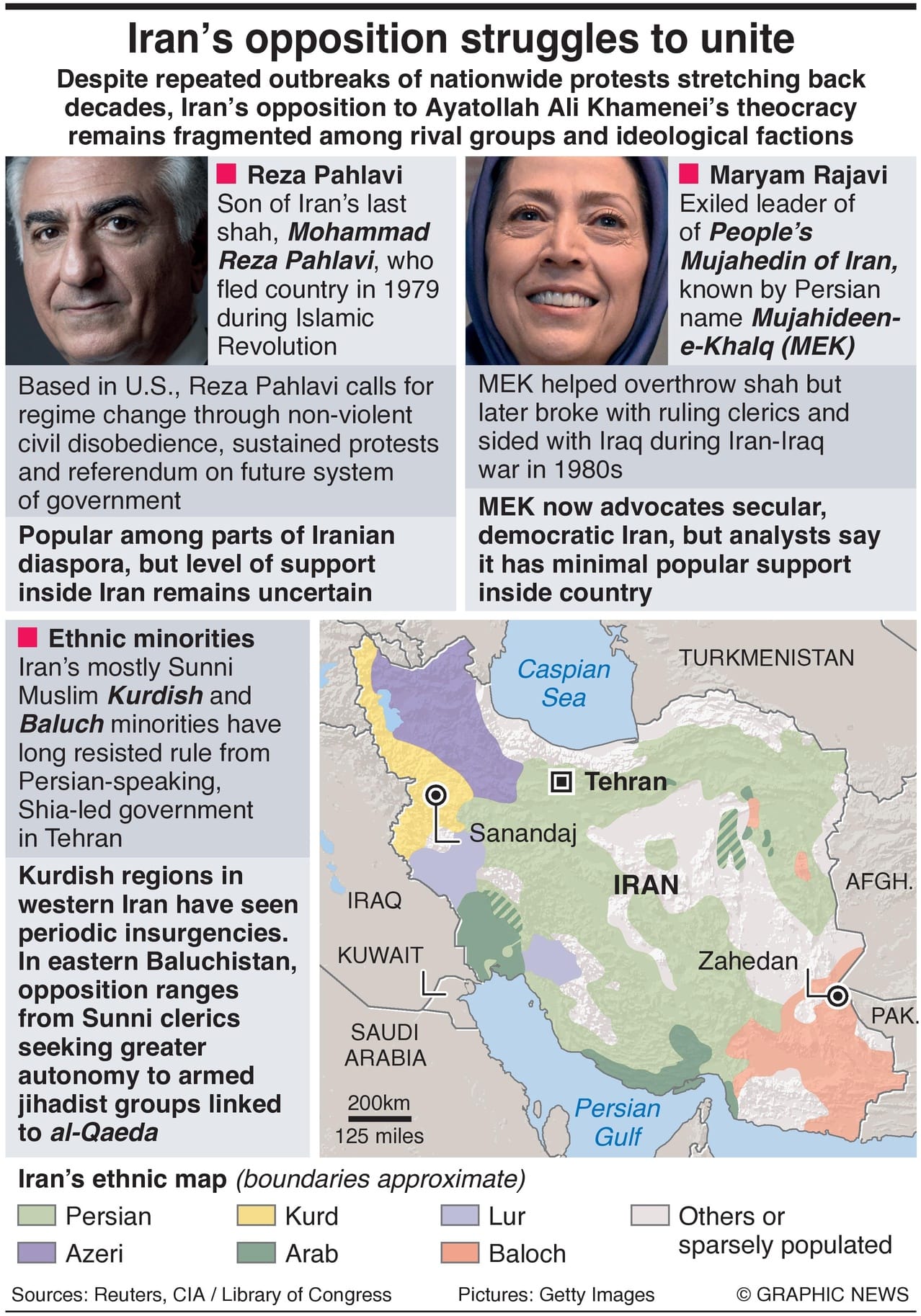
Despite repeated outbreaks of nationwide protests stretching back decades, Iran’s opposition to Ayatollah Ali Khamenei’s theocracy remains fragmented among rival groups and ideological factions.
The clerical establishment is currently under mounting pressure as economic hardship fuels public discontent. Inflation has surged sharply since a conflict last June, when Israeli and U.S. forces carried out airstrikes, primarily targeting Iran’s nuclear facilities.
Among the prominent opposition figures is Reza Pahlavi, son of Iran’s last shah. Based in the U.S., Pahlavi advocates regime change through non-violent civil disobedience, sustained protests, and a referendum on the country’s future system of government. While he enjoys support among segments of the Iranian diaspora, his backing inside Iran remains uncertain.
Another key opposition leader is Maryam Rajavi, exiled head of the People’s Mujahedin of Iran (MEK or Mujahideen-e-Khalq). The MEK initially helped overthrow the shah but later broke with the clerical rulers and sided with Iraq during the Iran-Iraq war in the 1980s. Today, the group calls for a secular, democratic Iran, though analysts say it has minimal popular support within the country despite some backing from Western politicians.
Ethnic minorities in Iran, particularly Sunni Kurdish and Baluch populations, have also long resisted the Persian-speaking, Shia-led government. Kurdish regions in western Iran have experienced periodic insurgencies, while opposition in eastern Baluchistan ranges from Sunni clerics seeking greater autonomy to armed jihadist groups linked to al-Qaeda.
editor-tippinsights@technometrica.com