
By Pinelopi Koujianou Goldberg, Project Syndicate
Export restrictions, like those depriving China of Nvidia’s most advanced chips, may buy time by curtailing a competitor's access to frontier capabilities made elsewhere. But in any technological conflict, policymakers must remember that slowing a rival is not the same as strengthening oneself.
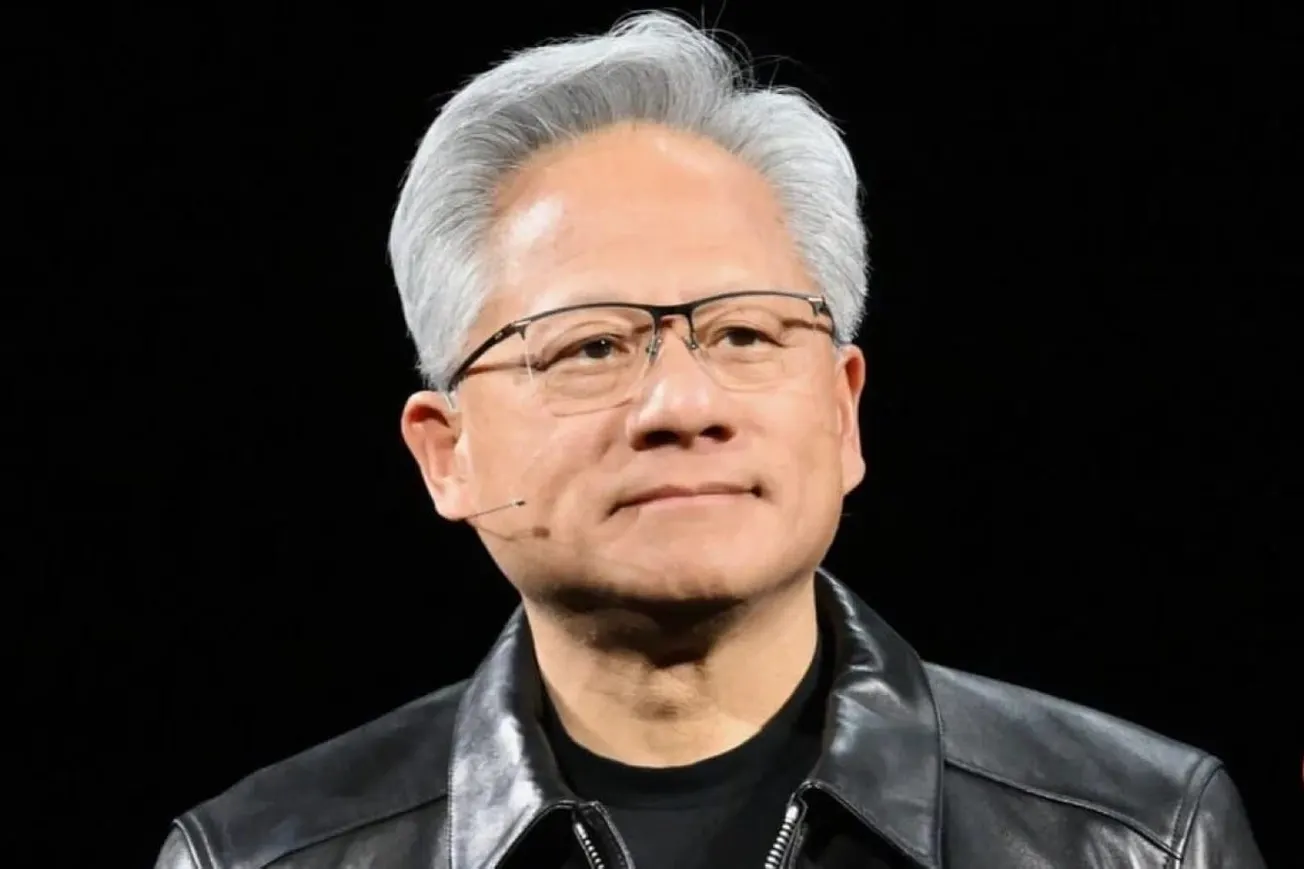
NEW HAVEN—The crisis at Nvidia, culminating in the resignation of its founder and CEO, Jensen Huang, raises important questions about corporate governance, national security, and the future of AI. At the center of the controversy are allegations that advanced Nvidia chips may have skirted export controls and reached China through intermediaries in third countries. But the episode also raises a fundamental economic question: Why, after decades of substantial investment in its semiconductor industry, does China still depend on foreign suppliers for the most advanced chips?
China recognized the strategic importance of semiconductors long ago. In 2014, it established the National Integrated Circuit Industry Investment Fund, commonly known as the “Big Fund,” to support domestic producers. With sustained government assistance, Chinese firms have made substantial progress in manufacturing older-generation chips, but they have been unable to match the most advanced manufacturing capabilities of firms such as Taiwan’s TSMC, which produces the cutting-edge chips designed by Nvidia.
This relative underperformance is striking given China’s success in other industries—from electric vehicles to pharmaceuticals—where research shows rapid growth in domestic innovation. In a recent paper, my co-authors and I document the extensive role of government support in the development of the global semiconductor industry. Our analysis finds that, after accounting for market size, China is not an outlier in the use of subsidies. Japan, South Korea, and Taiwan all relied on active industrial policies during the early development of their chip industries.
But these successful cases had another feature in common: domestic investment was accompanied by sustained access to foreign technology. As recent research by John David Minnich (his PhD dissertation) shows, China historically had less bargaining power to obtain the technology transfers it sought in semiconductors, compared to other industries such as automobiles.
In a second paper, my co-authors and I show how much these differences matter. Semiconductor manufacturing involves far more than purchasing sophisticated equipment or obtaining a chip design. The fabrication process calls for hundreds of interdependent steps, continuous adjustments to production processes, and accumulated experience in identifying defects and improving yields. Much of the relevant knowledge is tacit, meaning it is difficult to document fully in blueprints or technical manuals.
Moreover, the knowledge required to remain at the technological frontier is distributed across countries and firms. Foundries work closely with equipment suppliers, chip designers, and software developers; engineers regularly move between production facilities, including within multinational firms; and foreign investment and joint ventures transmit expertise across borders. Our research finds that such cross-border learning contributes substantially to productivity improvements, particularly for countries attempting to catch up with established producers.
This distinction helps explain both the potential effectiveness and the limits of US export controls. Even if a finished Nvidia chip is smuggled in, the recipient will not necessarily have the manufacturing equipment, process knowledge, supplier relationships, and engineering expertise to reproduce it competitively at scale. When it comes to China’s long-run technological capabilities, restrictions on advanced manufacturing equipment, software, and technical assistance probably matter more than the interception of individual shipments. In a stylized exercise, our model predicts large setbacks to Chinese production when access to foreign manufacturing knowledge is curtailed, identifying a mechanism through which the US has managed to slow China’s technological catch-up.
I would add two qualifications, though. First, restrictions can redirect innovation rather than simply suppress it. In early 2025, the Chinese AI firm DeepSeek demonstrated that improvements in algorithms can reduce the computing resources required for certain tasks, and its breakthrough was allegedly motivated by restrictions on the purchase of advanced chips. In another setting, research shows that China’s blocking of foreign digital applications stimulated innovation among domestic substitutes. Policies designed to slow China’s progress in a technology may accelerate the search for alternatives.
Second, restrictions can weaken the firms and networks on which US technological leadership depends. Limiting access to the Chinese market can reduce revenues and opportunities for American chip designers, even as it encourages Chinese customers to develop domestic alternatives.
Nvidia’s current leadership crisis adds a separate risk. As Anthropic’s Dario Amodei recently emphasized, access to computing power is among the main challenges facing AI companies today. A weakened Nvidia would not automatically deprive American firms of advanced chips, but it could pose risks to their future supplies.
Export restrictions may buy time by delaying competing countries’ access to frontier capabilities, but policymakers should evaluate their broader consequences. Are they merely curtailing access to particular chips and slowing knowledge transmission, or are they also affecting the incentives to develop substitutes and the competitiveness of domestic firms? In a technological conflict, slowing a rival is not the same as strengthening oneself.
Pinelopi Koujianou Goldberg, a former World Bank Group chief economist and editor-in-chief of the American Economic Review, is Professor of Economics at Yale University.
Loved it, hated it, or somewhere in between — tell us. Grade this article here and help shape what lands in your inbox next.
🧭 Power & Capital · November 18, 2026
Where state power meets the boardroom.
🔷 Democrats Launch Probes Into Trump Family Businesses And Administration
🔷 Why Has A Top House Democrat Sent Notices To 12 Trump Associates
🌍 Global Affairs
The world's flashpoints, in motion.
🟥 Yalta In Shenzhen? – Richard Haass, Project Syndicate
🟥 Trump, Xi And Putin Set For High-Stakes Trilateral Meeting In China – TIPP News
🟥 Watch: Red-Carpet Optics Set The Stage As Trump, Xi Meet For Crucial Summit – TIPP Video
🟥 US Warns Iran Of All-Out War Over Suspected Dirty-Bomb Threat – TIPP News
🟥 US Launches Fresh Strikes On Iranian Missile Site On Qeshm Island – TIPP News
🟥 Watch: Putin Claims Western Sanctions Can No Longer Stop Russia’s Economic Growth – TIPP Video
🏛️ National Affairs
The fights shaping America right now.
🟫 How Are Identity Thieves Stealing Millions Through Fake Student Accounts – TIPP News
🟫 Duffy Warned Congress Over 30 Times Of Air Traffic Risks Before Nationwide Ground Stop – Virginia Grace McKinnon, The Daily Signal
🟫 Senate GOP Quietly Roots For Van Hollen In Democrat Leadership Fight – Reagan Reese, The Daily Signal
🟫 Mamdani’s NYPD Shake-Up Is About Empowering The Rioter’s Veto – Jarrett Stepman, The Daily Signal
🟫 Solicitor General To Argue In Ohio Jewish Zoning Dispute Case – Andrew Rice, The Daily Signal
🟫 Watch: World’s Largest Urban Wildlife Crossing Ready To Open In Los Angeles – TIPP Video
📈 Economy
Prices, policy, and the pressure on your wallet.
🟩 Fed's Christopher Waller Urges Aggressive Rate Hike As Inflation Persists – TIPP News
💼 Markets & Business
The deals and tickers making moves.
🟧 Highly Anticipated Game 'GTA 6' Generates Over $1.5 Billion Before Official Release – TIPP News
🟧 Watch: Why ‘GTA 6’ Is Driving A 35-Petabyte Surge In New Zealand – TIPP Video
🟧 Watch: Licensed To Sell — Luxury Giants Clash For Screen Time In Next James Bond Film – TIPP Video
Letters to the editor email: editor-tippinsights@technometrica.com
Subscribe Today And Make A Difference. Consider supporting Independent Journalism by upgrading to a paid subscription or making a donation. Your support helps tippinsights thrive as a reader-supported publication. Contact us to discuss your research or polling needs.
Reach our audience. For sponsorship and advertising opportunities, visit our Partner With Us page.