
Editor’s Note
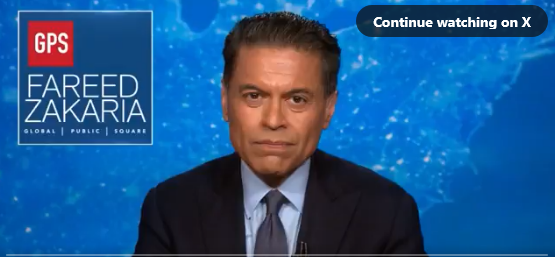
The following is a verbatim transcript of recent remarks by CNN host Fareed Zakaria. The text has been lightly cleaned for transcription errors but not substantively edited.
Zohran Mamdani ran on a promise to make New York affordable — a mandate for a city we can afford. Last week, he unveiled a budget that is, in a word, unaffordable. New York has been fiscally profligate for so long that the headline number, $127 billion, produces little shock.
But for perspective, this is similar to the annual expenditures of a mid-sized nation with all the expenses a country requires, like Greece or Thailand, devoted to governing one city. New York City’s budget has ballooned in recent years.
Michael Bloomberg’s last budget, adopted for fiscal year 2014, totaled about $70 billion. So in little more than a decade, the budget has nearly doubled, growing faster than inflation and faster than the city’s economic growth.
And much of it has happened as the city has been losing the one thing that makes big government easier to finance: people. New York City’s population fell sharply amid the pandemic, with a 5% decline from April 2020 to July 2022.
More recent city reports show a rebound, but the city remained below its 2020 baseline as of 2024. The arithmetic is brutal. A larger bill is divided among fewer payers.
Per person, the imbalance is stark. Using the Lincoln Institute’s fiscally standardized numbers, New York’s general spending in 2023 was more than 30% higher per capita than Los Angeles and more than double Houston. And what do New Yorkers get for this?
Look at New York City schools, the largest school district in the country. The city’s education budget has climbed while enrollment has shrunk. The DOE budget has risen from roughly $34 billion in 2019 to over $40 billion, while the DOE says per-student spending is projected to reach nearly $35,000 in fiscal year 2026, among the highest in the nation.
The outputs — graduation numbers, test scores, and reading levels — are at best middling, often comparable to places that spend a fraction of what New York does.
Now come the taxes, because every political argument in New York eventually ends up at the same curbside. Who will pay?
New York already sits at the extreme end of the American tax spectrum. For high earners, the combined state plus city income tax reaches 14.776%. Add federal taxes and the combined marginal rate can exceed 50%, reaching roughly 55% on certain investment income.
New Yorkers pay tax rates comparable to European countries that provide in return universal health care, free college education, and amazing infrastructure. New Yorkers get some 300 miles of sidewalk sheds.
On business taxation, the city is also off the charts. The Citizens Budget Commission reports that New York City business activity faces the country’s highest combined corporate tax rate, 17.44%, once state, city, and regional layers are stacked.
Mamdani wants to hike income and corporate rates even further, or else he says he will raise property taxes by almost 10%. Property taxes already made up more than 27% of the cost of homeownership in the city as of 2022, above the national average.
New York is really a prime example of a problem Democrats seem unwilling to confront. Blue cities are out of control, promising more, spending more, delivering less, and pushing off the fiscal problems to some future day.
Take Los Angeles, another one-party metropolis wrestling with affordability and disorder. The city’s homelessness budget for fiscal year 2025–26 totals about $950 million. The LA Homelessness Services Authority reported that in 2023, homelessness was up 9% countywide and 10% in the city.
And a 2024 AP account noted that homelessness has surged 70% countywide since 2015 and 80% in the city. All this amid public frustration despite billions spent. An audit reviewed $2.4 billion in city homelessness funding and found that officials could not reliably track where it went or what it achieved.
Or take Chicago, with a mayor whose approval rating is deep underwater, where the pension promises are so large that they will surely bankrupt the city at some point. What is the theory of good government here?
If the answer is keep adding programs, the city will keep producing unaffordability, because unaffordability is what happens when government becomes a machine that grows faster than the society it governs.
Zohran Mamdani’s basic instinct is correct. Focus on affordability, especially housing. But not by providing government subsidies. These only seem to have driven up the cost of rent, as subsidies naturally do.
The city’s rental assistance spending rose from $263 million in fiscal year 2020 to $1.34 billion in the most recently reported fiscal year. That is a fivefold increase in a handful of years, and housing costs only got worse.
Matt Yglesias persuasively argues that the city should make it easy and routine to just build abundant market-rate housing. That will bring in more people, expand the tax base, fill the schools, and increase local GDP.
And that will make the budget affordable.
For Democrats in city halls, there is a choice. Stop governing as if the goal is to announce new entitlements and instead make government work. Safer streets, functioning schools, predictable sanitation, and above all, enough housing that the middle class can find places to live.
New York City does not need more soaring rhetoric. It needs more homes.
Watch Video
Iran’s Secret Shoulder-Fired Missile Deal With Russia
Iran secretly signed a $589 million arms deal to acquire one of Russia’s most modern man-portable air defense systems (MANPADS) to rebuild air defenses damaged during last year’s war with Israel, the FT reports.

Citing leaked internal documents and several people familiar with the matter, the Financial Times newspaper said the agreement was signed in Moscow in December and commits Russia to deliver 500 Verba launch units, 2,500 9M336 missiles, and 500 Mowgli-2 night-vision sights in three tranches between 2027 and 2029.
According to the report, the deal was negotiated between Russia’s state arms exporter Rosoboronexport and the Moscow representative of Iran’s Ministry of Defense and Armed Forces Logistics (MODAFL).
The disclosure of the alleged agreement comes as Donald Trump has assembled a large U.S. military presence in the Middle East and warned Tehran of potential strikes unless it agrees to limits on its nuclear program.
Ruslan Pukhov, director of the Moscow-based Center for Analysis of Strategies and Technologies, said the Verba systems offer a relatively cost-efficient way for Russia to strengthen Iran’s air defenses without significantly depleting its own stockpiles.
Mexican Military Kills Drug Cartel Boss “El Mencho”
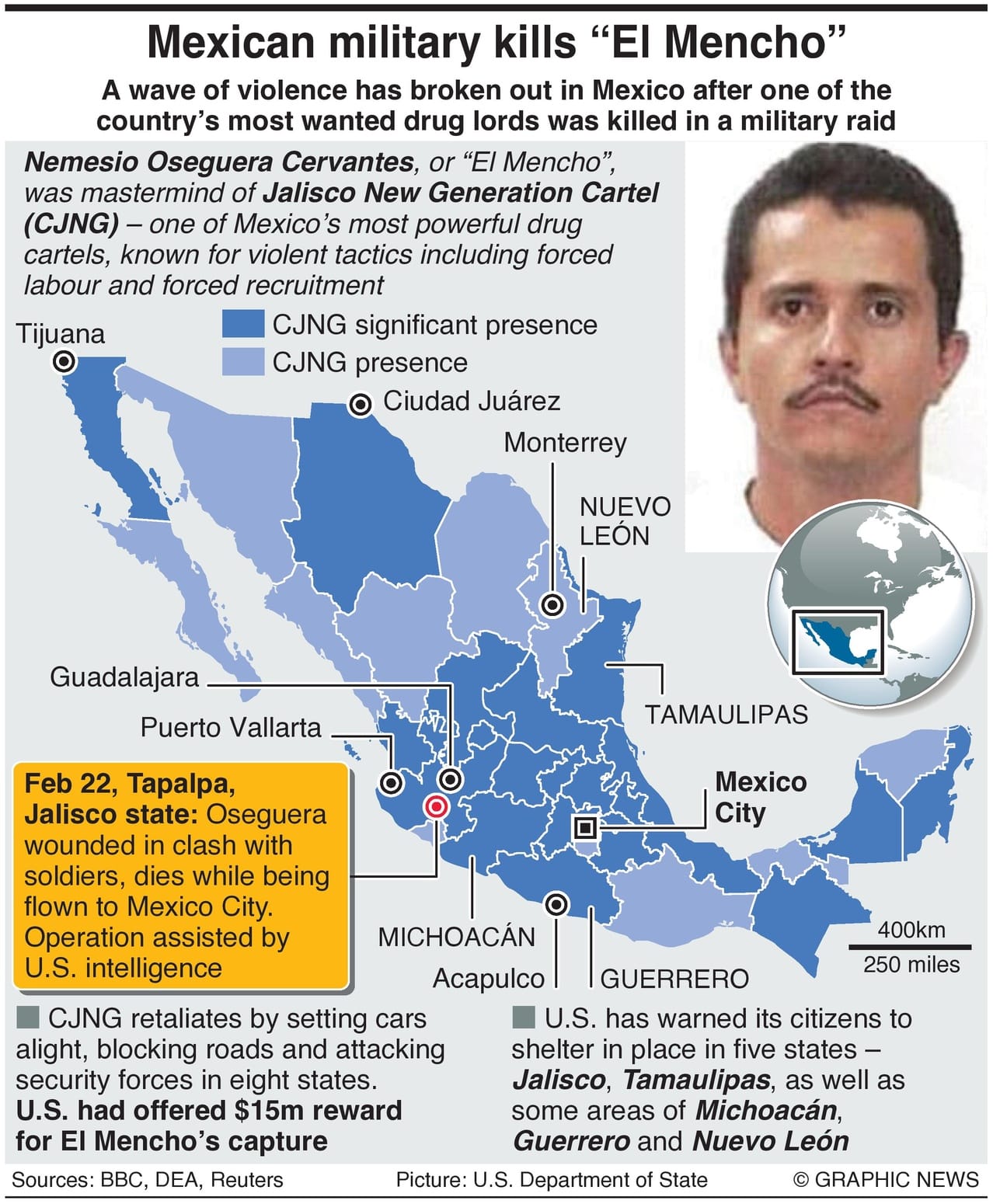
One of Mexico’s most notorious drug lords, Nemesio Oseguera, or “El Mencho,” was killed in a military raid on Sunday, sparking widespread retaliatory violence.
Mexican President Claudia Sheinbaum has been under mounting pressure from the U.S. to intensify her offensive against drug cartels blamed for producing and smuggling drugs, particularly the synthetic opioid fentanyl, across the border.
Mr. Oseguera, 60, the mastermind of the powerful Jalisco New Generation Cartel (CJNG) died in custody after being injured in a military operation by Mexican special forces in the town of Tapalpa on Mexico’s Pacific coast in Jalisco state, according to Mexico’s defense ministry.
His body arrived in Mexico City yesterday afternoon in a heavily guarded convoy of National Guard troops.
White House press secretary Karoline Leavitt later posted on social media that the United States provided intelligence support.
Catch up on today’s highlights, handpicked by our News Editor at TIPP Insights.
1. Xi Congratulates Kim, Reaffirms Beijing’s Commitment To Pyongyang
2. What Trump’s Iran Pressure Means As Tehran Protests Resume
3. UK Police Arrest Ex-Ambassador Over Epstein-Linked Case
4. Europe Warns Trump’s New Tariffs Put Trade Deals At Risk
5. Taiwan Seeks Answers After Supreme Court Ruling Shakes U.S. Tariffs
6. How A Military Raid Killed Mexico’s Top Drug Lord
7. U.S. Tourists Stranded As Cartel Violence Erupts In Mexico
8. The Nation’s Priorities Before The State Of The Union
9. Texas Tops U-Haul Growth Index, California Last Again
10. Dallas And Austin Lead In New Corporate Headquarters
11. New York And New Jersey Lose Hundreds Of Billions In Income Migration
12. Supreme Court Tariff Decision Undercuts U.S. Leverage On China
13. Why AI Agents Are Rapidly Rewriting Software Jobs
14. Human Rights Are Losing Ground Worldwide, UN Warns
15. OpenAI Signs Major Consulting Deals To Expand Enterprise AI
16. Hegseth To Meet Anthropic CEO Amid Tensions Over Military AI Usage: Report
17. What The East Coast Blizzard Means For Air Travel This Week
18. Supreme Court Takes Up Colorado Climate Lawsuit Against Oil Giants
19. Mortgage Rates Fall Below 6% For First Time Since 2022
20. What Happened When An Armed Intruder Entered Trump’s Florida Estate
21. Why Homeland Security Is Monitoring Cartel Activity Inside The U.S.
editor-tippinsights@technometrica.com