By Pegah Banihashemi, Project Syndicate | March 1, 2026
Ayatollah Ali Khamenei’s authority rested on a mix of religious legitimacy, military loyalty, and economic control, all anchored within constitutional mechanisms that concentrate power while preserving the outward appearance of legality. This authoritarian system will most likely prevent genuine, lasting change in Iran.
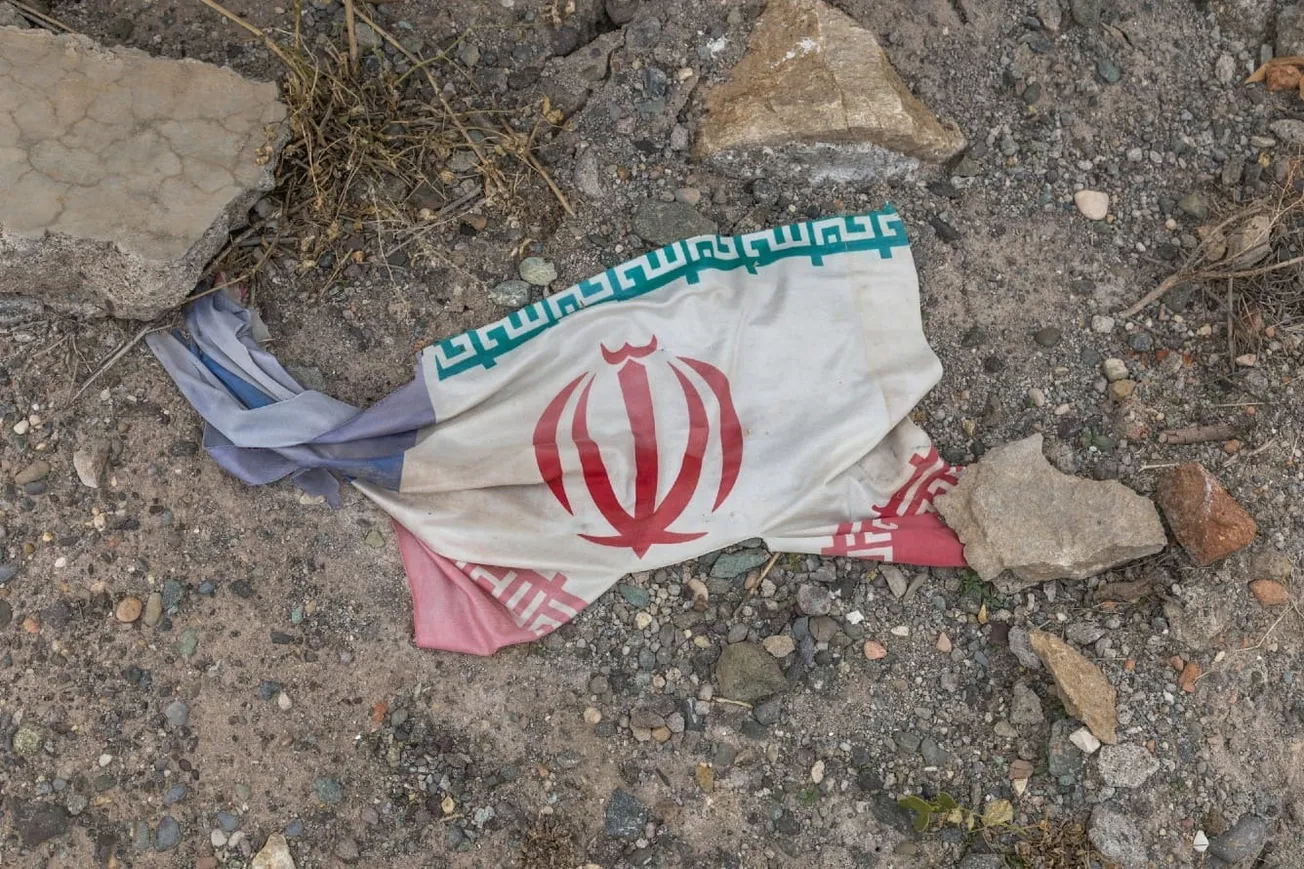
CHICAGO – Within hours of the massive explosion near the Tehran compound of Iran’s supreme leader, Ayatollah Ali Khamenei, on the morning of February 28, Israeli and American sources announced – and Iranian state media later confirmed – that Khamenei had been killed.
Across Iranian cities and among diaspora communities, spontaneous celebrations erupted, a catharsis of the public anger accumulated over decades of repression under Khamenei’s regime, including the violent crackdown in January on nationwide protests, in which government forces reportedly killed or detained tens of thousands of demonstrators. But the shock of Khamenei’s death does not necessarily signal the collapse of the security and political apparatus he spent nearly four decades building. This institutional structure of power may indeed be his most enduring legacy.
When the Islamic Republic’s founder, Ayatollah Ruhollah Khomeini, died in 1989, few political insiders imagined Khamenei as a dominant or transformative successor. Under article 109 of Iran’s constitution, the supreme leader was originally required to hold the status of marjaʿ-e taqlid, or a grand ayatollah, the highest level of Shia religious authority – and a qualification Khamenei did not possess.
Within months of Khomeini’s death, however, article 109 was amended. The requirement of achieving the supreme clerical rank of grand ayatollah was replaced with more general political and religious qualifications. At the same time, the model of a single supreme leader endowed with expansive powers was reinforced. Many people, including even influential revolutionary figures, believed Khamenei would play a more symbolic role, delegating governing authority to elected officials such as the president. They were badly mistaken.
Over the following decades, Khamenei gradually transformed the position of Supreme Leader from a supervisory authority into the Islamic Republic’s central command structure. His most consequential political innovation was the reconfiguration of the Islamic Revolutionary Guard Corps (IRGC). Whereas Khomeini emphasized limiting military involvement in political affairs, Khamenei relied on article 110 of the constitution – which grants the supreme leader command over all armed forces – to cultivate a fiercely loyal security apparatus.
No longer just a military institution, the IRGC under Khamenei became a political and economic conglomerate embedded in nearly every major sector of Iran’s economy, from infrastructure and construction to telecoms, energy projects, and the oil trade. The system Khamenei created was one in which military loyalty, financial interests, and regime survival became mutually reinforcing. His political authority was secured as much by institutional dependency as by ideology.
To consolidate his power further, Khamenei wielded control over the Guardian Council, which was established under Article 91 of the constitution with the aim of maintaining institutional balance. The Guardian Council comprises six Islamic jurists directly appointed by the supreme leader and six legal experts nominated by the head of the judiciary and approved by parliament. But under article 157, the supreme leader appoints the head of the judiciary, thus having final say over all 12 members. Over time, the Guardian Council’s authority to vet parliamentary candidates effectively allowed it to narrow the political field to only those individuals deemed acceptable by the regime.
A similar dynamic developed within the Assembly of Experts. Under articles 107 and 111 of the constitution, the Assembly is responsible for supervising the supreme leader and appointing his successor. The body is supposed to be one of the few constitutional checks on his authority. But in practice, candidates must first be approved by the Guardian Council, creating a feedback loop in which the supreme leader’s influence extends into the institution tasked with overseeing him.
Iran’s constitution does provide a legal mechanism for leadership succession. Upon the supreme leader’s death or incapacity, article 111 stipulates that executive authority temporarily transfers to a council composed of the president, the head of the judiciary, and a Guardian Council jurist chosen by the Expediency Discernment Council. But this presumes institutional independence, which Khamenei undermined so effectively.
Even so, the system Khamenei helped create will outlive his death. The networks governing the judiciary, security establishment, and clerical institutions remain deeply interconnected. During Khamenei’s rule, authority increasingly depended on a mix of religious legitimacy, military loyalty, and economic control, all anchored within constitutional mechanisms that concentrate power while preserving the outward appearance of legality. Khamenei’s successor will inherit not just a political office, but an institutional architecture designed to reproduce centralized authority.
Iran therefore faces a moment of profound authoritarian uncertainty, as neither regime collapse nor a predictable transition seems likely. Governing institutions will remain intact even as political legitimacy weakens and succession becomes contested, perhaps violently so. Without structural reforms, the same concentration of power could be transferred to a new supreme leader, perpetuating Iran’s political stagnation.
Meaningful, lasting change in Iran will depend less on who succeeds Khamenei than on whether his institutional legacy is dismantled. The problem is that the beneficiaries of the old system are unlikely to acquiesce quietly in an entirely new governing framework. But without an overhaul of executive power, the IRGC’s economic dominance, and the mechanisms controlling political participation, Iran’s authoritarian system will merely re-equilibrate.
Pegah Banihashemi is a constitutional law scholar at the University of Chicago Law School and a human rights law instructor whose work focuses on power structures and political change in the Middle East.
Copyright Project Syndicate
Who Might Replace Iran’s Supreme Leader?
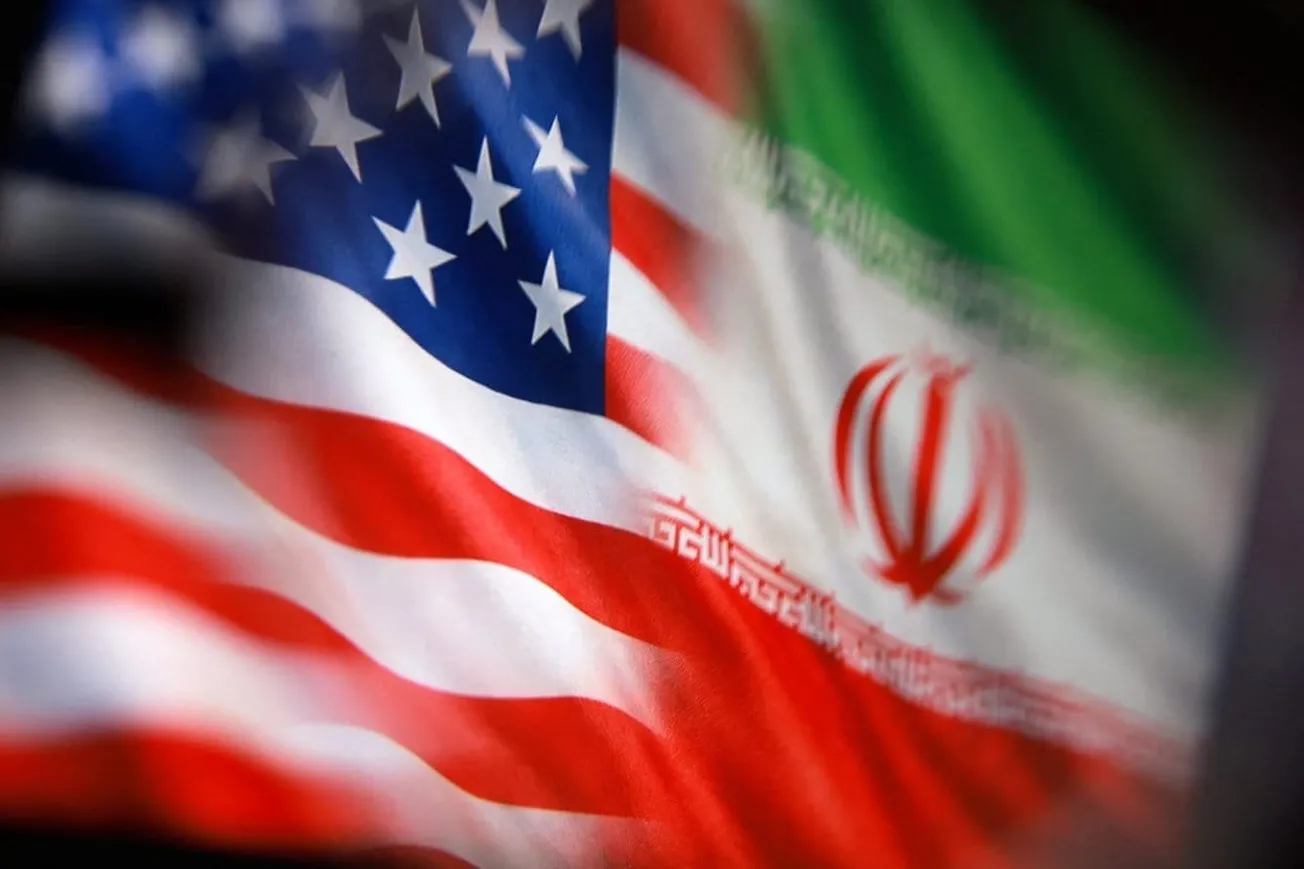
Iran’s clerical regime is facing the prospect of trying to find a successor to Supreme Leader Ayatollah Ali Khamenei following his killing in joint U.S.-Israeli strikes.
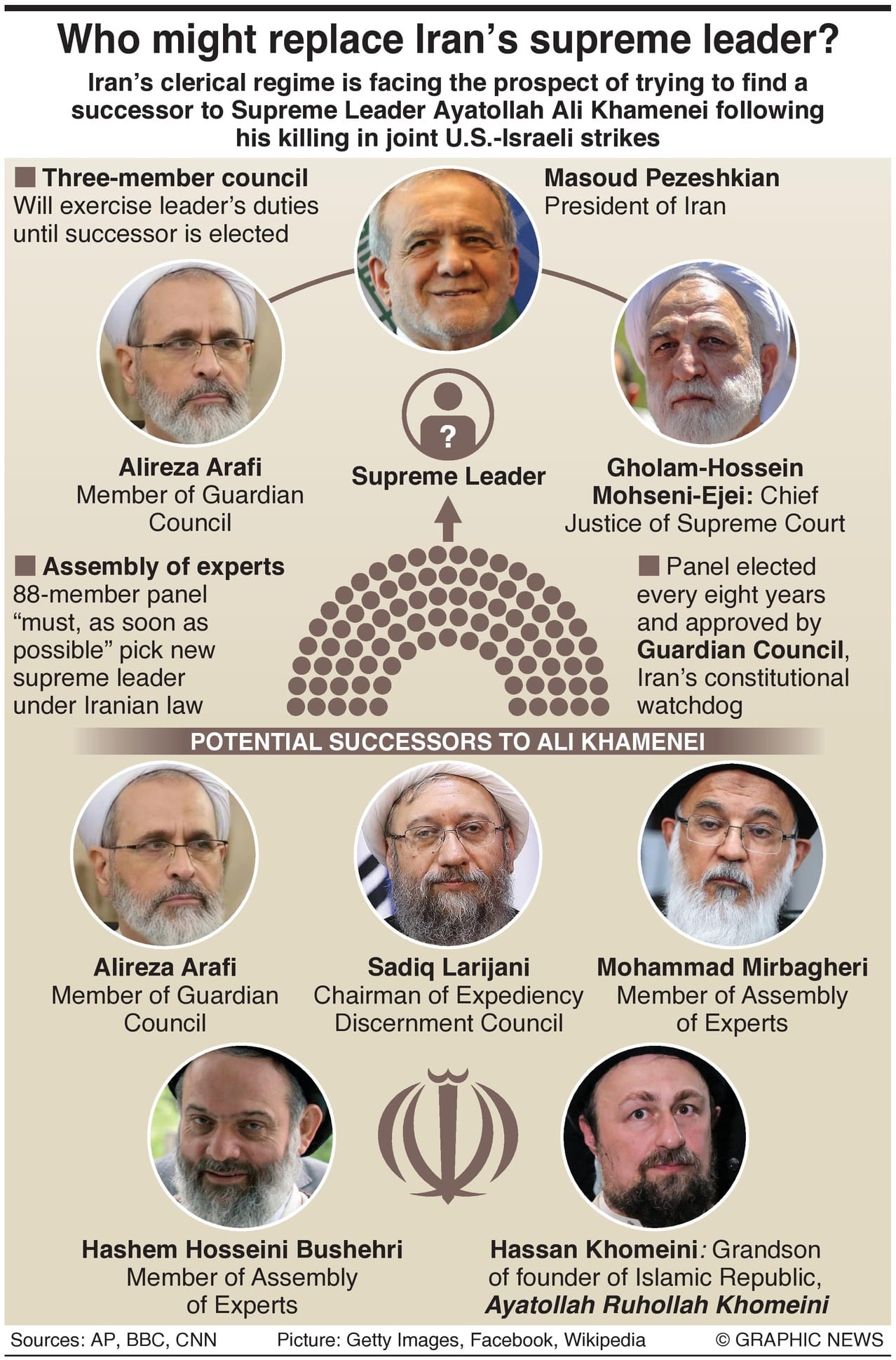
The veteran leader, who ruled with an iron fist for nearly four decades, has no officially declared heir. Instead, an elected body of 88 senior clerics, known as the Assembly of Experts, will select the next leader.
Under the constitution, if the supreme leader leaves office, his powers transfer temporarily to a council comprising the president, the head of the judiciary, and a senior cleric from the Guardian Council until the Assembly of Experts selects a new leader.
On Sunday, Iran formed a provisional leadership council, naming Ayatollah Alireza Arafi, President Masoud Pezeshkian, and Gholam-Hossein Mohseni-Eje’i, the head of the judiciary, as members.
Selecting a new leader is a task that has been carried out by the Assembly of Experts only once since the Islamic Republic was established in 1979, when Khamenei was hastily chosen upon the death of Ayatollah Ruhollah Khomeini more than three decades ago, CNN said.
Smartphone Sales To Fall By 13% Amid RAM Shortage
The global smartphone market is predicted to see a record-breaking decline in 2026, fuelled by the international RAM shortage brought about by AI’s relentless hunger for memory chips.

With Apple just days away from launching a new iPhone – anticipated to be a low-cost model called the iPhone 17e – news that 2026 is forecast to witness a record decline in smartphone sales is not the sort of news CEO Tim Cook wants to hear.
The slump will be caused by AI’s insatiable hunger for RAM memory chips, which is seeing AI startups around the world buying up all the memory they can get their hands on – to the detriment of consumer electronics manufacturers the world over.
One of the hardest hit areas will be the cheaper end of the smartphone sector, where margins are tight. With RAM prices soaring by several hundred percent, these low-end players will be unable to shoulder the cost increases and will be forced to raise prices – some may not survive, and others could have to merge to brace against the decline.
Overall, the smartphone market is going to experience a kind of reset, with a fall in shipments of around 13% this year.
Such is the damage being caused by AI, that even by 2030, the International Data Corporation (IDC) predicts sales will only just be returning to 2025 levels.
Catch up on today’s highlights, handpicked by our News Editor at TIPP Insights.
1. Israeli Airstrike Targets Iran’s Council Of Experts In Qom
2. Drone Attacks Damage AWS Facilities In UAE And Bahrain
3. Trump Slams UK PM Starmer Over Refusal To Back Iran War
4. China Signals Support For Iran Without Entering Conflict
5. China And France Push For De-Escalation After U.S.-Israel Strikes On Iran
6. Russian Losses Top 1.2 Million, Ukraine General Staff Claims
7. Oil Shipping Costs Hit All-Time High Amid Iran Tensions
8. U.S. Tells Citizens To Depart 14 Nations As Iran Conflict Widens
9. Markets Turn Cautious As U.S.-Iran War Enters Fourth Day
10. Drones Hit U.S. Embassy As Iran Expands Retaliation
11. Interior Department Leak Sparks Fight Over Park Narratives
12. Rising Oil Prices From Iran War Cloud U.S. Economic Outlook
13. Dow And S&P Futures React On Middle East Tensions
14. Lawmakers Cite Lack Of Proof On Imminent Iranian Threat
editor-tippinsights@technometrica.com