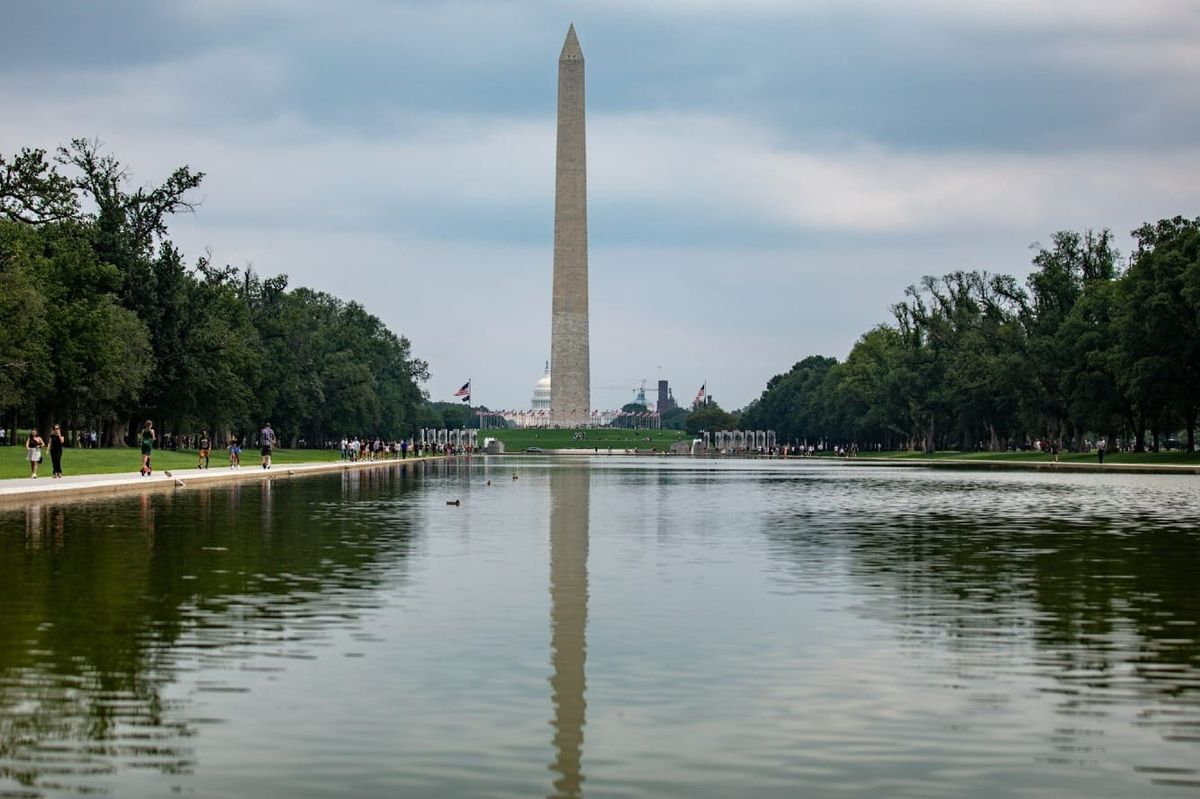
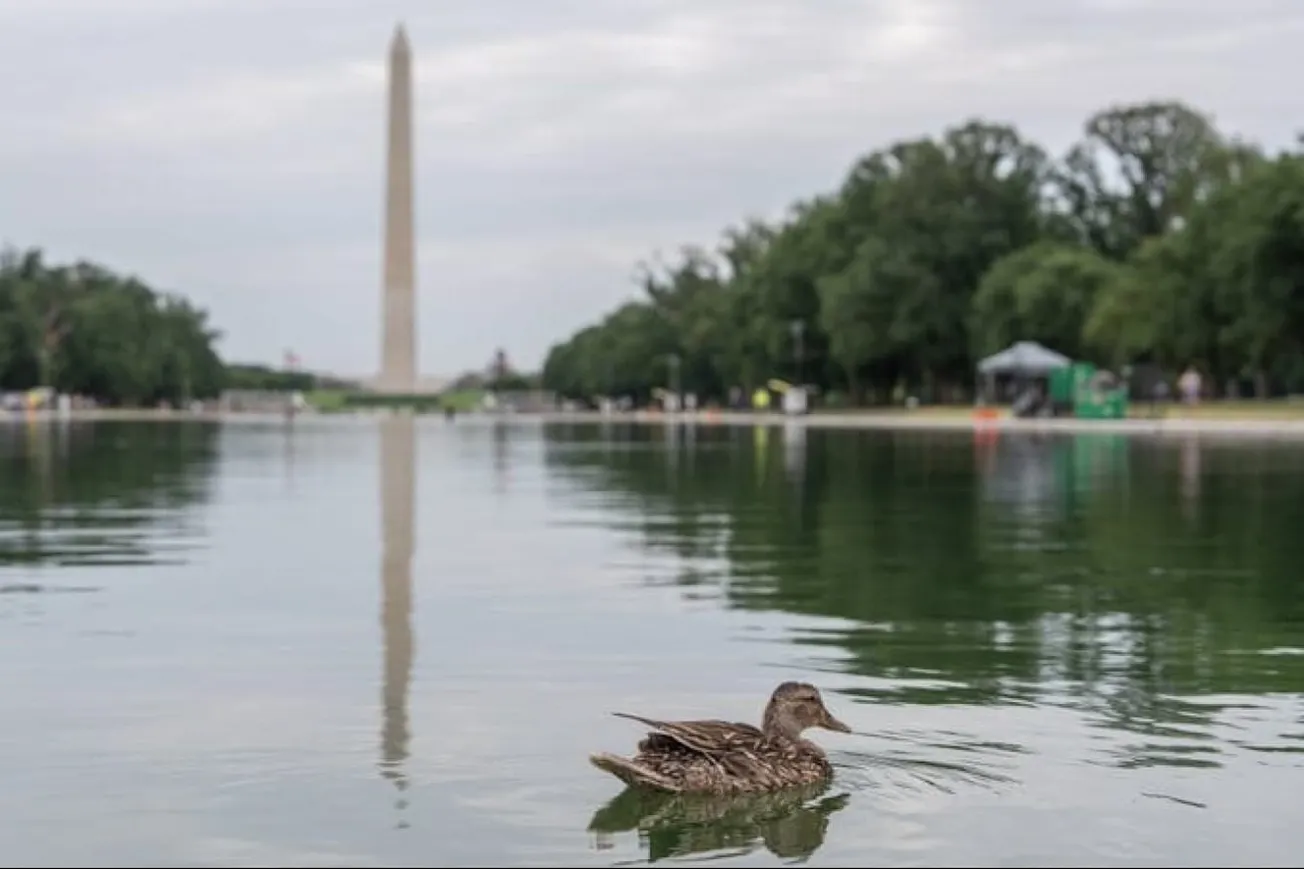
The discovery of a dead duckling in the Lincoln Memorial Reflecting Pool has renewed scrutiny of water quality conditions at one of Washington's most recognizable landmarks, just days after a multimillion-dollar renovation project was completed.
Photos circulating online showed the duckling floating in the pool near visible algae growth, prompting public concern about whether the recent refurbishment efforts adequately addressed environmental conditions within the historic site. The discovery comes shortly after the completion of more than $13 million in improvements intended to enhance the appearance and maintenance of the Reflecting Pool.
The National Park Service has been using hydrogen peroxide treatments to combat algae growth in the Reflecting Pool. Officials have stated that testing confirms peroxide concentrations remain within safe limits and are comparable to levels used in some natural swimming environments. The agency has also indicated that additional maintenance work, including draining portions of the pool, may be undertaken to further reduce algae accumulation.
Environmental experts emphasize that algae growth alone does not necessarily indicate the presence of harmful toxins and that further testing would be required to determine whether cyanobacteria played any role. Wildlife deaths can occur for many reasons, including disease, injury, predation, or natural causes.
Related Tweet:
Dead duckling found in Reflecting Poolhttps://t.co/OSm4iGpjrV pic.twitter.com/dUAFpyqJnp
— The Hill (@thehill) June 22, 2026
Also Read:
 TIPP Staff