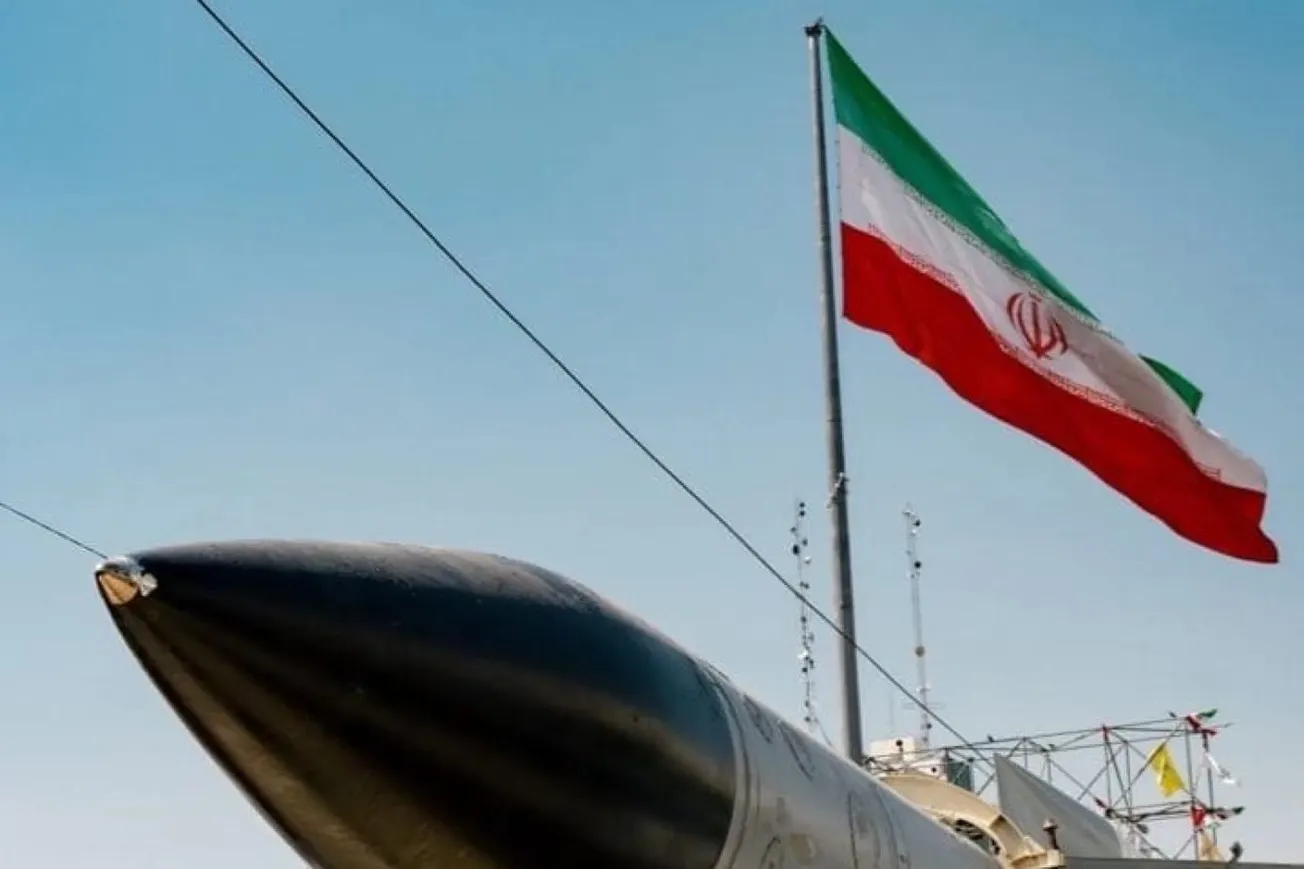
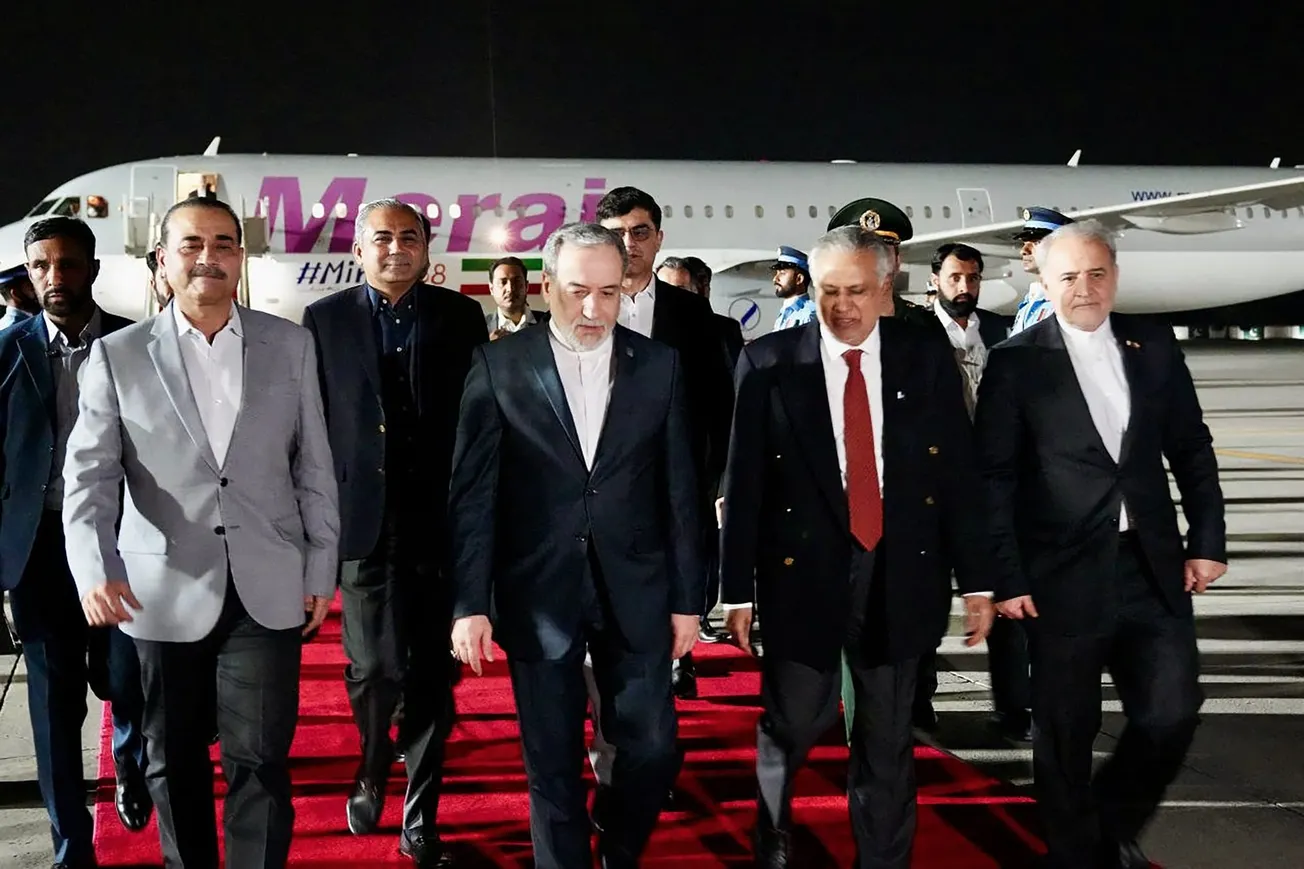
There is a particular kind of diplomacy reserved for the desperate: the kind where the point is not what happens in the room but who sees you walking in. When Iran’s foreign minister, Abbas Araghchi, boards his flight to Moscow on Monday, he will have visited three capitals in three days. Not because the meetings produced results, but because Tehran needs the world to see it is still welcome. The Americans just walked away from the table. The least Iran can do is show up at someone else’s.
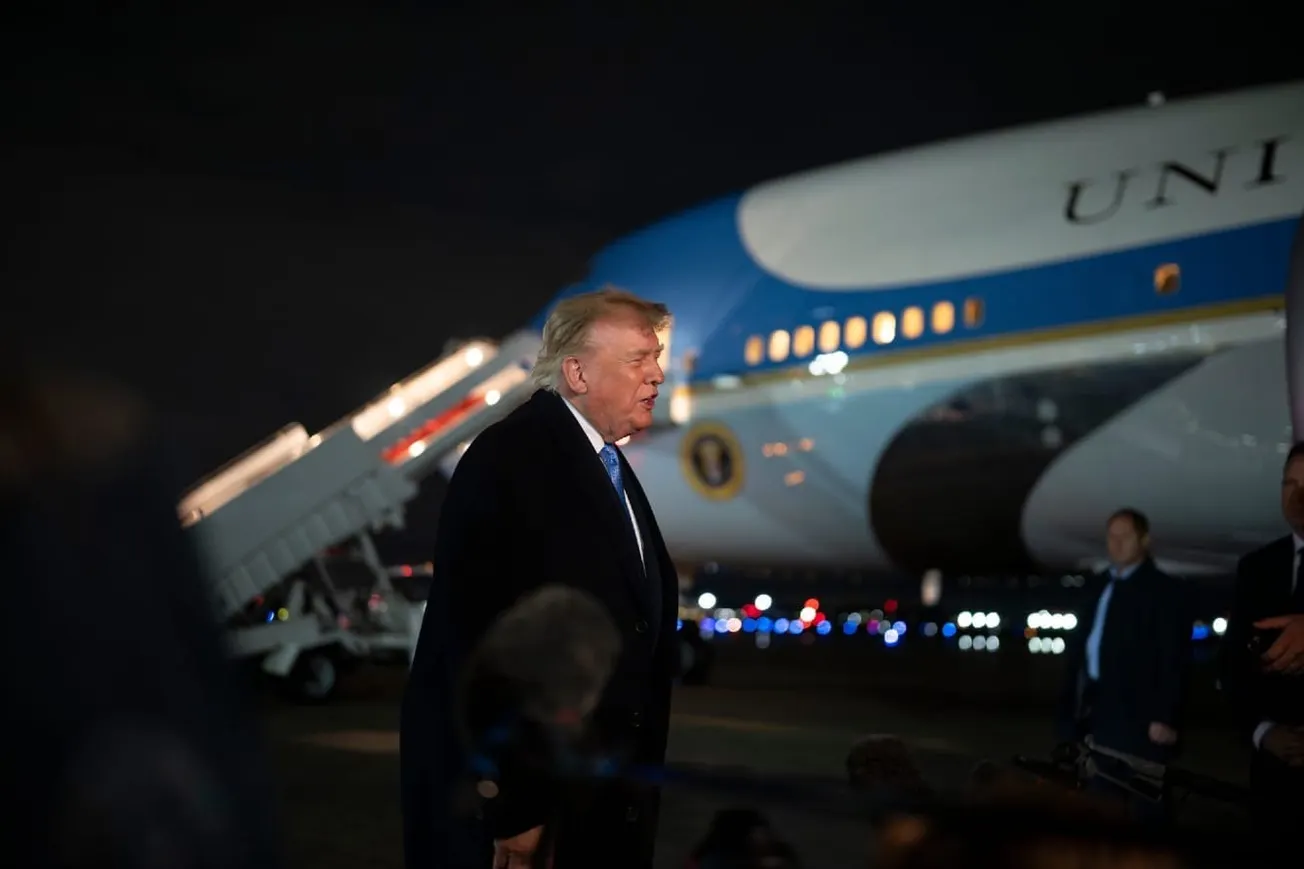
Araghchi’s weekend was a blur of motion without progress. He flew to Islamabad to meet Pakistan’s prime minister and army chief. He flew to Muscat to meet Oman’s sultan. He flew back to Islamabad. At each stop, Iran transmitted “written messages” to the United States through intermediaries, outlining red lines on nuclear issues and the Strait of Hormuz. These were not negotiations, Iranian media stressed, just “clarifications of position.” Meanwhile, President Trump pulled his envoys Steve Witkoff and Jared Kushner from the Pakistan talks at the last minute. Araghchi was left to tell reporters he had “yet to see if the US is truly serious about diplomacy.” Trump's response on Sunday was blunt: if Iran wants to negotiate, "they can call us."
Now Araghchi is heading to Moscow. The welcome will be warm, but the results won’t.
This should surprise no one. The architecture of the Russia-Iran relationship was designed for exactly this moment, and it was designed to fail Iran.
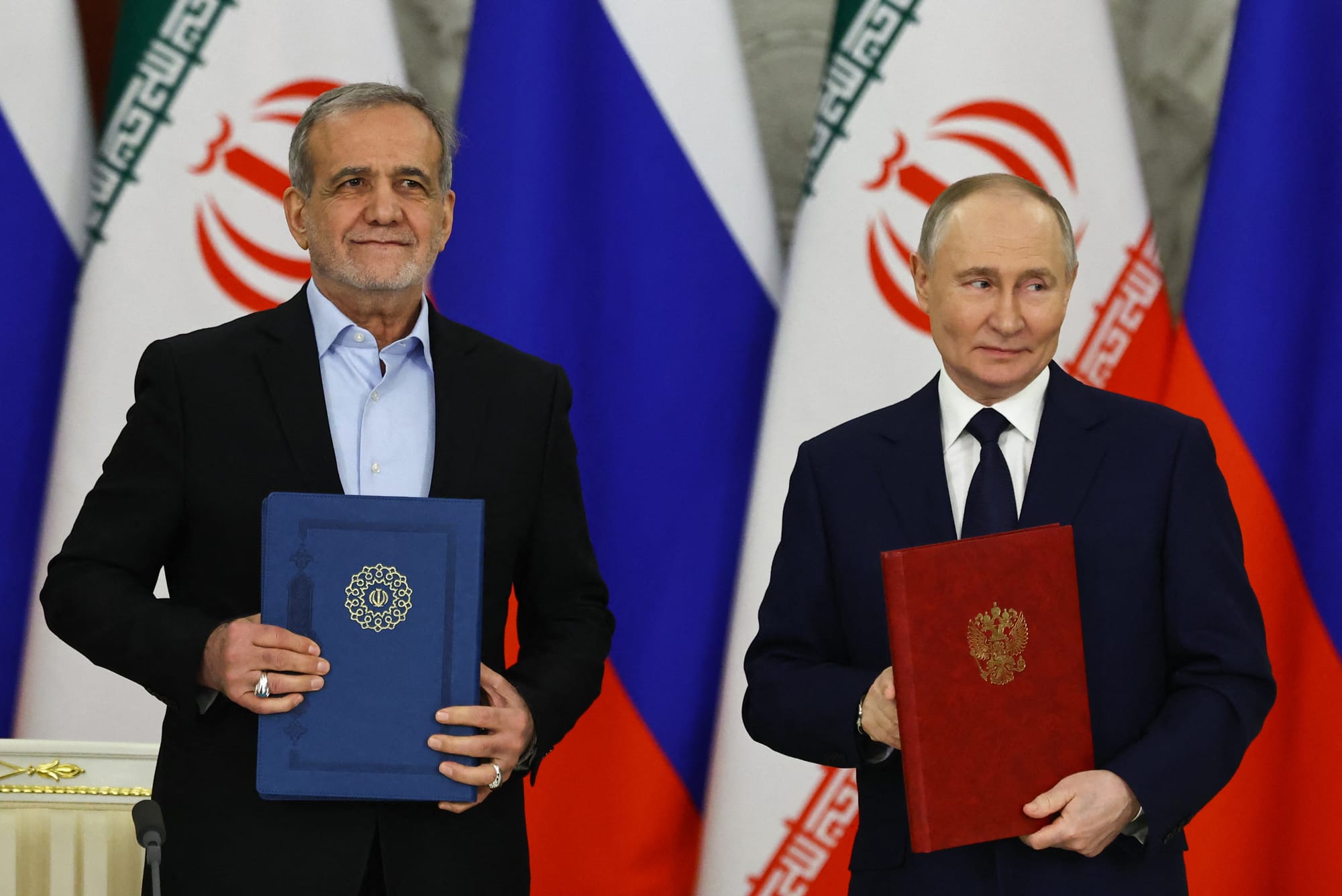
In January 2025, Putin and Iranian President Masoud Pezeshkian signed the Comprehensive Strategic Partnership Treaty in Moscow. Putin called it a “breakthrough document.” It spans 47 articles covering defense, intelligence sharing, energy, nuclear cooperation, counter-terrorism, and cybersecurity. It is set to govern relations for 20 years with automatic five-year extensions. On paper, it reads like an alliance.
It is not. The treaty deliberately omits a mutual defense clause. If one party is attacked, the other is obligated only to refrain from assisting the aggressor. That clause doesn’t promise help. It promises not to make things worse. When the U.S. and Israel struck Iran on February 28, Russia was under no obligation to fight on Tehran’s behalf. And it didn’t.
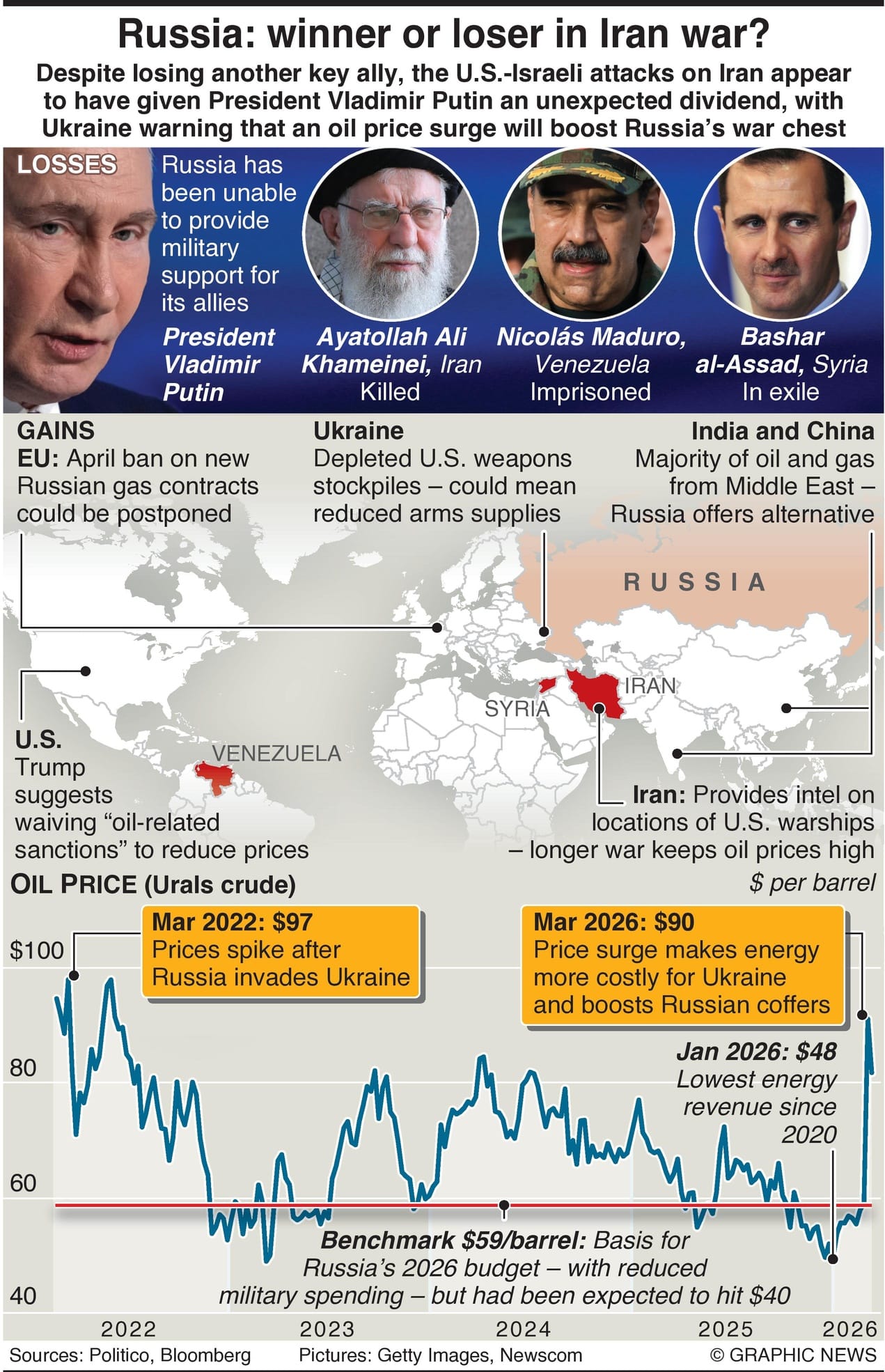
What Russia did provide was enough to sustain Iran’s resistance without changing the outcome. Moscow shared satellite imagery of American warship and aircraft positions, which U.S. officials described to the Washington Post as a “pretty comprehensive effort.” Russia supplied upgraded drone components, including Kometa-B satellite navigation modules that made Iranian Shaheds harder to jam. At the UN Security Council on April 7, Russia and China vetoed a resolution aimed at reopening the Strait of Hormuz, with Russia’s ambassador calling the text “unbalanced” for ignoring American and Israeli attacks entirely. And Putin repeatedly offered to take custody of Iran’s 440 kilograms of uranium enriched to 60 percent.
That uranium offer tells you everything. It sounds generous. In practice, it is a proposal that nobody will act on. Trump rejected it outright. Iran’s own foreign ministry says the transfer was never discussed in negotiations. By April 21, Kremlin spokesman Dmitry Peskov acknowledged the offer was “not currently on the negotiating table.” The proposal exists to make Russia look like a peacemaker without requiring Moscow to make peace.
Russian help came in forms that cost Moscow nothing: satellite imagery, a UN veto, a uranium offer still gathering dust. Since February 28, Pezeshkian and Putin have spoken by phone three times. Their foreign ministers have spoken eleven times. Russia has deployed no military personnel to support Iran’s defense. On the earlier UN Security Council Resolution 2817, which condemned Iran’s attacks on Gulf states, Russia did not even veto. It abstained.
Russia has its reasons, and none of them involve saving Iran. Moscow is deep into the fourth year of its war against Ukraine. Its resources are running low, and years of sanctions and battlefield losses have gutted its military. Russia is in no position to open a second front in Iran’s defense or lecture Washington about the use of force.
However, Russia has every incentive to keep Iran’s crisis going. Higher energy prices fill Russian coffers at a time when the Kremlin desperately needs revenue. The U.S. Treasury granted India a temporary waiver to buy stranded Russian oil cargoes to offset the Hormuz closure, effectively loosening sanctions that Washington spent years building. More than 50,000 American troops remain tied down in the Gulf. And a weakened, dependent Iran is far more useful to the Kremlin than a strong one. Iran supplied Russia with thousands of Shahed drones and ballistic missiles worth nearly $3 billion for Moscow’s war in Ukraine. Russia industrialized much of that drone production on its own soil and has begun shipping upgraded versions back. The relationship has a direction of flow, and it runs toward Moscow.
Russia doesn’t treat Iran as an ally, but as leverage.
Then there is China, the supposed senior partner in this anti-Western alignment, and the capital where Araghchi is not headed. Beijing is playing a different game entirely. While Iran’s foreign minister shuttles between Islamabad and Muscat, China is hosting everyone else: the UAE crown prince, Spain’s prime minister, Russia’s Lavrov, and Vietnam’s president. Beijing is positioning itself as the responsible global convener, the power that talks to all sides.
Behind the scenes, according to diplomats cited by the Associated Press, China used its leverage as Iran’s largest oil buyer to pressure Tehran back to the negotiating table for the Islamabad talks. Beijing will not even confirm it did so. Wang Yi, China’s top diplomat, has been telling Araghchi by phone to ensure “freedom and safe passage” through the Strait of Hormuz, which is the opposite of what Iran wants to hear from an ally. China imports roughly a third of its oil through that waterway. Beijing’s interest is in ending this crisis, not backing Iran’s position on it.
Araghchi is headed to Moscow because Putin will at least pose for the photo. Beijing will not even do that.
What exists between Tehran and its supposed great-power patrons is not a durable alliance but a set of overlapping transactions. Russia extracts drones, strategic advantage, and oil revenue windfalls. China buys discounted crude and collects military intelligence on U.S. capabilities. Iran receives satellite feeds, UN vetoes, phone calls, and a uranium proposal that exists only on paper. The relationship looks formidable from a distance, but shatters under pressure.
Tehran is being managed, not saved. Araghchi will fly home from Moscow with talking points, not tanks. The embrace will tighten for the cameras. But there is nothing more to it. There never was.
📊 Market Mood — Monday, April 27, 2026
🟩 Markets Slip as Iran Talks Stall
U.S. futures edged lower after Washington called off fresh negotiations with Tehran.
🟧 Oil Climbs as Hormuz Remains Shut
Crude rose on continued supply constraints through the critical shipping chokepoint.
🟦 Earnings Week Takes Center Stage
A heavy slate of results, led by AI giants, shifts focus back to corporate fundamentals.
🟨 Policy and Rates Add to Uncertainty
Central bank decisions loom as higher energy prices complicate the inflation outlook.
🗓️ Key Economic Events — Monday, April 27, 2026
No Events Scheduled
Letters to the editor email: editor-tippinsights@technometrica.com
Subscribe Today And Make A Difference. Consider supporting Independent Journalism by upgrading to a paid subscription or making a donation. Your support helps tippinsights thrive as a reader-supported publication. Contact us to discuss your research or polling needs.
Reach our audience. For sponsorship and advertising opportunities, visit our Partner With Us page.