Crises decide whether leaders move, stall, or break under pressure. While headlines tell you what happened, pressure tells you what happens next.
Every crisis creates competing pressure systems. One side applies pressure. The other absorbs it, redirects it, or cracks under it. Pressure vs. Pressure tracks that fight, not through spin or headlines but through leverage, endurance, economics, public confidence, and time.
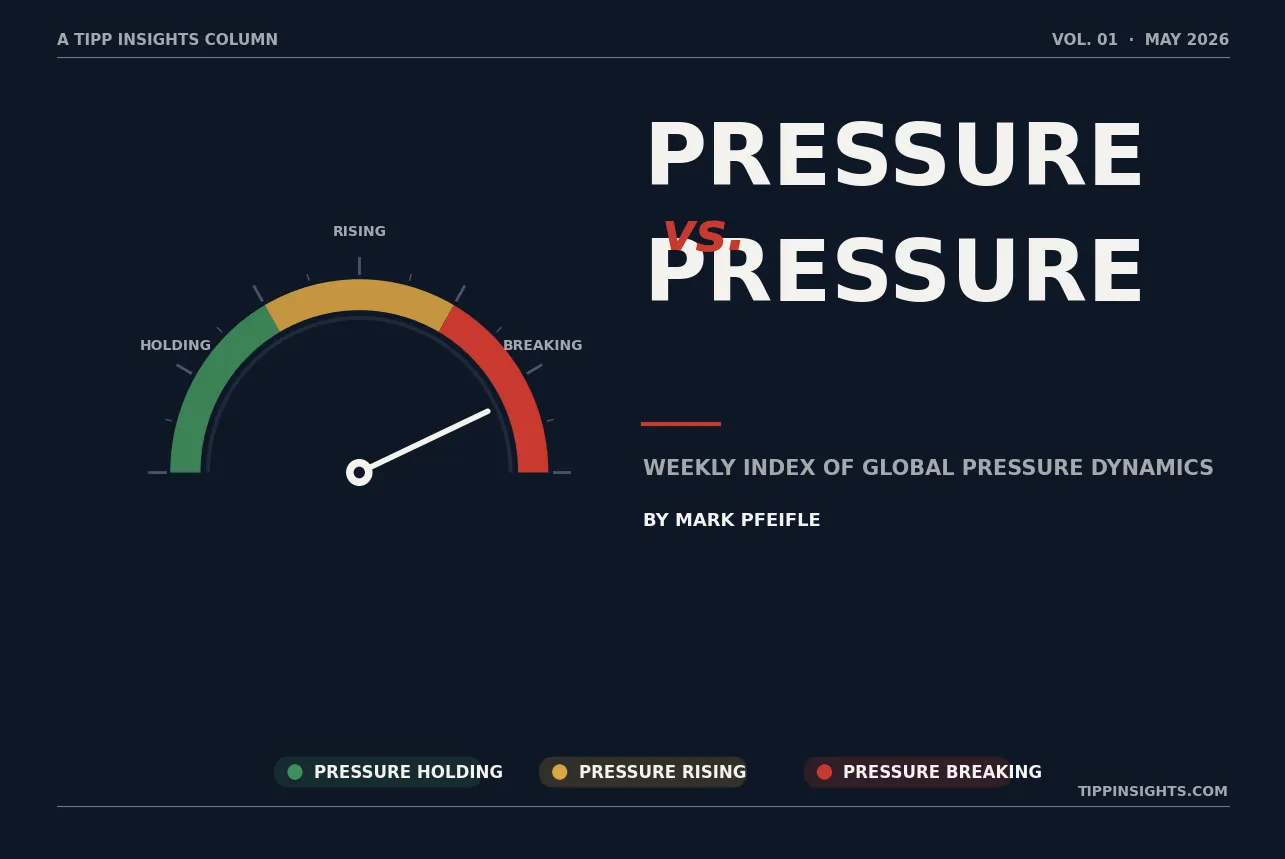
Each week, Pressure vs. Pressure measures global conflicts and political confrontations through three ratings: Pressure Rising, Pressure Holding, and Pressure Breaking.
I have spent 30 years operating where political, economic, military, diplomatic, and public pressure collide. I saw it after 9/11 in New York, during Hurricane Katrina at FEMA, inside the White House during the Iraq surge, during the Dakota Access Pipeline protests in North Dakota, while helping communities rebuild trust after the death of George Floyd, and during the opening days of the U.S.-Iran war while Patriot interceptors crossed the night sky over Doha. I worked inside board rooms, Situation Rooms, television studios, and crisis response centers where pressure moved faster than perfect information. Those experiences shaped my “Win Your Surge” leadership framework, built around trust, execution, and decision-making under pressure.
One lesson keeps repeating. Pressure exposes reality before politicians admit it.
This first Pressure vs. Pressure index examines the two biggest conflicts shaping global markets, military strategy, and political risk right now: Russia vs. Ukraine and the escalating confrontation between the United States and Iran.
Russia vs. Ukraine
Pressure in Ukraine centers on endurance.
Russia: Pressure Rising
Russia still believes time works in its favor. The Kremlin is not trying to win fast; it is trying to make the West tired first. Moscow wants a grinding war that weakens Ukraine politically, fractures Western unity, and exhausts public support in Europe and the United States. That strategy still keeps Russia in the fight, but the pressure around the Kremlin keeps building.
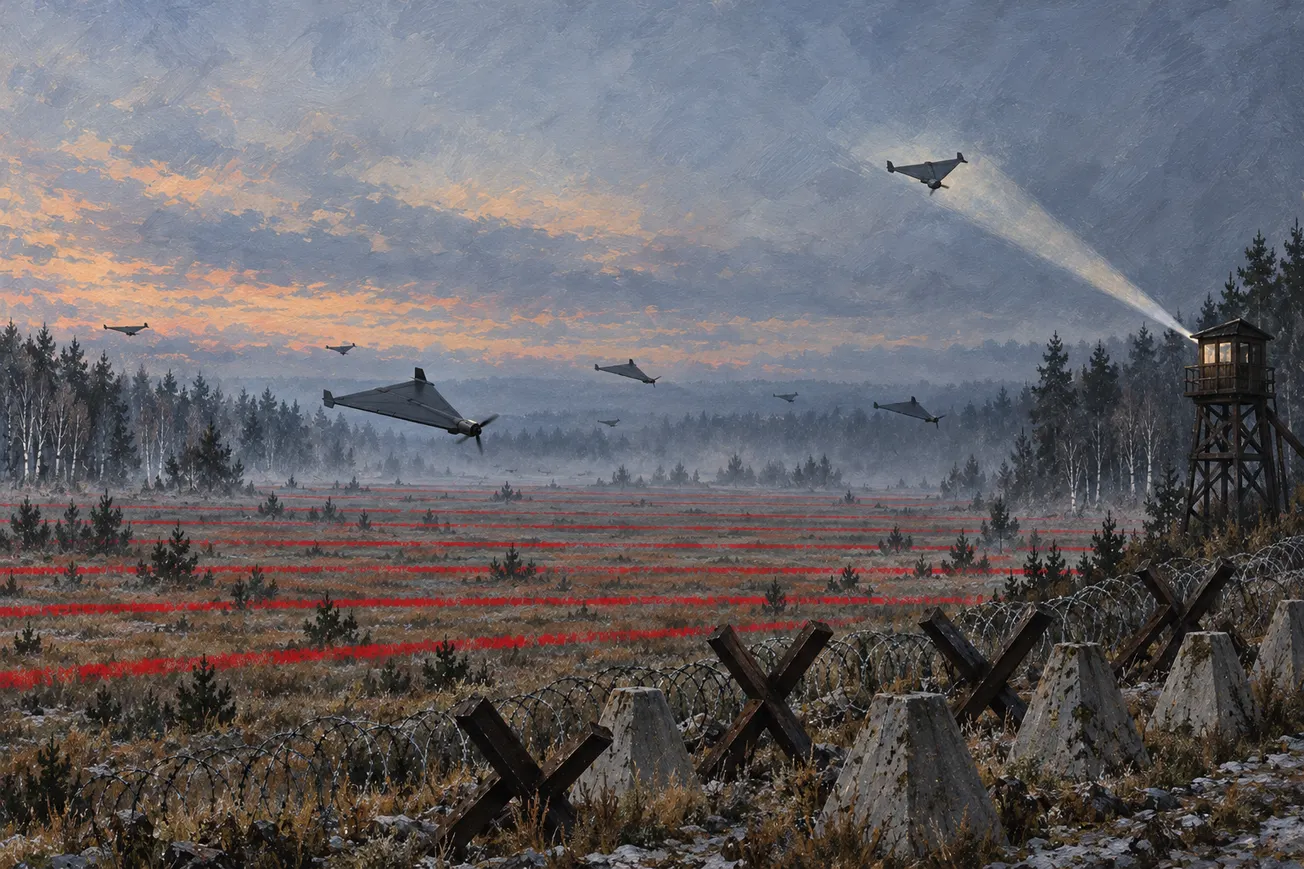
Ukraine now strikes deeper inside Russian territory with drones and long-range attacks targeting refineries, rail hubs, logistics routes, and military infrastructure. Every strike forces Moscow to spend more on defense, move equipment farther from the front, and explain to Russians why the war keeps reaching home. The war no longer lives only in Ukraine, and Russian mothers now hear the sirens too.
Russia stabilized parts of its economy through wartime production and expanded energy sales to China and India, but stabilization is not strength. Russia’s central bank held interest rates near 21 percent to slow inflation and defend the ruble, and defense and security spending now consumes roughly 40 percent of Russia’s federal budget. CSIS estimated in January that Russian military casualties had reached roughly 1.2 million killed, wounded, and missing through the end of 2025, with as many as 325,000 killed. Those numbers do not sit in spreadsheets but at kitchen tables in towns from Buryatia to Volgograd.
Russia still absorbs pressure better than many analysts predicted, but absorbing pressure does not mean escaping it. Russian forces continue making gains in some sectors, but they pay heavily for every mile. Moscow increasingly trades manpower, equipment, money, and long-term economic stability for incremental advances.
That creates the central pressure problem for Vladimir Putin: the longer the war continues, the more Russia depends on the West losing endurance before Russia loses endurance itself. That is not momentum but a sustainability fight.
Ukraine: Pressure Holding
Ukraine carries enormous pressure every day. Russian missiles and drones continue striking cities and infrastructure, mobilization pressures keep growing after years of war, millions remain displaced, and Ukraine’s economy still depends heavily on outside financing and military support. Every fight in Washington over aid packages becomes part of Russia’s strategy, and every delay in European weapons production creates battlefield consequences months later. Ukraine also faces a manpower reality, because long wars punish smaller populations first.
But Ukraine still holds critical advantages. Ukraine fights for national survival, and defensive wars create resilience that invading powers struggle to break. Ukraine also adapts faster than many larger militaries expected, especially in drones, distributed warfare, and asymmetric strikes against Russian infrastructure and logistics. Most importantly, Western support has weakened at times but has not collapsed.
Russia needs fractures inside the Western alliance to win strategically; Ukraine needs enough outside support to stay in the fight. Those are different pressure equations. Ukraine is holding pressure, and Russia still moves forward in places, but Moscow keeps paying more for every advance.
U.S. vs. Iran
Pressure in the Gulf centers on escalation.
Iran: Pressure Rising
These are not peace talks but pressure talks. The negotiation track is fading while the pressure campaign accelerates. President Donald Trump warned Tehran to “make a deal or be annihilated” after posting “to be continued” on social media, and the Pentagon has increased regional military readiness. Iran still wants sanctions relief and regime survival, while Washington wants limits on Iran’s nuclear program and protection of shipping through the Strait of Hormuz. Gulf states want stability, and energy markets want oil flowing normally. The center of gravity now sits less in diplomacy and more in escalation management.
The picture shifted late Monday. Trump said he had paused a planned Tuesday strike on Iran after Saudi Arabia, Qatar, and the United Arab Emirates urged a short delay to allow continued talks. The pressure campaign and the negotiation track are now running in parallel on a short clock. A senior U.S. official warned that without reciprocal action from Tehran, talks would continue “through bombs.”
Iran faces growing storage pressure while struggling to move oil exports consistently under sanctions and maritime disruption. China, Iran’s largest oil customer and most important economic partner, wants the Strait of Hormuz open because Beijing cannot absorb prolonged disruption to Gulf energy supplies without damaging its own economy. That creates a strategic problem for Tehran, because its closest major-power partner wants stability more than escalation. China has also shown little appetite for directly arming Iran in ways that could widen the conflict.
Inside Iran, pressure keeps spreading. The rial reportedly traded near 1.8 million to the U.S. dollar in parallel markets while inflation crushed purchasing power across large sections of society, and internet shutdowns disrupted commerce and daily business activity for weeks at a time. Iran’s pressure no longer lives only in military briefings; it now lives in kitchens, checkout lines, and dead phone screens.
The Washington Post reported in March, citing three U.S. officials, that Russia has been providing Iran with intelligence on the location of American warships and aircraft in the Middle East. NBC News and Fortune confirmed the reporting through their own sources. The New York Times added on May 18 that Iranian commanders studied the flight patterns of American fighter jets and bombers, with U.S. intelligence assessments pointing to possible Russian assistance in aspects of Iran’s military planning. That changes Washington’s pressure equation, because the United States no longer faces pressure only from Iran. It increasingly faces overlapping pressure from Iran, Russia, and economically from China.
Washington has publicly downplayed the operational impact of Iranian strikes while insisting the United States still maintains escalation dominance across the region. But pressure does not measure only battlefield damage; it measures how many fronts a country must manage at once: military, political, economic, alliance, and public confidence. When oil slows through the Strait, prices rise, governments react, and Iran owns more of the crisis. The moment you say “no ships,” you own every ship.
United States: Pressure Holding
Washington faces pressure too. President Trump faces weak approval numbers tied to economic anxiety, war fatigue, and energy prices. Americans may not follow every military development in the Gulf, but they notice gasoline prices immediately.
The White House also faces pressure from the negotiation process itself. Repeated efforts to push Tehran toward broader concessions produced limited visible breakthroughs while extending the political timeline of the conflict. Long negotiations without visible gains create political risk for Washington and the appearance of drift instead of control.
But the U.S. position still differs sharply from Iran’s. The United States retains military escalation dominance, global financial leverage, and far greater economic flexibility to absorb a prolonged confrontation. Washington feels pressure, but Tehran is running out of room. Pressure does not destroy systems all at once; it finds the weak point first.
Mark Pfeifle is a member of the TIPP Insights Editorial Board. He runs the crisis management firm Off the Record Strategies. He served as deputy national security adviser for strategic communications and global outreach at the White House from 2007 to 2009.
Russia Starting To Lose Ground In Ukraine
As Russia reportedly prepares for a major summer offensive in Ukraine, battlefield data suggests that Kremlin forces are losing ground for the first time since 2024.
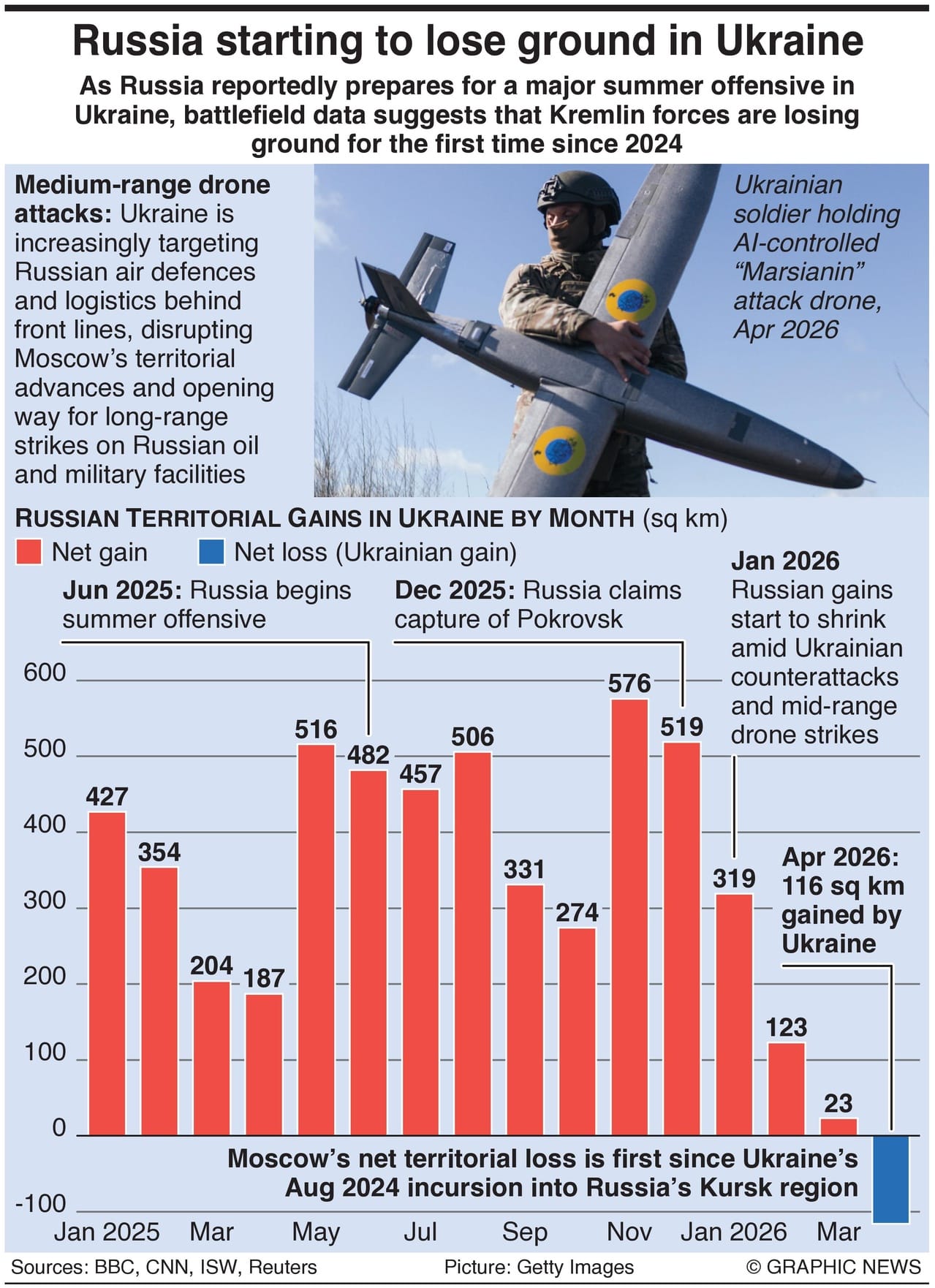
Russia is suffering problems in its war against Ukraine that partly stem from a growing Ukrainian military strength: the use of medium-range drone attacks.
By targeting Russian air defenses and logistics dozens of kilometers behind front lines, Ukraine is disrupting Russia’s battlefield advances and opening the way for long-range strikes on Russian oil and military facilities.
Last month, Ukraine managed to liberate more land than Russia seized – the first time Moscow suffered a net loss of territory since Ukraine’s August 2024 incursion into the southern Russian Kursk region, according to analysis from the U.S.-based Institute for the Study of War.
The stories and data that matter today — selected by the TIPP Insights editorial team.
Global Affairs
Russia-China Talks: What Are Xi And Putin Discussing In Beijing
What Is Russia Seeking From Xi During The Beijing Visit
What Does Sweden’s New Defense Deal Mean For NATO
U.S.-Cuba Tensions Escalate After New Sanctions
China Advances Wireless Space Energy Transmission Project
WHO Warns Over Rapid Spread Of Ebola In Congo
National Affairs
What Happened In The Deadly San Diego Mosque Shooting
Justice Jackson Criticizes Supreme Court Redistricting Decision
Markets & Business
Why Are U.S. Treasury Yields Rising So Fast
How Is The Iran War Disrupting The AI Supply Chain
How Is The Iran War Impacting Motor Oil Supplies
Why Are Home Depot Shoppers Still Spending Despite Higher Gas Prices
Letters to the editor email: editor-tippinsights@technometrica.com
Subscribe Today And Make A Difference. Consider supporting Independent Journalism by upgrading to a paid subscription or making a donation. Your support helps tippinsights thrive as a reader-supported publication. Contact us to discuss your research or polling needs.
Reach our audience. For sponsorship and advertising opportunities, visit our Partner With Us page.