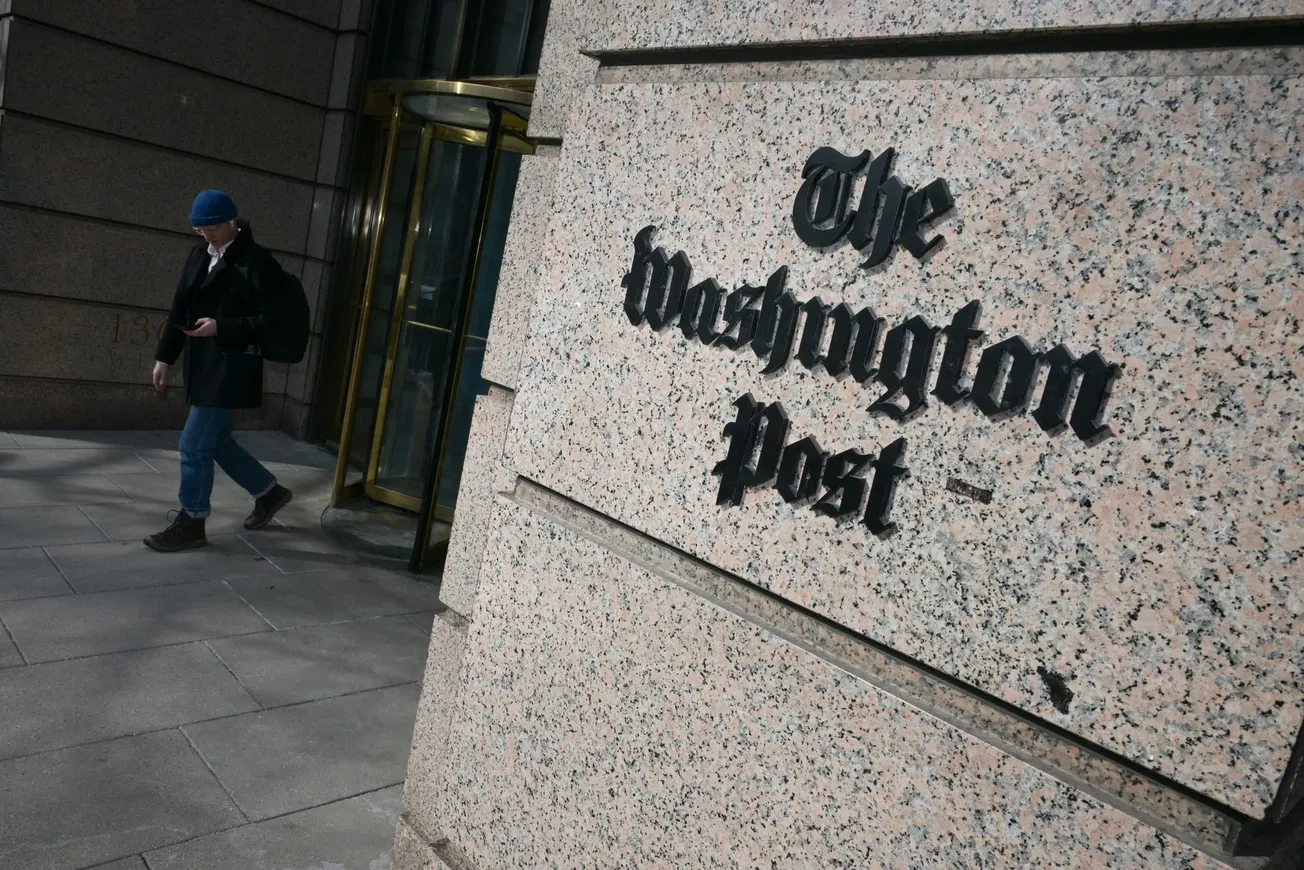
The irony would be poetic if it weren't so tragic. This week, the New York Times celebrated adding 1.5 million digital subscribers in 2025. Meanwhile, its cross-Mid-Atlantic neighbor, the Washington Post, announced devastating cuts affecting more than 300 journalists and mailroom staff. Owner Jeff Bezos' earlier warning that The Post needed a "second save" has proven prophetic, though his attempted rescue appears to have failed before it truly began.
The parallel to Charles Dickens' "A Tale of Two Cities" is apt, though perhaps not in the way one might initially imagine. The novel depicts London and Paris before and during the French Revolution. Dr. Alexandre Manette is released from a terrible prison after 18 years. He meets his grown-up daughter, Lucie, and they live happily in London. But when Lucie marries a Frenchman named Charles Darnay, trouble starts. Darnay was formerly part of a wealthy, mean-spirited family in France. When the French Revolution breaks out, Darnay is arrested. His friend Sydney Carton, who looks just like him and loves Lucie secretly, does something very brave: he switches places with Charles and dies on the guillotine so Charles can live happily with Lucie and their family.
Just as Dickens chronicled the excesses that led to the French Revolution's bloody guillotine, The Post's current predicament serves as a cautionary tale about journalistic excess. But unlike Sydney Carton's noble sacrifice, which saved Charles Darnay and preserved a family’s future, The Post's sacrifice of balanced reporting has saved no one and left its newsroom decimated.
The seeds of this crisis were planted long ago, but they found fertile ground in the political soil of 2015 when Donald Trump descended that golden escalator. While the New York Times aggressively covered Trump, maintaining its traditional separation between news coverage and editorial opinion, The Post took a different path. The newsroom and editorial pages practically became indistinguishable, transforming the newspaper from an observer of political events into a participant in political warfare.
The point of no return came on January 20, 2017—Inauguration Day. As Trump took the oath of office, The Post published an article with the extraordinary headline: "The campaign to impeach President Trump has begun." The story covered a fringe website, ImpeachDonaldTrumpNow.org, launched by liberal advocacy groups. While technically newsworthy in the narrow sense, this editorial decision revealed a fundamental misjudgment about The Post's role and responsibility.
Newspapers exist to report news. But responsible journalism also requires judgment about what deserves prominence. After a close election, partisan opposition is inevitable. By elevating this fringe effort to a front-page story on Inauguration Day, The Post wasn’t merely reporting but amplifying a divisive campaign. Given its influence as Washington’s journal of record, the decision encouraged increasingly aggressive and polarized political coverage elsewhere.
To be fair, The Post didn't create this toxic environment. Trump coined the term "Fake News" and launched his own offensive against The Post, CNN, and other outlets he deemed hostile. But this tit-for-tat quickly spiraled into something destructive for journalism itself. Legacy media journalists, feeling attacked, dug in. Positive stories about the Trump administration vanished almost entirely. Coverage became relentlessly negative.
Media research organizations like Pew documented what readers could see with their own eyes: Trump's coverage ran 90-10 negative, sometimes worse. This wasn't balanced journalism holding power accountable; it was advocacy journalism with a clear political target. The consequences were predictable. When coverage becomes so one-sided, audiences divide along the same lines, trust erodes, and readers leave. Moderate and conservative readers who once valued The Post abandoned it en masse. Why pay a subscription fee to read daily attacks on your preferred political leaders?
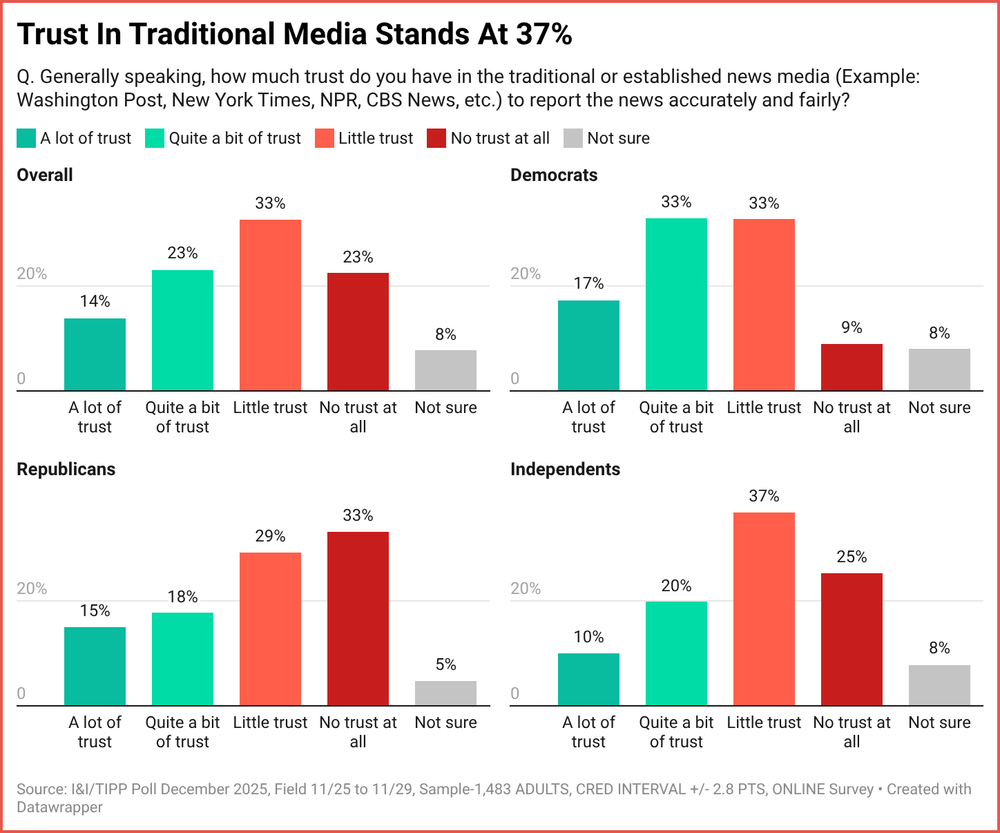
The rise of social media accelerated this exodus. Echo chambers became not just available but appealing to people tired of feeling lectured or dismissed by outlets like The Post. Better still, these alternatives were free. Why pay to be told your views are wrong when you can find a like-minded community and affirmation without spending a dime?
The Post's financial struggles inevitably followed. Reader losses mounted. Advertising revenue declined. The latest round of layoffs—30% of staff—represents the grim arithmetic of these choices. Executive Editor Matt Murray's statement attempted to frame the cuts positively: "If anything, today is about positioning ourselves to become more essential to people's lives in what is becoming a more crowded, competitive, and complicated media landscape. And after some years when, candidly, The Post has had struggles."
But "struggles" understates the crisis. The Post's problems aren't primarily about a crowded media landscape or technological disruption. These challenges affect all legacy outlets equally. The Post's crisis is self-inflicted. It stems from abandoning the journalistic principles that made it essential in the first place: fairness, balance, and a commitment to serving readers across the political spectrum rather than reinforcing the prejudices of one section.
The guillotine now threatening the Washington Post was not erected by Jeff Bezos, technological change, or social media competition. The newspaper built it itself through choices that prioritized political mission over journalistic mission. Unlike Dickens’ tale, there is no Sydney Carton here to make a noble sacrifice. There are only journalists losing their jobs and readers losing a newspaper that might have served them better, if only it had remembered what newspapers are truly for.
👉 Show & Tell 🔥 The Signals
I. U.S. Manufacturing Returns To Growth After Two-Years
U.S. manufacturing activity moved back into expansion in January, with the ISM index rising to 52.6, above the 50 level that signals factory growth. Manufacturing had been below that mark for more than two years.
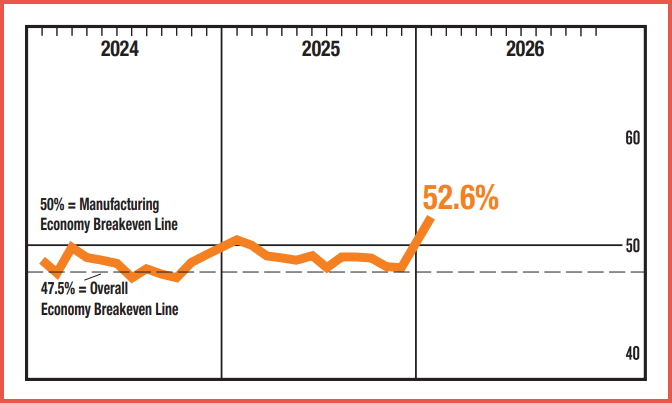
The chart also shows 47.5 as a warning level, below which the broader economy often weakens. Manufacturing stayed above that danger zone and has now moved back into growth, with new orders, production, and employment all improving.
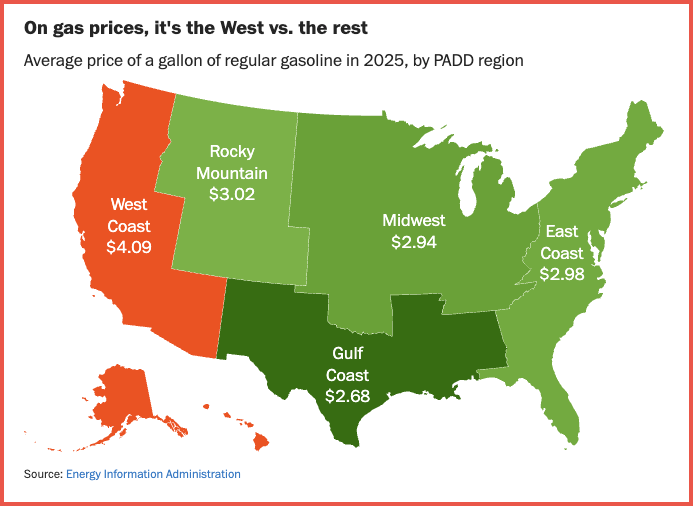
II. California Had Highest Gas Prices In 2025
Gas prices in California and Washington were the highest in the nation in 2025, with California’s lowest weekly average price still about 88 cents higher than the highest weekly price seen in New York, according to regional fuel data. The figures highlight how drivers on the West Coast consistently pay more at the pump than those in most other parts of the country.
The TIPP Stack
Handpicked articles from TIPP Insights & beyond
1. Walz, Ellison Adopt Nullification Playbook Against Federal Law—Josh Hammer, The Daily Signal
2. Never Let Leftists Say They Are The First Amendment Stalwarts—Tim Graham, The Daily Signal
3. ‘Why Don’t You Criticize Iran??’—Caitlin Johnstone, Ron Paul Institute for Peace and Prosperity
4. Meet The Former Fashion Blogger And Shady Doctor Behind The ‘30,000 Dead’ Iran Psy-op—Wyatt Reed & Max Blumenthal, Ron Paul Institute for Peace and Prosperity
5. Will He, Or Won’t He?—Ron Paul, Ron Paul Institute for Peace and Prosperity
6. Arctic Craziness—Eric Margolis, Ron Paul Institute for Peace and Prosperity
7. Gaza Reconstruction; Ukraine Reconstruction – ‘It’s All Business’— Alastair Crooke, Ron Paul Institute for Peace and Prosperity
8. Flashing Red: Why GOP Lost Texas Special Elections—Daniel McCarthy, The Daily Signal
9. Showdown—William Schryver, Ron Paul Institute for Peace and Prosperity
10. Have Fiat Money, Will Tyrannize—George Ford Smith, Mises Wire
11. It’s No Surprise That Conservatives Have Rediscovered Their Love Of Federal Power—Ryan McMaken, Mises Wire
12. Are There Constants In Economics?—Frank Shostak, Mises Wire
13. The Not-So-New Dollar Strategy: Monetize Productivity In Advance—Brendan Brown, Mises Wire
14. Adam Smith Misunderstood The Origins Of The Division Of Labor—Mark Thornton, Mises Wire
15. Everyone Agrees Our Elites Are Terrible, So Why Are We Stuck with Them?—Connor O'Keeffe, Mises Wire
16. A Positive View Of Sectional History— Wanjiru Njoya, Mises Wire
17. Mises, Money, And Catallactics: The State “Theory” Of Money Abandons Economics— Joshua Mawhorter, Mises Wire
📊 Market Mood — Thursday, February 5, 2026
🟩 Futures Mixed as Tech Volatility Persists
Markets search for stability after a sharp selloff in software and AI-linked stocks.
🟧 Alphabet Doubles Down on AI Spending
Google signals massive new AI investment plans, reinforcing its push to lead the AI race despite investor concerns over rising costs.
🟦 Amazon Earnings Next Test for AI Trade
Investors look to Amazon’s results tonight for clarity on whether AI investments are translating into cloud and retail growth.
🟨 Gold and Silver Retreat as Dollar Firms
Precious metals slide again as a stronger dollar and rate outlook pressure safe-haven demand.
🗓️ Key Economic Events — Thursday, February 5, 2026
🟩 8:30 AM — Initial Jobless Claims
Weekly filings for unemployment benefits provide a timely read on layoffs and labor market trends.
🟧 10:00 AM — JOLTS Job Openings (December)
Measures U.S. labor demand and hiring conditions, closely watched for wage and employment signals.
🟦 7:00 PM — President Trump Speaks
Markets may react to any comments on economic policy, trade, or fiscal priorities.
editor-tippinsights@technometrica.com