Retail sales barely grew in June, slowing sharply from the pace set in May. According to Census data, retail and food services sales totaled $768.6 billion, up 0.2% from May's $766.9 billion, a change small enough that the Census Bureau says it cannot be sure sales rose at all. May's total had itself been revised upward, with its growth rate increasing from 0.9% to 1.0%. June's total nevertheless represented a 6.7% increase from a year earlier.
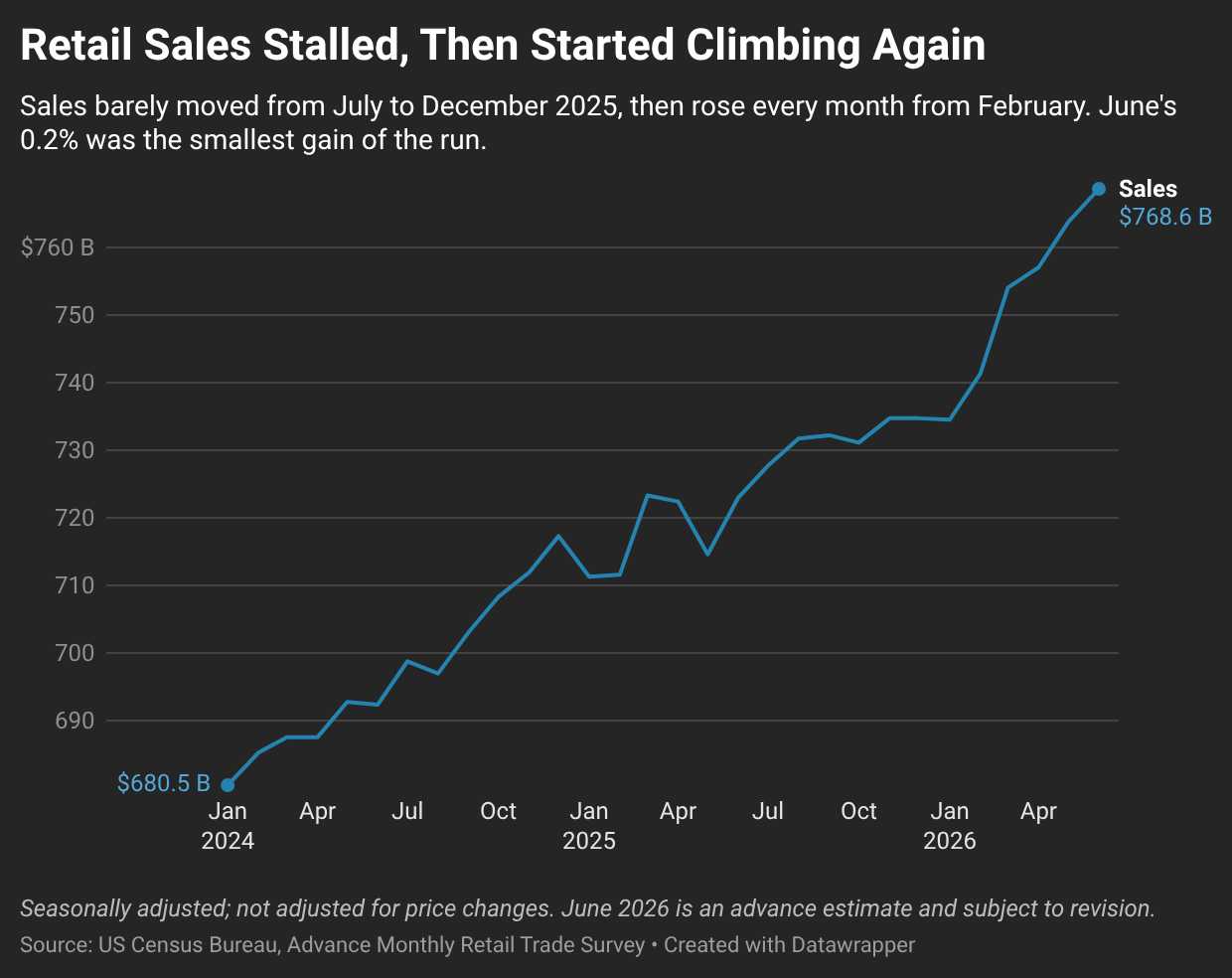
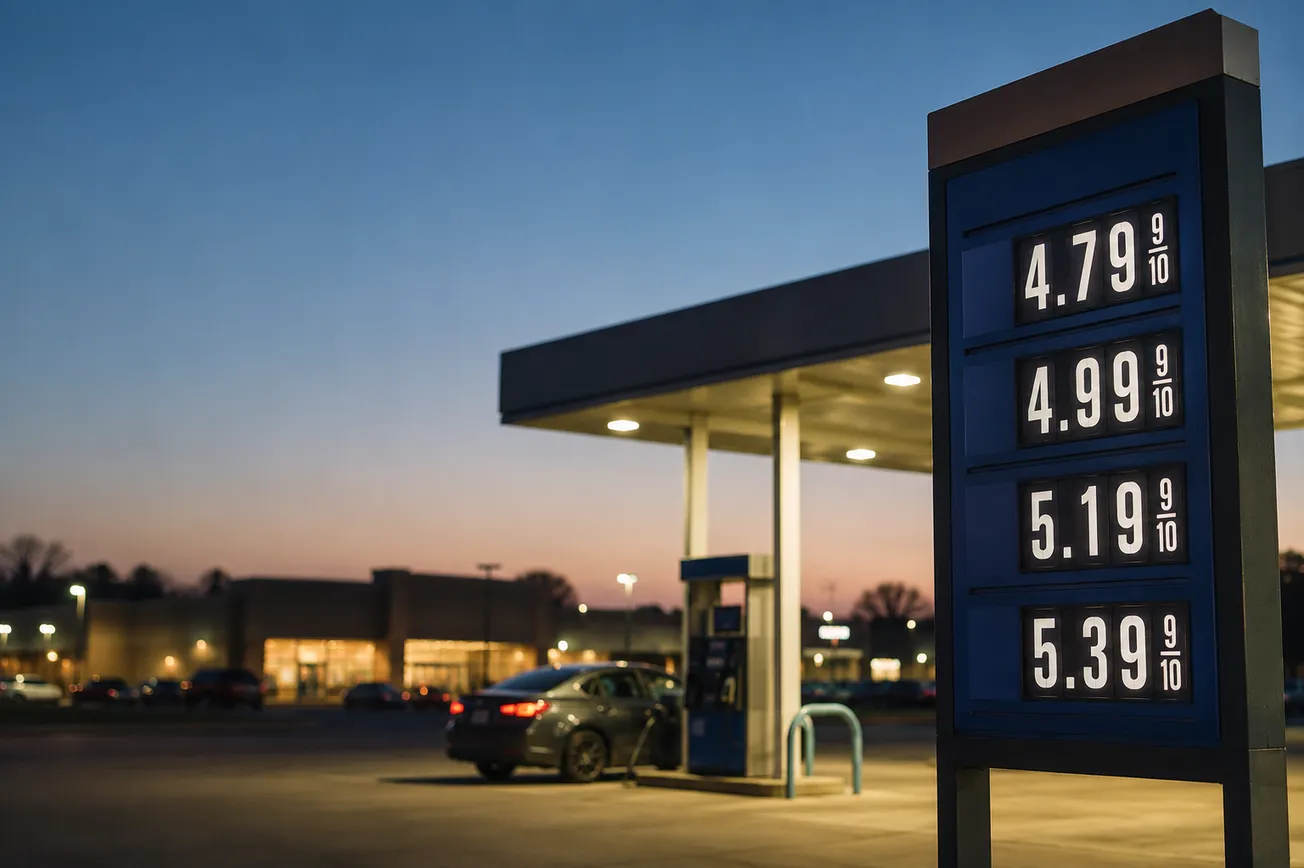
June's monthly growth was held back by a 5.3% decline in gas station sales. Because retail sales are reported in nominal dollars and do not adjust for price changes, this decline reflects cheaper fuel rather than weaker demand. Gasoline averaged $4.05 a gallon in June, down 9.6% from May, after peaking at $4.55 on May 21 and falling for most of the following month as a memorandum of understanding between the United States and Iran, signed on June 17, raised hopes of reopening the Strait of Hormuz. Prices fell faster than sales did, which implies Americans bought roughly 5% more fuel in June than in May, not less. Excluding gas sales, retail sales increased 0.7%.
Other categories posting monthly declines included health and personal care stores (-0.8%) and food and beverage stores (-0.2%). Despite June's monthly drop, gas sales remained 19.8% higher than in June 2025 — but that gap is also a price effect rather than a demand story. Gasoline cost 28.6% more in June than it did a year earlier, well ahead of the 19.8% rise in receipts, implying that drivers bought around 7% less fuel than in June 2025. Both calculations are approximate, since gas station receipts include snacks, cigarettes, and other non-fuel merchandise.
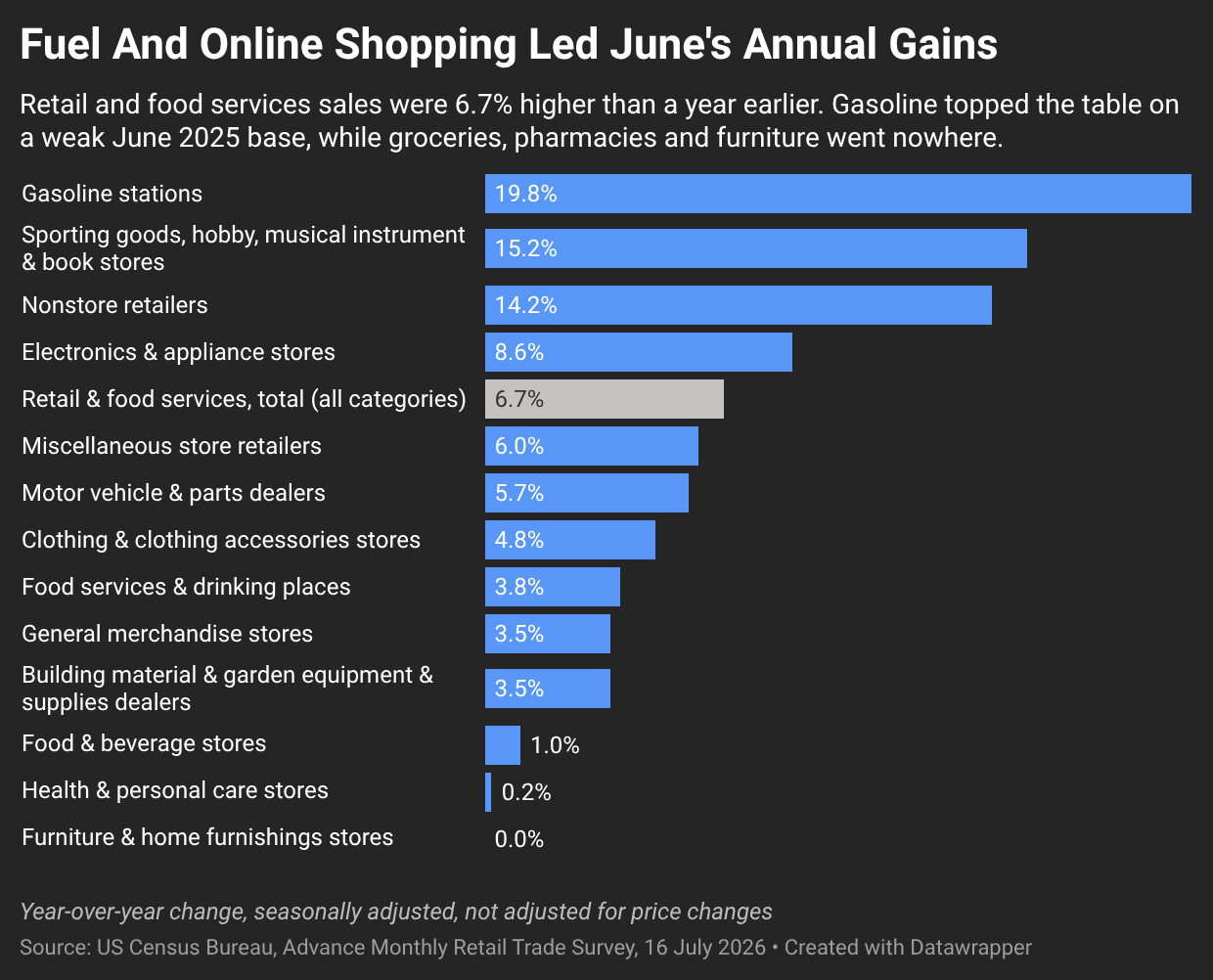
There were several bright spots. Motor vehicle and auto parts dealers posted 1.9% growth in June, while nonstore retailers, including online merchants such as Amazon, also grew by 1.9% and were up 14.2% on the year. Nonstore retailers have continued to post consistent gains across multiple time periods, underscoring the resilience of online shopping. Sporting goods, hobby and book stores rose 1.3% on the month and 15.2% on the year, the strongest annual gain of any category other than fuel — a plausible sign that the 2026 FIFA World Cup, co-hosted by the United States, Canada and Mexico, is feeding through to spending. The tournament's group stage and Round of 32 were held entirely in June.
The headline annual figure, however, flatters the picture. Because these numbers ignore inflation, categories growing more slowly than prices are shrinking in real terms — and several are. Food and beverage stores rose just 1.0% over the year, health and personal care stores by 0.2%, and furniture and home furnishings stores by none. Americans are spending more at the pump and online, and standing still on the essentials.
Looking ahead, the outlook is less settled than June's fuel prices suggested. The June memorandum has frayed badly: Iran attacked three commercial ships in the Strait of Hormuz on July 6 and 7, and President Trump said on July 7 that he considered the truce over as the United States stepped up strikes on Iranian assets. He has since announced plans to restore a blockade on Iranian vessels transiting the strait. Renewed fuel inflation would lift July's headline number while squeezing spending elsewhere — the mirror image of June. The World Cup offers less support than it did last month, with only the closing knockout rounds left and the final on July 19.
Source: U.S. Census Bureau, Advance Monthly Retail Trade Survey, July 16, 2026. Fuel prices: Bureau of Transportation Statistics; AAA. Sales figures are seasonally adjusted and not adjusted for price changes. June 2026 is an advance estimate and subject to revision.