President Jose Jeri morphed into the Anthony Scaramucci of South American politics, getting punted after a measly 4 months in office as the head of state in Peru. He barely had time to order new drapes for the presidential palace.
Kidding aside, political instability afflicts Peru, a nation with so much promise and a hub that, increasingly, becomes a flash point in the Pacific battle for influence between China and the United States.
Jeri was himself a replacement leader for President Dina Boluarte, who was impeached before him. In turn, Boluarte was a replacement for Pedro Castillo who was both impeached and arrested. Prior recent presidents have served lengthy prison sentences. This rinse and repeat cycle forms a troubling throughline of chaos within the corridors of power in Lima.
But often, upheaval presents opportunity.
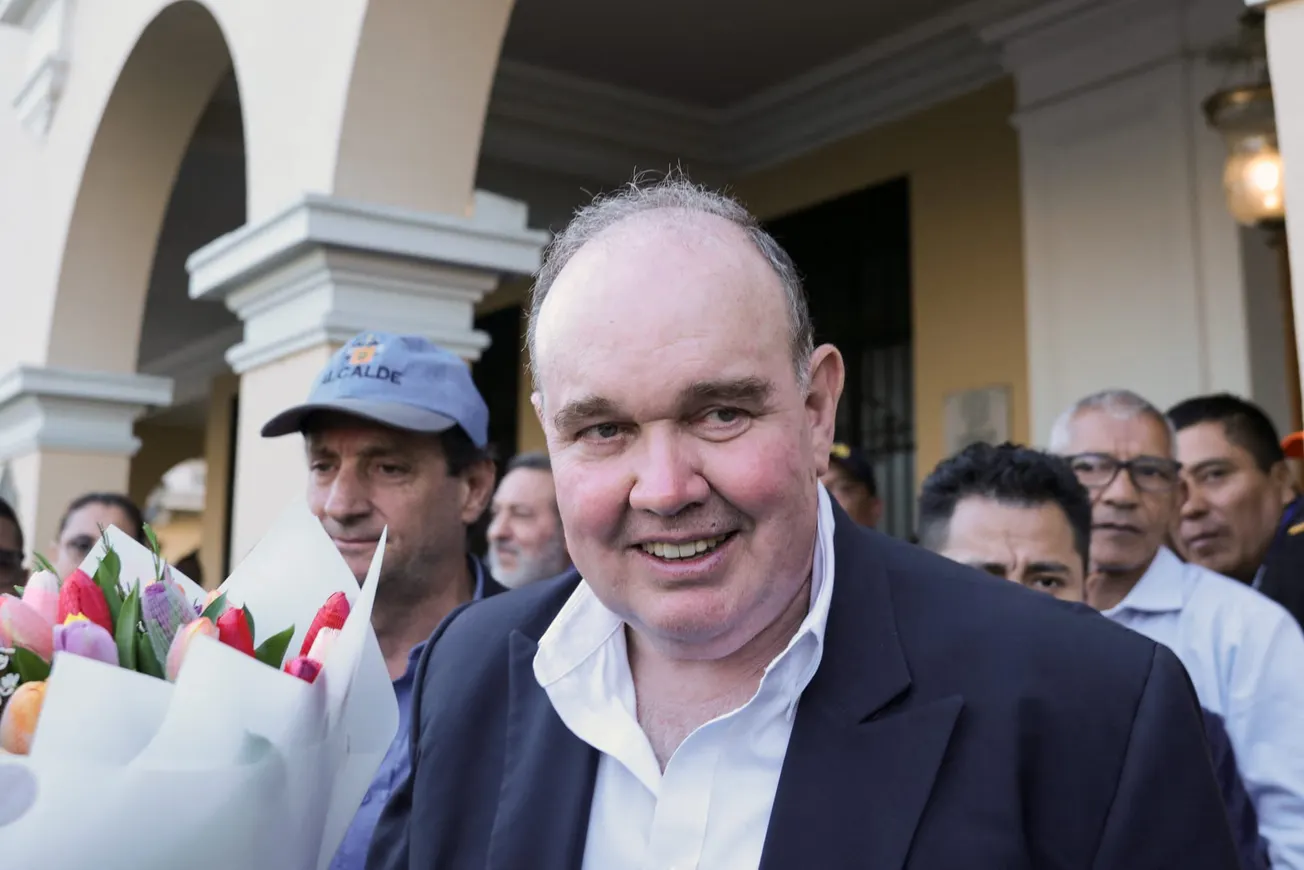
Right now, in an April election, the electoral scene in Peru clarifies. Citizens clamor for order and a better trajectory. Those aspirations point to Rafael Lopez Aliaga as the man of the hour who can save his country from this dismal cycle and elevate the prosperity of regular Peruvians. Aliaga can also act as a trusted partner with the United States rather than repeating the pattern of supplication to the Chinese Community Party.
Aliaga currently leads in the polls, and stands out amidst the crowded field as a hugely successful businessman who emerged from outside of politics to become the mayor of Lima. As the leader of Peru’s sprawling capital, he earned high marks for his leadership, especially in the tangible realms of street safety and public works.
Peruvians particularly appreciated Aliaga’s strong stance against punitive road tolls collected by a Canadian private equity firm Brookfield. Peruvians widely believe that the concession was obtained from dirty deals agreed to by prior corrupt officials in Lima. This entire scandal, known as “Rutas de Lima” locally, presented a particularly punitive tax upon the working poor in the region.
As such, Aliaga shored up his populist credentials in standing up against foreign abuse of Peruvians. As a businessman, Aliaga welcomes badly needed foreign capital into Peru, but only on terms that are transparent and corruption-free.
Speaking of foreign intrigue, President Jeri’s main offense that drove his removal from office, per NY Times reporting, was that “he failed to disclose meetings with Chinese businessmen who were under government scrutiny.” Chinese influence in Peru grows into a foundational worry, both for its citizens and for U.S. national security officials. The CCP has aggressively expanded operations there, fiendishly exploiting a prevalence of internal corruption -- combined with the constant churn of Peru’s top leadership.
Specifically, China exerts very controversial control over Peru’s valuable Chancay deep water port, one of the shipping jewels of Latin America, able to accommodate the largest ocean vessels traversing the Pacific between China and South America. Many Peruvians understandably bristle at surrendering majority control of such a strategic asset, and especially to the Beijing dictatorship.
Not surprisingly, Washington objects as well, and issued a scathing public statement about Chinese state-owned-enterprise Cosco controlling much of the port. The U.S. State Department warned that “Peru could be powerless to oversee Chancay…which is under the jurisdiction of predatory Chinese owners.”
Thankfully for the people of Peru and for the United States, Aliaga has been clear and consistent in seeking a closer Peruvian relationship with America rather than China. Aliaga, widely known by his nickname “Porky,” recognizes that the vast natural resources of Peru form a perfect counter to China. America’s exploding digital economy badly needs the critical minerals found in Peru. By partnering with Peru, the U.S. simultaneously decouples from China while also checking China’s influence in Latin America.
So, Aliaga emerges as a key rising ally for America. In fact, he becomes the newest key political ally in the region that increasingly shifts to the political right, including Argentina, Chile, Paraguay, Honduras, and Costa Rica.
As patriotic populism sweeps the region, the Trump Administration recently issued a historic explanation of its pivot in strategic focus with the landmark National Security Strategy memorandum. This NSS projects a macro pivot away from the Old World to the New, placing primary foreign policy emphasis on strengthening the Western Hemisphere.
Using language that was both lofty and blunt, this U.S. administration clearly sees the Americas broadly as the fulcrum center of future power, both commercially and strategically. In this regard, a partner like Rafael Aliaga presents an incredible chance to align with a New World leader who shares the Trump vision to employ populism to defend and advance Western Civilization, throughout the hemisphere.
So, as the political dust settles in Lima…a new possible reality becomes clearer. With the steady hand of Aliaga directing the affairs of state, a calmer, more predictable, more prosperous future starts to unfold. After years of noise and disappointment, this bold new leader will forge a rising era of Latin prosperity and stability.
Steve Cortes is president of the League of American Workers and advisor to Catholic Vote. He directs political campaigns on media, polling, and Hispanic outreach, including Trump 2016/2020 and Vance 2022 US Senate. He is a former broadcaster for Fox News and CNN.
Catch up on today’s highlights, handpicked by our News Editor at TIPP Insights.
1. China’s Military Purges May Undercut Ability To Fight, Report Says
2. OpenAI Exposes Chinese AI-Driven Intimidation Campaign
3. Massive U.S. Air Power Positioned In The Middle East
4. Iran Slams Trump’s State Of The Union Speech, Accuses Him Of Lying
5. Syria Flags Major Breach At Camp Holding ISIS Families
6. Report Warns U.S. Military Readiness Metrics Are Outdated
7. How Canada Plans To Build Military Independence From The U.S.
8. Voters Give ‘Thumbs Up’ To Trump’s Foreign-Policy ‘Donroe Doctrine’ Activism: I&I/TIPP Poll
9. Anthropic Softens AI Safety Rules Amid Pentagon Showdown
10. Why Apple Is Shifting Some Mac Mini Production To America
11. What Bill Gates Told Staff About His Epstein Connections
12. Larry Summers Steps Down From Harvard Roles After Epstein Fallout: Report
13. NASA Astronaut Confirms Medical Issue Behind Early ISS Return
14. The Evolution Of AI Agents
15. California Now Ranks As The World’s Fourth-Largest Economy
16. Data Center Spending Surges Past Office Construction
17. AI Announcements Are Shaking Up Software Stocks
18. Tech Stocks Now Cheaper Than Staples
19. College Tuition Up 5x Faster Than Inflation
20. State Of The Union: Trump Focuses On Jobs, Inflation, And Homes In Major Address
21. Tariffs, Trade, And Tech Dominate Countdown To Trump-Xi Summit
22. Mortgage Rates Fall To Four-Year Low As Buyers Stay Cautious
23. Global Spirits Giant Diageo Lowers Outlook As Stock Drops
24. State Of The Union: What Trump’s New Retirement Plan Means For Workers
25. Nvidia Results Could Calm Or Fuel AI Market Fears
editor-tippinsights@technometrica.com