Skip to content
Getty Images

By Sergei Guriev, Project Syndicate | October 7, 2025

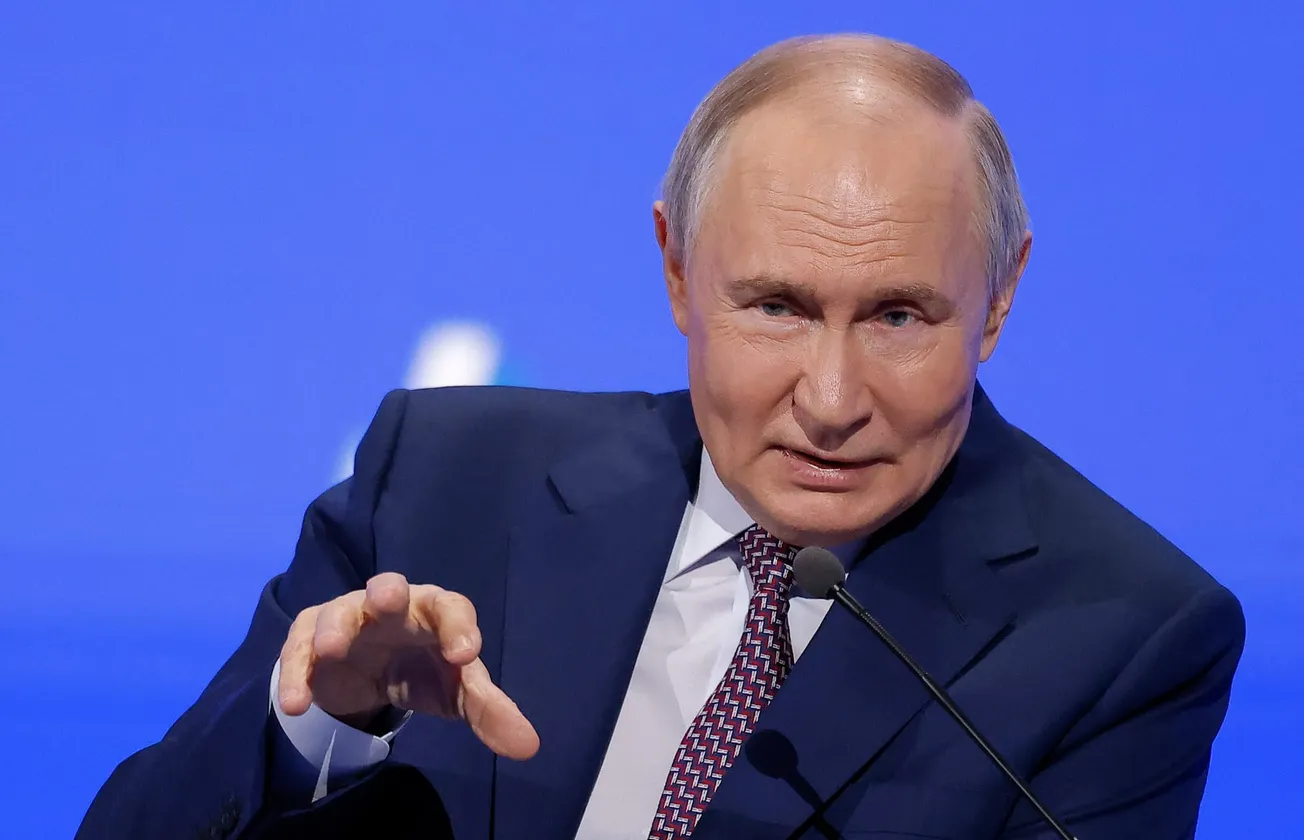
Despite mounting economic and demographic pressures, Russian President Vladimir Putin will continue to feed the war machine so long as he gains ground in Ukraine. To change his calculus, Western leaders must strengthen sanctions against the Kremlin, provide advanced weapons to Ukraine, and incentivize Russian brain drain.
LONDON – As the war in Ukraine drags on, the economic-policy debate in Russia has shifted from celebrating war-driven growth to arguing over whether the economy is stagnating or has entered a recession. In the first quarter of 2025, GDP declined by 0.6% compared to the previous quarter, and then grew by only 0.4% in the second quarter. Even the most optimistic forecasts expect Russia’s growth to be around 1% in 2025, down sharply from 4.3% in 2024 and 4.1% in 2023.

Despite this deceleration, inflation remains a challenge. As a result, the Russian Central Bank recently lowered its policy rate by 100 basis points – a smaller-than-expected cut – to 17%. Russian consumers are already feeling the pinch. Car sales, for example, are forecast to fall by 24% this year.

President Vladimir Putin is also facing a fiscal challenge. Russia’s budget deficit in the first eight months of 2025 hit 1.9% of annual GDP and is projected to grow to 2.6% of GDP by the end of the year – low by American or European standards, but problematic for a country that has been cut off from international borrowing as a punishment for invading Ukraine. Over the same period, oil and gas tax revenues fell by about 20% year on year, thus draining the sovereign wealth fund. The liquid part of this fund now stands at $50 billion, or 1.9% of GDP. Understanding that under the current economic model he will run out of cash in less than a year, Putin just announced a budget for 2026-28 which includes substantial tax hikes. This will depress the economy further and could trigger a public backlash.

In addition to mounting economic pressures, Russia faces a deepening demographic crisis. Around one million troops have been killed or wounded in the war, and roughly the same number of people have fled the country, many of them men avoiding conscription. It is telling that this year Russia has stopped publishing demographic data.

Moreover, the West’s sanctions regime has limited Russia’s access to crucial technologies, undermining investment in the economy and modernization efforts.

Given these conditions, it is no surprise that a substantial majority of Russians have grown tired of the war. In a recent poll, 66% of respondents were in favor of starting negotiations rather than continuing “military actions” in Ukraine.

Despite these multiple challenges, Putin seems undeterred. That is because the situation is not yet catastrophic. After all, the Russian economy may be stagnating, but it is not collapsing. And with a labor force of more than 72 million, Putin can still recruit about 30,000 soldiers per month by paying men from Russia’s poorest regions ten or 20 times their average wage. These factors, coupled with his apparatus of repression, have likely convinced Putin that he has the means to keep his war economy running and suppress domestic discontent for as long as necessary.

Perhaps more importantly, Russian forces continue to advance on the battlefield – a critical element of Putin’s strategy. To be sure, the process is slow and costly in terms of lives and money. But so long as Putin continues to seize more Ukrainian land, he has no incentive to negotiate, regardless of what the US government offers him.

That is not to say that Western sanctions have failed. Putin has limited access to cutting-edge military technology and must rely on China, North Korea, and Iran for spare parts and other supplies. He has less cash to recruit soldiers, and he may need to spend even more to quell civil unrest. In the new fiscal plan for 2026, he has to budget the same amount for military and security spending in nominal rubles – thus de facto reducing this expenditure adjusted for inflation.

Looking ahead, Russia’s demographic troubles imply that the Kremlin will need to offer ever higher bonuses for recruits and spend more on wages for workers in defense industries, while enduring a further slowdown in civilian sectors. Meanwhile, a recession would undermine fiscal equilibrium and mire the country in a doom loop, as the higher taxes needed to finance the war dampen economic growth and depress revenues further.

In Putin’s view, these are concerns for another day. In the near term, he has sufficient resources to maintain order at home and pay for his army’s slow advance in Ukraine. Yes, it comes at the expense of spending on education, health care, innovation, and infrastructure. But for Putin, making progress on the battlefield is a better investment in Russia’s future: it means that he will have a stronger hand when it comes time to make a settlement.

If Putin cares about territorial gains above all else, the question becomes how to stop Russian troops from advancing in Ukraine. That will require the West to press as hard as possible on Putin’s pain points. Only by strengthening technological, economic, and financial sanctions against the Kremlin, providing advanced weapons to Ukraine, and incentivizing the Russian brain drain can Western policymakers accelerate the demise of Putin’s war machine, freeze the frontline, and save Ukrainian lives.

Sergei Guriev, Dean and Professor of Economics at London Business School, is a former provost of Sciences Po and a former chief economist of the European Bank for Reconstruction and Development.

Copyright Project Syndicate

Your feedback is incredibly valuable to us. Could you please take a moment to grade the article here?

TIPP Takes

Geopolitics, Geoeconomics, And More

1. Ukraine War: Kremlin Bets On Cash Bonuses To Revive Failing Soldier Recruitment Effort- TIPP Insights

Russia’s regional governments are dramatically increasing cash bonuses to attract new recruits for the war in Ukraine, signaling waning public willingness to fight.

Several regions, including Tyumen, Voronezh, and Tatarstan, have quadrupled enlistment payments, offering up to 3 million rubles ($36,560) — roughly four times the annual local salary — to those who sign contracts before November.

Analysts say financial incentives have replaced patriotic appeals as Russia struggles with manpower shortages.


2. Ukraine Claims Russia Has Lost Over 1.1 Million Troops Since 2022 - TIPP Insights

Russia has lost approximately 1,117,360 troops in Ukraine since launching its full-scale invasion on February 24, 2022, according to the General Staff of the Armed Forces of Ukraine on October 7.

The tally includes 1,020 casualties in the past 24 hours.

Ukrainian officials also reported the destruction of 11,238 tanks, 23,319 armored vehicles, 33,493 artillery systems, and 67,564 drones, among other equipment losses.


3. Ukraine Finds Western Parts In Russian Drones, Missiles - TIPP Insights

Ukrainian President Volodymyr Zelensky has alleged that drones and missiles fired by Russia against his country are filled with parts sourced from Western companies.


4. Zelenskyy Announces $36 Million Plan To Safeguard Ukraine’s Energy Sector - TIPP Insights

Ukraine has allocated $36 million to strengthen energy infrastructure in frontline regions as Russian strikes intensify ahead of winter, President Volodymyr Zelenskyy announced on October.

The funding will help protect critical power facilities and build a reserve of equipment for rapid restoration of electricity in war-hit areas, Zelensky said after meeting Prime Minister Yulia Svyrydenko.


5. Trump Says Would Want to Know Ukraine's Plans for Tomahawk Missiles – Reuters

President Donald Trump said on Monday he would want to know what Ukraine planned to do with U.S.-made Tomahawk missiles before agreeing to supply them because he does not want to escalate Russia's war against Ukraine.

Ukrainian President Volodymyr Zelenskiy has asked the U.S. to sell Tomahawks to European nations that would send them to Ukraine.

Tomahawk missiles have a range of 2,500 km (1,550 miles), putting Moscow in the range of Ukraine's arsenal, were Kyiv to be granted them.

Russian President Vladimir Putin said in a video clip released on Sunday that if Washington supplied Tomahawk missiles to Ukraine for long-range strikes deep into Russia, it would lead to the destruction of Moscow's relationship with Washington.


6. Russia Hosts Taliban Delegation And Warns Against Foreign Military Presence In Afghanistan - AP

Russia hosted a delegation of Afghanistan’s ruling Taliban government on Tuesday and issued a strong warning against a foreign military presence in the country.

Lavrov emphasized that “the deployment of military infrastructure of any third countries on the territory of Afghanistan, as well as on the territories of neighboring states, is categorically unacceptable under any pretext.”


7. Trump, Carney Clash On Trade But Affirm Deep U.S.-Canada Ties - TIPP Insights

President Donald Trump expressed uncertainty over the future of the United States-Mexico-Canada Agreement (USMCA) during his meeting with Canadian Prime Minister Mark Carney at the White House on Tuesday.

Despite Trump’s claim of a “natural conflict” between the two allies, he praised Canada as a valued partner, while Carney emphasized cooperation over competition.


8. Tesla Launches Lower-Priced Model 3 And Y To Counter Rising EV Competition - TIPP Insights

Tesla unveiled cheaper versions of its Model 3 and Model Y after the expiration of the $7,500 U.S. federal EV tax credit.

The Model 3 Standard will start at $38,630, while the Model Y Standard will cost $41,630, both including destination and order fees. Deliveries are expected by early 2026.


9. Fatty Liver Disease Risk Linked To Both Sugary And Diet Drinks – Health News

People could be at higher risk of fatty liver disease from both sugary sodas and diet drinks, a new study says.

In fact, artificially sweetened drinks might pose a greater threat to liver health than sugary beverages, researchers reported Monday at the United European Gastroenterology's annual meeting in Berlin.

The team also found that replacing these drinks with water significantly reduced people's risk of fatty liver disease.

"Sugar-sweetened beverages have long been under scrutiny, while their 'diet' alternatives are often seen as the healthier choice," lead researcher Lihe Liu said in a news release. She's a graduate student in gastroenterology at the First Affiliated Hospital of Soochow University in Suzhou, China.


10. Bitcoin Should Reach Half Of Gold’s Market Cap” – Vaneck Projects $644k BTC - Cryptoslate

Bitcoin and gold have outperformed every other major asset class this year, reflecting how US macroeconomic uncertainty is reshaping investor behavior.

Bitcoin and Gold Price Performance (Source: Charlie Bilello)

Gold has surged 48% year to date, reaching an all-time high near $4000. In comparison, Bitcoin has gained over 30% this year and has reached a new high above $126,000. Notably, this marks the first time the two assets have simultaneously held the top performance spots in any calendar year.

While both assets are receiving praise for their current market performance, there is an increasing belief that BTC could soon upstage gold.

In an Oct. 7 post on X (formerly Twitter), Matthew Sigel, head of digital assets research at VanEck, said Bitcoin could reach half of gold’s market capitalization after the next halving in April 2028. A halving event cuts Bitcoin’s issuance rate by 50%, reducing supply and typically driving price appreciation when demand holds steady.

Sigel emphasized that younger investors, particularly in emerging markets, increasingly view Bitcoin as a superior store of value to the precious metal. Gold’s worth, he noted, largely stems from its role as a value reserve rather than from industrial or jewelry demand.

So, if Bitcoin continues capturing that perception advantage, its market could expand substantially. At gold’s current record price, Sigel calculated an equivalent valuation of $644,000 per BTC.


📊 Market Pulse — October 7, 2025

📉 S&P 500 — 6,714.59 ▼ 0.38%
Stocks eased slightly as the federal shutdown entered its second week, dampening sentiment despite ongoing AI-driven enthusiasm.

💵 10-Year Treasury — 4.13% ▼ 3.5 bp
Yields slipped as investors sought safety amid political gridlock and limited economic data releases.

🛢️ Crude Oil — $62.02 ▲ 0.53%
Oil prices edged higher, supported by expectations that OPEC+ will hold steady on output despite supply concerns.

💲 U.S. Dollar — 98.62 ▲ 0.51%
The dollar strengthened for a second session, supported by firm yields and global risk caution.

Bitcoin — $121,998.07 ▼
Bitcoin pulled back after last week’s surge, as traders took profits amid broader market uncertainty.

🪙 Gold — $3,982.48 ▲ 0.50%
Gold continued its climb toward $4,000, buoyed by safe-haven demand and mounting rate-cut expectations.


📧
Letters to the editor email: editor-tippinsights@technometrica.com
📰
Subscribe Today And Make A Difference. Consider supporting Independent Journalism by upgrading to a paid subscription or making a donation. Your support helps tippinsights thrive as a reader-supported publication. Contact us to discuss your research or polling needs.

Comments

Latest