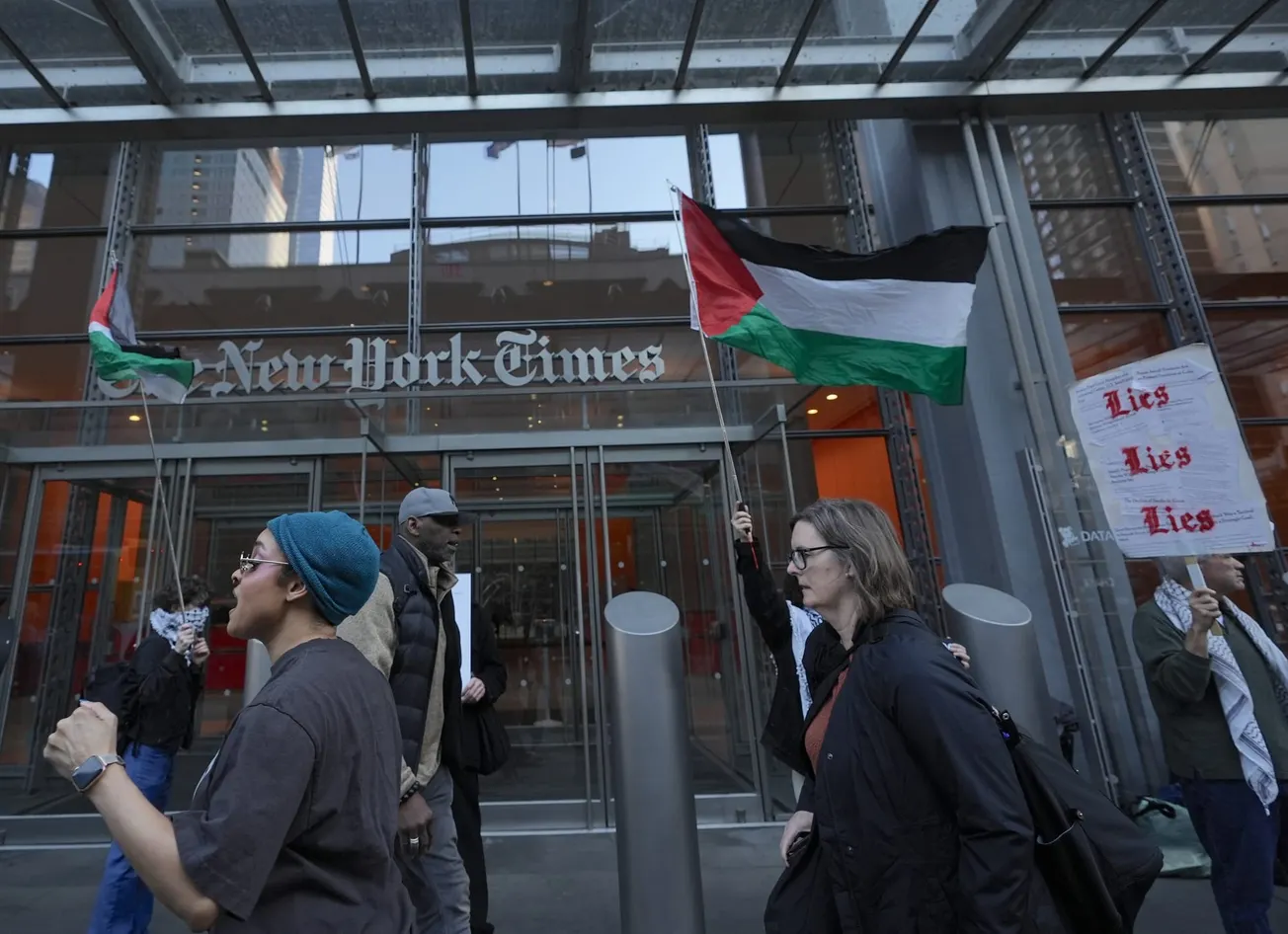
The New York Times published an op-ed last week claiming that Israel rapes Palestinian prisoners, in particular by using dogs. Israel responded that this was “one of the most hideous and distorted lies ever published against the State of Israel in the modern press,” and that the country will initiate a defamation lawsuit against The New York Times.
I have been either practicing or teaching law for the past 25 years, including helping governments understand their options and obligations in world events. I bring that experience to our organization, RealityCheck Research, which is dedicated to reliable clarity. Today, we bring that same legal and historical clarity to the events of the week between Israel and the New York Times.
The New York Times op-ed
In this case, Israel’s response is correct.
The writer, Nicholas Kristof, relied heavily on sources that have been credibly described as Hamas-aligned, including an NGO whose independence from Hamas has been seriously questioned. The op-ed did not present independent corroboration for its central claims. And on the central allegation (training canines to commit rape), James Crosby, a retired police lieutenant and canine aggression expert with Harvard University’s Canine Brain Project, says he is unaware of credible evidence of such training and doubts it is even possible. The claim is not unlike popular conspiracy theories that Israel controls sharks, birds, and the weather.
This is to say nothing of the IDF’s strict ethical code and its strong internal enforcement, which would make such an act not only illegal, but unlikely to go unnoticed and unpunished.
Kristof’s op-ed came out just hours before a long-anticipated Israeli Civil Commission report, “Silenced No More,” which details the nightmare of sexual violence on October 7. The New York Times even gave its opinion piece a similar-sounding title.
The op-ed, its title, and its timing functioned not to expose rape but to obscure the report that was about to drop.
The famous scientist Carl Sagan once said, “extraordinary claims require extraordinary evidence.” The claims against Israel are indeed extraordinary, yet completely lacking in evidence. This contrasts with the sexual violence of October 7, which terrorists live-streamed using body cams and bragged about publicly.
Many articles break apart each disturbing element of the New York Times op-ed in detail. For further reading, one might begin with this analysis by Israeli journalist Amit Segal.
The Law
Defamation law exists for an important reason: because a severe enough lie can ruin a person’s life. Weaponized lying is not protected speech, it is not legal, and its victims are not meant to be defenseless under the law.
This situation is exactly what defamation law was meant to prevent.
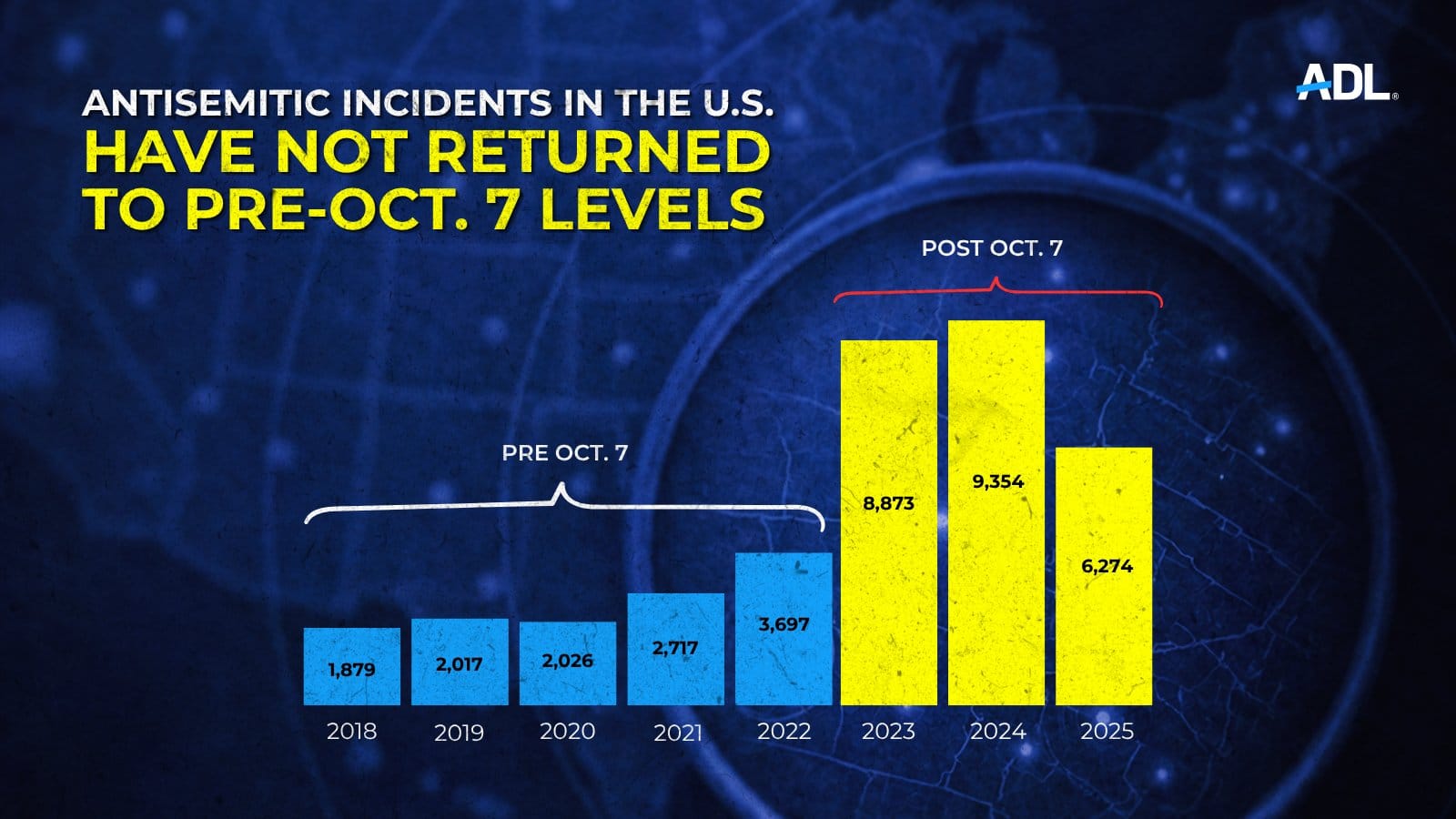
In America, Jews are victims of more attacks per capita than any group, and most of these crimes are related to Israel or Zionism. Since the October 7 massacre, the sheer number and scale of these attacks has broken new records every year.
In other words, defamation against Israel not only can but does trigger violent attacks against American Jews: Jewish synagogues, Jewish schools, and Jewish people.
Yet there is a technical barrier.
The United States does not allow a government to bring a case for defamation (New York Times Co. v. Sullivan). This relates to a concern that governments might use lawsuits to silence free speech. Even ethnic or racial groups are typically restricted from accessing the protections of defamation law.
Though well intended, this rule violates the spirit of the law.
Jewish individuals, not governments, are paying a deadly price for weaponized lying, and they are exactly the type of victims that defamation law is meant to protect.
For this reason, Israel should consider structuring its suit in such a way that the plaintiff is a person, rather than a government.
When an implication of wrongdoing is directed at a specific individual within a government, that individual may serve as a plaintiff (Rosenblatt v. Baer). In this case, the New York Times op-ed references Israeli Prime Minister Benjamin Netanyahu six separate times in his role as the leader of Israel, while condemning Israeli “leaders” with all manner of abhorrent and untrue accusations. This creates a strong argument that the op-ed actually targets an individual, rather than a government.
There may be other technical approaches to meet the requirements of American law. If none of them succeed, the New York Times will enjoy immunity for its abhorrent and dishonest conduct. American Jews will continue to pay the price, and other vulnerable groups will inevitably follow.
This is not about Israel, nor even about Jews. This is about all of us. This is about America.
Victims of defamation must not be left helpless under the law.
In this particular case, the victims are American Jews, and the threat is a tidal wave of blood libels in the historical sense of the word. Ahead of the Spanish Inquisition of 1492, Jews were accused of crucifying children and controlling animals. The pogroms of the 19th and 20th centuries included claims that Jews made Passover matzah from the blood of Christian babies. During the Holocaust, Jews stood accused of a whole range of horrors, including committing torture and rape.
The New York Times’ claim that the Jewish state somehow magically controls animals in order to torture and rape its non-Jewish victims could have been lifted almost word for word from these disturbing histories.
The tidal wave of blood libels has reemerged from the pages of history, and we ignore it at our peril.
All of us.
Daniel Pomerantz is the CEO of RealityCheck, a non-profit charitable organization dedicated to restoring public trust in information. An expert on the Middle East and international law, Daniel also serves as an adjunct professor at Israel’s Reichman University (the “IDC” in Herzliya). Daniel and RealityCheck can be found at www.realitycheckresearch.org or at contact@realitycheckresearch.org.
👉 Show & Tell 🔥 The Signals
I. Antisemitic Incidents Remain Elevated After Oct. 7
Antisemitic incidents in the U.S. remain well above pre-Oct. 7 levels, even after declining from 2024 highs. ADL data shows reported incidents in 2025 are still significantly higher than levels seen before the Hamas attack and the ensuing war in Gaza.
II. College Campuses Still Among Antisemitism Hotspots
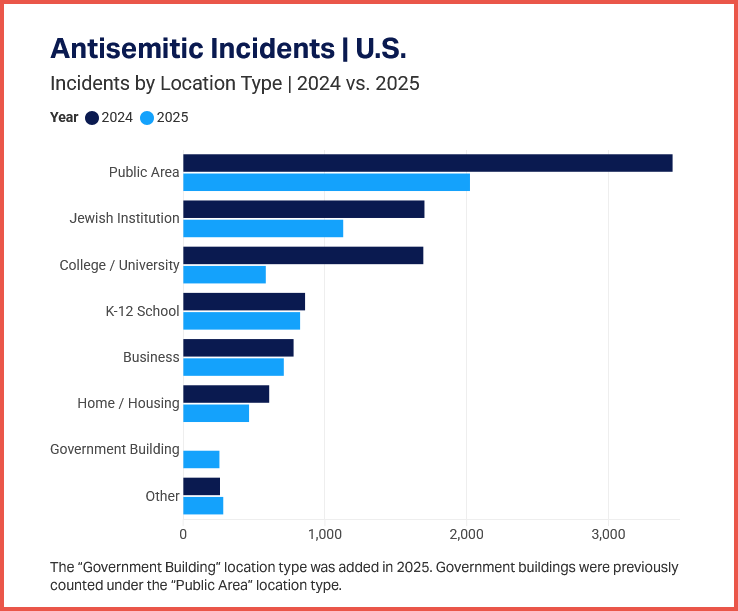
Public areas saw the largest number of antisemitic incidents in 2025, but colleges and universities remain among the most affected locations. Incidents tied to campuses and Jewish institutions continue to far exceed levels seen before Oct. 7.
📊 Market Mood — Monday, May 18, 2026
🟩 Markets started the week cautiously as rising bond yields and stubbornly high oil prices weighed on investor sentiment.
🟧 The global bond selloff has become the market’s main concern, with investors increasingly worried that the Iran-driven energy shock could force central banks back toward rate hikes.
🟦 Oil climbed above $110 a barrel as tensions around Iran remained unresolved and fresh drone attacks raised doubts about the durability of the fragile ceasefire.
🟨 China’s economy showed new signs of weakness, with disappointing factory output and soft retail sales highlighting fragile consumer demand despite strong exports.
🗓️ Key Economic Events — Monday, May 18, 2026
No Events Scheduled
Letters to the editor email: editor-tippinsights@technometrica.com
Subscribe Today And Make A Difference. Consider supporting Independent Journalism by upgrading to a paid subscription or making a donation. Your support helps tippinsights thrive as a reader-supported publication. Contact us to discuss your research or polling needs.
Reach our audience. For sponsorship and advertising opportunities, visit our Partner With Us page.