
Europe likes to speak the language of values. It prefers not to speak about power.
For years, it did not have to. The United States provided it.
That arrangement worked because it was never seriously tested.
Now it is.
Earlier this year, Denmark did something that should have set off alarm bells across the alliance. As tensions over Greenland rose, Danish forces did not just protest or posture. They moved explosives into position and prepared to take out key runways to prevent U.S. aircraft from landing. They even flew in blood supplies in case things turned violent.
Pause there for a moment.
A NATO ally was preparing, in practical, operational terms, for the possibility of a clash with the United States, not as a thought experiment, but as something that might actually happen.
Imagine if it had.
American aircraft approaching. A landing attempt. Then detonations. Runways destroyed by an ally to stop U.S. forces from touching down. Images flashing across the world: a NATO country physically denying access to the United States, not an adversary but an ally. The diplomatic shock alone would have been enormous. The strategic embarrassment would have been even greater.
It would have eclipsed even the scenes from the U.S. withdrawal from Afghanistan, when desperate civilians chased departing aircraft on the runway. That moment raised questions about American power. This would have raised something deeper: whether America could rely on its own allies at all.
Allies do not prepare for that unless something fundamental has shifted. They do it when they are no longer certain where the line is. That is not how alliances behave when trust is intact. Denmark’s actions amount to a quiet warning.
That is what makes this moment so revealing.
In Andersen’s tale, the Little Mermaid gives up her voice for love. This time, in Europe, she is finding it. The moment is no Hans Christian Andersen story.
Europe’s reaction to Trump’s Ukraine peace efforts in late 2025 offered another example. As the administration pushed a framework to end the fighting, however imperfect, European leaders and commentators branded it appeasement or an outright sell-out to Putin. EU officials warned against any “dirty deal” behind their backs, while others accused Washington of undermining Ukraine’s sovereignty. Yet even as they lectured America on moral hazard and endless war, Europe continued to rely almost entirely on U.S. weapons, intelligence, and leverage to sustain Kyiv’s position. They demanded Washington keep the conflict alive on their terms, and attacked it the moment compromise entered the picture.
The contradiction surfaced again in March 2026 over the Strait of Hormuz. When Iran mined the chokepoint and global energy prices surged, Washington asked NATO allies for naval support to reopen the vital artery. The response from major European capitals was a resounding no. Germany, France, Spain, Italy, and others declared that this was not their war, rejecting any military role while insisting on diplomacy. They still expected the United States to secure the world’s most critical shipping lane, ensuring Europe’s factories stay lit and homes warm, without sharing the risk.
The relationship increasingly lacks a clear quid pro quo.
Europe wants the benefits of power. It just does not want to exercise it.
Much of the commentary from Europe today focuses on American behavior. Washington is described as erratic, distracted, or unpredictable. Writers like Carl Bildt, a former prime minister and foreign minister of Sweden, argue that U.S. strategy is drifting and undermining itself. Europe, in that telling, is left to deal with the consequences.
There is some truth in that. But it is only part of the picture.
Because while Europe critiques American power, it continues to depend on it. It expects the United States to deter threats, secure trade routes, and stabilize crises far beyond Europe’s borders. When things go wrong, Europe points the finger at Washington. When something serious needs to be done, it still looks to Washington.
At the same time, it is quietly preparing for a different possibility. That is the contradiction at the heart of this moment.
Europe wants the protection, but not the uncertainty that comes with it. It wants the benefits of American power without having to absorb the risks that accompany it. And so it hedges. It plans. It prepares.
Denmark’s actions in Greenland bring that into sharp focus. You do not position explosives and medical supplies unless you are thinking through worst-case scenarios. And in this case, the worst case included the United States.
That is not a small shift.
It does not mean the alliance is breaking apart. The ties are still deep, and the shared interests remain strong. But the comfort that once defined the relationship is fading.
Europe still stands with America, but it now stands with its guard up, and that changes everything.
👉 Show & Tell 🔥 The Signals
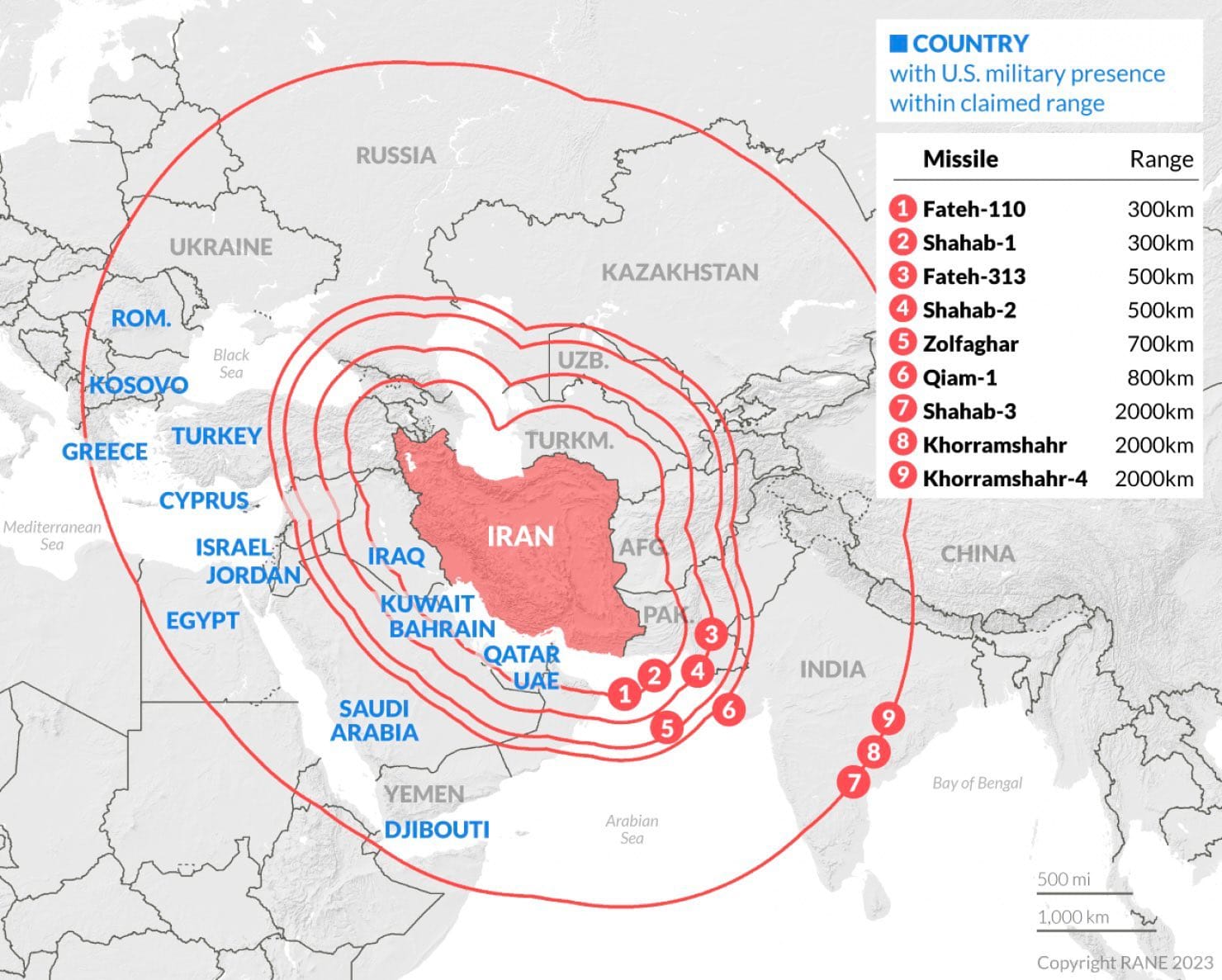
I. Iran’s Missile Reach May Extend To Diego Garcia
New assessments suggest Iran may have demonstrated missile capabilities of up to 4,000 kilometers, far beyond the previously assumed range of around 2,000 km. That range would put Diego Garcia, a key U.S. military base in the Indian Ocean, within potential reach.
If confirmed, the development would mark a major leap in Iran’s long-range strike capability, expanding the threat beyond the Middle East and bringing critical Western military assets into range.
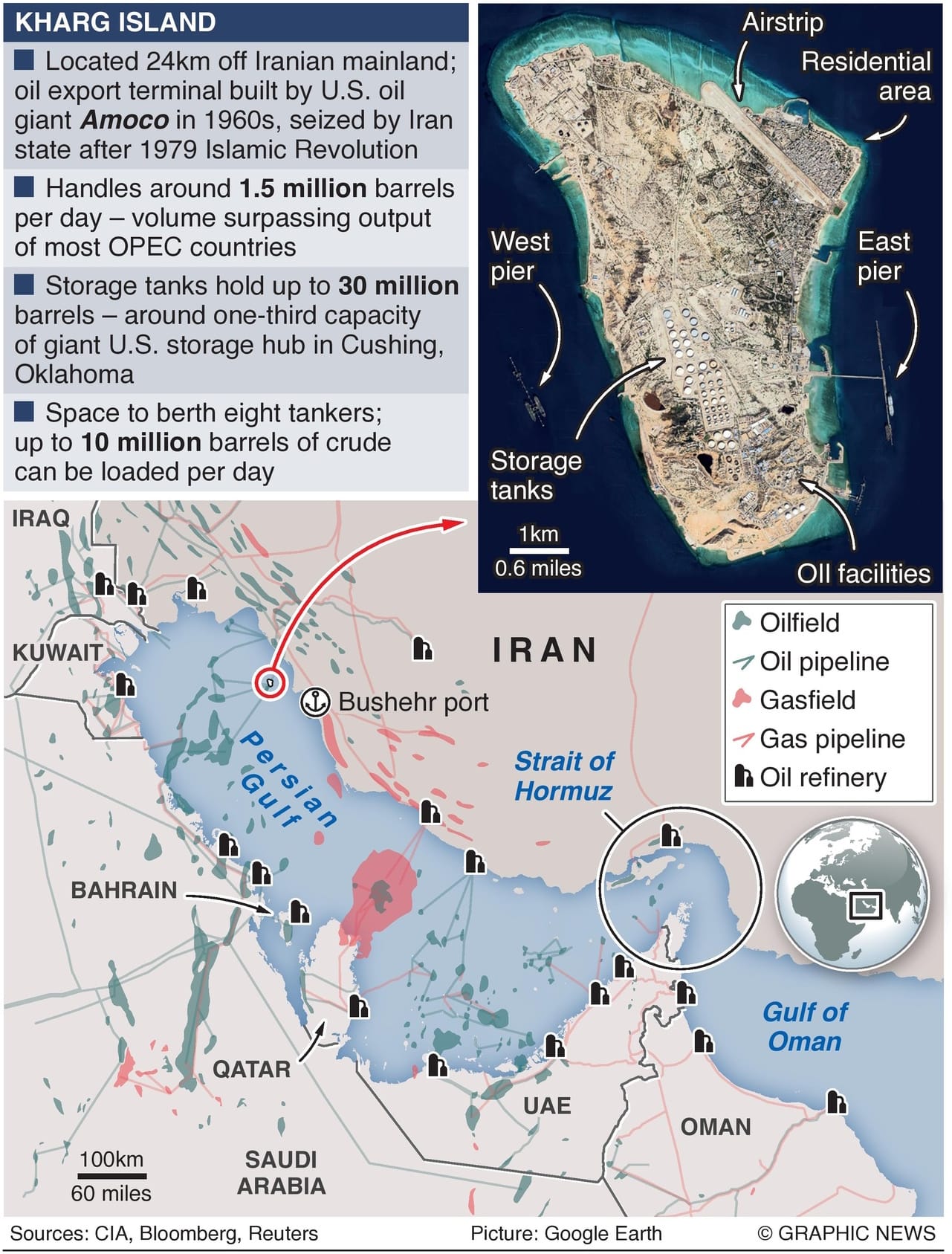
II. Kharg Island Is The Nerve Center Of Iran’s Oil Exports
Kharg Island is Iran’s main crude export hub, handling roughly 1.5 million barrels per day and storing up to 30 million barrels of oil. Built in the 1960s and later seized after the 1979 revolution, the terminal remains critical to Iran’s energy infrastructure.
Because a large share of Iran’s oil exports flow through the island, any disruption could quickly ripple through global energy markets and push prices higher, especially given its importance to Asian buyers.
editor-tippinsights@technometrica.com