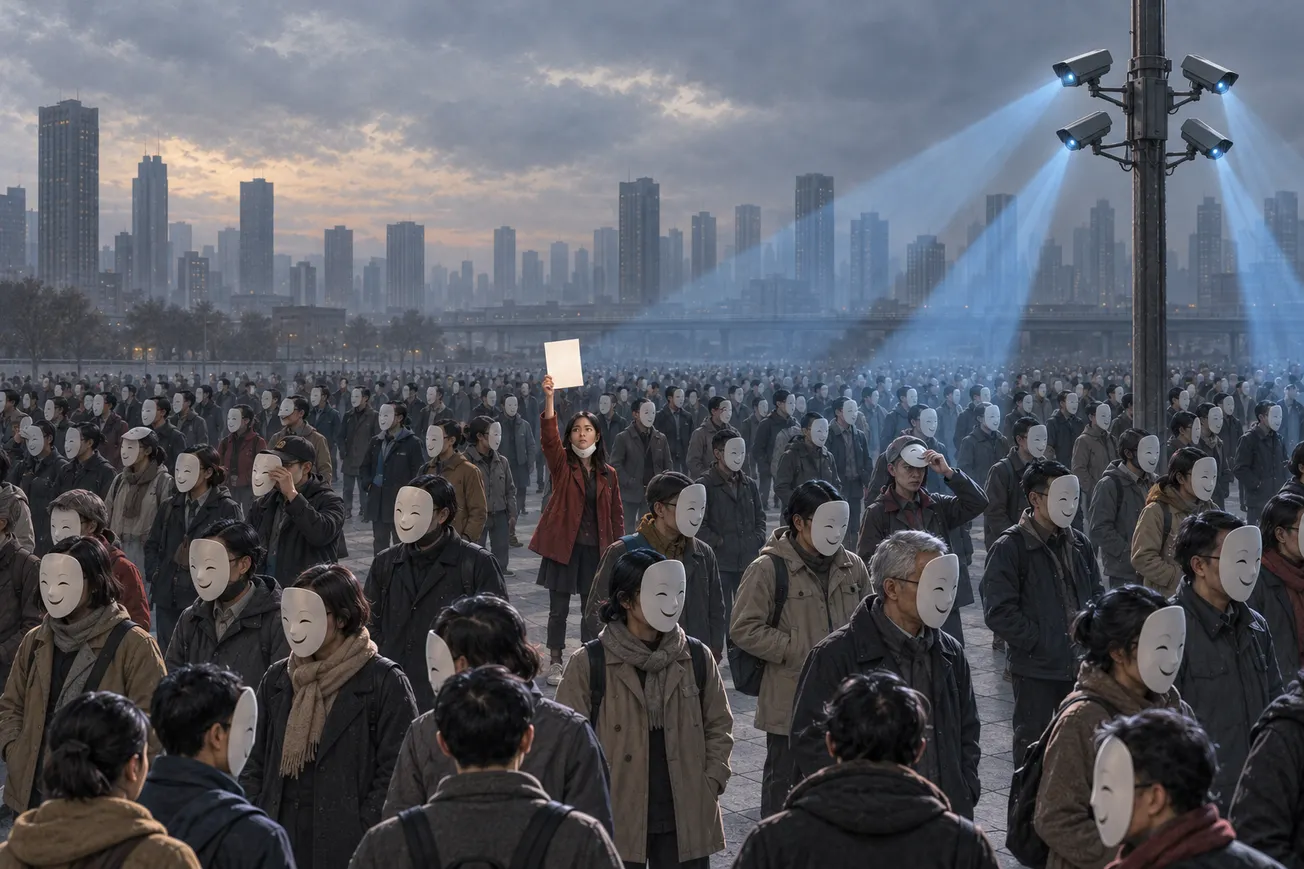

Freedom of speech is one of America's most cherished principles, but many Americans are reluctant to use it when the conversation turns to politics or social issues. A new TIPP Poll finds that 52% of Americans have held back from expressing their political or social views because they were worried about negative consequences. About one in five (21%) say they have done so frequently, and another 31% say they have done so occasionally.
Although Americans have broad constitutional protection for speech, many apparently see personal or social risks in speaking openly about these subjects. Republicans, younger and middle-aged adults, men, and higher-income Americans are more likely than others to say they have held back.
Republicans Report More Self-Censorship
Among Republicans, 61% say they have frequently or occasionally withheld their political or social views, compared with 52% of Democrats and 46% of independents. Republicans are also the most likely to say they hold back frequently, at 27%, compared with 21% of Democrats and 15% of independents.
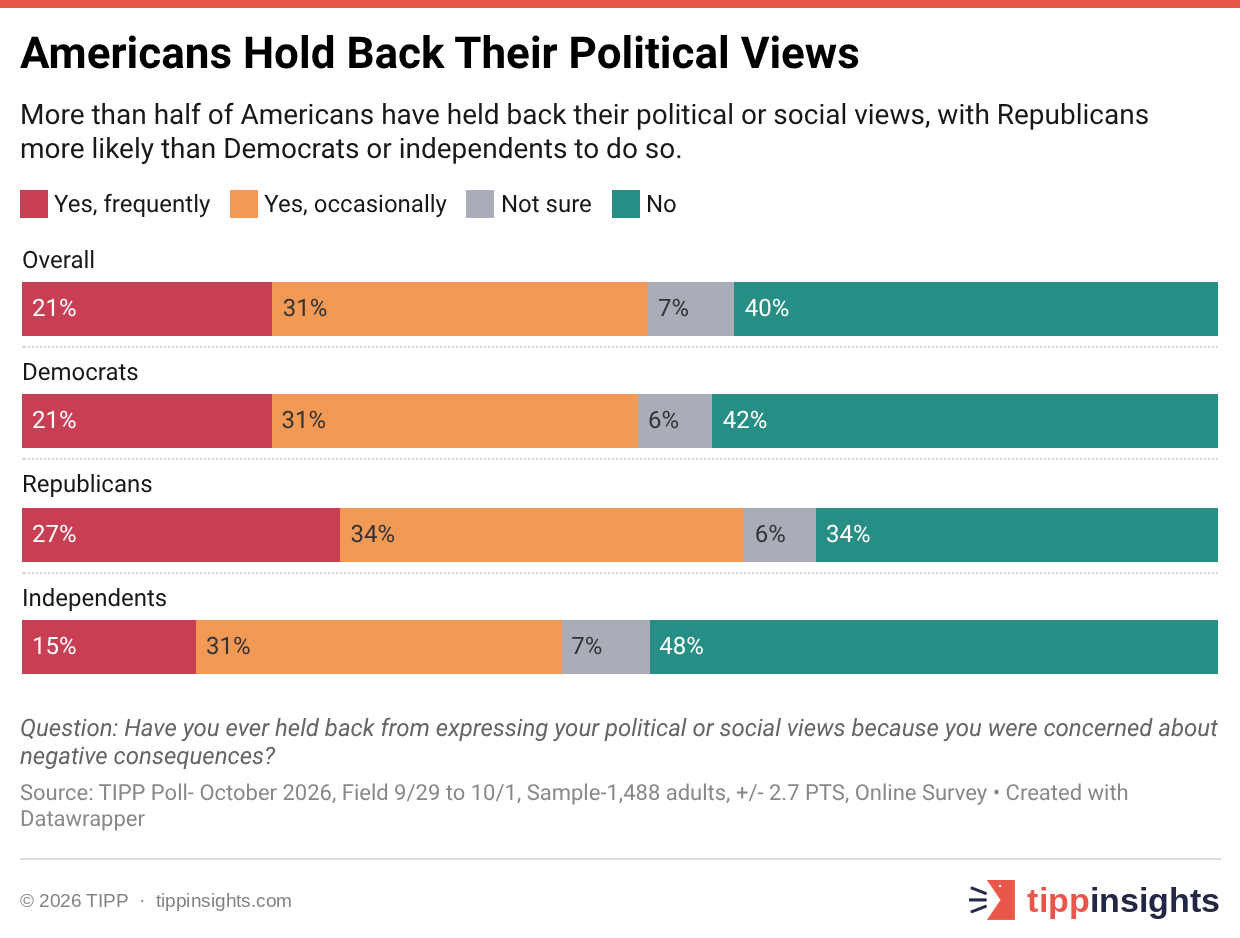
Republicans are the most likely to report holding back their opinions, although a majority of Democrats say they have done so as well.
The survey did not ask respondents to describe specific incidents or the consequences they feared, so it cannot say whether their concerns came from work, personal relationships, public criticism, or something else.
Younger Adults and Men More Likely to Hold Back
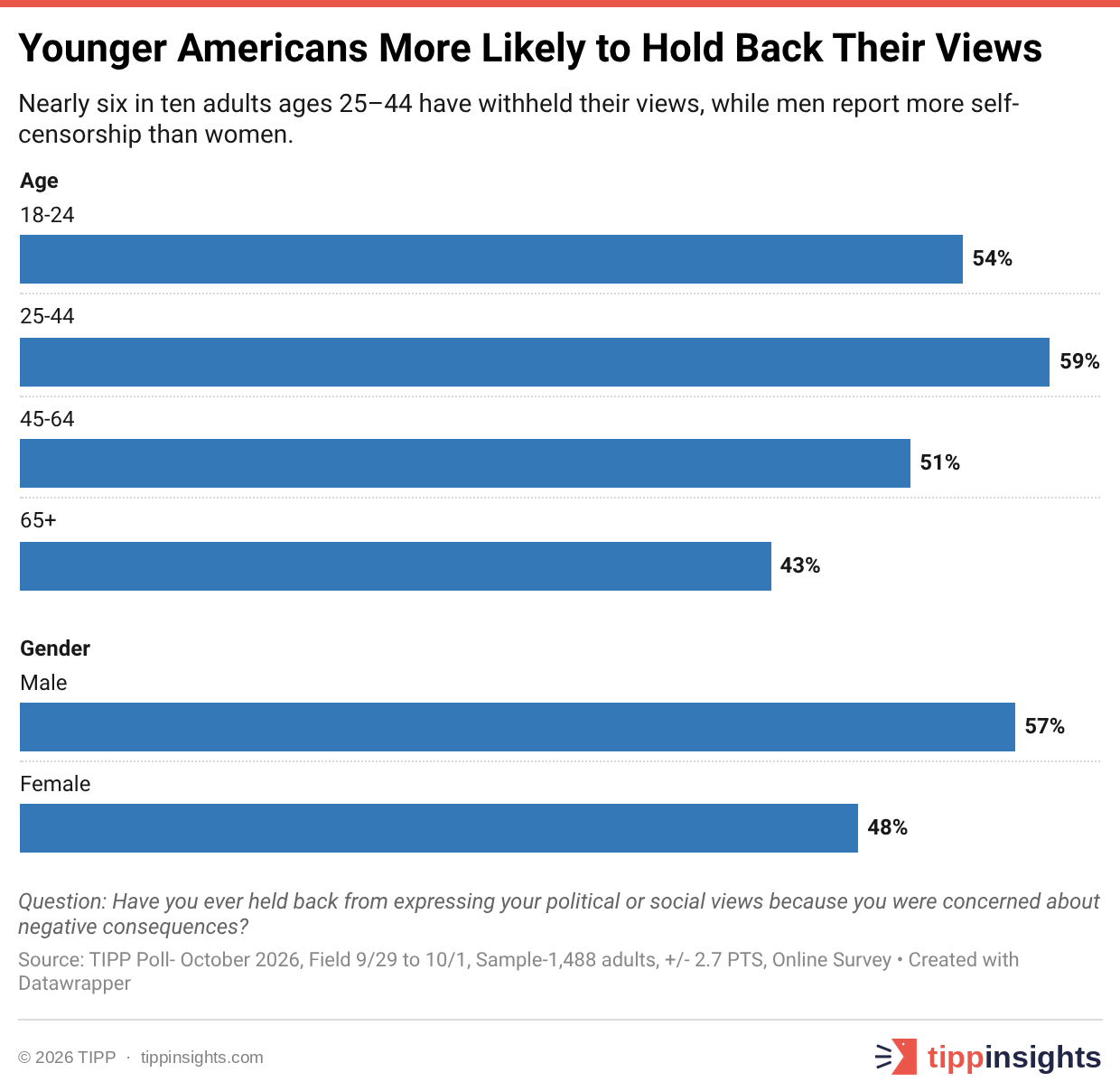
Self-censorship also varies by age. Adults aged 25 to 44 are the most likely to say they have withheld their views, at 59%, followed by those aged 18 to 24 at 54% and those aged 45 to 64 at 51%. Americans 65 and older are the least likely, at 43%.
The 16-point gap may reflect differences in social and professional circumstances, although the survey does not establish why the age groups differ.
Men are more likely than women to say they have held back their views, 57% to 48%.
Higher Earners Are More Likely to Self-Censor
Household income produced one of the poll's more unexpected results. Nearly two-thirds (65%) of Americans in households earning $75,000 or more say they have withheld political or social opinions because of possible negative consequences, compared with 44% of those earning less than $30,000, a 21-point difference.
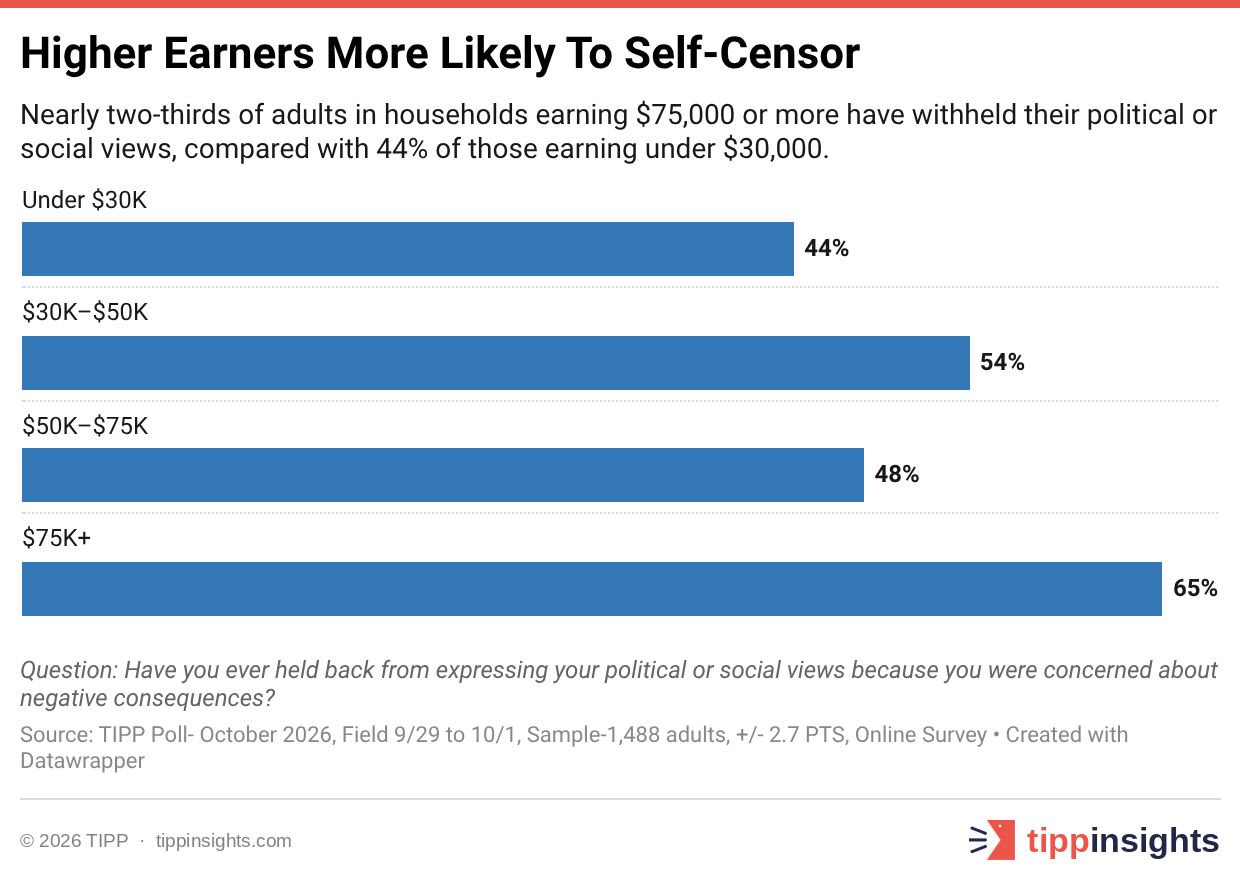
The pattern is less consistent in the middle brackets. Self-censorship stands at 54% among those earning $30,000 to $50,000 and 48% among those earning $50,000 to $75,000.
Still, the gap between the highest and lowest income groups suggests that financial security does not necessarily make people more comfortable sharing controversial opinions. Higher earners may have professional relationships, reputations, or careers that make them more cautious, but the survey shows only an association between income and self-censorship, not the reasons for it.
Where Americans Stay Silent
The TIPP Poll also asked respondents to name the setting where they were most likely to avoid expressing their political views. More than two-thirds (68%) named one, while 22% said they generally felt comfortable expressing their opinions and 11% were unsure.
Social media was the most common answer, at 18%, followed by public places (16%) and workplaces (13%). Family gatherings (10%) and conversations with friends (8%) also appeared on the list, while 2% chose schools or colleges.
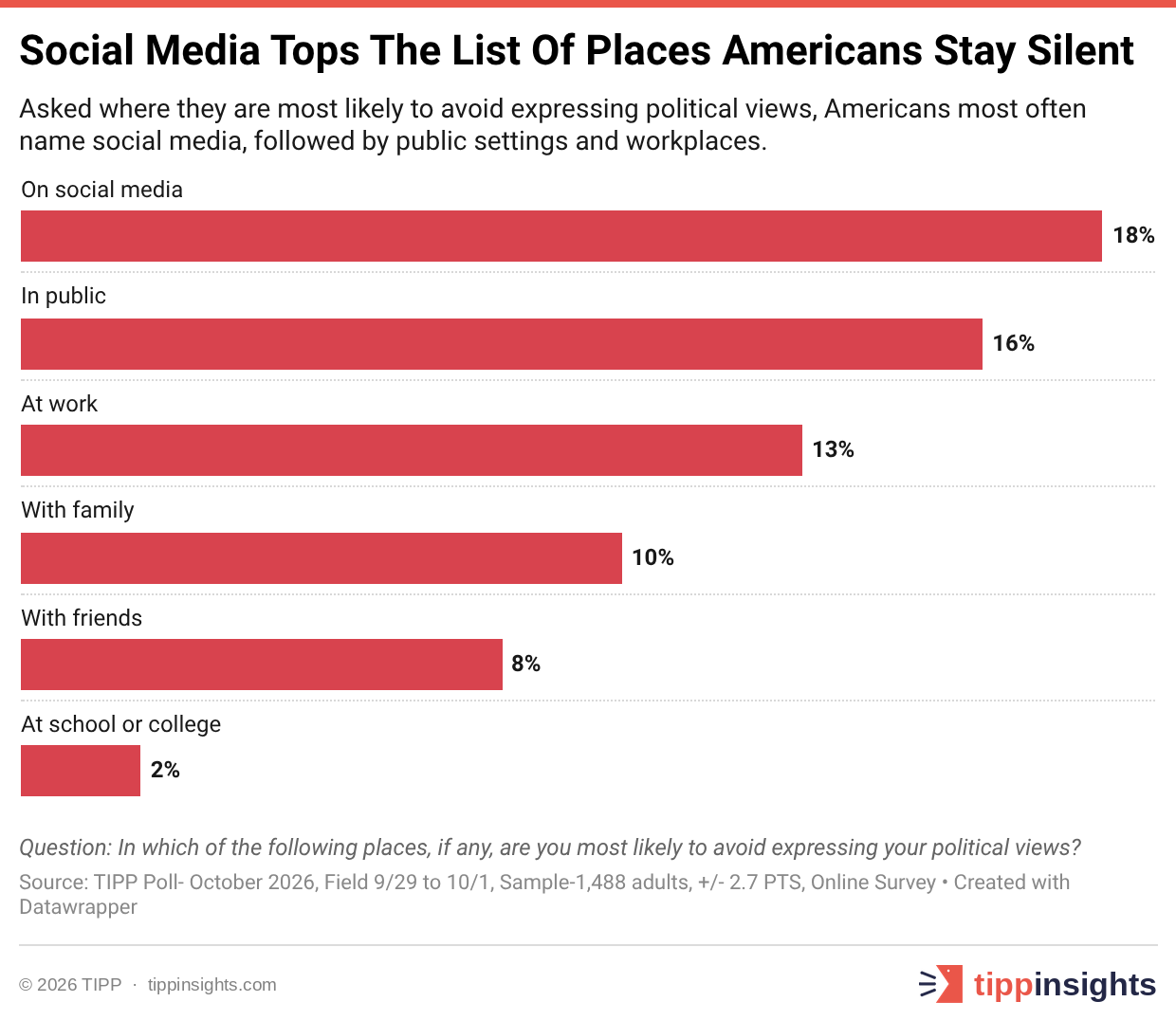
Because respondents chose only one setting, these figures do not show the total share of Americans who have ever avoided political conversation in each place. They do show that the reluctance extends well beyond social media, to workplaces, public spaces, and even family and friends.
The Cost of Staying Silent
The poll asked whether Americans have held back their views out of concern about negative consequences, not whether they have actually experienced any. More than half say they have held back, with the highest shares among Republicans, working-age adults, men, and higher-income households. More than two-thirds can also name a setting where they are most likely to stay quiet.
For a country that places so much value on free speech, that is a large number of people choosing not to exercise it.
Methodology: The TIPP Poll was conducted online September 29 to October 1, 2026, among 1,488 U.S. adults. The margin of error for the full sample is ±2.7 percentage points. Subgroup results have larger margins of error. Figures may not total 100% because of rounding.
Loved it, hated it, or somewhere in between — tell us. Grade this article here and help shape what lands in your inbox next.
📊 Market Mood · October 19, 2026
How the trading day is setting up.
🟩 Wall Street futures are rebounding after last week's selloff. S&P 500 futures are up about 0.8% and Nasdaq futures 1.3%, supported by falling oil prices and Treasury yields.
🟧 Oil prices are retreating as Russian supplies could increase. President Trump's decision to ease some sanctions on Russia has pushed crude lower, offering relief from energy-driven inflation pressures.
🟦 Treasury yields are easing as investors reassess growth risks. The 10-year yield is near 5.07%, providing some support for stocks despite persistent concerns about inflation and borrowing costs.
🟨 AI earnings face a critical test this week. Meta, Tesla and other major companies report results as investors seek reassurance about the profitability and financing of massive AI investments.
🗓️ Key Economic Events
On today's U.S. data calendar.
🟧 10:00 a.m. ET — NAHB Housing Market Index (October) Forecast: 31 | Previous: 32
Homebuilder confidence is expected to weaken slightly as elevated mortgage rates and affordability pressures continue to weigh on housing demand.
Letters to the editor email: editor-tippinsights@technometrica.com
Subscribe Today And Make A Difference. Consider supporting Independent Journalism by upgrading to a paid subscription or making a donation. Your support helps tippinsights thrive as a reader-supported publication. Contact us to discuss your research or polling needs.
Reach our audience. For sponsorship and advertising opportunities, visit our Partner With Us page.