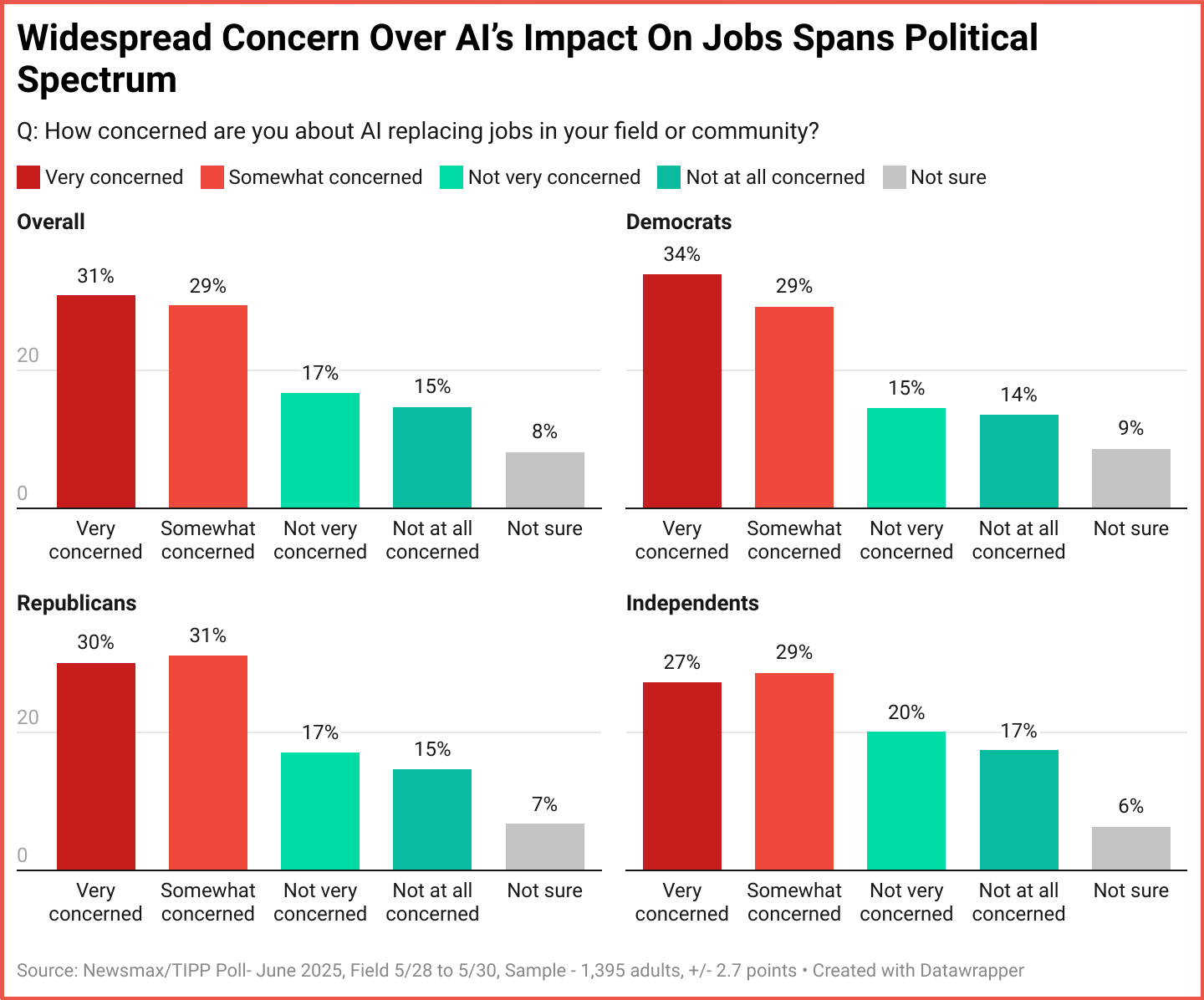
Last week, the Commonwealth Bank of Australia learned the hard way that replacing people with AI can backfire. After laying off 45 call-center staff in favor of voice bots, the bank was swamped by customer outrage and operational chaos, forcing a swift reversal. The episode highlights a fear shared on this side of the Pacific as well. A recent Newsmax/TIPP Poll found that six in ten Americans worry AI could make them redundant, a concern cutting across age groups, income levels, and political lines.
Artificial Intelligence (AI) is the next frontier in technology. While some believe that AI will improve life as we know it, the jury is still out on whether ‘smart’ machines and machine learning will cause more harm than good. While enthusiasts point to AI-enabled services taking up mundane jobs and automation cutting down costs and saving time, there is a growing chorus among users and developers cautioning that we have let an unfamiliar genie out of the bottle.
AI has seeped into our homes and embedded itself into our everyday lives. From virtual assistants to self-driving cars and language models, we often interact with AI-enabled systems without even realizing it. It cannot be refuted that machine learning and smart devices have improved efficiency and enhanced productivity in many sectors. However, the adoption of AI-powered systems and processes means less need for manpower and fewer job opportunities, especially at the entry and mid-management levels. Without proper policy or foresight to gainfully reabsorb or support those being made redundant by the mushrooming tech, American society finds itself at a crossroads.
At present, Americans are most concerned about AI replacing jobs in their field or community. Concerns run deepest among those in the job market: two-thirds of 25–44-year-olds and nearly 6 in 10 of those just entering the workforce (18–24) fear AI could take away their jobs. Though political ideology has recently divided the country along partisan lines on all issues, the worry that AI will take away livelihoods is prevalent across parties.
The debate over AI’s benefits, risks, and long-term costs has only just begun. While students and researchers embrace AI-powered search engines for quick, precise answers, others are turning away from real-world interactions and finding comfort in “deeper, more immersive conversations” with Character.AI. On this online platform, millions create and chat with virtual personas that mimic friends, celebrities, or even fictional characters, a shift that highlights how AI is reshaping not just work, but human connections.
As with every other technological advancement humans have made, AI's impact is not black and white. Artificial Intelligence is neither the biggest bully on the block nor the safest ally-on-call. It is a tool that must be used wisely and with discernment. With AI's true potential yet to be tapped or predicted, there is a growing sentiment among people that AI should be regulated, and a competent authority should ensure its ethical development.
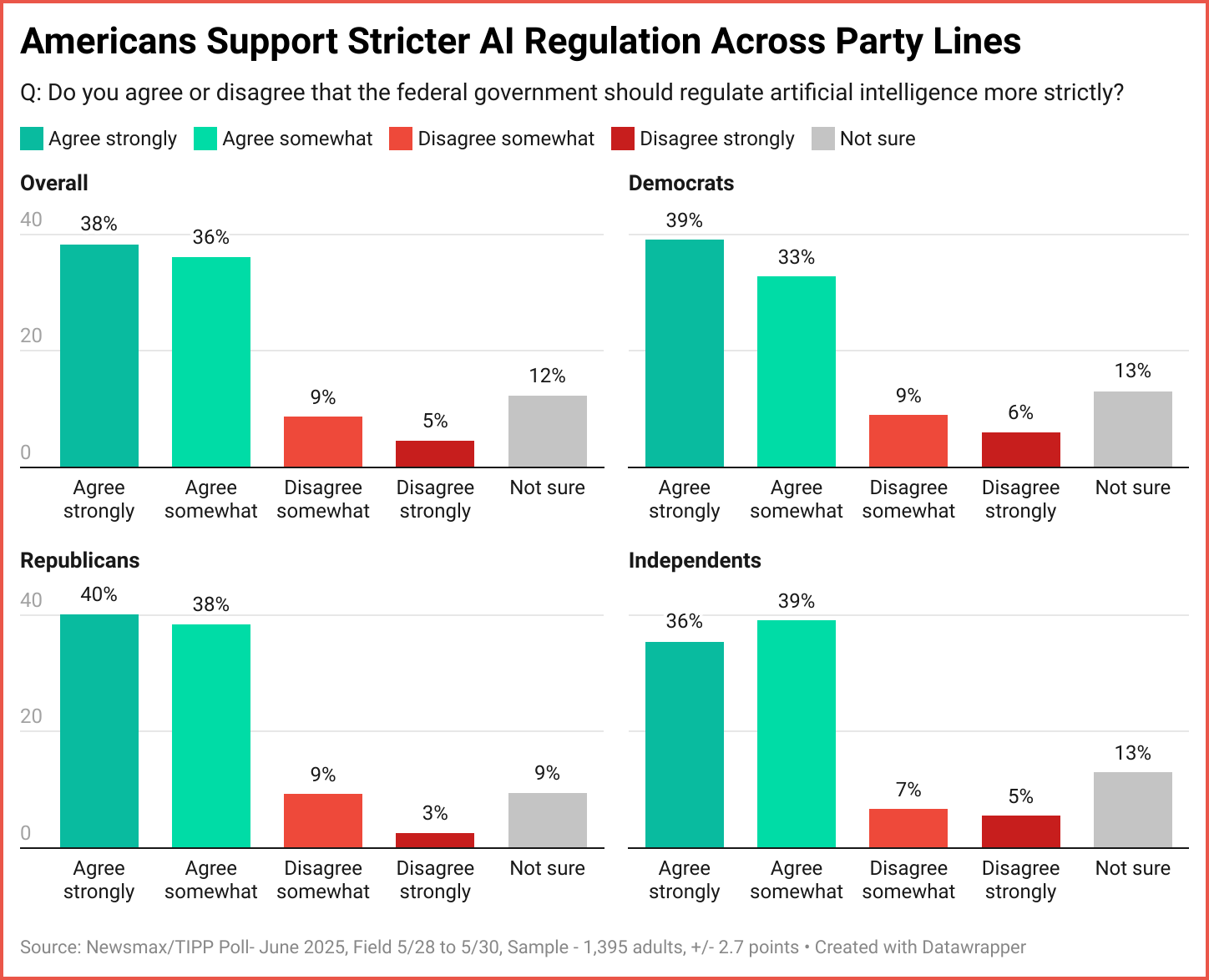
Three-quarters of those who participated in the Newsmax/TIPP Poll want the federal government to regulate Artificial Intelligence more strictly. A little more than a tenth (13%) disagree, while about an equal number are undecided. Regulating AI is an issue on which the deeply divided country is finding common ground—72% of Democrats, 78% of Republicans, and 75% of independents agree that the federal government should play a greater role in regulating AI.
Don’t just follow AI. Understand it.
Subscribe now for the best AI coverage, $99/year.
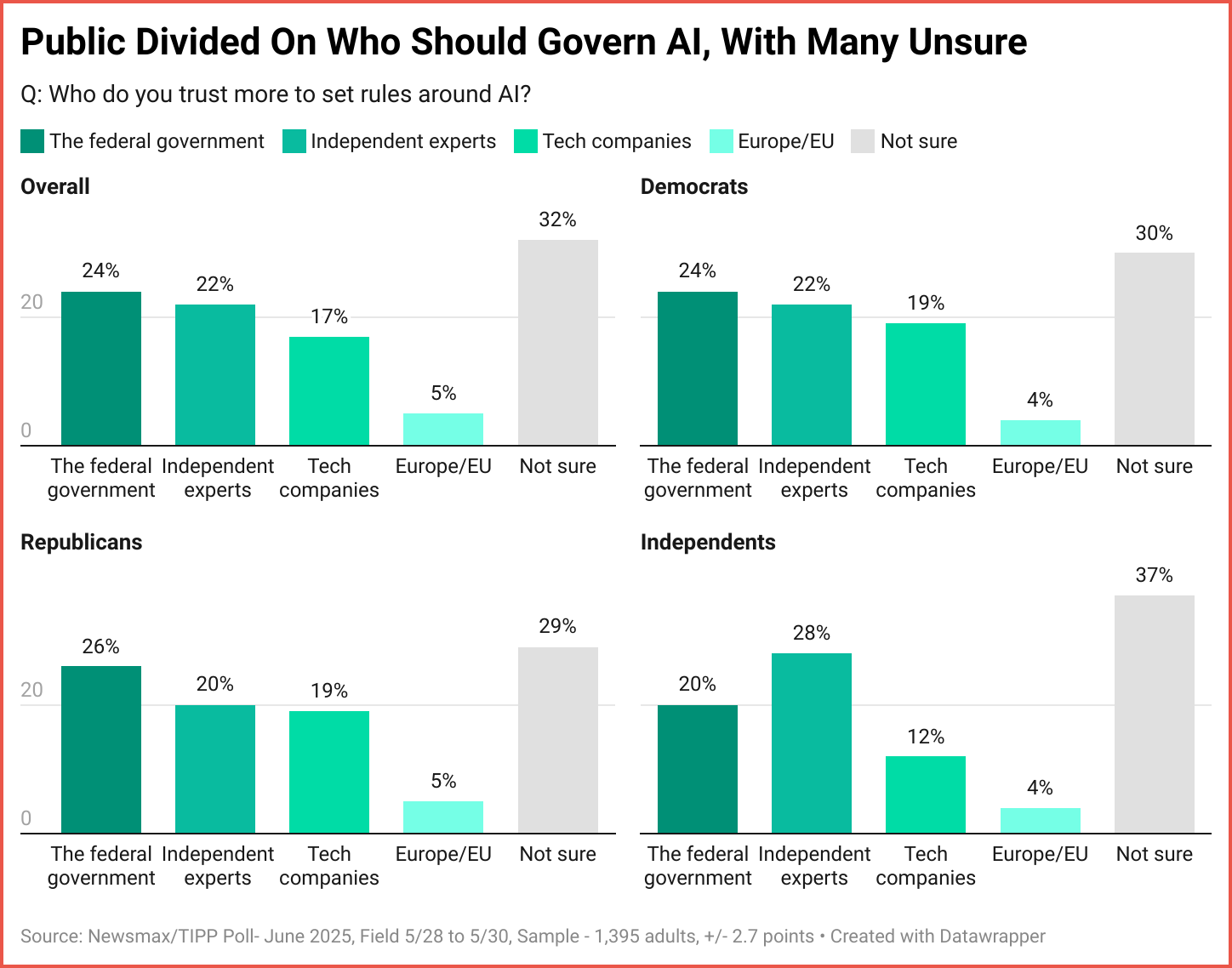
The nature and scope of the fast-burgeoning tech has many confused about who is best placed to set rules around it. While a quarter (24%) trust the federal government to regulate AI, an almost equal share (22%) wants independent experts formulating the rules surrounding the tech. Less than a fifth (17%) would entrust the job to tech companies, and a small segment (5%) believe the European Union is best suited for the job. However, the largest share (32%) is undecided on whom to trust to ensure that AI is developed and employed ethically and responsibly.
The potential that Artificial Intelligence has revealed so far is exciting and overwhelming. Its ability to improve efficiency, save time, and cut costs is immensely promising for the economy. However, even as developers and tech enthusiasts build more powerful autonomous systems, keeping a close eye on the potential risks—ranging from privacy violations to ethical dilemmas—is necessary.
Regulations that present clear guidelines and ethical frameworks that balance innovation with accountability are the need of the hour. Robust and forward-thinking policies that harness AI's capabilities to serve the common good and prioritize human well-being could be game changers. The question that needs to be answered is not what AI is capable of, but what should AI be permitted to do.
President Trump has also moved decisively to put the United States at the forefront of the AI race. His AI Action Plan, unveiled in July, lays out a roadmap to cut red tape, build out data-center and chip infrastructure, and ensure U.S. technology remains globally competitive. In August, the U.S. government converted $8.9 billion in CHIPS and Secure Enclave funds into a 9.9% equity stake in Intel, acquiring more than 433 million non-voting shares at a discount, making Washington one of the company’s largest shareholders, signaling that semiconductor and AI leadership are national priorities.
At the same time, his administration signed symbolic $1-a-year agreements with OpenAI and Anthropic, giving federal agencies access to cutting-edge AI platforms at a token price. The deals are less about money and more about partnership, underscoring Trump’s view that AI leadership is not optional but essential to America’s future prosperity and security.
The Commonwealth Bank’s stumble is a reminder that even the most advanced systems can falter when humans are sidelined too quickly. While AI’s ability to cut costs and boost efficiency is enticing, its reckless deployment risks not just jobs but public trust. The Newsmax/TIPP Poll shows Americans understand this tension: they welcome innovation but demand safeguards, knowing that the balance struck today will decide whether AI becomes a trusted tool or a disruptive force that leaves society scrambling tomorrow.
🧠 TIPP Investing Weekly
Week Ending: August 22, 2025
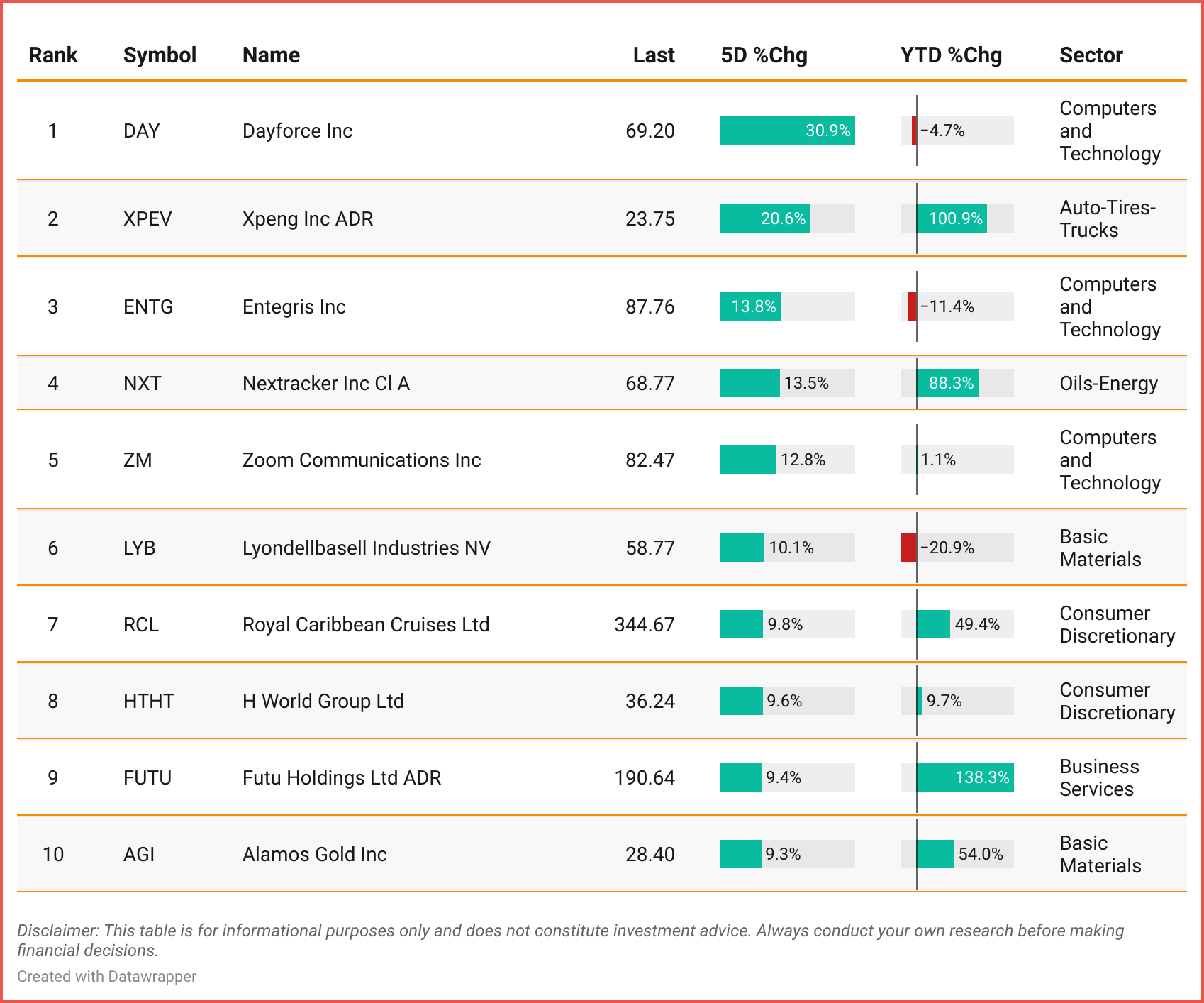
🧾 Top 10 Stocks This Week
A data-driven look at the 10 biggest winners, all above $20 and 1M in volume.
Tickers: DAY | XPEV | ENTG | NXT | ZM | LYB | RCL | HTHT | FUTU |AGI
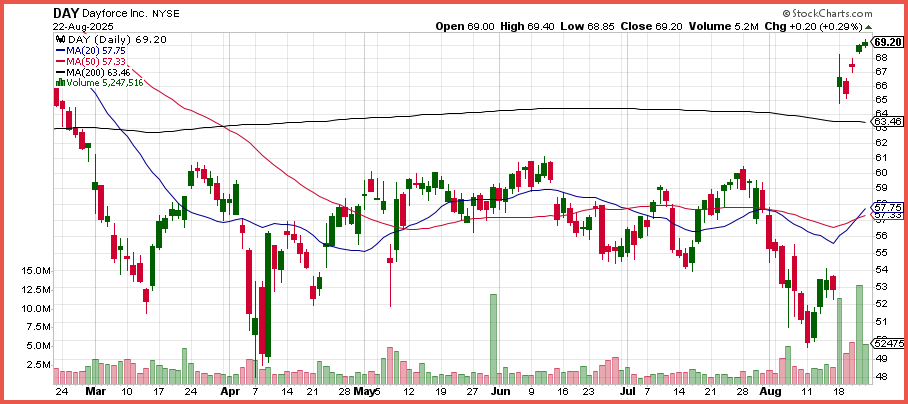
🔍 Stock to Watch: DAY
Dayforce Inc. is a human capital management software company, formerly known as Ceridian HCM Holding Inc., based in Minneapolis, Minnesota.
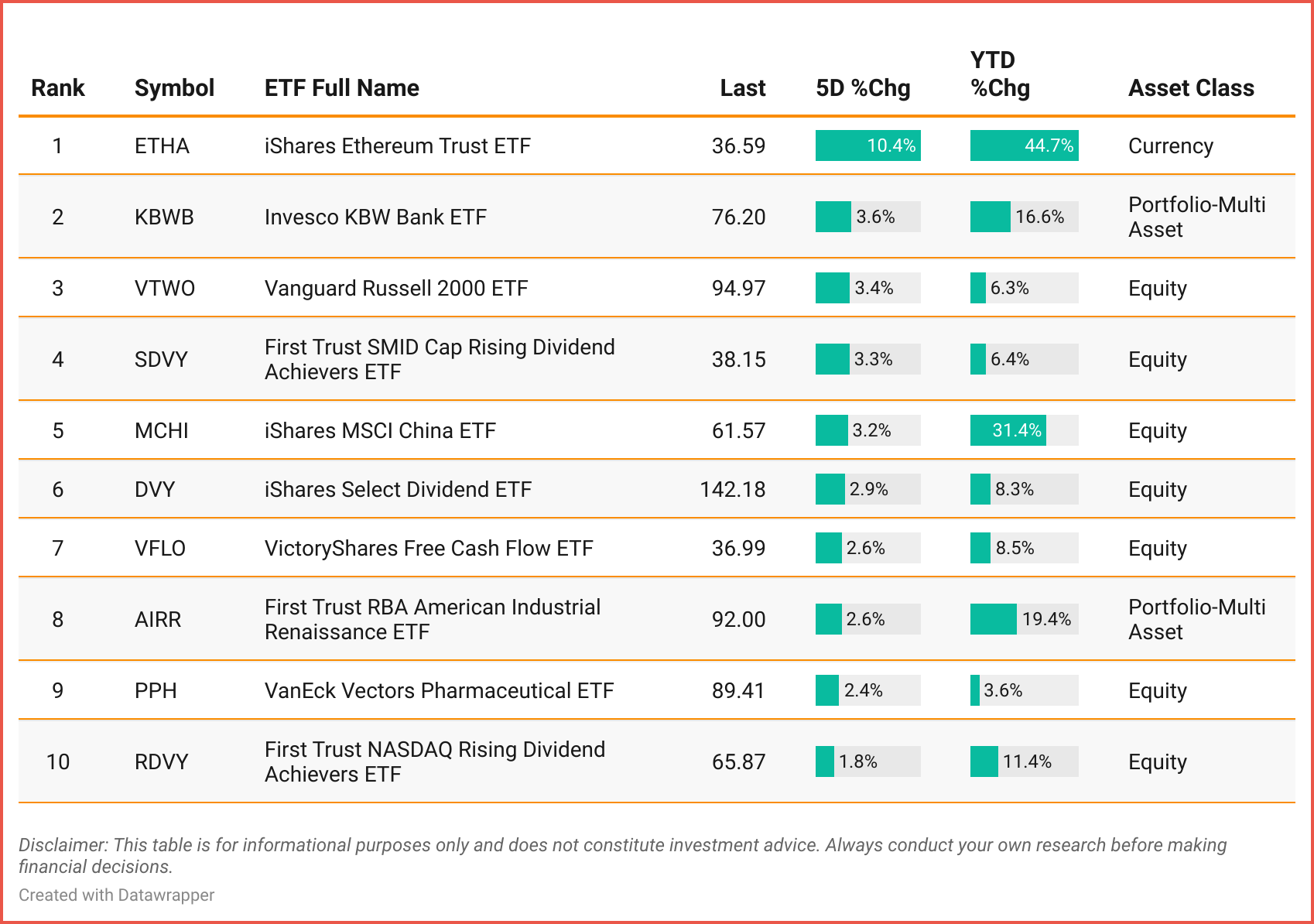
📊 Top 10 ETFs This Week
A data-driven look at the 10 best-performing ETFs, all above $20 in price, with over 300K in average volume and $ 250 M+ in assets.
Tickers: ETHA | KBWB |VTWO |SDVY |MCHI |DVY |VFLO |AIRR |PPH | RDVY
📈 ETF to Watch: ETHA
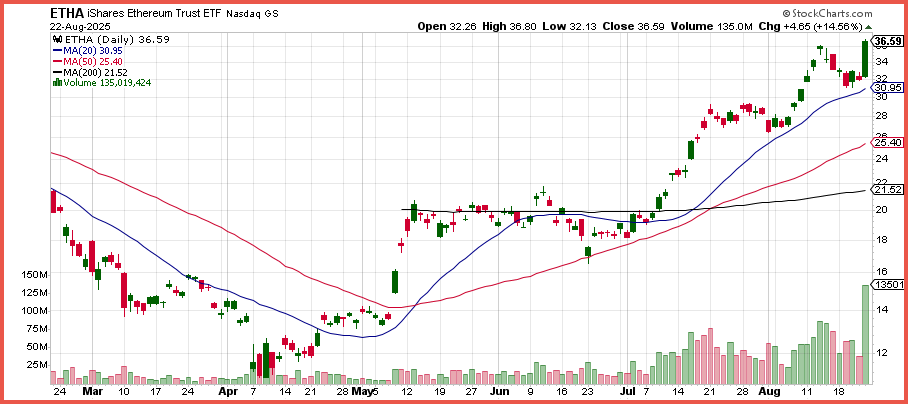
The iShares Ethereum Trust ETF seeks to reflect generally the performance of the price of ether.
📅 Key Events This Week
🟧 Monday, August 25
10:00 – New Home Sales (Jul)
Gauge of newly built single-family home sales.
🟦 Tuesday, August 26
08:30 – Durable Goods Orders (Jul)
Key measure of business investment demand.
10:00 – CB Consumer Confidence (Aug)
Snapshot of consumer outlook and sentiment.
🟩 Wednesday, August 27
10:30 – Crude Oil Inventories
Weekly update on U.S. stockpiles and energy demand.
🟨 Thursday, August 28
08:30 – GDP (Q2)
Quarterly growth measure of the U.S. economy.
08:30 – Initial Jobless Claims
Gauge of new unemployment filings.
🟪 Friday, August 29
08:30 – Core PCE Price Index (Jul)
Fed’s preferred inflation gauge.
09:45 – Chicago PMI (Aug)
Monthly snapshot of Midwest business activity.