

As the summer travel season comes to a close, many vacationers are disappointed after spending thousands of dollars. This is mostly because facilities have not scaled up to accommodate everyone, even as government agencies aggressively promote tourism to generate tax revenue.
NPR reports that U.S. airlines are carrying more passengers than ever, though they operate fewer flights than they did 20 years ago. Even the head of the FAA says the aviation system has "reached its limits."
The surge in travel and heightened interest in unique or ‘once-in-a-lifetime’ experiences are taking a toll on the environment, infrastructure, and local communities, to name a few.
The recent catastrophic disaster on the Nepal–Tibet border is believed to have been caused by a glacier collapse. The event triggered a landslide and flash floods in the river systems that separate Nepal from Tibet. The massive wall of water, mud, and debris barreling down the rivers instantly wiped out the immigration facilities between the two countries. The flood was so powerful that it swept an entire village away.
Himalayan glacier melt is nothing new. What is new is how fast it is going, and how many people are now standing in its path. But the world has been focused on the coverage because over 261 foreign nationals from 23 countries are still reported missing among 5,600 others. Over 1,300 are reported dead, of which more than 500 are foreign nationals.
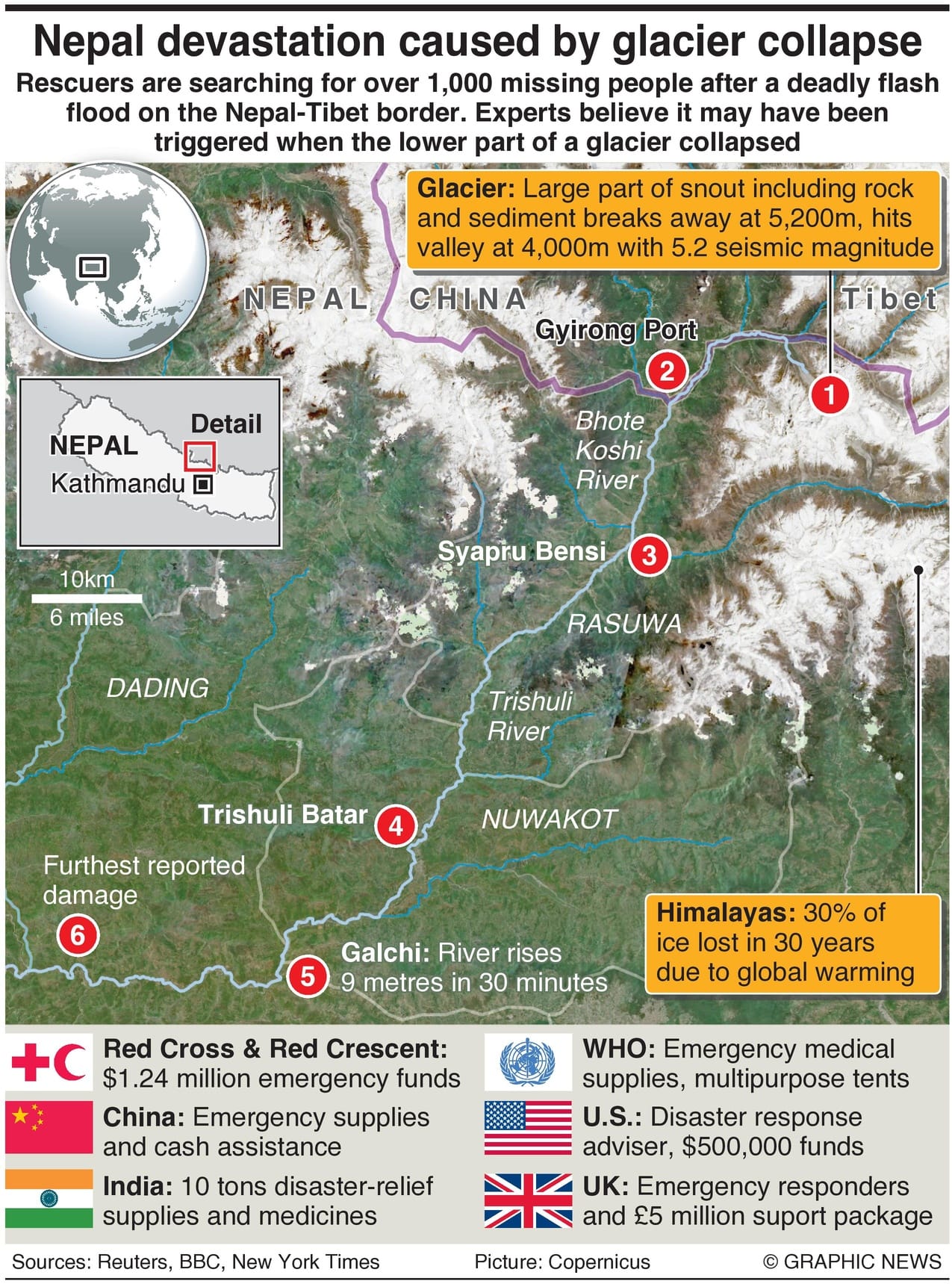
The devastation caused by this catastrophe could have been minimized if stricter visitor limits had been in place to restrict the number of travelers going there in the first place. The attraction here is Mount Kailash, which Hindu pilgrims believe to be the final resting place of Lord Shiva. It is one standalone mountain among thousands of such peaks in the Himalayan region.
China administers Tibet. Nepal issues the permits and takes the fly-in traffic. India supplies most of the pilgrims. Every one of them has an interest in promoting the region for the tourism dollars. The pilgrimage economy is so vibrant that tour operators aggressively promote the Manasarovar Lake and Mt. Kailash as once-in-a-lifetime, must-visit destinations for the devout in pursuit of salvation.
For the organizers, the money is excellent. The Isha Foundation, founded by Jaggi Vasudev, also known as Sadhguru, says that it has been organizing these trips for the past 22 years. The foundation has an enormous following worldwide, with well-to-do Indian diaspora families dedicated to its mission.
Unfortunately, 77 Isha pilgrims died that day, each having paid upwards of $5,000 for the pilgrimage. They were waiting to be processed at the immigration facility on the Tibetan side. Local operators in the region arrange the ground portion of the same route for a fraction of that, which is a measure of how much value the pilgrimage economy has added on top of the trek itself. Nearly all these pilgrims were persons of Indian origin who had become naturalized citizens in various countries, including the US, Canada, the UK, and Europe.
Because of the weather, the region is only open for about two months of the year. Many visitors are not physically fit to make the trek, which involves a nearly 50 km hike around Mt. Kailash in high-altitude conditions with no running water or toilets. Pilgrims are limited to carrying a backpack with warm clothing and are told to conserve water and rations as they make the hike over several days.
Then there is the high-altitude, low-oxygen issue. Travelers, most of them hailing from entirely different geographies, are given about three days to acclimatize to the harsh environment. None of these potential hazards are deterrents to the travelers, tour companies, or governments. For the various provincial governments, it’s a means to generate much-needed revenue.
Tibet, which is officially administered as the Tibet Autonomous Region (TAR), a province-level autonomous region of the People’s Republic of China, has access to Beijing’s powerful security and surveillance technologies. Yet, days after the disaster, China refused to be a helpful player in addressing families’ anxieties about those missing or dead. A Reuters report said Beijing held a diplomatic briefing for embassies representing 23 countries. Still, after the closed briefing, attendees said China shared no details on how it planned to proceed with DNA identification of victims.
The situation is not much different 8,000 miles west, though, thankfully, no lives were at risk. Canadian Prime Minister Mark Carney announced that national parks in Canada would not charge entrance fees during the peak summer season. It was a great move to attract tourism dollars, but visitors ended up paying the price.
One of the most beautiful regions of the Canadian Rockies, the town of Banff was utterly unprepared for an influx of tourists in July. The town says it is home to about 3,000 residents year-round, rising to about 8,000 during the summer to host migrant workers. However, during peak July season, the town’s population swelled to over 50,000 tourists per day.
After banning private car parking during peak travel hours and requiring tourists to use shuttle buses, Parks Canada fell significantly short on tour buses. Only 50% of the available daily seat quota is sold to tourists on the spot. And these tickets often sell out in less than two minutes.
Private bus operators are ready to fill the void by selling tickets at a steep premium. At Peyto Lake, just four pit toilets are expected to handle thousands of visitors at once. Cars trying to make it to the parking lot line up for miles on the Icefields Parkway. There are no other facilities nearby.
The popularity of national treasures does not excuse governments from investing in basic infrastructure, limiting access to control attendance, and enforcing regulations to ensure the health, safety, and comfort of the novice traveler and local communities.
Indeed, improved infrastructure on either side of the border would not have helped on August 26. The floods erased communities and villages from history in an instant. But a cap on the number of pilgrims crossing in a single window would have meant fewer people at the border post when the water came, and a shorter list for the search that followed. Fewer missing people would have also made the search-and-rescue operation more effective.
Loved it, hated it, or somewhere in between — tell us. Grade this article here and help shape what lands in your inbox next.
🔗 Further Reading
Deeper on what you just read.
🟨 China’s Super-Dam Is Becoming An Upstream Water Bomb – Brahma Chellaney, Project Syndicate
📊 Market Mood · September 8, 2026
How the trading day is setting up.
🟥 Oil is again driving the market narrative. Brent is nearing $99 a barrel after Houthi attacks on Saudi energy facilities raised fears that the Gulf conflict could spread and further disrupt energy supplies.
🟧 Stocks are under pressure as inflation fears return. Higher oil prices, combined with Friday's strong U.S. jobs report, are reinforcing expectations that the Fed may still raise rates at next week's meeting.
🟦 The yen has surged to a seven-month high as investors increasingly expect the Bank of Japan to raise rates this month. The rapid move is also reviving concerns about an unwinding of yen-funded carry trades.
🟨 Inflation takes center stage later this week. Thursday's PPI and Friday's CPI could determine whether the Fed has enough evidence to tighten policy again despite the renewed energy shock.
🗓️ Key Economic Events
On today's U.S. data calendar.
No major U.S. economic reports are scheduled today.
Letters to the editor email: editor-tippinsights@technometrica.com
Subscribe Today And Make A Difference. Consider supporting Independent Journalism by upgrading to a paid subscription or making a donation. Your support helps tippinsights thrive as a reader-supported publication. Contact us to discuss your research or polling needs.
Reach our audience. For sponsorship and advertising opportunities, visit our Partner With Us page.