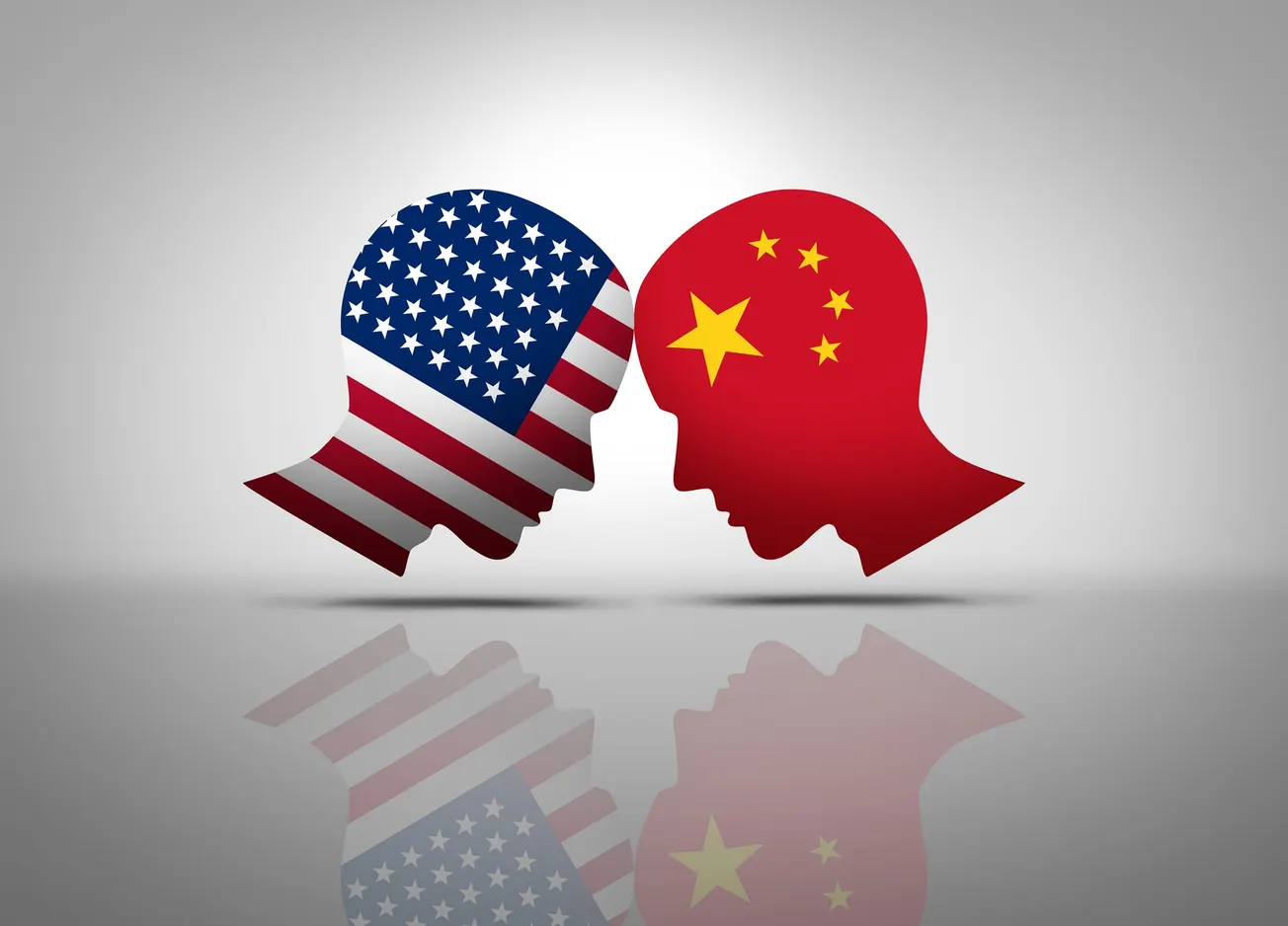

Great powers are not tested only on battlefields. They are tested in markets, in supply chains, and in their ability to respond when commerce itself becomes coercion. A state that binds its own hands in the name of procedural integrity may discover that those hands move too slowly against adversaries who face no such constraints.
On Friday, the Supreme Court of the United States struck down the emergency tariffs imposed under the International Emergency Economic Powers Act. By a 6–3 vote, the Court held that Congress had not clearly authorized the president to impose sweeping tariffs under IEEPA’s grant of authority to “regulate importation” during national emergencies.
Markets initially welcomed the ruling. Investors prefer predictability to confrontation, and constitutional formalists welcomed the Court’s insistence that Congress speak clearly when delegating sweeping power. But any calm was short-lived: within hours, the President signed an executive order imposing a new 10% global tariff under Section 122 of the Trade Act of 1974, later increasing it to 15%.
Constitutional clarity and market relief do not resolve the larger question this case raises: how should the United States wield economic power in an era when trade is no longer merely commerce but strategy?
Chief Justice John Roberts’ opinion centers on a straightforward textual finding: IEEPA does not explicitly mention tariffs or duties, and Congress has never used the word “regulate” to authorize taxation. All six justices in the majority, Roberts, Sotomayor, Kagan, Gorsuch, Barrett, and Jackson, joined that holding.
In a separate portion of the opinion joined only by Justices Gorsuch and Barrett, Roberts also invoked the “major questions” doctrine, arguing that Congress must speak clearly when delegating authority of vast economic and political significance. The three liberal justices declined to join that reasoning, agreeing instead that IEEPA’s text and history were sufficient to resolve the case. The result is a six-justice ruling that IEEPA does not authorize tariffs. The major questions doctrine, however, commands only a three-justice plurality.
Institutionally, that reasoning carries weight. Congress writes the tariff statutes. When it has delegated tariff authority in the past, it has done so explicitly and often with procedural guardrails. The Court is signaling that broad language such as “regulate importation” cannot be stretched to accommodate decisions affecting hundreds of billions of dollars and reshaping global trade flows.
Yet the dissent, authored by Justice Brett Kavanaugh and joined by Justices Thomas and Alito, raises concerns that deserve serious consideration. Kavanaugh argued that tariffs have long been understood as tools to regulate importation and that history and precedent support such use. If IEEPA permits a president to impose quotas or outright embargoes on foreign goods, he reasoned, it is illogical to exclude the less severe measure of tariffs. He also warned of practical consequences: billions in refunds to importers, uncertainty surrounding trade agreements negotiated under tariff pressure, and a remedial process he predicted would be a “mess.” Justice Thomas filed a separate dissent, grounding his analysis in originalist principles, adding a distinct constitutional dimension to the minority’s position.
The disagreement ultimately reflects a deeper tension between textual precision and strategic flexibility.
When IEEPA was enacted in 1977, global trade did not resemble today’s interconnected and strategically charged landscape. Supply chains were not deeply embedded within national security frameworks. Industrial subsidies, export controls, currency leverage, and technology restrictions were not deployed as instruments of geopolitical competition. Today, economic power is routinely weaponized.
In such an environment, speed matters. Economic responses often require agility. IEEPA explicitly permits a president to block imports outright during a declared emergency. The majority rejected the a fortiori reasoning that such authority implies the lesser authority to impose tariffs. The dissent contends that regulation has long included duties as a regulatory tool. The Court resolved the debate in favor of strict textual clarity.
The ruling is also significant for how it handles the major questions doctrine. Roberts, Gorsuch, and Barrett invoked the doctrine to argue that emergency statutes cannot serve as vehicles for sweeping economic policy without unmistakable congressional authorization. But the three liberal justices explicitly declined to join that reasoning, reaching the same result on narrower textual and historical grounds. The doctrine’s role in this case is thus more limited than initial headlines suggest—it commands only a plurality, not the Court. Still, its invocation in the context of emergency foreign commerce marks a new frontier, even if its binding force awaits a future majority.
That demand reinforces the separation of powers. It also shifts responsibility squarely to Congress. If lawmakers intend for the executive branch to wield emergency tariff authority, they must explicitly say so.
But here lies the practical challenge. Congress is deliberative by design; emergencies are not. Trade disputes, supply chain disruptions, and economic coercion can escalate quickly. A framework that requires extended legislative negotiation when strategic leverage is needed may satisfy constitutional architecture, but in practice, it weakens negotiating strength.
The Justices were careful to emphasize that they claim no special competence in economics or foreign affairs. Their duty is to interpret the law, not to design policy. Yet the Court’s interpretation shapes the boundaries within which policy operates.
The decision may not end tariffs. As Justice Kavanaugh observed, the Court’s holding may amount to concluding that the President checked the wrong statutory box. Numerous other federal statutes—including the Trade Expansion Act of 1962, the Trade Act of 1974, and the Tariff Act of 1930—authorize the President to impose tariffs, albeit with procedural prerequisites and constraints that IEEPA does not require. The ruling may reroute executive action rather than eliminate it. Indeed, hours after the decision, the administration clearly demonstrated this agility by invoking Section 122 to reimpose levies.
Still, it introduces friction at precisely the moment when economic statecraft has become central to national power.
Modern constitutional governance rightly restrains executive power. But restraint is not an end in itself. In a world where economic pressures move quickly and adversaries operate without procedural hesitation, the United States must ensure its legal architecture preserves both accountability and agility.
The Supreme Court has insisted on clarity. That clarity now demands a legislative response. If trade is a battlefield of economic sovereignty, Congress must determine whether it will equip the executive branch with tools commensurate to the challenge and do so in language that leaves no ambiguity.
Clarity is essential. So is capability.
👉 Show & Tell 🔥 The Signals
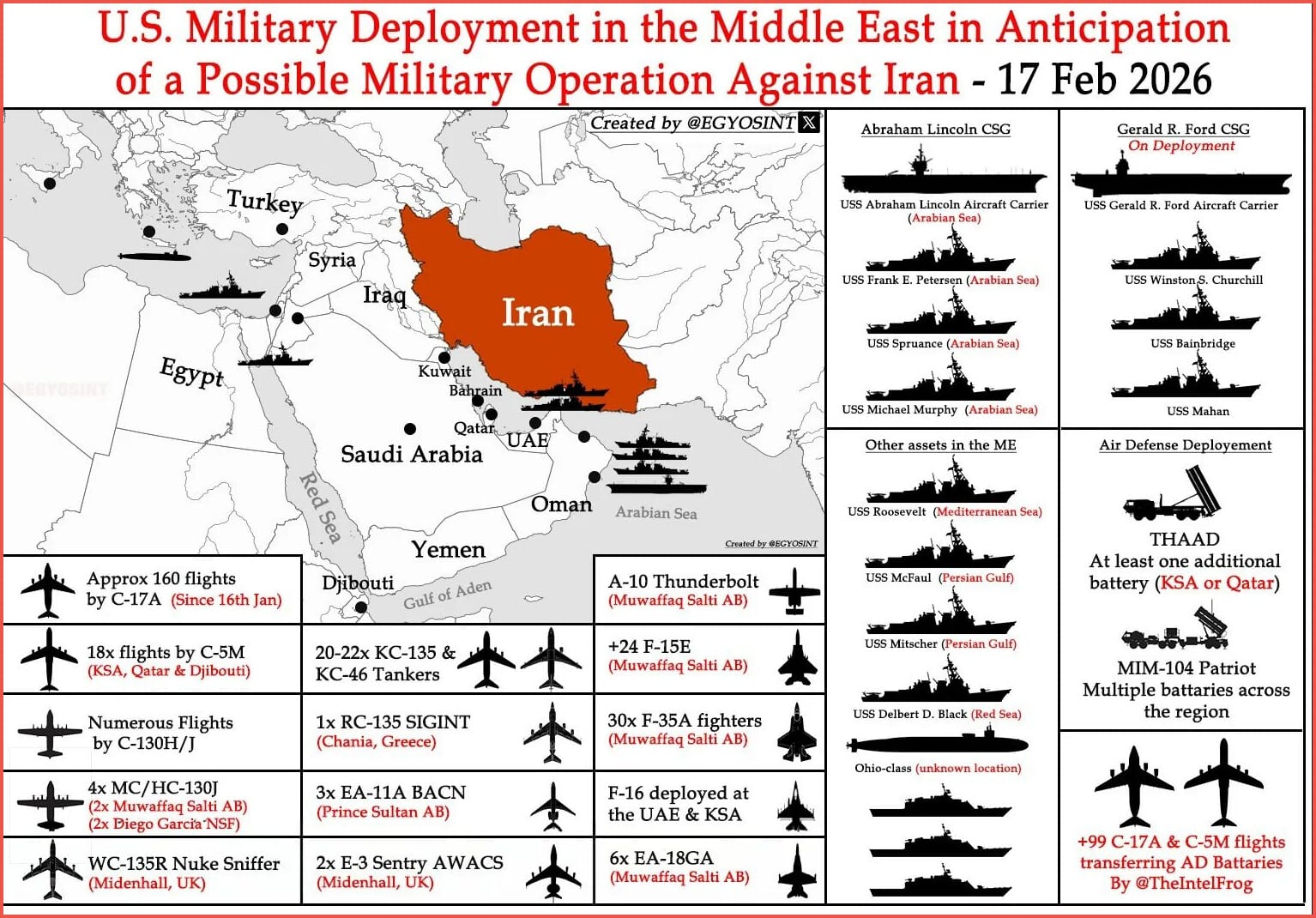
I. Massive U.S. Air Power Positioned In The Middle East
New deployments place a significant share of America’s deployable air assets across the Middle East, including strategic bombers, fighter squadrons, aircraft carriers, and missile defense systems. The buildup represents one of the largest forward concentrations of U.S. air power in recent decades.
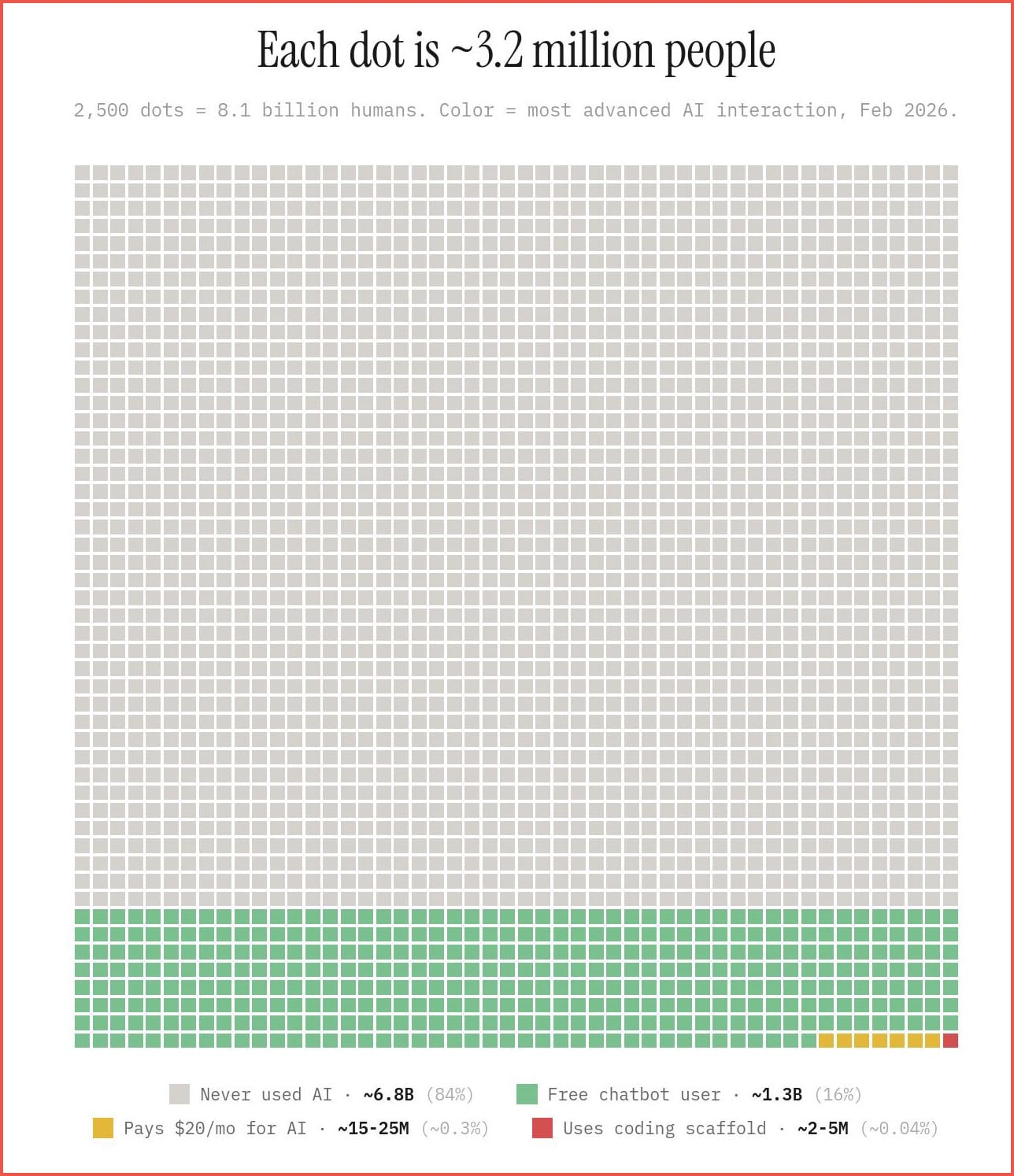
II. Most Of The World Still Hasn’t Used AI
A global snapshot of AI adoption shows that roughly 84% of people have never used AI tools, while only a small fraction pay for premium services. Despite heavy investment and media attention, widespread daily usage remains limited relative to the world’s population.
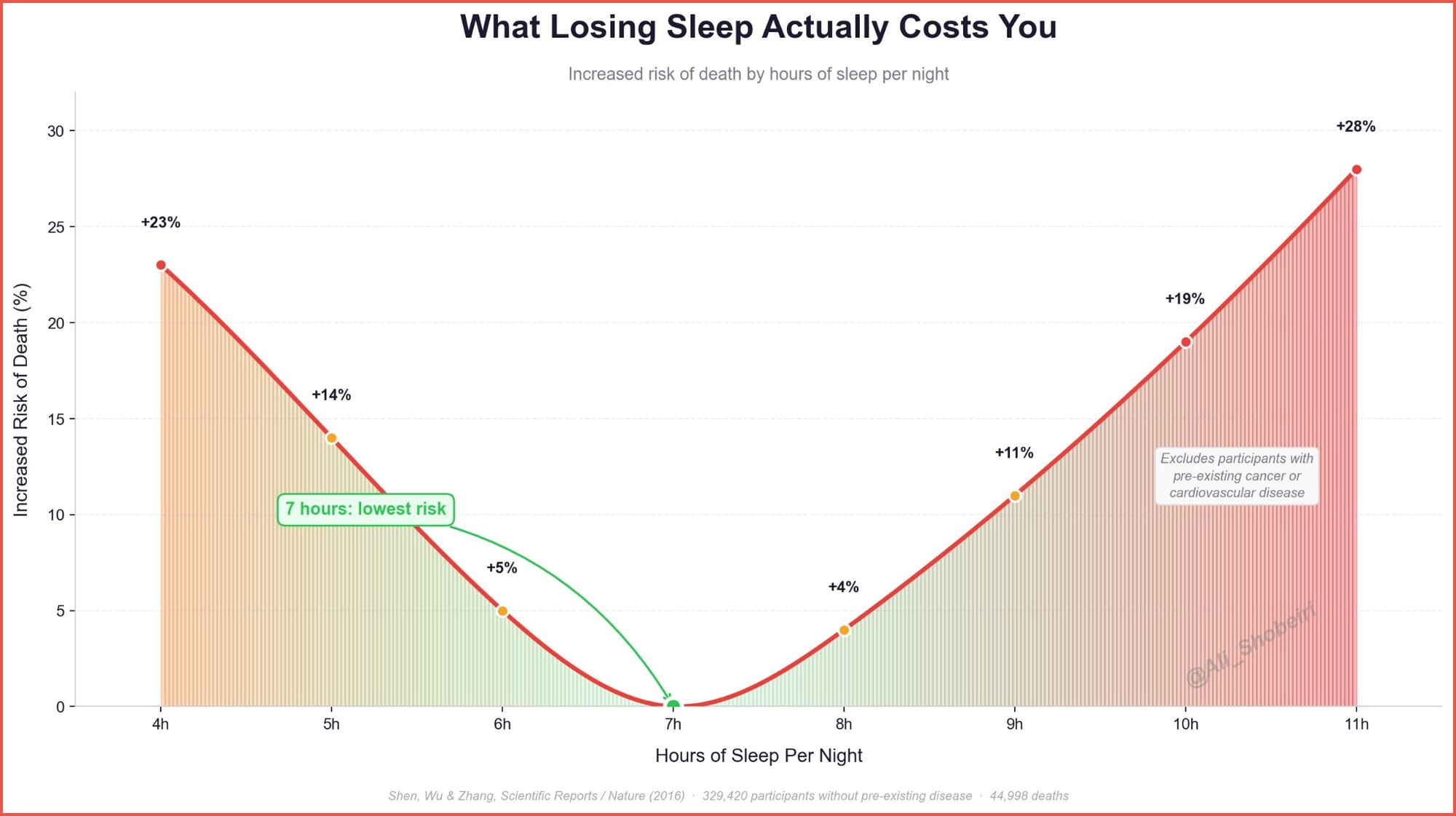
III. Sleep Too Little or Too Much, Risk Rises
Research suggests a U-shaped relationship between sleep and mortality risk, with roughly seven hours per night associated with the lowest risk. Both short and long sleep durations correlate with higher health risks, reinforcing the importance of sleep balance rather than extremes.
The TIPP Stack
Handpicked articles from TIPP Insights & beyond
Iran Watch
1. U.S. Military Readies For Possible Strikes In Iran—News Editor, TIPP Insights
2. UK Refuses U.S. Request To Use Bases In Potential Iran Strike, Say Media Reports—News Editor, TIPP Insights
3. Trump Warns Of Using Diego Garcia As US And UK Hold High-Level Talks—News Editor, TIPP Insights
4. Trump Reviews Limited Strike On Iran As Pressure Mounts—News Editor, TIPP Insights
5. A New Iranian Revolution?—Shlomo Ben-Ami, Project Syndicate
6. The Tehran Endgame—Daniel Pomerantz, TIPP Insights
7. The Day The Regime Lost The Streets—Daniel Pomerantz, TIPP Insights
8. Why ARE The US And Israel Obsessed With Eliminating Iran’s Ballistic Missiles?—Larry C. Johnson, Ron Paul Institute for Peace and Prosperity
9. Trump’s Iran Gamble—Ian Bremmer, Project Syndicate
10. Iran’s Supreme Leader Is Trapped—Pegah Banihashemi, Project Syndicate
11. In Iran, Digital Empowerment Now Resembles A Digital Siege—Mark Pfeifle, TIPP Insights
12. Why This Time Is Different for Iran—Vali Nasr, Project Syndicate
13. The Economic Roots Of Iran’s Protests—Djavad Salehi-Isfahani, Project Syndicate
ICYMI
1. Japan’s New Prime Minister Warns Of Chinese Coercion, Backs Stronger U.S. Ties
2. U.S. Scrambles Fighter Jets After Russian Aircraft Approach Alaska
3. What Triggered A Rare US-China Air Standoff Over The Yellow Sea
4. Barcelona’s Sagrada Família Reaches Full Height
5. Florida Lawmakers Vote To Rename Palm Beach International Airport After Trump
6. What To Know About The Ranger Road Megafire Spreading Across Oklahoma And Kansas
7. Why Trump Is Moving To Declassify UFO And UAP Files
8. How Trump Plans To Take Minneapolis Immigration Strategy Across The US
9. U.S. GDP Growth Falls To 1.4%, Raising Fed Policy Questions
10. Supreme Court Rules Trump Tariffs Violated Federal Law
11. Epstein Estate Agrees To Up To $35 Million Settlement With Survivors
12. Tariffs Setback: How Supreme Court Ruling Reshapes Trump’s Economic Strategy
13. Trump Calls Tariff Ruling Disappointing, Vows Alternative Measures
14. Trump Responds Quickly With New 10% Global Tariff After Court Blocks Trade Plan
editor-tippinsights@technometrica.com