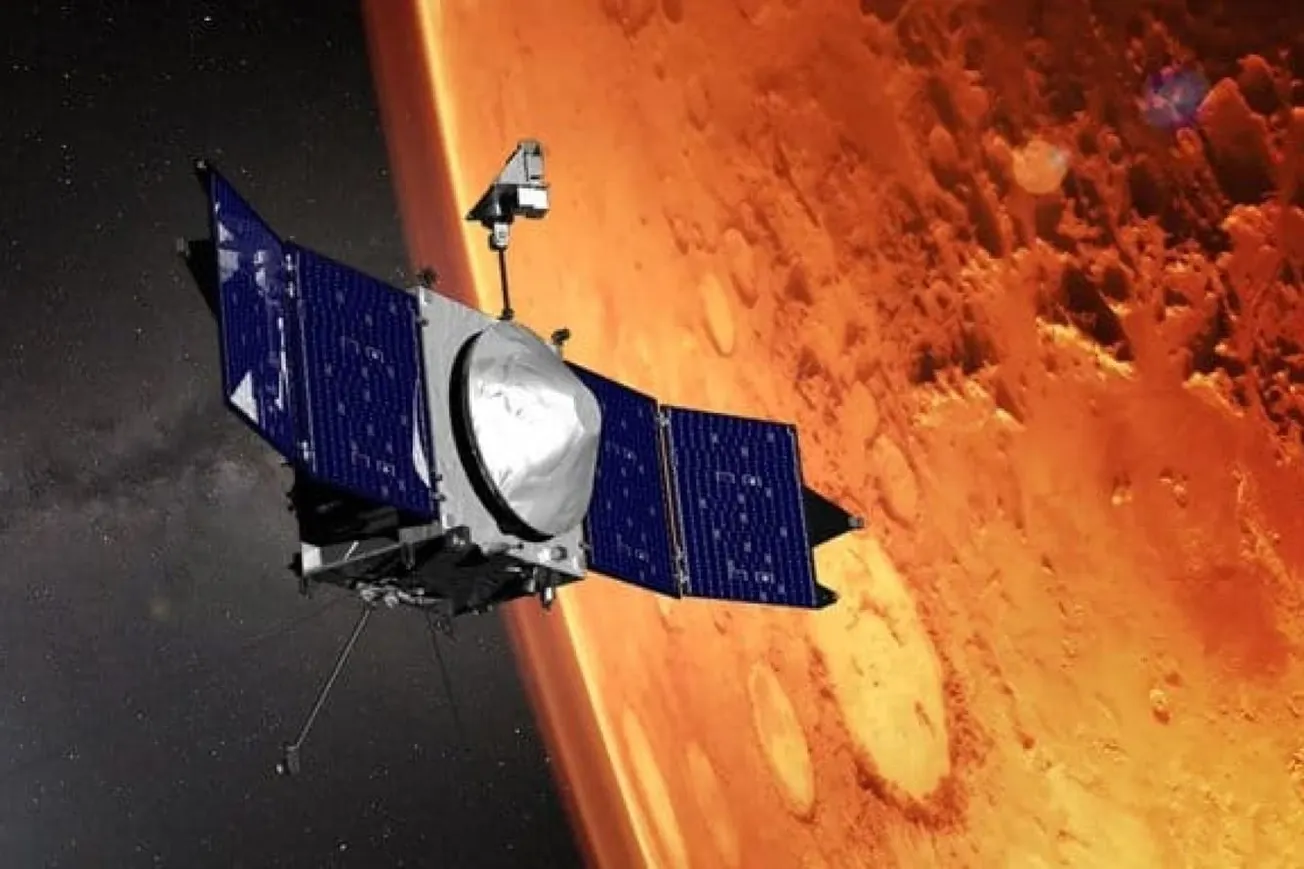
NASA has officially declared its MAVEN spacecraft lost after six months of unsuccessful attempts to re-establish contact, bringing an end to a mission that spent more than a decade studying the Martian atmosphere.
According to NASA, the spacecraft stopped communicating after passing behind Mars in December.
A subsequent review found that the solar-powered orbiter entered safe mode and began tumbling, causing its batteries to drain. Investigators concluded that the spacecraft could no longer be recovered or returned to normal operations.
NASA declares its Mars Maven spacecraft dead after 6 months of silence https://t.co/mfYCcnqV7g pic.twitter.com/40NfngK8tm
— New York Post (@nypost) June 3, 2026
Launched in 2013, MAVEN, short for Mars Atmosphere and Volatile Evolution, played a key role in helping scientists understand how Mars lost much of its atmosphere over time.
The spacecraft also served as a communications relay for NASA’s Curiosity and Perseverance rovers on the Martian surface.
Lead scientist Shannon Curry said MAVEN produced significant discoveries that deepened knowledge of the Red Planet’s evolution.
NASA officials noted that the mission’s extensive scientific data will continue supporting research for years to come, even as the agency investigates the circumstances that led to the spacecraft’s loss.
Also Read:
 TIPP Staff
Also Read:
 TIPP Staff
Also Read:
 TIPP Staff