
By Vali Nasr, Project Syndicate | January 9, 2026
For Iran's rulers, today's mass protests pose a vexing dilemma. Cracking down too hard could undo the entente that the regime forged with the population after last year's 12-day war with Israel and the United States, but letting them grow could itself invite foreign intervention.
WASHINGTON, DC – Iranians have taken to the streets to protest the collapse of the country’s currency and surging inflation, with many calling for an end to the Islamic Republic. Yet the government’s response has differed from earlier waves of unrest. Whereas Iran’s rulers were quick to suppress the 2009 Green Movement and the 2022 Woman, Life, Freedom uprising, the security forces were slow to react as the current protests intensified. Rather than brutally cracking down, President Masoud Pezeshkian initially responded with belt-tightening reforms to free up funds for subsidies to the poor.
But this stopgap didn’t hold. While the poor may have been mollified, those in the middle rungs of society bore the costs and joined the protests in greater numbers. What started as an expression of economic discontent soon became a political uprising. Only after protests erupted across the country on January 8 did the regime clamp down in earnest.
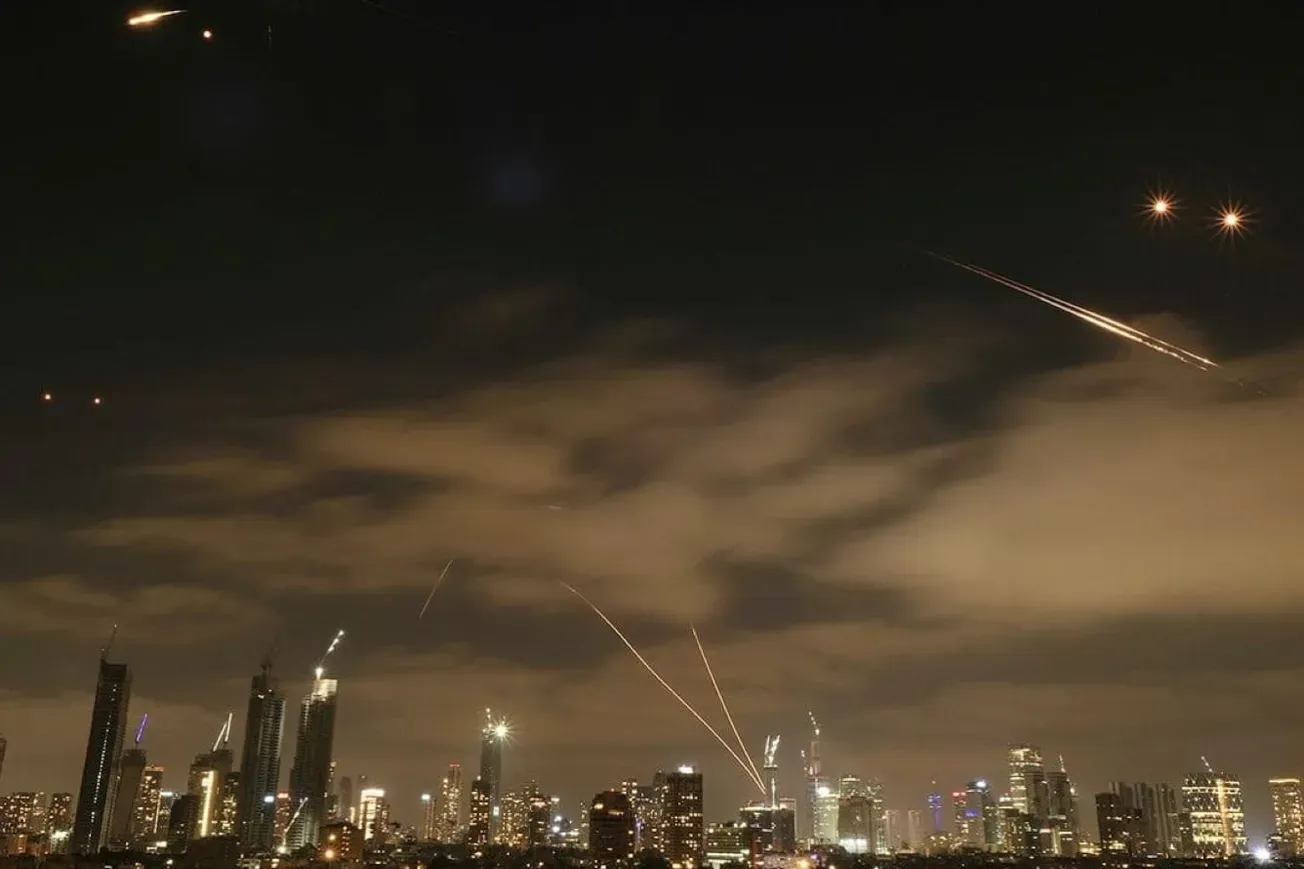
Why was the reaction to political dissent so different this time? The current protests are taking place in the shadow of Iran’s 12-day war with Israel last June. Iranian officials are still reeling from the conflict and operating on the assumption that it could resume at any time. That threat looms larger than domestic political unrest, because Israel’s battering of Hezbollah and the collapse of Bashar al-Assad’s regime in Syria have left Iran with little deterrence against foreign intervention.
Adding insult to injury, Iran is no longer able to prevent foreign actors from boosting popular discontent at home. During the June 2025 war, Iranians did rally to the flag, and the regime reacted by relaxing its enforcement of religious rules, most notably regarding hijabs. But the current protests pose a dilemma: cracking down too hard could undo the fragile understanding that the regime forged with the population after the war, while letting them grow could invite foreign intervention.
Iran’s worsening economy has also been a decisive factor. A combination of mismanagement, corruption, and crippling sanctions has caused rampant inflation and unemployment, steadily weakening the middle class and expanding the ranks of the struggling poor. The June war accelerated these trends. In the six months following it, the rial lost over 40% of its value and inflation surged by as much as 60%. With many assuming that the hobbling of Iran’s nuclear program had reduced its leverage to negotiate sanctions relief, capital flight soon followed.
Thus, as Iran’s rulers see it, the economic plight that has brought protesters to the streets is deeply intertwined with the external threat facing the country. They remember that during last year’s war, Israel called on ordinary Iranians to revolt. The Israelis calculated that eliminating dozens of senior military commanders and battering military and security institutions would encourage Iran’s restless population to rise up and overwhelm the beleaguered state. When that didn’t happen, Iran’s leaders were the first to acknowledge that they had survived the war thanks to their people. But it also became clear to them that a popular uprising was part of Israel’s war strategy, and this realization informs their view of the current protests.
These suspicions were confirmed when US President Donald Trump recently took to social media to declare that the United States is “locked and loaded,” ready to intervene to “rescue” Iranian protesters from a violent crackdown. The real threat of the protests lies not in what Iranians can achieve on their own, but in whether they can serve to justify US military action against Iran.
The obvious parallels are to Libya and Syria during the Arab Spring, when the US and some European governments invoked a “responsibility to protect” protesters to justify military intervention. These popular uprisings quickly morphed into foreign-led regime-change efforts, ultimately leading to civil war and state collapse. Notably, Iran’s Islamic Revolutionary Guard Corps is filled with veterans of the Syria conflict. They witnessed firsthand how quickly peaceful protests with external support can precipitate civil war. The imperative to avoid Libya and Syria’s fate is the driving force behind Iranian decision-making today.
Yet another factor in Iranian leaders’ thinking is the US capture of Venezuelan President Nicolás Maduro. Like everyone else around the world, Iran’s rulers were stunned. This was not the kind of regime change that America had carried out in Afghanistan and Iraq in the early 2000s, and pursued in Libya and Syria a decade later. Rather than committing troops or advocating nation-building, the Trump administration has left the Chavista power structure in place, demanding that it submit to American imperial control or face economic strangulation.
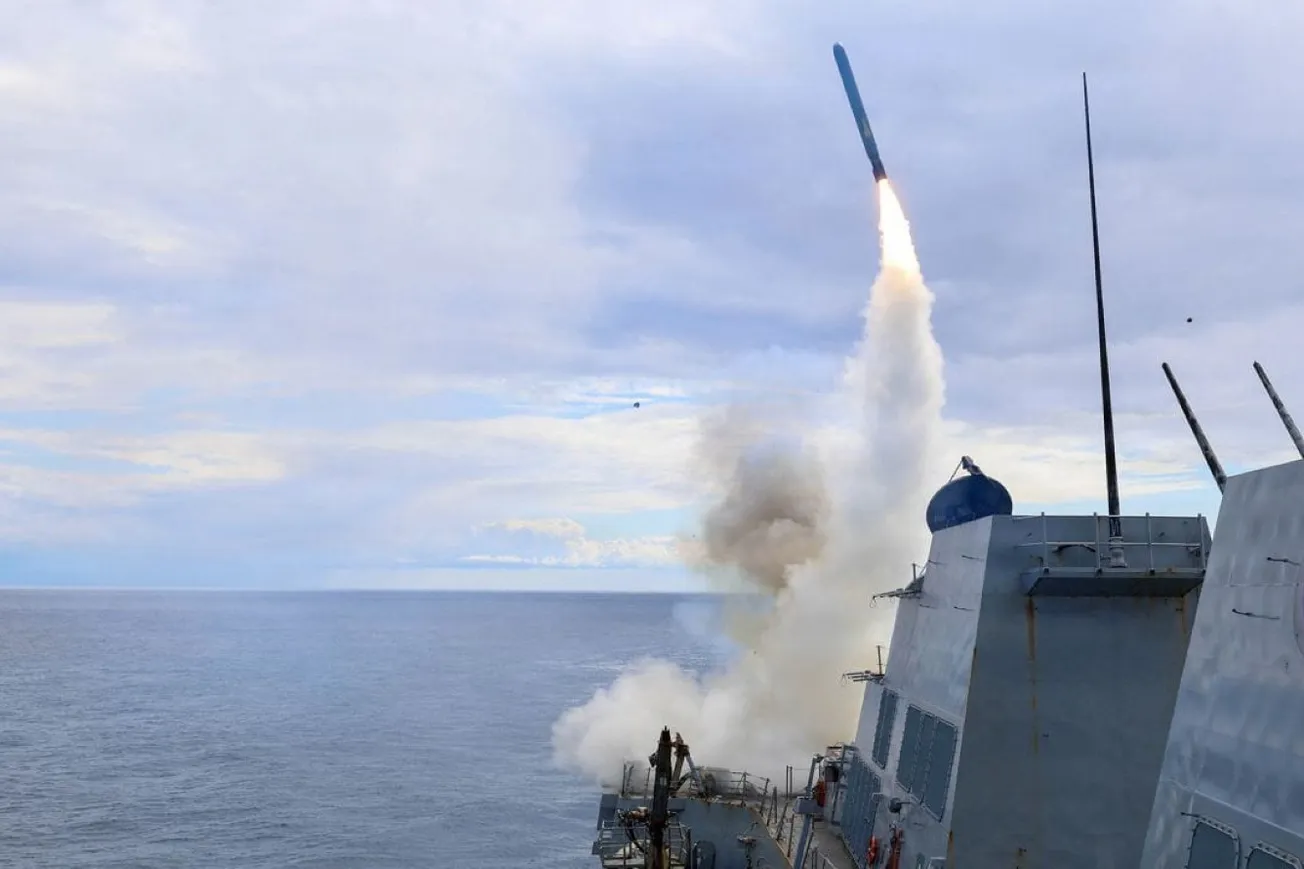
Could the US pursue a similar strategy against the Islamic Republic? If so, it might try to launch a precision military strike to kill Iran’s Supreme Leader and key political and military leaders, capture Iranian oil tankers on the high seas, and then demand that whatever is left of the Islamic Republic accede to its demands (which would include abandoning its nuclear and missile programs and handing over control of its natural resources). Even short of killing Iranian leaders, an American strategy of bombing and oil-export interdiction could bring the regime to its knees.
Faced with these scenarios, Iran’s immediate response was to point to the potential costs of US aggression. On January 6, the Iranian Defense Council revised its strategic posture, announcing that Iran may pursue “preemptive measures” if faced with “objective signs of threat.” Although a preemptive strike on US targets in the Middle East would surely invite a war that Iran does not want, and could well be the end of the regime, the Islamic Republic cannot afford to give the impression that defeating it would be cost-free.
Even if Iran can avoid a direct confrontation with the US, however, and even if the current wave of protests subsides, the country’s economy is in a downward spiral. That means public anger will only grow over the medium and long term. The Islamic Republic is in a vise, squeezed by the external threat from the US and Israel and the internal threat of a mass uprising. There is no easy escape from this impasse. A total collapse of the Islamic Republic is not necessarily imminent, but Iran’s revolution is now nearing its end.
Vali Nasr, Professor of Middle East Studies and International Affairs at Johns Hopkins University’s School of Advanced International Studies, is the author, most recently, of Iran’s Grand Strategy: A Political History (Princeton University Press, 2025).
Copyright Project Syndicate
Related:
The Economic Roots of Iran’s Protests—Djavad Salehi-Isfahani, Project Syndicate
👉 Quick Reads
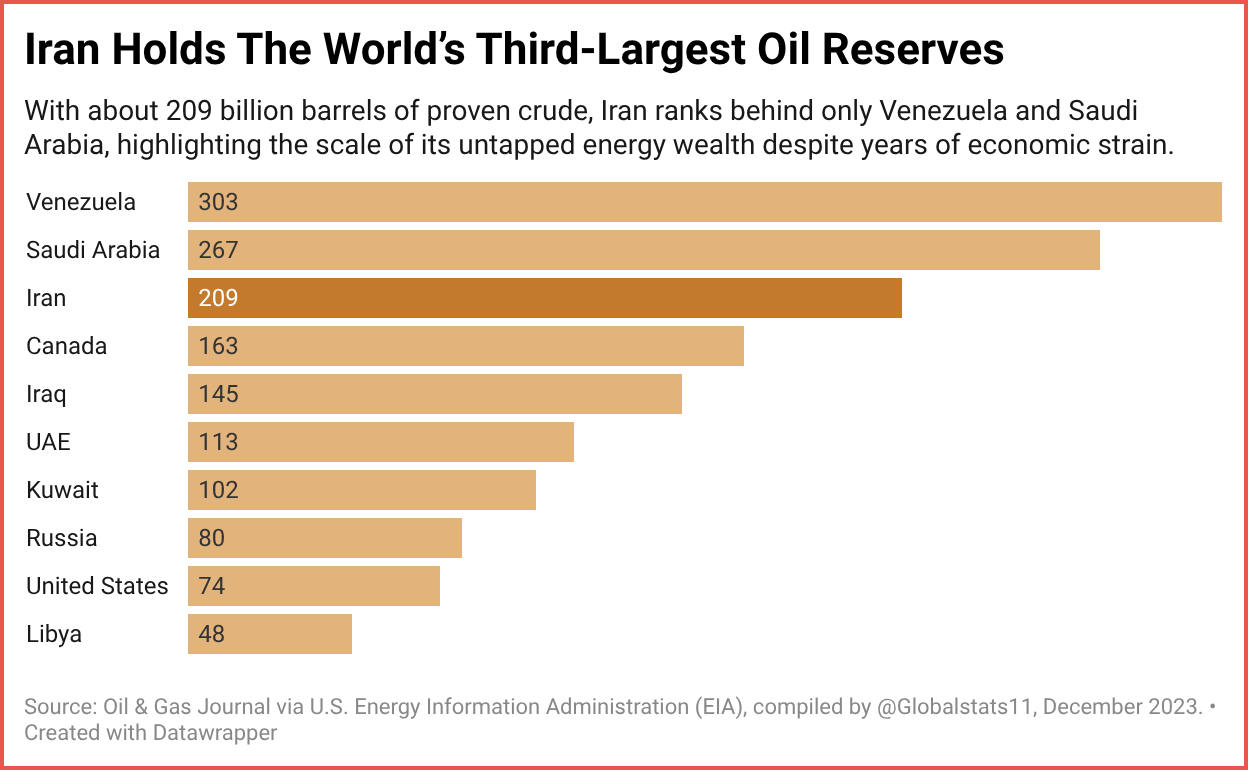
I. Iran Has The Third-Largest Proven Oil Reserves In The World
Among the world’s top oil holders, Iran sits behind only Venezuela and Saudi Arabia, with over 200 billion barrels of proven reserves as of the end of 2023, underscoring the country’s energy wealth even amid economic challenges.
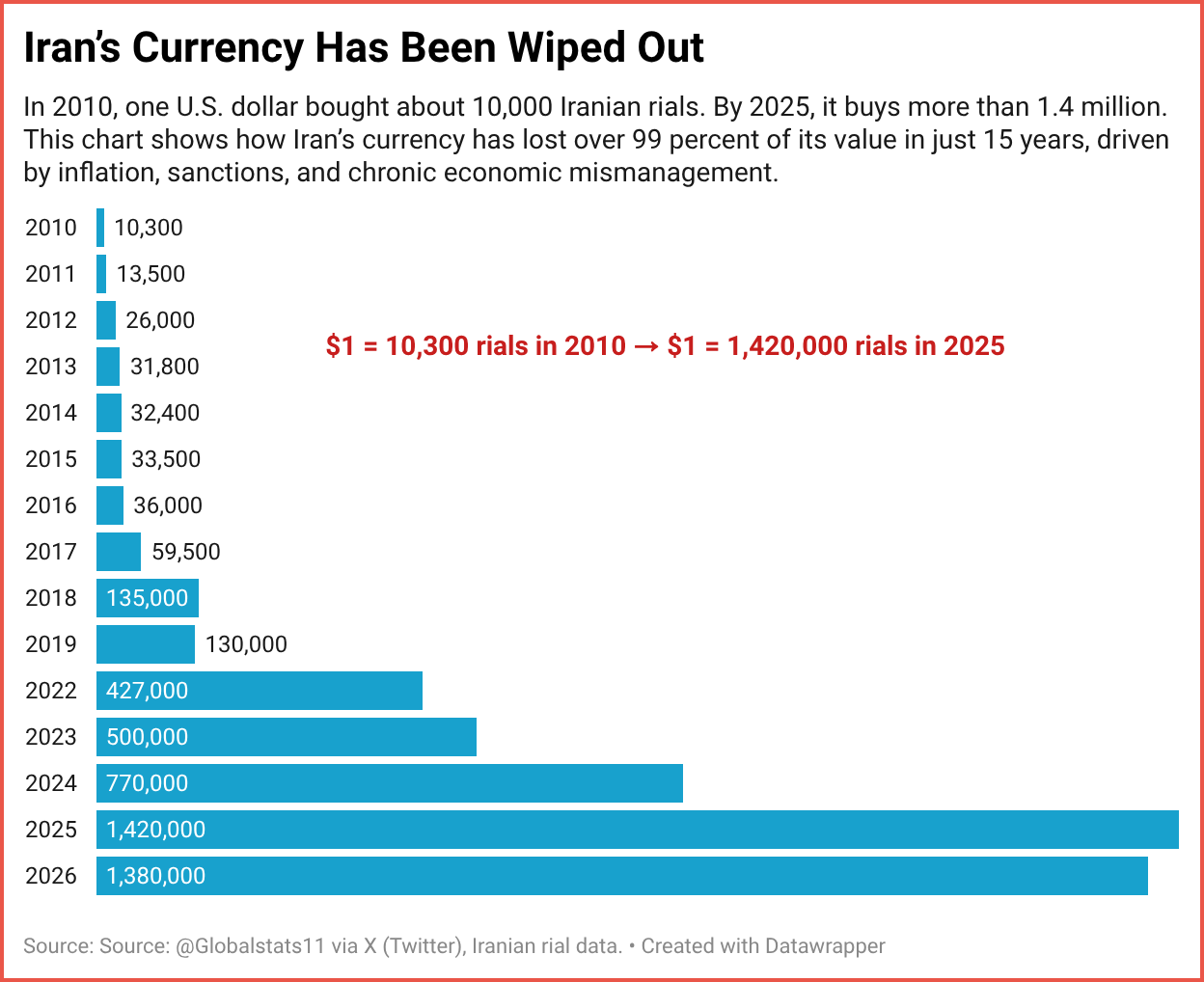
II. Iran’s Currency Collapse
Over the last 15 years, the Iranian rial has lost more than 99 percent of its value, falling from about 10,000 rials per dollar in 2010 to over 1.4 million today, a stark measure of how inflation and economic isolation have hollowed out everyday purchasing power.
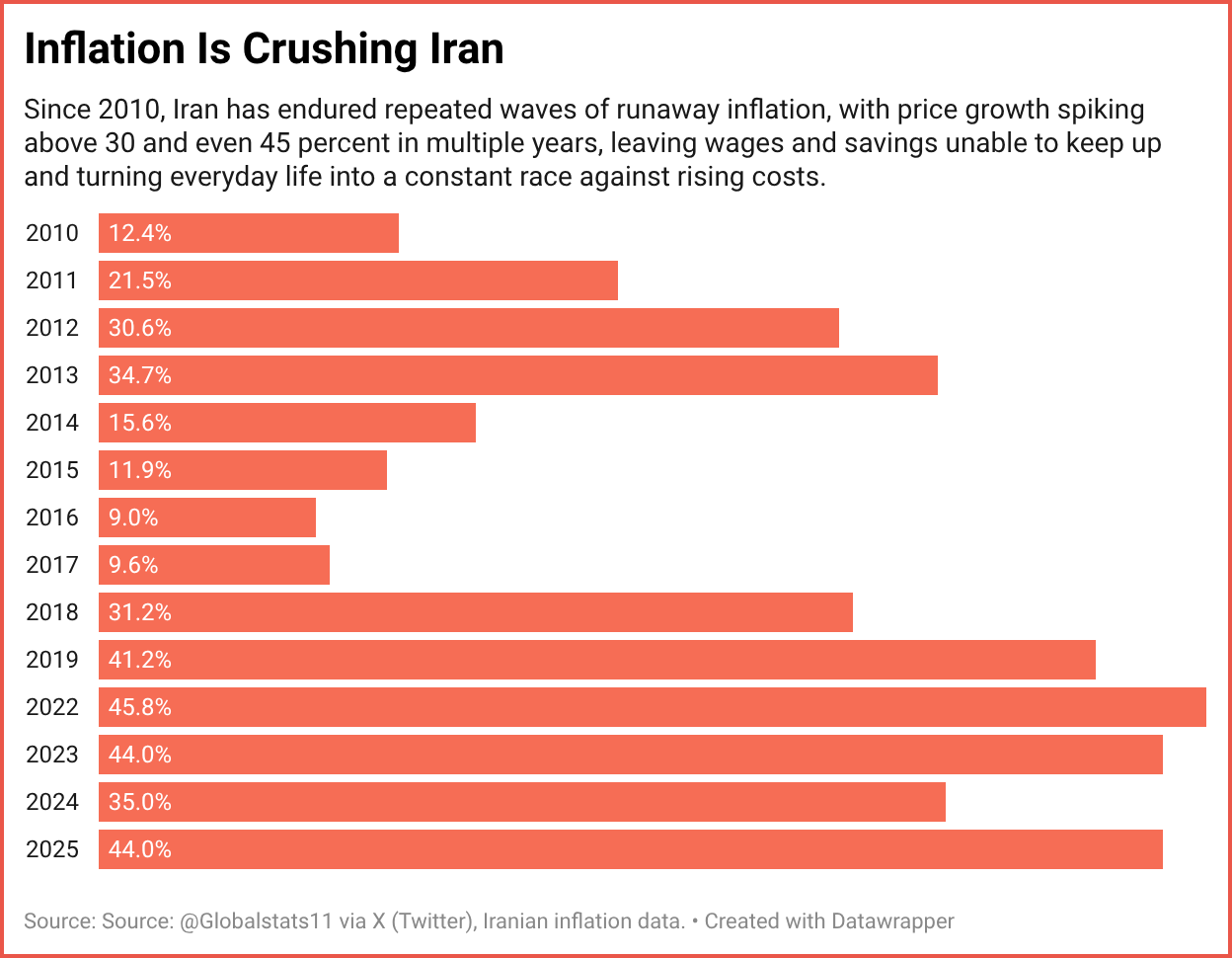
III. Inflation Is Eating Iran Alive
Inflation in Iran has repeatedly run above 30 to 45 percent in recent years, meaning prices are doubling every few years and wiping out wages, savings, and pensions even for people who never touched foreign currency.
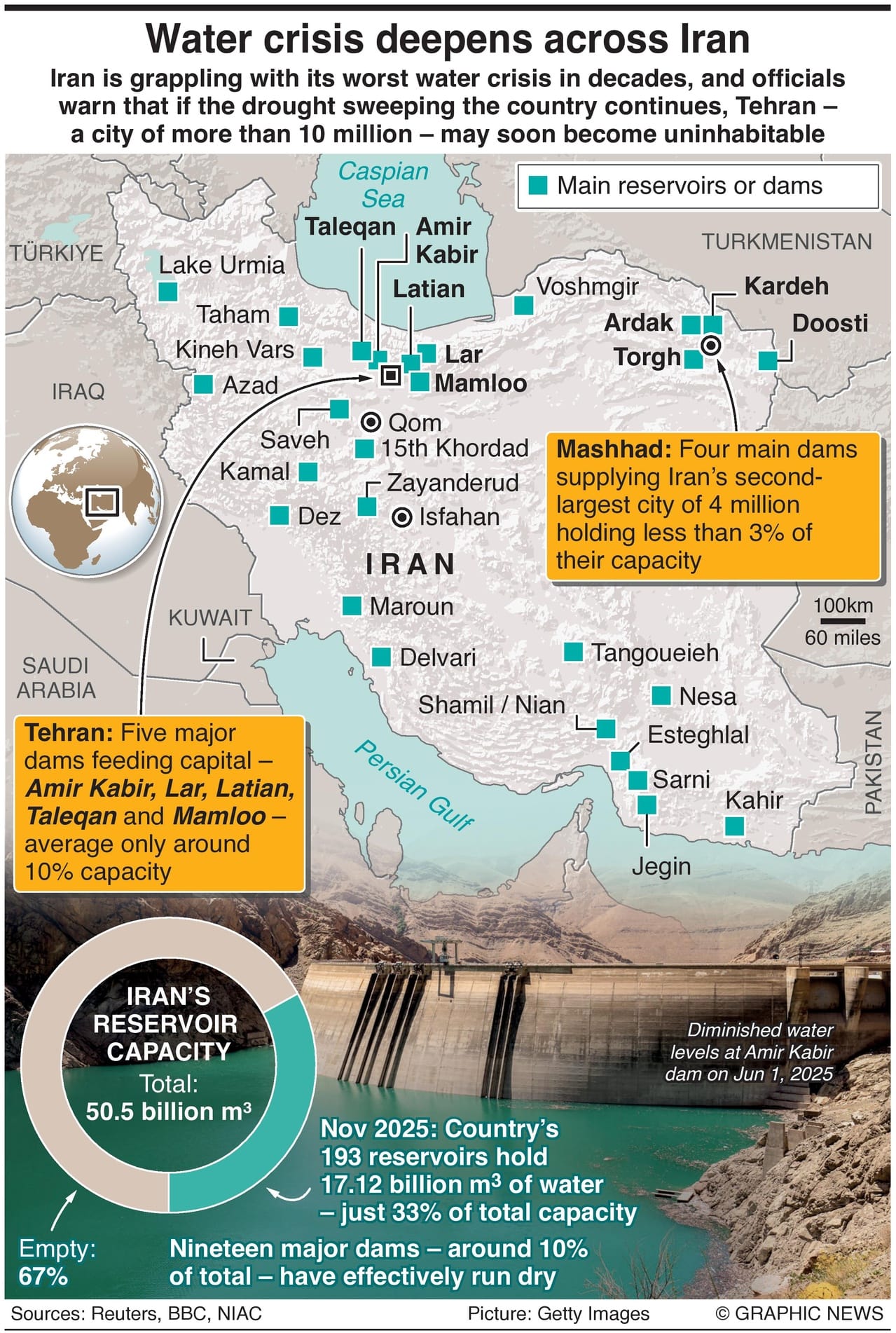
IV. Iran Struggles With A Dire Water Crisis
Iran is grappling with its worst water crisis in decades, and officials warn that if the drought sweeping the country continues, Tehran – a city of more than 10 million – may soon become uninhabitable.
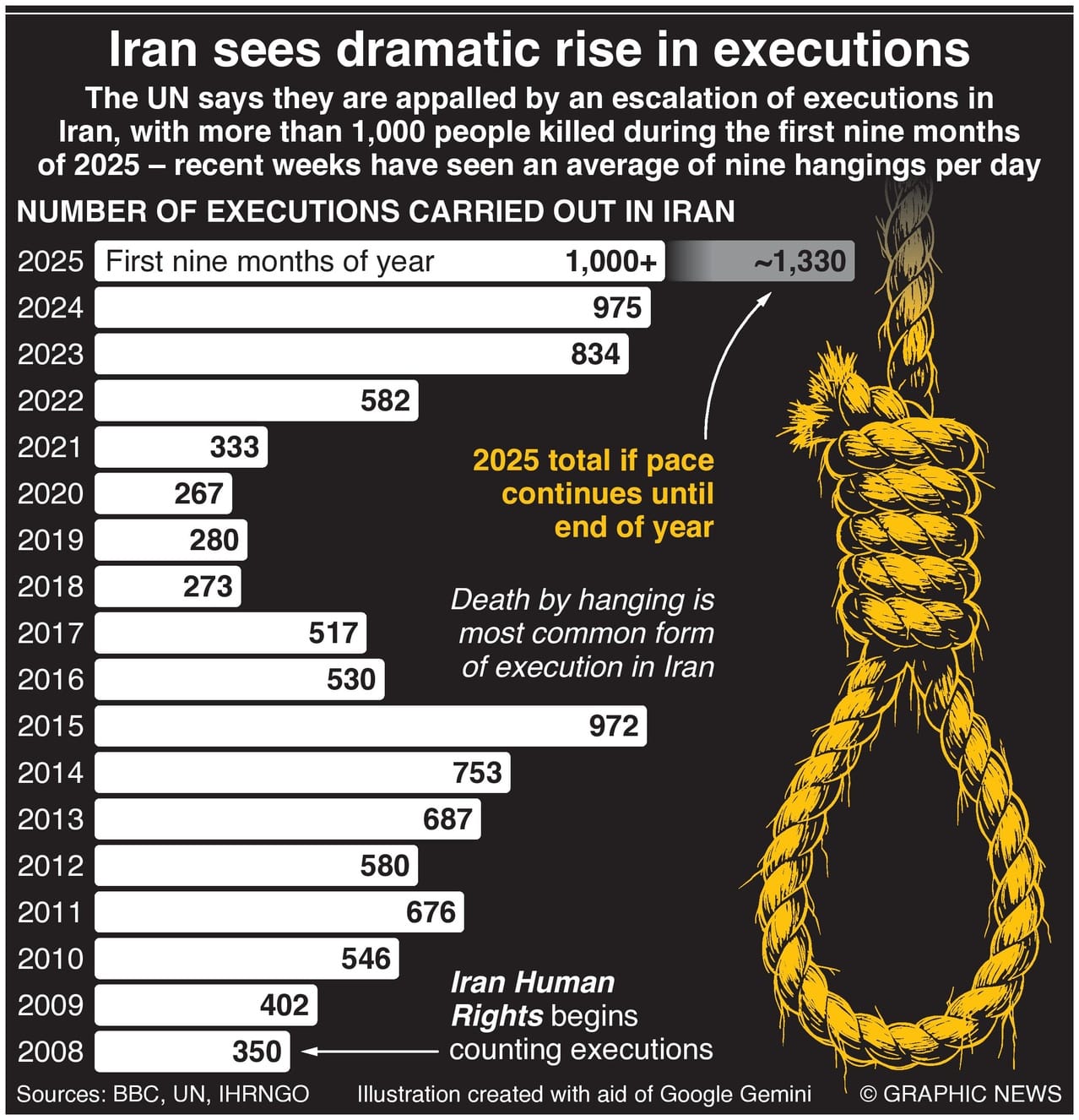
V. The "Staggering Scale" Of Iran’s Rising Executions
The UN says they are appalled by an escalation of executions in Iran, with more than 1,000 people killed during the first nine months of 2025 – recent weeks has seen an average of nine hangings per day.
editor-tippinsights@technometrica.com