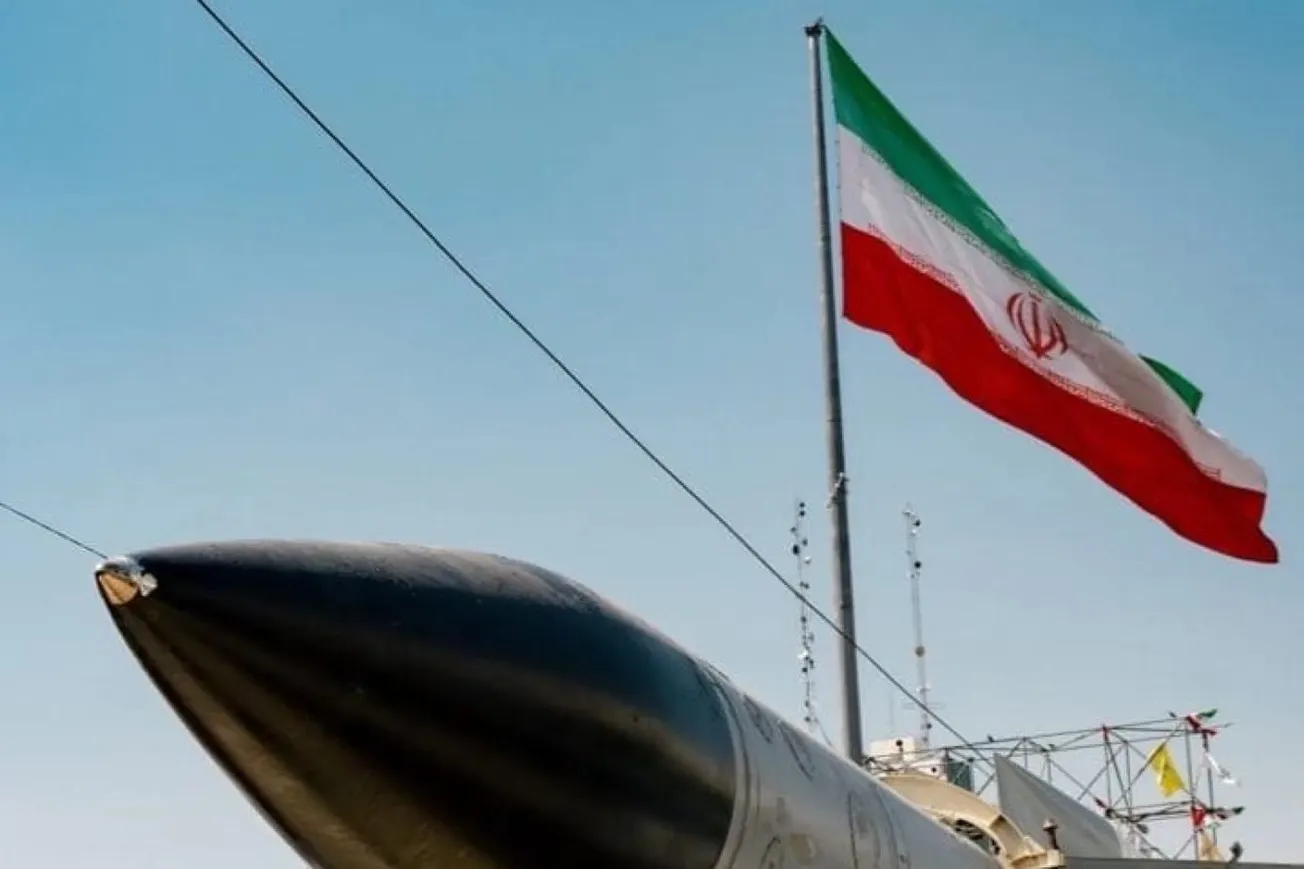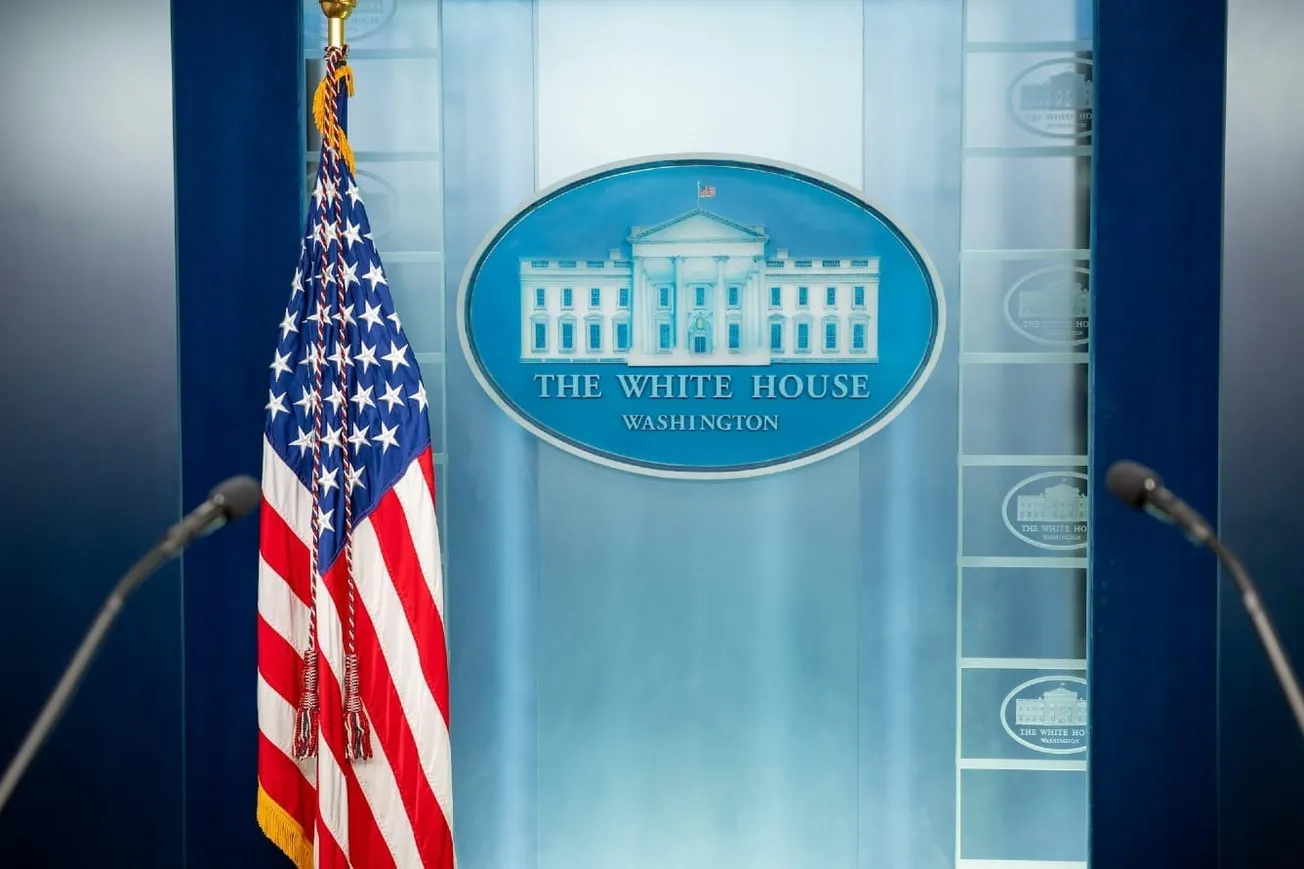

There used to be a rule in Washington: politics end at the water’s edge. In the last month, a Republican senator invoked the bloodiest battle in Marine Corps history to sell an island invasion, and a Democratic senator posted “awesome” when he thought American ships had been outrun. The water’s edge is gone, and the War Powers clock expires in three days.
Under the law, a president can act quickly but not indefinitely. After 60 days, Congress must either approve the war or force a withdrawal. May 1 is the line, and votes are already being forced on the floor.
We’ve been here before, and I saw it up close. From a perch at the NSC, I helped make the case for the Iraq surge on Capitol Hill. In 2007, after Democrats took control of Congress, Iraq funding became a political fight. Members who had voted for the war, including presidential candidates like John Edwards and Hillary Clinton, began turning against it as campaigns took shape. Clinton did not ease into that shift. She went straight at General David Petraeus and Ambassador Ryan Crocker in hearings, publicly challenging the strategy. Funding battles dragged on and momentum stalled.
In 2021, Afghanistan fell apart almost overnight. The collapse in Kabul triggered an immediate backlash across both parties. The verdict came within days, and new Pentagon leadership and Republicans on Capitol Hill are still investigating it.
The timeline now is even tighter, and Iran is forcing the decision early. The House has been narrowly divided. The Senate has repeatedly rejected efforts to limit the president’s authority. On March 5, the House voted 219 to 212 to let the president continue the war. A later vote was even closer, 214 to 213. Both times, Congress backed the president. But the margins are shrinking, and they will only get thinner as gas prices keep climbing.
Sen. Lindsey Graham is no stranger to calling for military action, but invoking Iwo Jima to justify seizing Kharg Island is a serious escalation in language. “We did Iwo Jima, we can do this,” he told Fox News. Iwo Jima was one of the bloodiest battles in Marine Corps history. In 36 days of fighting, nearly 6,800 Americans were killed, about 5,900 of them Marines. That comparison should stop anyone cold, and fellow Republicans, including Rep. Nancy Mace and Rep. Anna Paulina Luna, an Air Force veteran, said as much publicly.
On the other side, Sen. Chris Murphy gave a master class in what not to do during a war. His one-word post, “awesome,” in response to a report that Iranian vessels had bypassed a U.S. blockade, landed like a grenade. He later said it was sarcasm. Maybe it was. But sarcasm does not travel in wartime. A sailor sees that post. A Marine’s family reads it and wonders whose side their senator is on.
When I was a young staffer, my boss Jim Nicholson, a former Republican National Committee chairman, retired Army colonel, West Point graduate, and Army Ranger, reminded us of a standard: politics end at the water’s edge. That principle traces back to Arthur Vandenberg, who helped build bipartisan support for NATO and the postwar order. Today, politics are being carried straight into the war zone by both parties in real time on social media.
The president can act quickly, but he cannot act indefinitely without Congress. Roughly 50,000 U.S. troops remain in the region. Air defense systems are burning through munitions faster than they can be replaced. The Navy needs hundreds more Tomahawks after funding only a fraction last year. Carrier strike groups burn millions a day. This is what Congress funds, or what Congress stops.
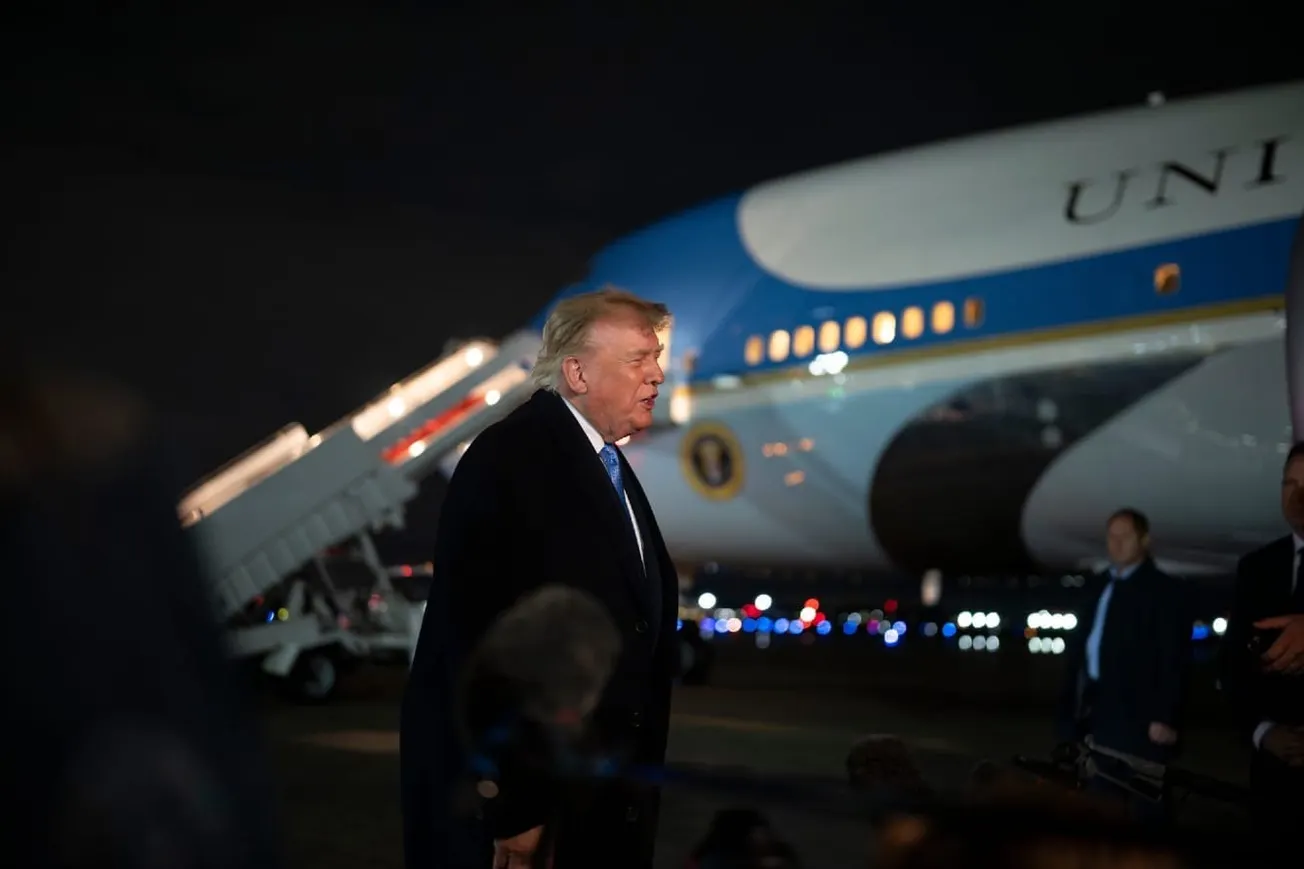
President Donald Trump can win the opening phase from the Oval Office. He needs Congress to sustain it. The troops, the enemy, the markets, and the families are all listening. What Congress does next will determine whether this war continues or stops.
Mark Pfeifle is a member of the TIPP Insights Editorial Board. He runs the crisis management firm Off the Record Strategies. He served as deputy national security adviser for strategic communications and global outreach at the White House from 2007 to 2009.
👉 Show & Tell 🔥 The Signals
I. King Charles Visits U.S.
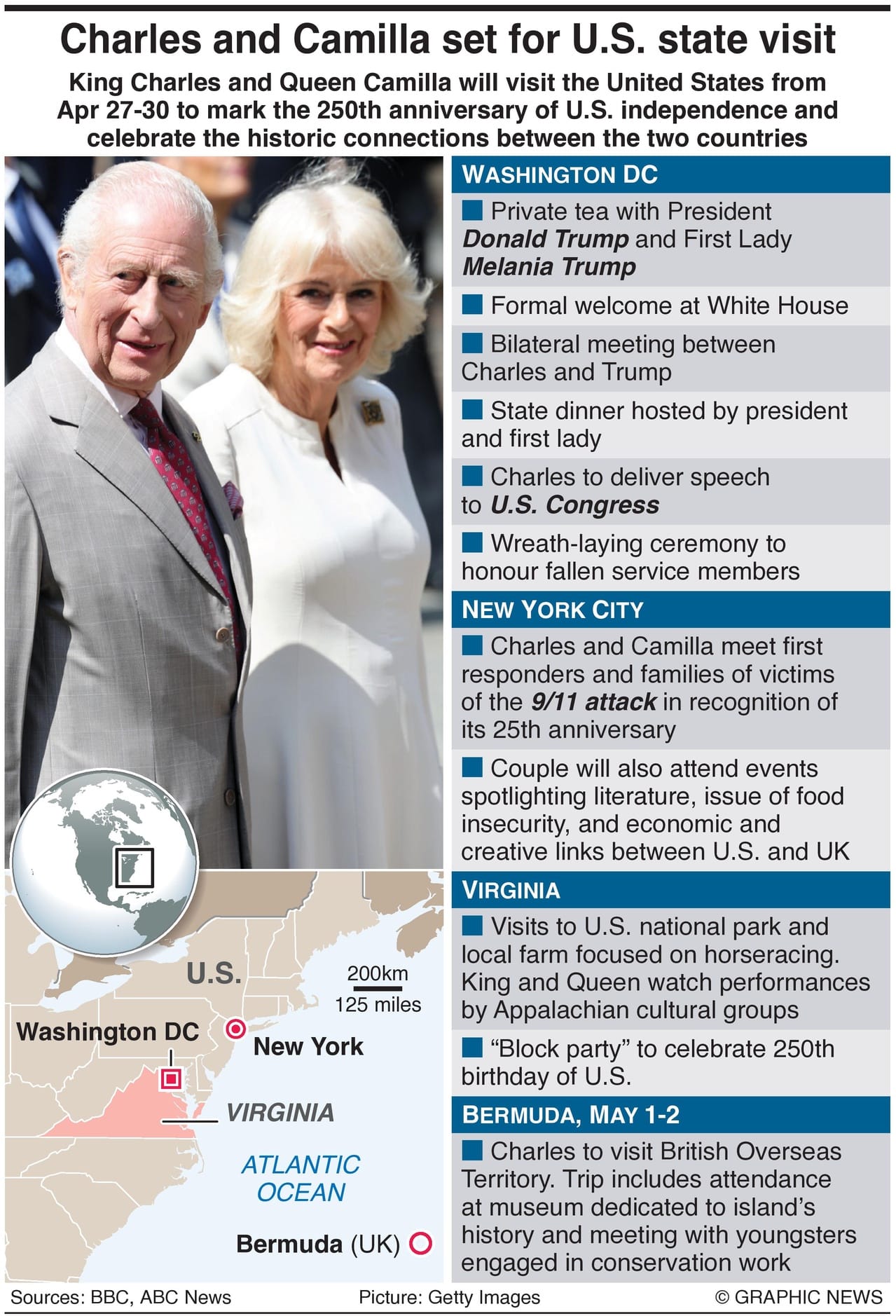
King Charles and Queen Camilla are on a four-day state visit to the United States (April 27–30), marking America’s 250th anniversary of independence. The trip includes stops in Washington, D.C., New York, and Virginia, with meetings, a state dinner, and events highlighting U.S.-U.K. ties.
II. Partisan Divide Defines The National Mood
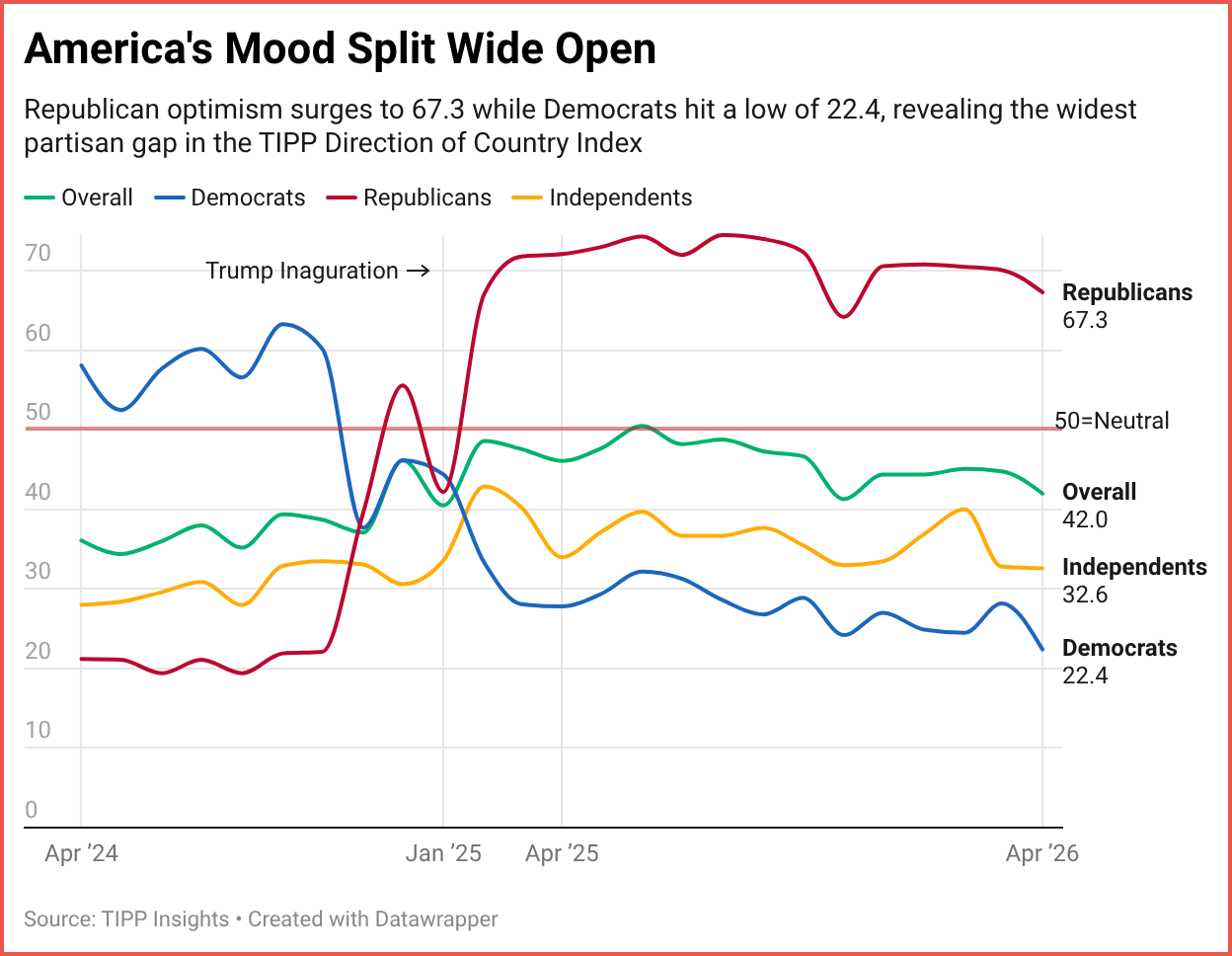
Republicans feel great about where the country is headed, Democrats don't — and Independents are closer to tuning out than buying in.
📊 Market Mood — Tuesday, April 28, 2026
🟩 Markets Drift as Iran Talks Hit Another Snag
U.S. futures hovered near flat as doubts grew over the latest U.S.-Iran proposal.
🟧 Oil Climbs Again on Prolonged Supply Strain
Crude pushed higher with the Strait of Hormuz still effectively closed.
🟦 Earnings Wave Takes Center Stage
A heavy slate of corporate results, especially from tech, anchored market focus.
🟨 Central Banks Turn More Cautious on Inflation
The BOJ signaled a hawkish tilt as energy-driven price pressures build.
🗓️ Key Economic Events — Tuesday, April 28, 2026
🟧 10:00 ET — CB Consumer Confidence (Apr)
Expected at 89.0 (vs. 91.8 prior), a key gauge of household sentiment as inflation and geopolitics weigh on outlook. Confidence has been softening recently, reflecting pressure from higher energy costs and uncertainty.
Letters to the editor email: editor-tippinsights@technometrica.com
Subscribe Today And Make A Difference. Consider supporting Independent Journalism by upgrading to a paid subscription or making a donation. Your support helps tippinsights thrive as a reader-supported publication. Contact us to discuss your research or polling needs.
Reach our audience. For sponsorship and advertising opportunities, visit our Partner With Us page.