
By Rainer Zitelmann via Issues & Insights | July 22, 2026
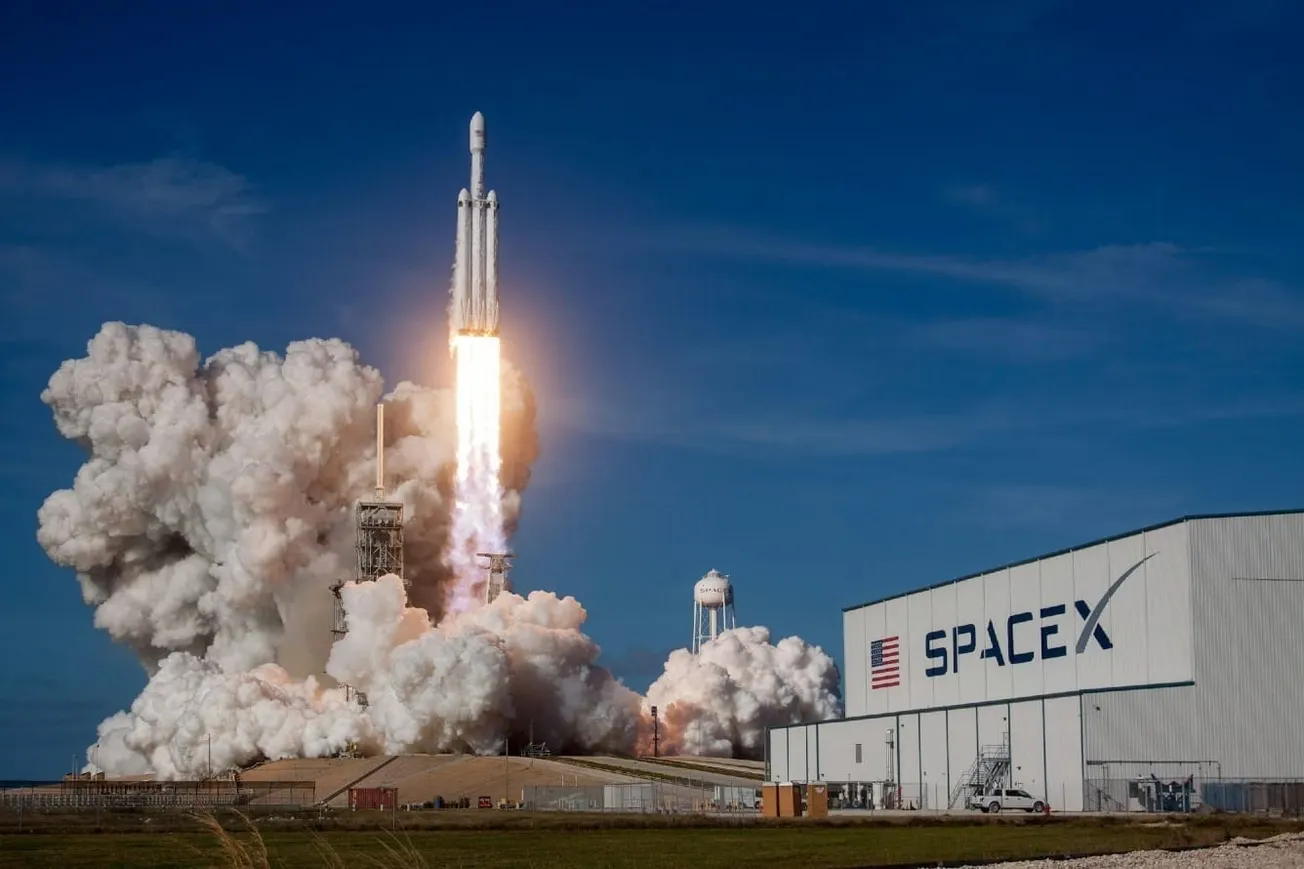
SpaceX’s IPO in June was the largest in history. The stock initially surged after its debut, reaching a high of more than $225 per share, but has since fallen below its $135 IPO price.
From its peak, the stock has now lost about 42%. Rocket Lab, after an extraordinary rally over the past two years, has suffered sharp pullbacks of more than 30%. Planet Labs tells a similar story: spectacular gains followed by painful corrections.
To many investors, the conclusion seems obvious: another bubble. But the real question is not whether commercial space contains speculative excess. Almost every transformative technology has. The more important question is what kind of bubble we are witnessing. Financial history suggests there are two fundamentally different types.
1. The first is a bubble without lasting economic substance. The classic example is the Dutch Tulip Mania of 1636 and 1637. Prices of rare tulip bulbs reached absurd levels before collapsing. Once the frenzy ended, nothing fundamental had changed. Tulips remained flowers. No new industry had emerged. No technological revolution followed. Investors lost money, and history moved on.
2. The second type of bubble looks very different. Here, investors become wildly overenthusiastic about a technology whose long-term importance they correctly recognize—but whose short-term value they dramatically overestimate.
The internet boom of the late 1990s perfectly illustrates this distinction. Between 1995 and early 2000, the Nasdaq rose more than 400%. Companies with little revenue and no profits achieved multibillion-dollar valuations. When reality finally intervened, the Nasdaq lost almost 80% of its value, and thousands of internet companies disappeared.
At the time, many observers concluded that the internet itself had been little more than another tulip mania. But history could hardly have delivered a more devastating verdict on that prediction.
The bubble burst. The revolution didn’t.
Amazon lost more than 90% of its market value during the dot-com crash. Today it generates well over half a trillion dollars in annual revenue and has fundamentally reshaped global commerce.
Google, founded only two years before the bubble peaked, became the world’s dominant search engine and built perhaps the most profitable advertising business ever created.
Meta did not even exist during the dot-com boom. Founded in 2004, it became one of the most valuable companies in the world because the internet infrastructure financed during the bubble years made its business model possible.
The investors who bought many internet stocks in 1999 often lost fortunes. The investors who concluded that the internet itself had been a fad made an even bigger mistake.
Commercial space belongs to the second category, not to the first.
Elon Musk has reduced launch costs by approximately 95% compared with the Space Shuttle. Throughout history, dramatic reductions in transportation costs have often marked the beginning of major economic transformations. The advent of railroads in the 19th century slashed the cost of moving goods and people, creating national markets and fueling industrialization. Likewise, the sharp decline in ocean shipping costs through containerization revolutionized global trade and accelerated decades of economic growth.
The Space Economy is no longer a vision of the future. It is already an essential part of the global economy. Modern life depends on space infrastructure in ways that most people never notice. Satellite networks make GPS navigation possible, enable global communications, support financial transactions through precise timing signals, provide weather forecasting, connect remote regions to the internet, and supply the Earth observation data that modern agriculture, disaster management, and environmental monitoring rely on every day.
Space capitalism is equally real. In 2025, there were 324 orbital launch attempts worldwide, and SpaceX alone accounted for 165 of them—more than half of all launches. Commercial companies are already generating substantial revenues through satellite communications, Earth observation, navigation services and launch operations. The era in which governments dominated space has given way to the era of Space Capitalism in which entrepreneurs and private investors drive innovation and investment.
Another promising opportunity is space-based data centers. Data centers in orbit could benefit from abundant solar energy and may offer advantages for certain satellite networks. As artificial intelligence dramatically increases global demand for computing power, advances in thermal management could make orbital data centers an important complement to terrestrial infrastructure.
Even more ambitious opportunities lie ahead. Asteroids are believed to contain enormous quantities of platinum group metals (PGMs), including platinum, palladium, rhodium, iridium, ruthenium, and osmium, potentially creating entirely new sources of supply. Space tourism, meanwhile, remains affordable only for the very wealthy today—but the same was true in the early days of aviation, before technological progress and competition made air travel accessible to millions.
The greatest obstacle to the next phase of space development is not technology but economics and law. The decisive breakthrough will come only when entrepreneurs and investors can obtain secure property rights over extraterrestrial assets.
While the Outer Space Treaty prohibits national sovereignty over celestial bodies, it does not explicitly address private ownership. That legal ambiguity could eventually give rise to “space squatters,” much like the pioneers who claimed land in the American West before formal property rights were established.
If private individuals and companies could own land on the Moon or Mars, or claim and develop asteroids, these assets could be financed, traded, and even packaged into publicly listed real estate investment trusts (REITs). Throughout history, secure property rights have transformed frontiers into prosperous economies. Space will be no exception. The barriers are primarily legal and economic—not technological.
Rainer Zitelmann is the author of the book “New Space Capitalism.”
Original article link