By Yaqiu Wang, Project Syndicate | October 14, 2026
China's relentless surveillance has taught people to perform obedience and loyalty, while keeping their beliefs hidden. This creates a dilemma for the ruling Communist Party: repression distorts the very information the government needs to understand society.
WASHINGTON, DC—China’s surveillance state reaches into the most banal corners of life. At a garden in Yangzhou, visitors must scan their faces to receive toilet paper; the dispenser remembers them and refuses to provide a second serving. In Shenzhen, the police use facial-recognition technology to catch jaywalkers, then send penalties to scofflaws’ phones and notify their employers. The scrutiny is not limited to public spaces. For China-registered users, WeChat messages and images are automatically screened. One human-rights lawyer recalled that police monitored his WeChat exchanges before detaining and torturing him.
It is easy to see why this appeals to the ruling Communist Party of China (CPC). Awareness of being watched can deter misconduct and petty crimes, making public spaces more secure and orderly. In one set of interviews, nearly every participant said they behaved better in public after cameras were installed. Pervasive surveillance can also deter dissent. A field experiment found that digital surveillance reduced university students’ willingness to express discontent and participate in protest, and lowered their expectations that others would join.
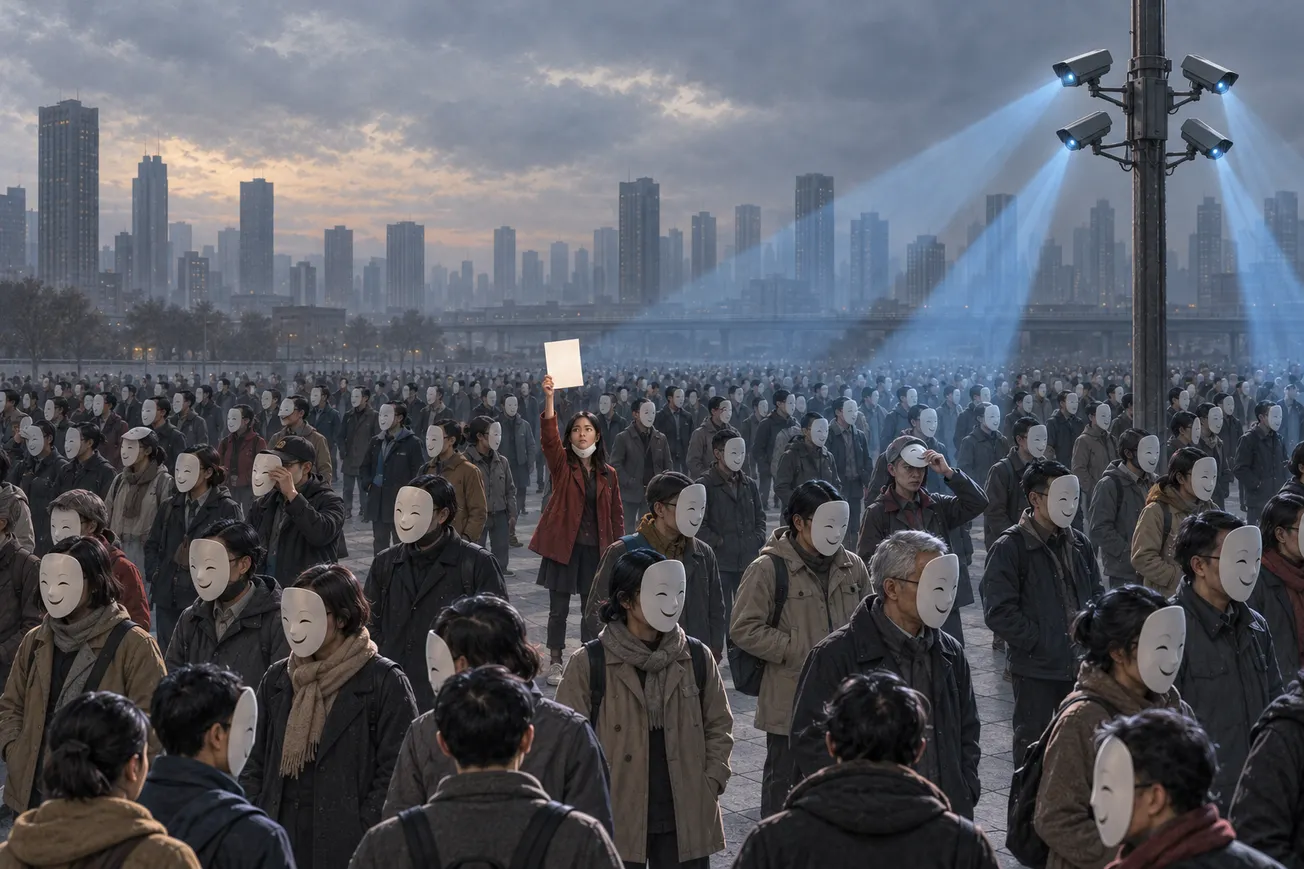
But avoiding expression of dissent is not the same as wholeheartedly supporting the regime. Chinese surveillance has taught people to perform obedience and loyalty, while keeping the truth hidden. This creates a dilemma for the CPC: repression distorts the very information the government needs to understand society. AI makes that problem more acute, because algorithms cannot learn from the opinions and behavior that fear has driven offline and underground.
The Show Must Go On
The northwestern region of Xinjiang, populated largely by Uyghurs and other predominantly Muslim ethnic minorities, has offered the starkest demonstration of both the reach and the blindness of the CPC’s surveillance system. Long before today’s AI models existed, cameras watched streets, mosques, markets, and homes, while police checkpoints divided cities and villages into closely monitored zones. In 2017-18, every resident aged 12–65 was compelled to provide fingerprints, voice samples, iris scans, and DNA. Officers routinely inspected people’s mobile phones and even entered people’s homes, staying for days at a time to observe family life.
Under this relentless scrutiny, Uyghurs and other Turkic Muslims learned not merely to remain silent, but to stage their contentment. They deleted religious materials from their phones, stopped contacting relatives abroad, and avoided mosques. In photographs released by state media, Uyghurs were shown singing and sharing meals with government officials, and even offering them beds.
But beyond the government’s view, anger and resentment built. When Uyghurs escaped Xinjiang, they often began voicing feelings they could not express at home. Some Uyghurs grew so furious that they ended up joining Islamist rebel groups in Syria. In interviews, former fighters cited persecution by Chinese authorities as a source of motivation for taking up arms and spoke of a desire for revenge.
Xinjiang remains an extreme case of ethnically targeted surveillance and repression. But many of the technologies and tactics deployed there have spread nationwide, with police building similar integrated data systems. Internet registration requirements ensure that online speech is never anonymous. Facial recognition has spread into public transportation, residential buildings, and even public bathrooms. During the COVID-19 pandemic, “health-status” apps determined who could leave home, enter a store, or board a train. So, like residents of Xinjiang, Chinese elsewhere have learned to obscure their true beliefs.
While this makes it impossible for even non-government entities to get a clear picture of public opinion in China, cleverly designed studies offer a glimpse into the gulf between stated views and private beliefs. For example, researchers at the University of Southern California showed that when Chinese citizens were asked directly whether they support the CPC, more than 90% respond positively. But when they were asked the same question in the form of list experiments, which create a greater sense of anonymity, approval dropped to roughly 50–70%. Likewise, only 8% admitted that fear of repression had kept them from joining an anti-regime protest when asked directly, but nearly 40% indicated that this was the case when the question was included in a list of non-sensitive questions.
Artificial Ignorance
The gap between what people say and what they actually believe becomes even more consequential as China embraces AI. When political scientist Eddie Yang simulated the removal of politically sensitive expression from an automated censorship model’s training data, the model became less effective at determining which social-media posts should be censored. The more sensitive material vanished, the worse the model got at distinguishing censorable posts from “safe” ones.
The model’s performance deteriorated more sharply under a simulated crisis, and most errors were false negatives: content that should have been censored, from the system’s perspective, was classified as safe. Doubling the amount of similarly biased data brought little improvement. More data could not compensate for information lost to fear. Yang calls this the “authoritarian data problem”: an algorithm trained on a staged version of society will learn only the stage set.
Of course, AI systems have access to data created before people adapted to their existence. It is by identifying patterns in such data that these systems infer risk. But even if they learn to recognize the slogans, images, and behaviors associated with past protests, they will prove less reliable when behavior departs from historical precedent—for example, when a new grievance emerges or an ordinary object acquires new political meaning. Before the 2022 White Paper protests, an AI system might have recognized a blank sheet of paper only as stationery, not as a condemnation of the government’s highly restrictive zero-COVID policy.
The authoritarian data problem implies that when the decisive shift comes—when people begin to realize that many others share their anger and become emboldened to act on it—not even the most sophisticated AI surveillance will have seen it coming. A crisis, even a relatively small one, can reveal just how widely shared people’s grievances are. One person speaks, another joins them, and each act of courage reduces the fear surrounding the next. What appeared to be durable obedience can unravel with remarkable speed.
The White Paper protests showed just how fast. After an apartment fire in Ürümqi killed at least ten people, suspicion that pandemic controls had impeded escape and rescue ignited fury online. The following day, Ürümqi residents took to the streets to confront officials. Images and meeting locations spread through social media, chat groups were created faster than censors could erase them, and the protests quickly spread across the country. With the economy already battered by repeated lockdowns, it took less than two weeks for China to announce a sweeping rollback of pandemic controls.
This phenomenon is not limited to China. The political scientist Timur Kuran attributed the Soviet Union’s rapid decline partly to the “preference falsification” that prevailed before things began to go south. “A government that appears unshakeable,” he wrote in 1989, “might see its support crumble following a slight surge in the opposition’s apparent size”—a surge that may be triggered by events that, on their own, appear “insignificant.”
Having spent 15 years working on human rights, I know how misleading the apparent order and calm of Chinese society can be. China’s political system is brutal not only in how it represses people but also in the secrecy and impunity surrounding that repression. The CPC controls the courts, severely censors the internet and the press, and has eliminated independent civil society. With few effective checks on power and little public accountability, the system has created victims throughout Chinese society, many of whom remain invisible even to one another.
Privately, I have heard story after story from people whose relatives were detained, whose homes were taken, whose wages were withheld, or whose attempts to seek justice brought further punishment. In public, censorship and fear of retaliation keep many people silent. Yet suppressed anger does not disappear. It waits.
A Human Apparatus
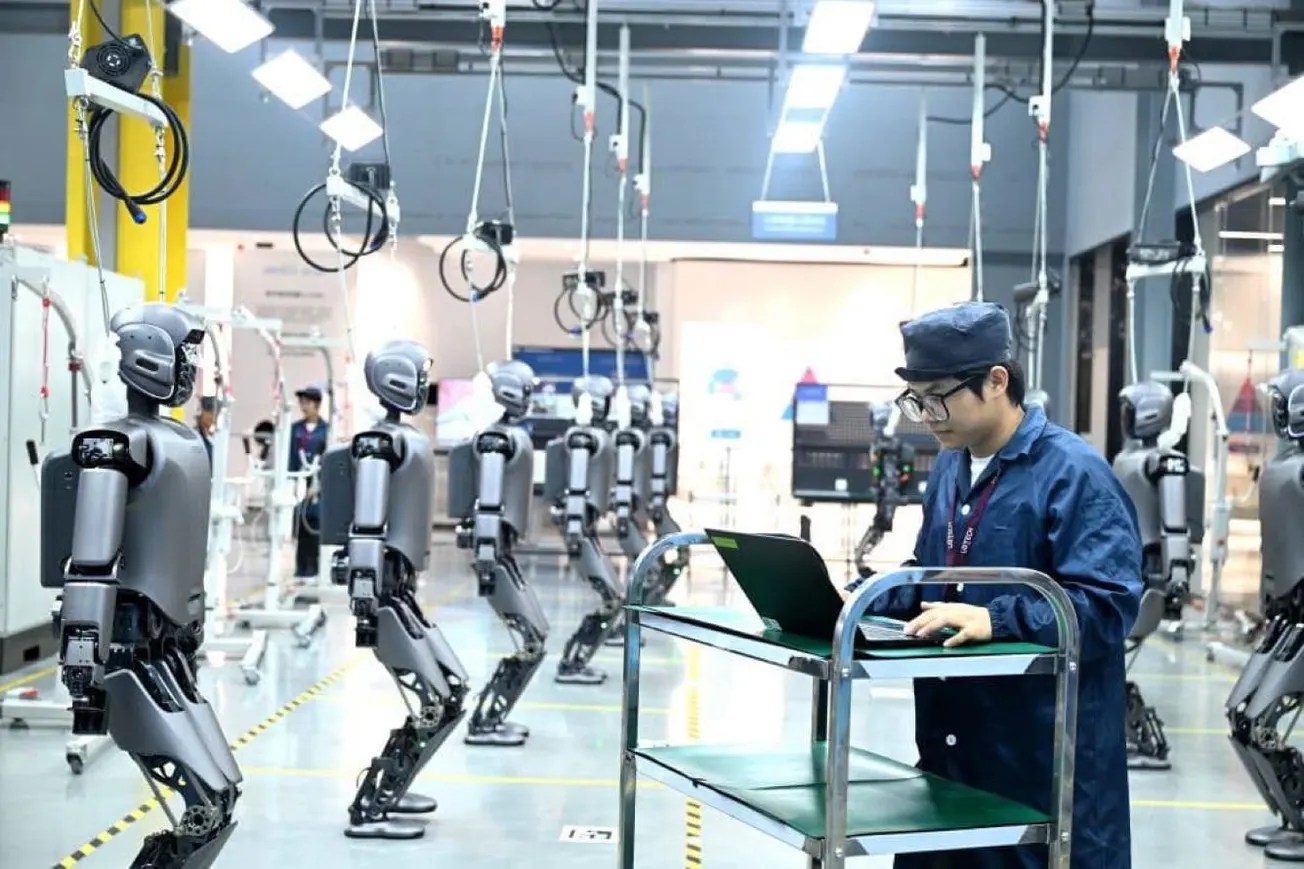
Information blindness is not the surveillance state’s only vulnerability. Behind this system’s futuristic façade lies a vast, labor-intensive bureaucracy, comprising police, security officers, neighborhood committees, and as many as 15 million informal information-gatherers. During the pandemic, more than 4.5 million grid workers helped enforce quarantines. Cameras and databases extend the state’s reach, but human beings must still knock on doors, question residents, and impose punishment.
The CPC cannot take this workforce for granted. Grid workers complain of low salaries, tedious reporting, hostility from residents, and crushing workloads. Zhang Yabo, a former Han Chinese police officer stationed in Xinjiang, revealed that he had been required to produce weekly leads that would send more Uyghurs into detention. Failing to meet quotas could cost him bonuses, promotion opportunities, and time off. So extreme was his workload, and so little control did he have over his own schedule, that at times Zhang saw his wife only once a month.
The workers who form the backbone of China’s surveillance system are not exempt from monitoring, either. Zhang reported feeling “extremely anxious” under the constant gaze of the cameras. “This really is no way for a human being to live,” he recalled thinking. Zhang’s eventual defection to Germany highlights a vulnerability no algorithm can repair: China’s surveillance machinery cannot function without a loyal workforce to operate it.
In Xinjiang, the party-state fostered loyalty by exploiting ethnic divisions: Han cadres were deployed to control a predominantly Uyghur population, against whom they held pre-existing prejudices. But in the rest of China, the state is often asking its representatives to police people much like themselves. The grid worker monitoring an angry homeowner may also have lost money in the property crisis. The officer dispersing a gathering of unpaid workers may also have relatives struggling to find jobs. The censor deleting a complaint may share it.
China’s deepening economic woes only fuel dissatisfaction. The real-estate slump has wiped out vast amounts of household wealth, and nearly 20% of urban youth are unemployed. Many young people are now “lying flat”: withdrawing from the relentless pressure of the labor market, consumption demands, and even romantic and family life.
This trend has so alarmed China’s leaders that the Ministry of State Security has accused “foreign forces” of promoting it to undermine China. But lying flat is not so much an active choice as a sign of resignation; it is what people do when they see no safe or productive way forward. The frustration underlying this approach can remain politically inert for a long time, but it can eventually lead to resistance.
China’s rulers might be able to track every jaywalker, private message, and sheet of toilet paper, but it is precisely this surveillance that keeps them from finding out what is happening inside people’s minds. The greatest danger to the CPC is not necessarily the dissent it can see, but the dissent that will erupt when private fear gives way to shared courage.
Yaqiu Wang is a fellow at the Penn Project on the Future of US-China Relations at the University of Pennsylvania.
Loved it, hated it, or somewhere in between — tell us. Grade this article here and help shape what lands in your inbox next.
🔗 Further Reading
Deeper on what you just read.
🟧 California Woman Charged As Unregistered Chinese Agent – TIPP News
🟧 Trump Reveals What He Told Xi About Political Prisoners – Elizabeth Troutman Mitchell, The Daily Signal
🟧 China’s Economic Miracle Has Run Out Of Road – Joseph Solis-Mullen, Mises Wire
🟧 China’s Efforts To Brush Uyghur Genocide Under The Carpet – Editorial Board, TIPP Insights
🟧 Why Privacy Matters – Ryan Bangert, The Daily Signal
🟧 The Home Front – Editorial Board, TIPP Insights
Letters to the editor email: editor-tippinsights@technometrica.com
Subscribe Today And Make A Difference. Consider supporting Independent Journalism by upgrading to a paid subscription or making a donation. Your support helps tippinsights thrive as a reader-supported publication. Contact us to discuss your research or polling needs.
Reach our audience. For sponsorship and advertising opportunities, visit our Partner With Us page.