
Last in a three-part series on Xi Jinping’s year of pressure on Japan. How Beijing tried to break Japan’s new prime minister, why China, not Japan, is the one boxed in, and who the campaign was really performed for.
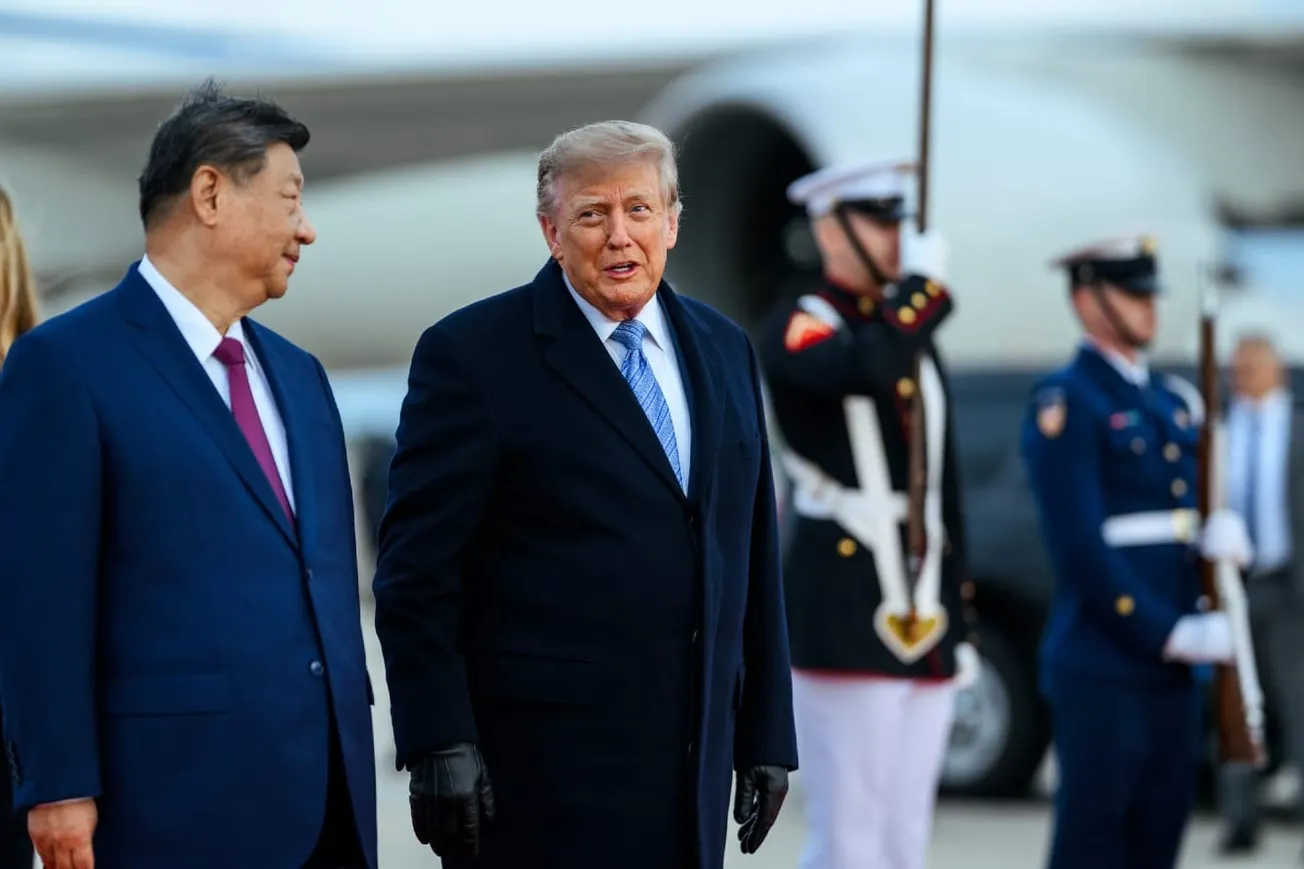
On November 1, 2025, in the South Korean city of Gyeongju, China’s leader Xi Jinping accepted the gavel for the next Asia-Pacific summit and announced that China would host it in Shenzhen in November 2026, under a banner of regional community and shared prosperity. The day before, he had shaken hands with Japan’s new prime minister, Sanae Takaichi. It was their last civil contact. Within a week, Xi opened a campaign of pressure that would contradict every line of that gavel speech. He spent the next year boycotting Asia’s second-largest economy and teaching his own public to despise it.
As foreign policy, Xi’s harassment of Japan failed, but it was built for domestic consumption.
Start with the fish.
Rewind to August 2023. China banned all Japanese seafood, citing the treated water Japan had begun releasing from its wrecked Fukushima nuclear plant. China was the biggest overseas market for that seafood, and the ban hit Japan’s scallop and sea-cucumber exporters hardest. Beijing then spent two years negotiating to reopen the market. The first shipment, six tons of Hokkaido scallops, was sent on November 5, 2025.
On November 7, Takaichi gave Beijing its pretext, telling parliament that a Chinese attack on Taiwan could threaten Japan’s survival, language her predecessors had kept deliberately vague. Twelve days later, on November 19, China retaliated and reinstated the seafood ban it had just lifted, though nothing about the Fukushima water had changed in those two weeks. In addition to punishing Japan, the ban projected strength to a domestic audience. Beijing scrapped two years of diplomacy in a fortnight, a reaction disproportionate to Takaichi’s remark.
Piling on, China’s foreign ministry posted history lessons on social media. The Global Times, the Communist Party’s nationalist tabloid, ran a long investigation casting Takaichi as the heir to Shinzo Abe, Japan’s hawkish late prime minister, and reported with relish the fury of Chinese netizens. State outlets invoked the Century of Humiliation, the long period of foreign invasion that the Party casts itself as having ended. Japan was the obvious villain in that story. And the fury was managed as much as reported: China’s online censors set the limits of what the public could say, so the anger ran only as far as Beijing allowed.
A recent editorial on Xi’s reelection theater described a different performance for a different audience. The showpiece receptions in May, when Xi hosted the visiting American and Russian presidents in the same week, were staged for the Communist Party itself, a reassurance to its members that the man at the top still ran the machine ahead of his bid for a fourth term. The Japan campaign played a wider room. Its target was the broad public rather than the Party elite, and the job was to whip up nationalist feeling.
China’s economy is in the doldrums, as the International Monetary Fund’s February 2026 review made plain: urban youth unemployment at 16.5 percent at the end of 2025, prices sliding toward deflation, the property market still correcting, and growth set to slow again this year. A leader short of good economic news looks for a dependable enemy, and Japan is the most dependable one China has. As one regional analysis observed late in 2025, when the Party’s record of delivery weakens, nationalism does the work prosperity used to. Japan is the easy target, picked less for what Tokyo does than for what it has long stood for in the Party’s story.
To be sure, Takaichi did cross a line her predecessors had guarded, as this series argued at the outset. But the response was sized to Beijing’s needs, not to Tokyo’s words.
The neighbor Xi set out to cow has only hardened against him. Japan’s prime minister rode the crisis to the largest single-party majority in the country’s postwar history, downgraded China in Japan’s official diplomatic record, and pressed ahead with the rearmament Beijing least wanted, fitting new locks to the island chain that already pens China’s navy in.
Beijing’s fury ran well past Tokyo, unsettling capitals from New Delhi to Seoul into an arc of wary neighbors now hedging against China rather than bending to it. Jeff Kingston, a historian of Japan, warned in the spring that Beijing was overplaying its hand and seeding precisely that anxiety across the region, while noting the obvious asymmetry: Takaichi answers to voters, and Xi does not.
In November, Xi will welcome the region’s leaders to Shenzhen under his banner of community and shared prosperity. Japan is a founding member of that forum and Asia’s second-largest economy. As of this spring, it was not certain that Xi and Takaichi would meet there.
Xi aimed the whole campaign at an audience at home. That is why it cost him so much abroad: a Japan hardened against him, and a region now counting the exits.
Trilogy complete.
The TIPP Off
What you should be reading right now
Global Affairs
Mr. President, Give The Iranian Regime Nothing – Editorial Board, Issues & Insights
Putin Says No Point In Meeting Zelenskyy Over Peace Talks – – TIPP News
The Boxed-In Giant – Editorial Board, TIPP Insights
The Blueprint – Editorial Board, TIPP Insights
Inside The Wire – Editorial Board, TIPP Insights
National Affairs
Trump Admin Delivers Major Win Against Government Weaponization – Steve Cortes, The Washington Examiner
Trump’s Approval Ratings Remain Low As Voters Fret Over Economy, Inflation: I&I/TIPP Poll – Terry Jones, TIPP Insights
Ambiguity Top And Bottom – Editorial Board, TIPP Insights
The Backfire – Editorial Board, TIPP Insights
Humanity Has Only A Few More Months To Live – Editorial Board, Issues & Insights
Economy
Yes, Today’s Gas Prices Are ‘Peanuts’ – Editorial Board, Issues & Insights
Down To Two – Editorial Board, TIPP Insights
Warsh’s Concerning Interest In Redefining “Inflation” – Connor O’Keeffe, Mises Wire
Iran War Clouds Global Outlook, OECD Warns – TIPP News
Markets & Business
Democracy vs. Data Centers – Angela Huyue Zhang, Project Syndicate
Letters to the editor email: editor-tippinsights@technometrica.com
Subscribe Today And Make A Difference. Consider supporting Independent Journalism by upgrading to a paid subscription or making a donation. Your support helps tippinsights thrive as a reader-supported publication. Contact us to discuss your research or polling needs.
Reach our audience. For sponsorship and advertising opportunities, visit our Partner With Us page.