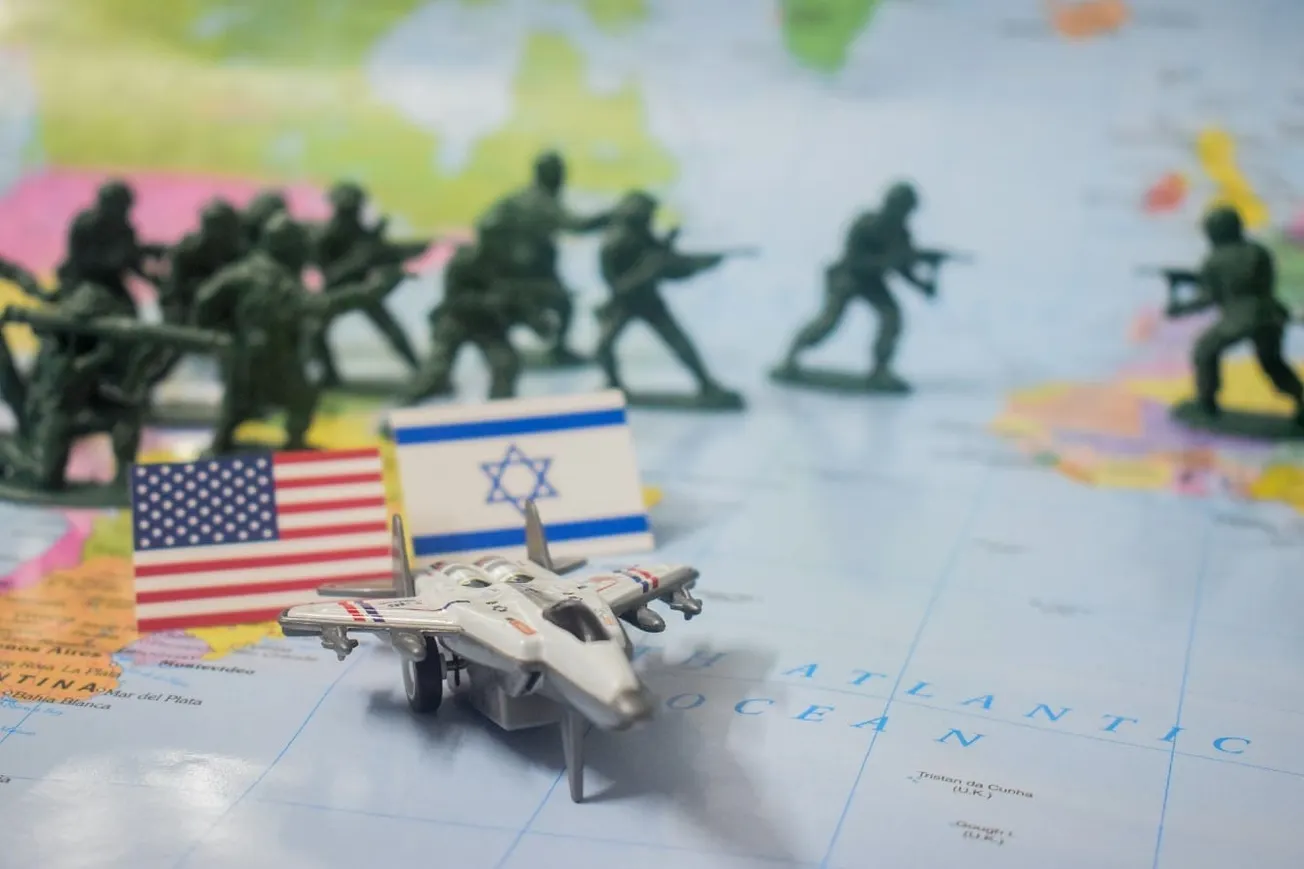

American warships are enforcing a blockade in the Persian Gulf. Iranian officials are calling it piracy. And the Islamabad talks, 21 hours of Pakistan-brokered negotiations, have collapsed without a deal. Mark Twain wrote of Tom Sawyer that he 'gave up the brush with reluctance in his face, but alacrity in his heart.' Tehran is playing the same game. It sounds defiant. Look closer, and it's strategic.
After the collapse of those Pakistan-brokered talks, held during a fragile two-week ceasefire in the now seven-week-old Iran war, Iran’s leadership has settled into a familiar but effective posture: push back hard in public while keeping just enough space open for diplomacy. The tone from senior officials, lawmakers, and military voices has been firm, but not final.
On the surface, the standoff appears to be escalating. Trump’s blockade is aimed at cutting off Iran’s oil revenues and squeezing its economy. Iranian officials have simultaneously warned of retaliation in the Strait of Hormuz and claimed that a breakthrough had been “inches away” before the talks broke down over Washington’s demands on enrichment, facilities, and proxy funding.
Roughly a fifth of the world’s oil supply flows through that narrow waterway. Iran closed it after the U.S.-Israeli strikes began in late February, but U.S. destroyers have since transited the Strait, and mine clearance operations are underway. Tehran’s Hormuz gambit failed militarily. As a talking point, though, it still has life.
Iran's messaging continues to frame the Strait as both an economic tool and a symbol of sovereignty. Hardliners talk about turning it into a revenue stream, military figures warn of future disruption, and the cumulative effect is a simple message: even with the blockade in place, pressure on Iran will come at a price. But how much weight any of this carries after the U.S. Navy moved to break Iran's grip on the Strait is far from clear.
But there’s another signal running alongside the warnings.
President Masoud Pezeshkian has indicated that an agreement remains possible if Washington adjusts its approach. Other voices have stressed that the failure of one round is not the failure of diplomacy itself. Even the act of sitting down to talk, after decades of hostility, has been cast inside Iran as progress worth protecting.
Tehran is positioning itself. It wants a better deal, not no deal.
From Washington’s side, the picture is just as layered. Publicly, the emphasis is on pressure: the blockade and the economic squeeze suggest a strategy aimed at forcing concessions. Vice President Vance, departing Islamabad, said Iran had “chosen not to accept our terms” and called the outcome bad news “for Iran much more than for the United States.” Yet Washington has not declared diplomacy dead. The real question is not whether Iran will retain nuclear capability forever, but how long that capability can be delayed, and at what price.
Both sides are escalating, but in a controlled way. Israel has coordinated closely with the Trump administration. Gulf states, after weeks of Iranian missile strikes on their own soil, are pushing Washington to keep the pressure on rather than back down. Washington and Tehran are both signaling strength to domestic audiences while preserving an exit ramp.
Markets seem to read the situation the same way. Brent crude has climbed to around $99 a barrel in light of higher shipping costs, but the reaction remains contained. If a full-scale disruption in the Gulf were imminent, prices would spike much more sharply. The relative calm suggests investors are betting on the usual pattern: bluster, then a deal.
None of this guarantees success. The risks are real. Miscalculation in a confined and heavily trafficked waterway like Hormuz can escalate quickly. A single incident at sea could force decisions that neither side currently intends to make.
Still, the structure of the standoff points away from breakdown. Iran is acting less like a country preparing for a final break than one trying to improve its negotiating position. The United States, despite its show of force, is not closing off diplomacy; it is trying to reshape it. The current moment feels more volatile than it probably is. The noise is real, and so are the stakes. But the underlying logic tracks with past episodes: pressure is being applied not to end talks, but to shape their outcome.
The collapse of the Islamabad meeting may be less a turning point than a transition, a shift to a phase defined by sharper signals and higher costs. Tehran’s message is clear enough: it won’t yield easily, but it isn’t walking away. On Monday, Trump himself said “the right people” in Iran had called and “want to work a deal.” Pakistan has offered to host the next round. The ceasefire holds until April 22, giving both sides eight days to decide what comes next.
Iran is talking tough. But the door is still open.
TIPP Takes
Geopolitics, Geoeconomics, And More
1. ‘We’ll Be Your Canada’: Brutal Reality Check For NATO Free Riders—Victor Davis Hanson, The Daily Signal
2. As Trump Seeks Iran Deal, Congress Wants Say On Foreign Policy— George Caldwell, The Daily Signal
3. Iran: Won’t Get Fooled Again— Kurt Nimmo, Ron Paul Institute for Peace and Prosperity
4. Is The Samson Option Unthinkable?— Ashes of Pompeii, Ron Paul Institute for Peace and Prosperity
5. Trump Got Played By Israel… And The Game Continues— Larry C. Johnson, Ron Paul Institute for Peace and Prosperity
6. Nuclear Myths Continue To Fuel Neocon Fantasies—James Carden, Ron Paul Institute for Peace and Prosperity
7. Argentina Is Booming—Capitalism Remains Undefeated—David Harsanyi, The Daily Signal
8. America Last: War Abroad, Tyranny At Home—And The Theft Of A Nation— John W. And Nisha Whitehead, Ron Paul Institute for Peace and Prosperity
9. Ben Carson: There’s A Solution To Having Democrats Undermine The TSA—Dr. Ben Carson, The Daily Signal
10. Will Accused Charlotte Train Killer Even Face A Trial?— Fred Lucas, The Daily Signal
11. Finland Study Exposes The Harms Of ‘Gender-Affirming Care’ And Hints At The Real Cause Of Gender Dysphoria— Tyler O'Neil, The Daily Signal
12. US Fertility Rates Drop To Record Low In 2025 As Births Fall— Mariam Sunny, The Daily Signal
13. ‘LAWLESS BEHAVIOR’: Charges Dropped Against Woman Who Allegedly Disrupted Easter Service At Cities Church— Tyler O'Neil, The Daily Signal
14. Randy Fine Joins House Freedom Caucus— Pedro Rodriguez, The Daily Signal
15. Roy Introduces Bill To Designate CAIR As Hamas Affiliate— Pedro Rodriguez, The Daily Signal
16. Spanberger Is ‘Taking Credit’ For Youngkin’s Economic Deals— Virginia Grace McKinnon, The Daily Signal
17. DEFINITION OF JIM CROW’: Republican Turns The Tables On Democrats’ Redistricting Rhetoric— Tyler O'Neil, The Daily Signal
18. A Note On “Currency” In Colonial America— Joshua Mawhorter, Mises Wire
19. Freedom Caucus Members Say They Will Reject All Amnesty Proposals—Pedro Rodriguez, The Daily Signal
20. Virginia: A New Extreme In Gerrymandering—Daniel McCarthy, The Daily Signal
21. Whistleblower Group Says Big Tech Blocking Ads For Documentary Alleging Biden Corruption—Fred Lucas, The Daily Signal
22. The Causes And Cures For Gen Z’s Economic Illness—Jeffery L. Degner, Mises Wire
23. Will Taxpayers Foot The Bill For Abortion And ‘Gender-Affirming Care’ In 2026?—Hannah Lape, The Daily Signal
24. On The Skids—David Gordon, Mises Wire
25. Ex Nihilo No More—Mateo Orlando, Mises Wire
26. A Rothbardian Reconstruction Of Libertarian Political Theory—Gabriel Rodriguez, Mises Wire
📊 Market Mood — Tuesday, April 14, 2026
🟩 Markets Edge Higher on Fresh Peace Talk Optimism
U.S. futures ticked up as signs of progress in Iran negotiations lifted sentiment.
🟧 Oil Slips Below $100 Despite Ongoing Blockade
Crude eased as diplomacy hopes offset continued supply constraints in the Strait of Hormuz.
🟦 Markets Balance Diplomacy Against Disruption
Investors weighed ceasefire progress against the reality of a tightening U.S. blockade.
🟨 Earnings Season Kicks Into High Gear
Major bank results take center stage as markets look for clues on growth amid geopolitical strain.
🗓️ Key Economic Events — Tuesday, April 14, 2026
🟧 08:30 ET — PPI (MoM, Mar)
Producer prices are expected at +1.1% (vs. +0.7% prior), offering an early signal on pipeline inflation pressures.
editor-tippinsights@technometrica.com