Israel’s address to the United Nations General Assembly last week signaled a tectonic shift in the global world order, and it’s not what anyone thinks.
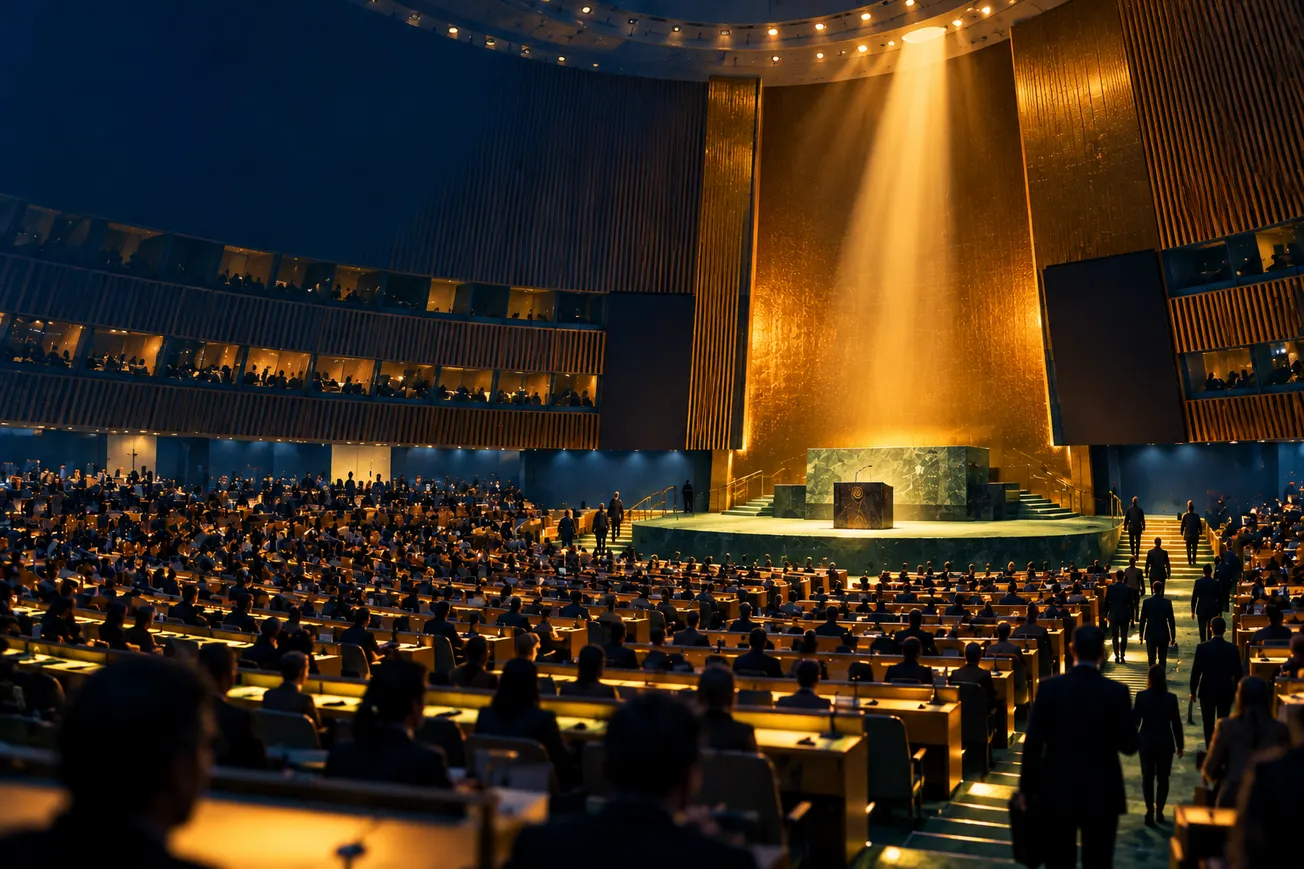
Two years ago, the United Nations General Assembly.
Israeli Prime Minister Benjamin Netanyahu takes the podium. Six thousand miles away, the Israeli Air Force prepares to drop over 80 tons of explosives precisely on Hassan Nasrallah, the near mythical leader of Hezbollah: Iran’s terror organization in Lebanon. The audience at the UN has no idea. Nobody does.
The Prime Minister speaks calmly about “degrading” Hezbollah among other matters, returns to his hotel, and then gives the “green light.” Israel’s Air Force strikes perfectly: in mere seconds it wipes out the bunker, Nasrallah, and much of Hezbollah’s leadership.
Three months later, lacking Hezbollah’s protection, the Iranian-backed Assad regime in Syria collapses after 54 years of brutal rule.
Just 18 months later, Israel repeats its Beirut performance, except this time in the skies over Tehran: wiping out Iran’s “Supreme Leader” Ayatollah Ali Khamenei, and much of the regime’s top leadership.
Two years later: the “walk-out”
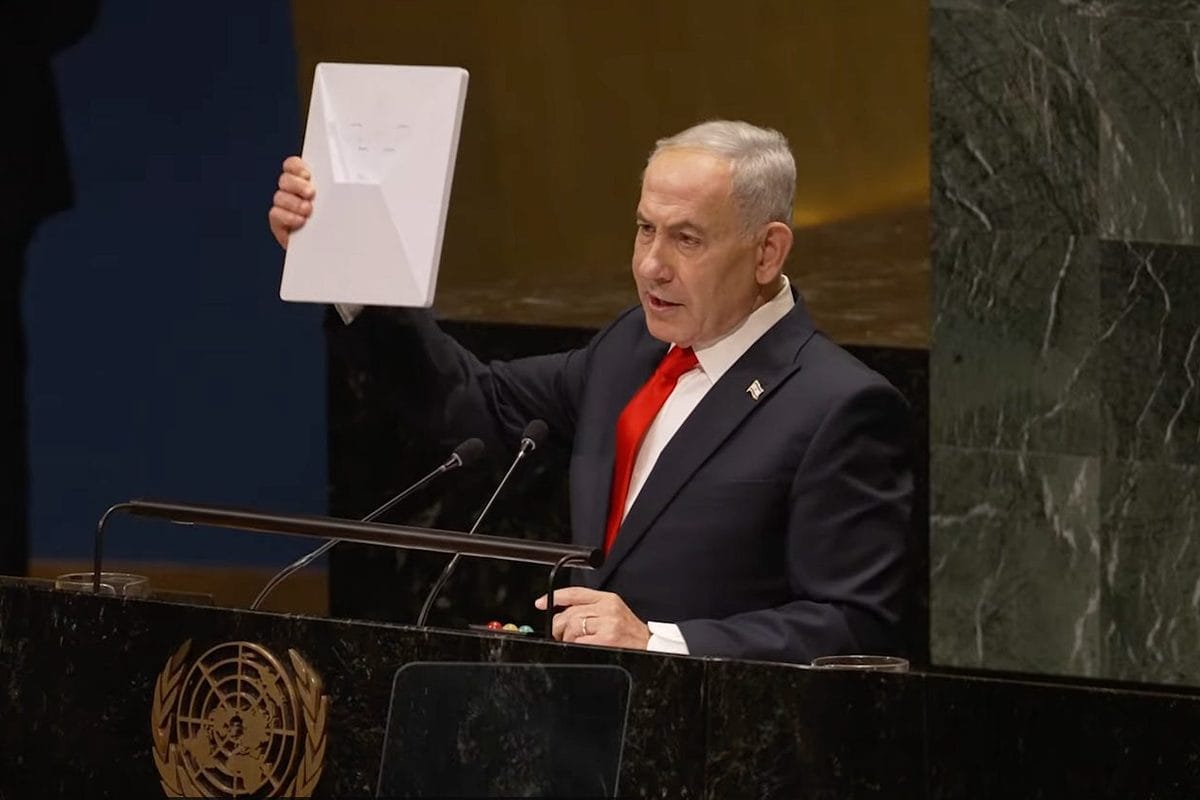
This week Netanyahu took the UN podium once again, and the world abruptly “walked out” in protest…except that isn’t what happened at all.
A full 61% of the UN General Assembly attended Israel’s speech (116 countries): that’s more audience than most speakers ever get (because delegates typically “skip class” during the speeches, which are almost always sparsely attended).
The Palestinian Authority had arranged the stunt in advance, encouraging nations to bring in extra staff before the speech, to make their exit appear more dramatic than it really was. Many of those who left, promptly ran to video monitors where they stayed glued to Israel’s every word.
And after all that, Israel still had more attendance than most countries. Usually only major global powers command this kind of audience at the UNGA.
So why does Israel?
Israel’s speech actually began on October 7, 2023
On that day Israel didn’t look like a global power.
Hamas, the Palestinian terror organization that controls Gaza, breached Israel’s border, and committed the largest massacre of Jews since the Holocaust, including: some 1,200 murders, mass rape, mass torture, ritualistic Islamic beheadings, and mass hostage taking. Relative to Israel's small population, it was the equivalent of the U.S. suffering 16 September 11 attacks at once. The attackers included Palestinian civilians and United Nations staff.
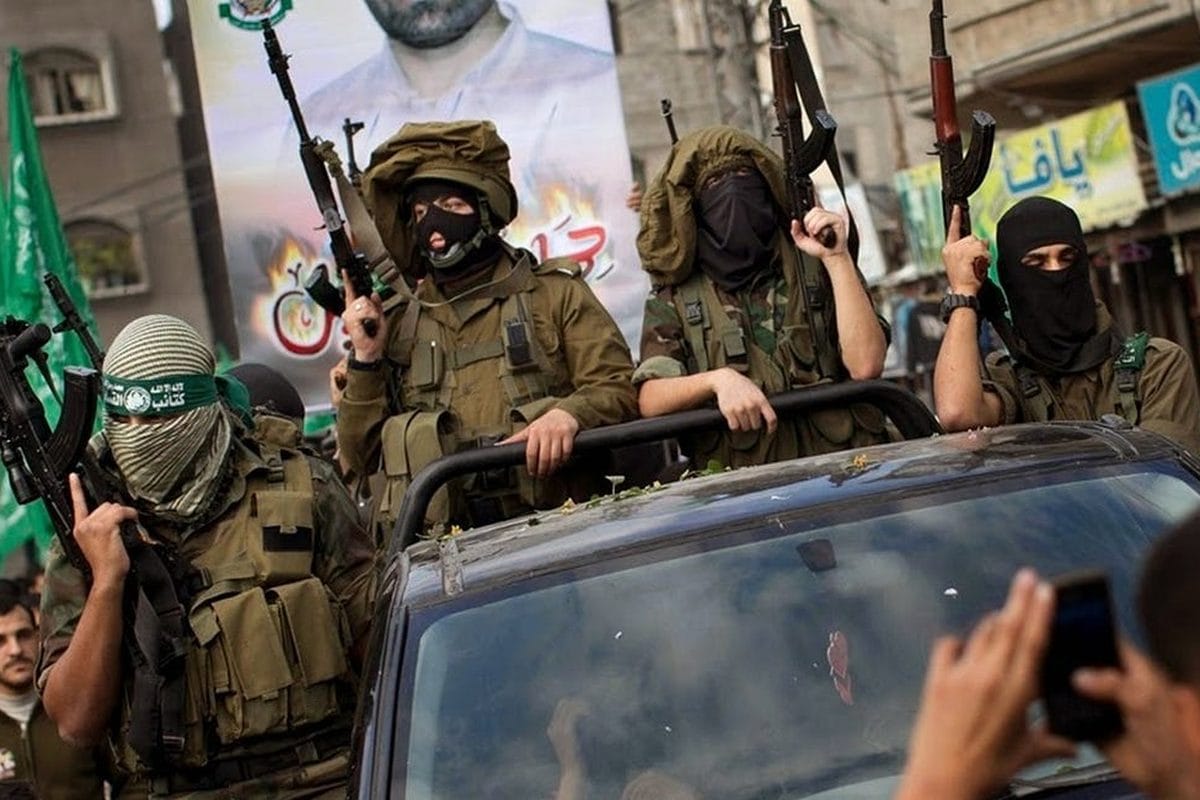
What’s worse: the Palestinian people overwhelmingly supported the massacre, and if elections were held today Hamas would win in a landslide, and the Palestinian people remain overwhelmingly against the idea of Hamas disarming — even though that’s the only thing standing in the way of Gaza's reconstruction and billions in foreign aid.
The UN Reaction
The UNGA is ongoing as of writing this. Of the 141 countries that have spoken so far, 111 condemned Israel over its self-defense in Gaza, while only 55 addressed Russia/Ukraine and a mere 28 mentioned Iran, demonstrating an odd obsession with an issue that does not directly impact most of the countries at all.
Ten countries criticized Israel over “settler violence,” against Palestinians which, despite widespread propaganda, is extraordinarily rare, violates Israeli law, and that law is strongly enforced by Israel’s police and military.
None of those ten countries mentioned Netanel Shukrun, an unarmed Israeli settler who was on a family nature hike last week, when a Palestinian attacker shot him in the neck. He bled to death in front of his 16 year old son. Nor did any speaker mention Neriya Leiter, the son of Israel’s Ambassador to the United States, who is currently in critical condition at Shaare Zedek Medical Center after a Palestinian attacker rammed him using his car as a terror weapon.
Both attackers will receive cash rewards from the Palestinian Authority government, which continues to pay millions per month to the perpetrators of the October 7 massacre.
Twelve countries used their speeches to accuse Israel of “genocide,” a blood libel so clearly and demonstrably untrue that its persistence is nothing short of bizarre. We’ve covered this topic in exhaustive detail, including that Gaza has one of the fastest growing populations in the world, that according to Hamas’s own data most casualties were males of military age, and that Israel has flooded Gaza with aid, vaccination campaigns and medical care at levels unheard of in modern warfare.
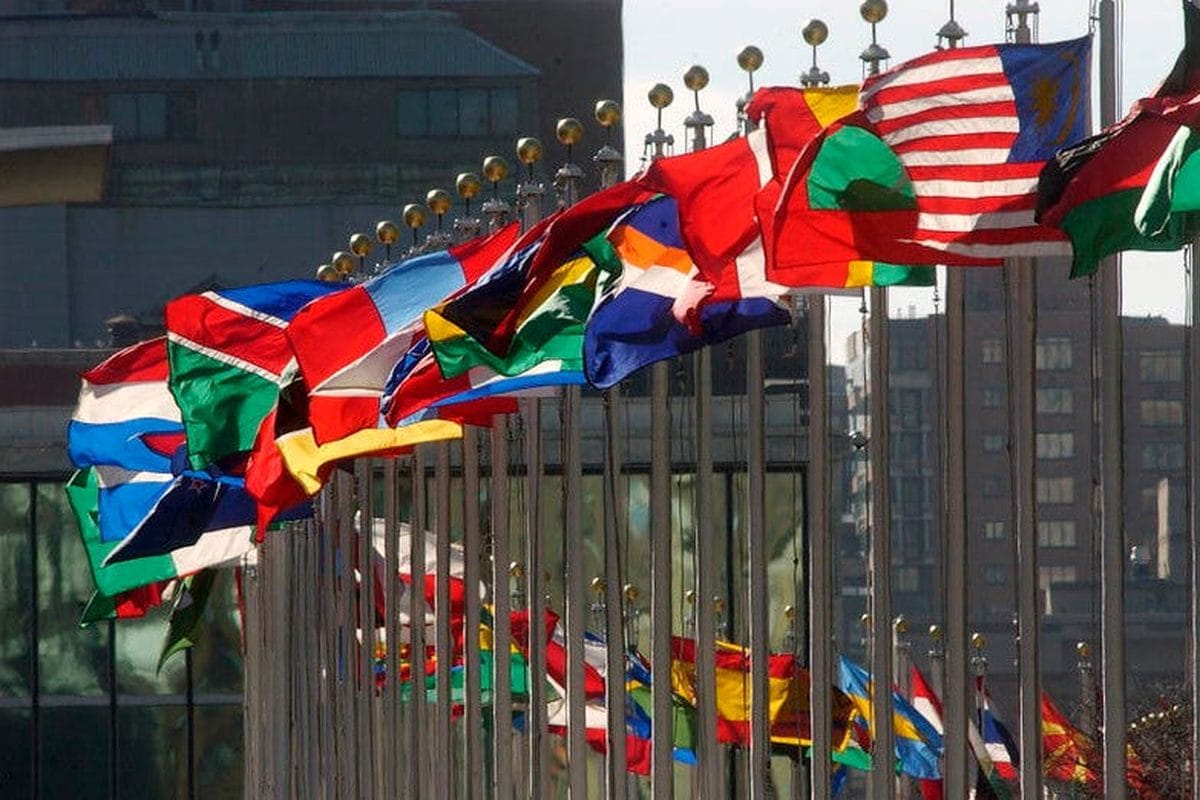
The Prime Minister addressed these issues and more, such as the antisemitic behavior of New York Mayor Zohran Mamdani. For months Mamdani made an impotent show of attempting to arrest Israel’s Prime Minister in violation of U.S. Federal law, while simultaneously encouraging anti-Israel protests on the streets of New York, and even accused New York’s American Jewish community of “war crimes.”
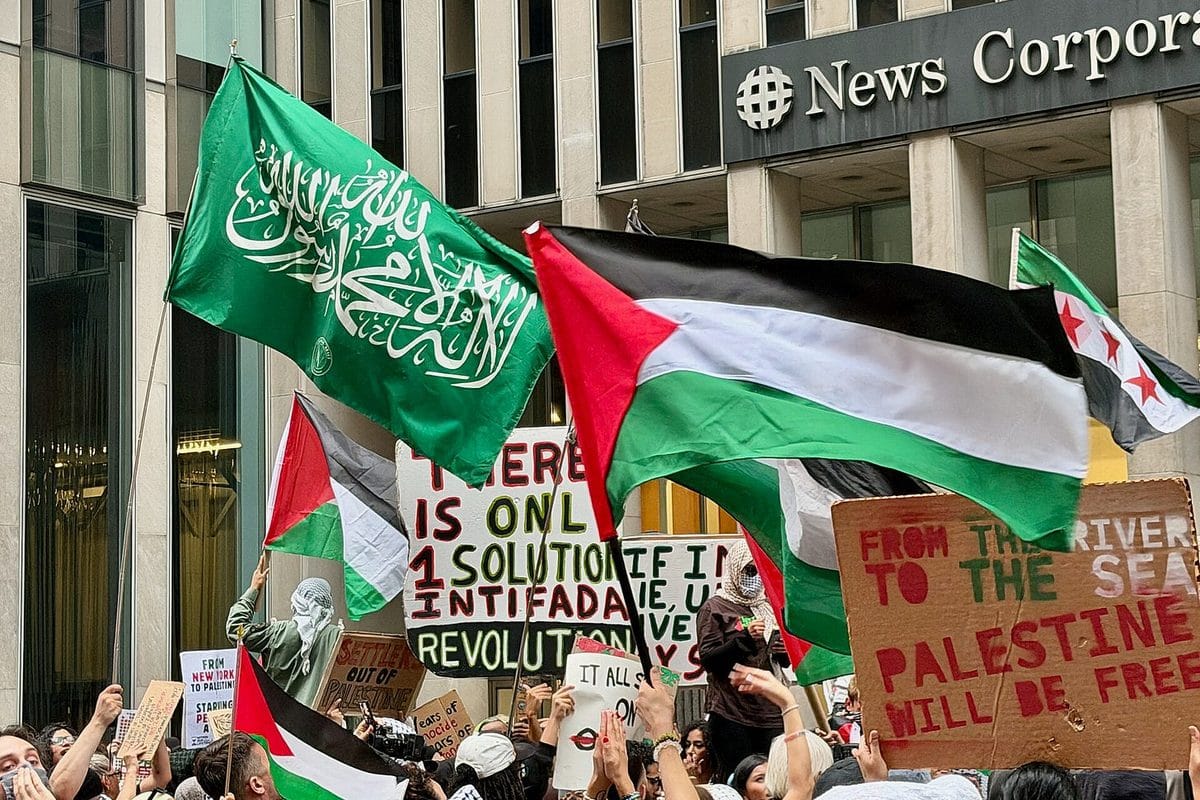
Yet the true essence of Israel’s speech wasn’t about being a victim (which Israel briefly was) nor defending against a tidal wave of false propaganda (which the Prime Minister briefly did). Instead, the speech was a “coming of age” announcement: a subtle but piercing revelation that in the last three years, Israel has become a global power to be reckoned with.
Israel’s coming of age
No stranger to props, Netanyahu displayed one of the exploding pagers that helped Israel decimate Hezbollah two years earlier.
He held a Starlink terminal: the communications lifeline of the Iranian people, while recalling Israel’s powerful cooperation with the United States in attacking Iran’s nuclear program.
The Prime Minister spoke of Nasrallah alongside Khamenei, and (deceased) Hamas leaders Mohammed Deif, Yahya Sinwar, and Ismail Haniyeh, calling them “arch-terrorists” and declaring “they're all gone too.”
Netanyahu then predicted the imminent collapse of the entire Iranian regime and the rise of the Iranian people.

After the UK announced sanctions on Israel earlier this month, Israel promptly ended the former empire’s presence in Jerusalem (which had been uninterrupted since the fall of the Ottoman Empire), its role in Gaza’s reconstruction, and Israel’s intelligence sharing — which reportedly has British security services “tearing their hair out” in panic.
In the wake of a tirade of French condemnations and sanctions, Israel unceremoniously cut-off the former empire’s role in Lebanon for the first time in 800 years, anticlimactically declaring, “They are not necessary. They have no positive influence, especially not in Lebanon.”
None of this is supposed to be possible.
Israel is a tiny Middle Eastern country, half the size of Lake Michigan with a total population less than New York City. And yet, in 36 months, Israel has fought for survival successfully on seven fronts, toppled entire regimes, casually humiliated (what used to be) the world’s greatest empires, and built new alliances never before imaginable, including throughout the Arab world.
Not every country is comfortable with Israel’s newfound influence. The result is propaganda, fake “walk-outs” and well rehearsed protests. In other words: performances. Those countries that attempted actual military strikes have been physically decimated.
Israel’s pithiest Prime Minister, Golda Meir, said in 1973, “We Israelis have a secret weapon. We have nowhere else to go.” Netanyahu echoed that sentiment in his speech, saying six separate times, “We’re going to win. We have no other choice.”
Yet much has changed since 1973, when “Golda” echoed a kind of fierce national desperation.
Israel now has alliances that were previously unimaginable, record-breaking global trade and security relationships, a record breaking stock market, and despite the fake “walk-out,” Israel enjoyed a larger and more attentive audience at the United Nations than all but the most prominent global powers.
Not all of that attention was positive, but that too, is precisely characteristic of a global power.
An important footnote: Prime Minister Netanyahu is the focus of both opposition and support, both inside and outside of Israel. Yet on these particular issues, the Israeli public holds a widespread, almost unanimous consensus, as does every major candidate for Prime Minister in Israel’s upcoming elections.
Daniel Pomerantz is the CEO of RealityCheck, a non-profit charitable organization dedicated to restoring public trust in information. An expert on the Middle East and international law, Daniel also serves as an adjunct professor at Israel’s Reichman University (the “IDC” in Herzliya). Daniel and RealityCheck can be found at www.realitycheckresearch.org or at contact@realitycheckresearch.org.
Loved it, hated it, or somewhere in between — tell us. Grade this article here and help shape what lands in your inbox next.
Letters to the editor email: editor-tippinsights@technometrica.com
Subscribe Today And Make A Difference. Consider supporting Independent Journalism by upgrading to a paid subscription or making a donation. Your support helps tippinsights thrive as a reader-supported publication. Contact us to discuss your research or polling needs.
Reach our audience. For sponsorship and advertising opportunities, visit our Partner With Us page.