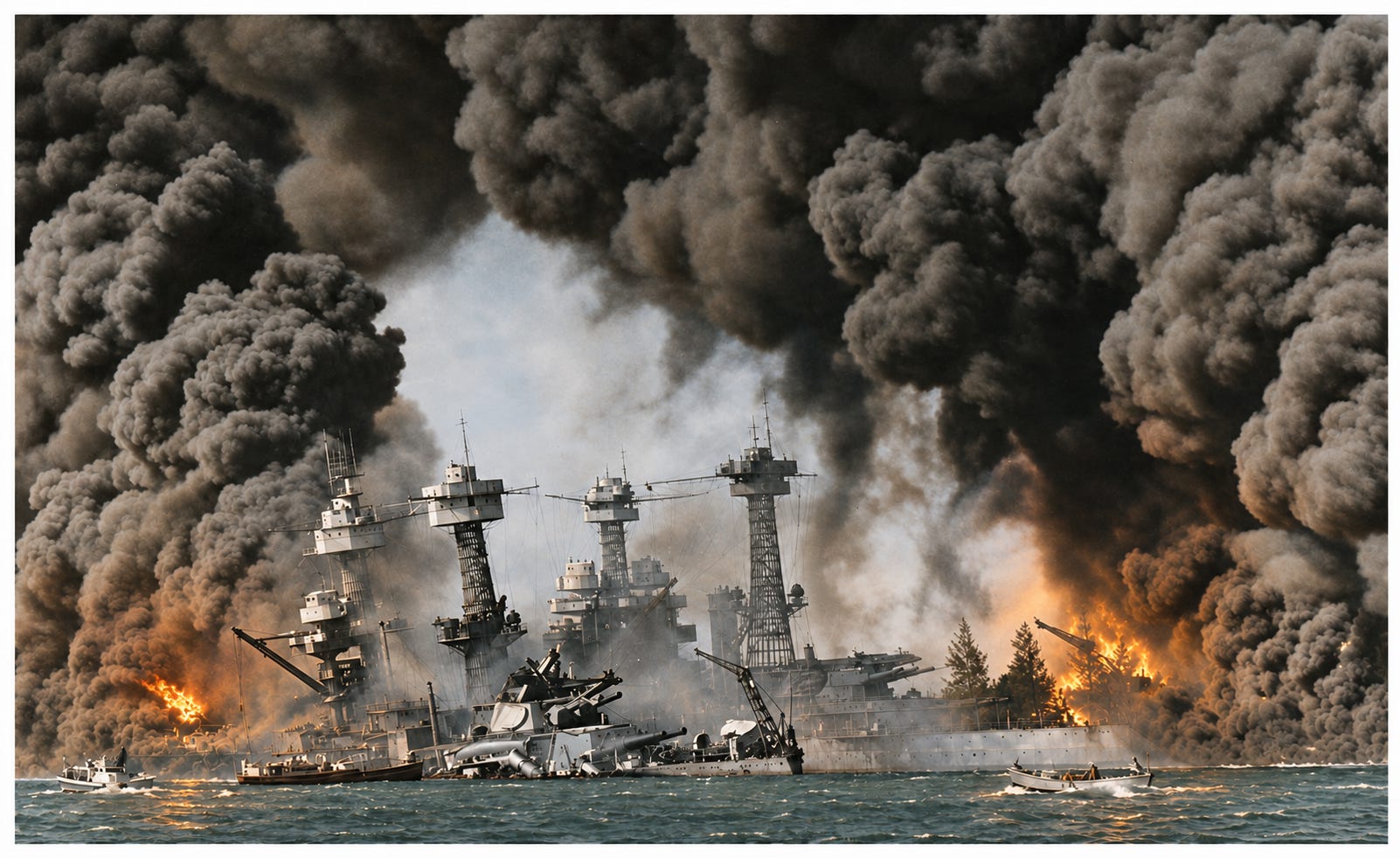

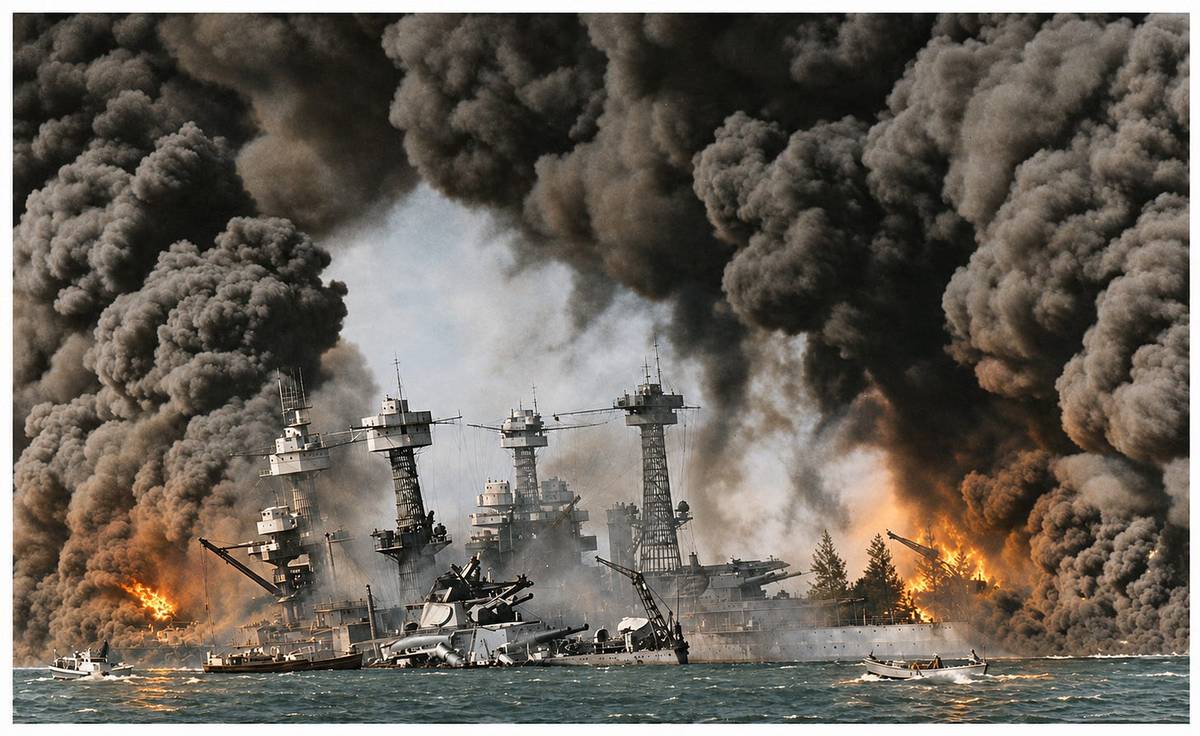
Imagine: America is fighting for survival. The year is 1941 and the Japanese have just obliterated Pearl Harbor, shattering American isolationism in “a date which will live in infamy.” Hitler declares total war on the United States and for all we know, he just might win.
A naive critic might declare, “I have no problem with America, I just oppose FDR’s policy of fighting Hitler.” That is, of course, senseless. Fighting World War II was no mere “FDR policy”: it was the American consensus. In our age of polarization, it’s hard to imagine any kind of consensus at all, but one exists in Israel, and for the very same reason it existed in America, 1941: survival.
The vast majority of Israelis agree on the importance of decisively defeating Hamas, Hezbollah, and Iran, all of whom fully and openly intend to annihilate the Jewish state. Israelis also agree that creating a Palestinian state in the wake of October 7th is an absolute non-starter, and a dangerous one at that. These aren’t merely “Netanyahu’s policies”: this is the Israeli consensus.
Accordingly, every major candidate for Prime Minister holds the same positions on these issues, and none of these policies will change under any new Israeli government: a reality that has been lost on many foreign leaders.
So what are the issues?
- Israel’s ultra-orthodox communities receive blanket exemptions from Israel’s otherwise universal military service, a situation that has become untenable, but cannot change as long as the ultra-orthodox political parties hold sway.
- Judicial reform, cost of living and a variety of daily life issues are at play as well.
- But mostly, the Israeli left holds a passionate and entirely personal hatred for Benjamin Netanyahu — despite being relatively close on most policy questions.
So who “won”?
Election night is not the end of Israel’s process: it’s the beginning. What comes next is like the NBA draft: lots of moving parts, deals, strategies…and sometimes surprises.

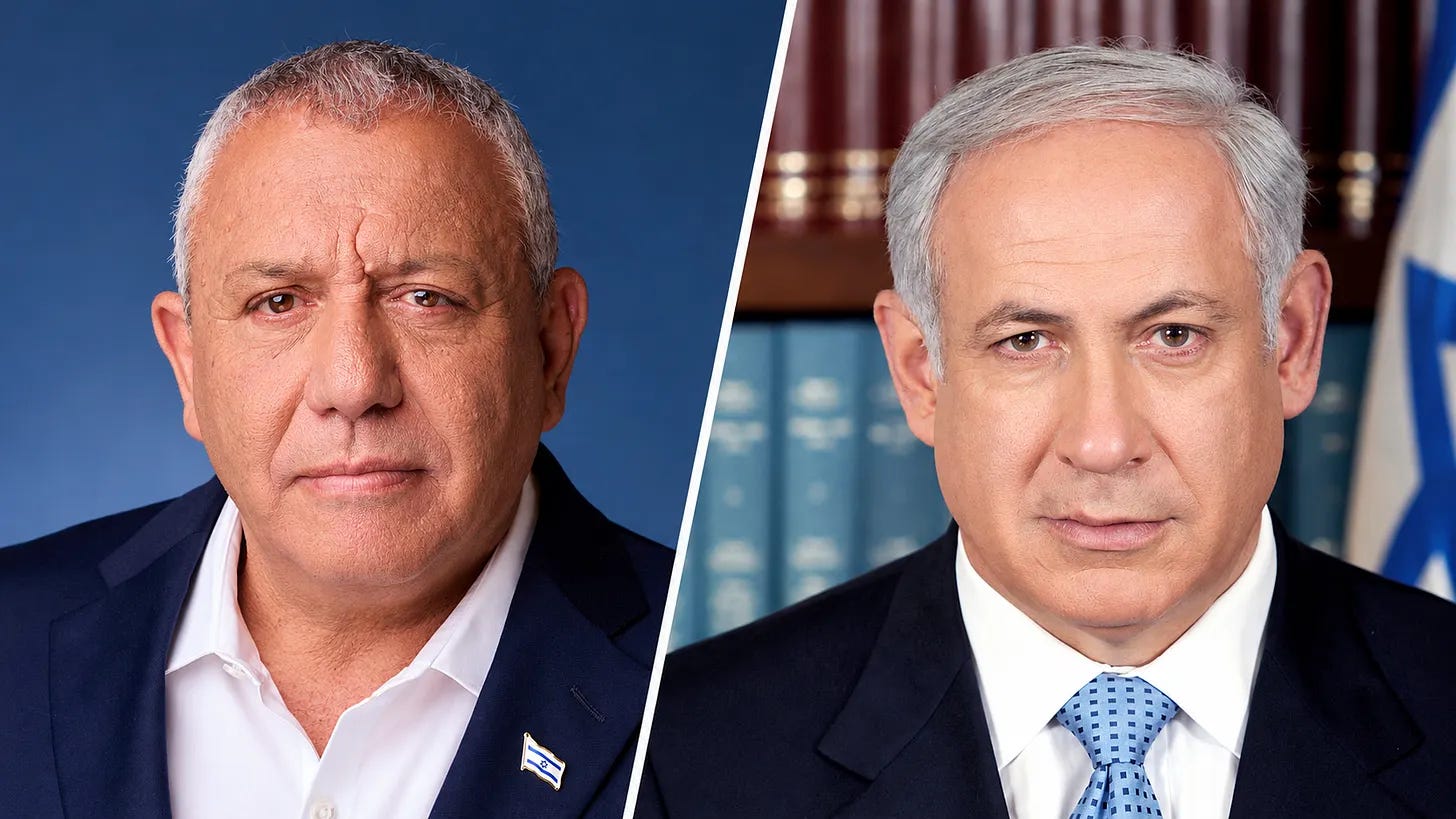
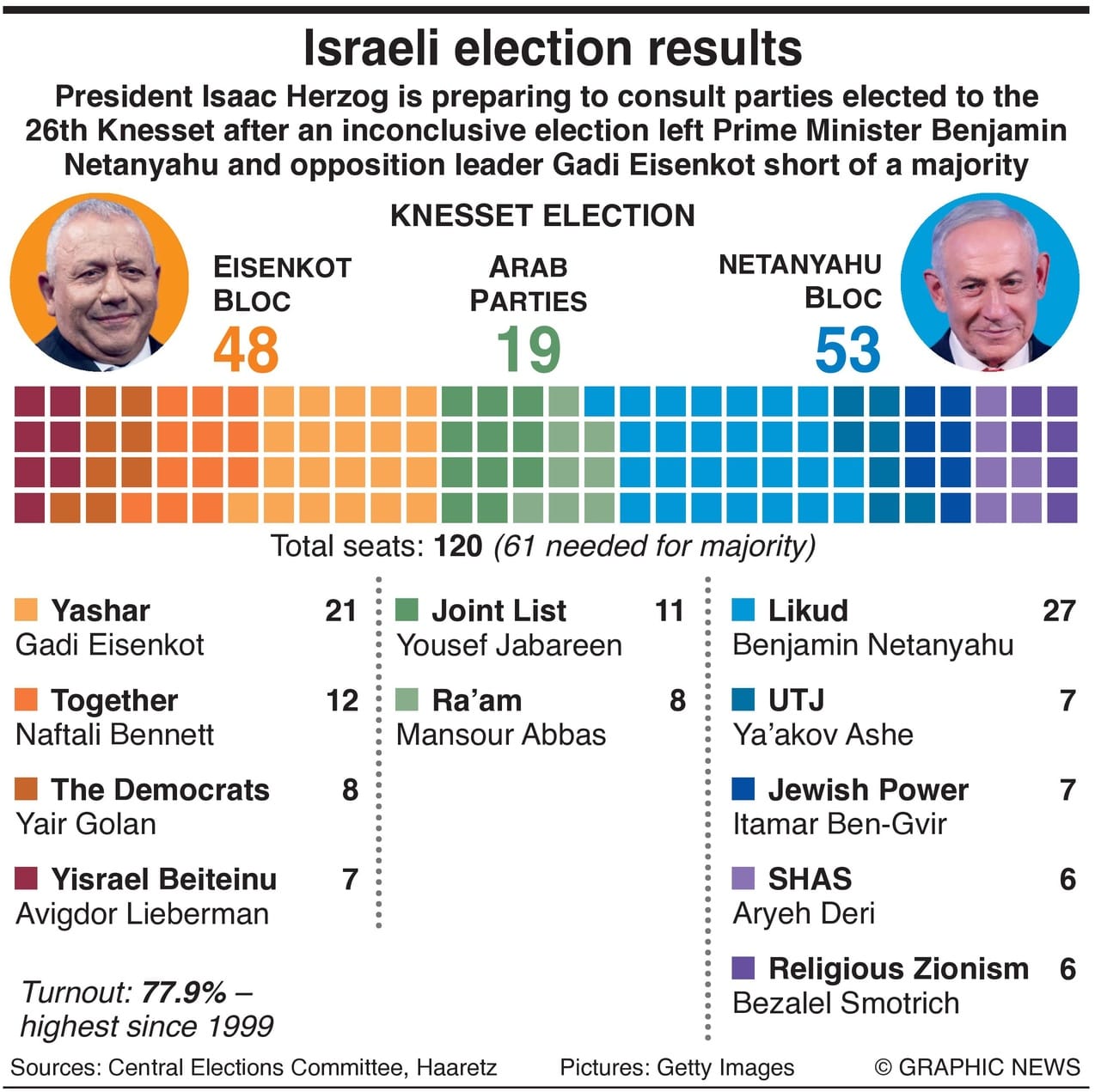
Israelis don’t count votes by percent but instead by how many Knesset (parliament) seats the votes represent. This election gave 27 seats to Prime Minister Benjamin Netanyahu’s Likud party: well ahead of the 21 seats won by the next largest challenger: Yashar!, a new party led by former IDF general Gadi Eisenkot.
In order to form a government, the leading party must join with others to build a “coalition” that commands a majority of Israel’s 120-seat Knesset — in other words: 61. The magic number. The bloc of parties that makes up the outgoing government now stands at 53 seats, with opposition parties holding a combined 48, and Israeli Arab parties at 19.
Now the horse trading begins.
The Israeli President (Isaac Herzog) holds a mostly ceremonial post, but one of his concrete duties is to determine who will receive the mandate to form a new governing coalition. This mandate typically goes to the party that wins the most votes, but it does not have to — the President must decide who has the best chance of successfully forming a coalition, and so far, no one is close to 61.

Eisenkot faces a catch-22: in order to get 61 seats, he must include both of the major Arab parties, but if he does so, he’ll lose his mainstream partners. The reasons do not stem from racism — some of those partners formed a coalition with the very same Arab parties in 2020. But that was before October 7. The Arab parties unanimously refuse to classify Hamas as a terror organization, and some even have indirect ties to the terror group — a reality that Jewish Israelis will no longer ignore.
If included in a coalition, the Arab parties would effectively hold veto power over any Israeli decision, including self-defense. Life-saving military activities against Hamas, Hezbollah and Iran would be jeopardized, and even worse, Israel’s enemies would know it.
So what happens next?
One of three things must happen:
- The left decides its hatred of Netanyahu is more important than concerns about national security, and forms a coalition with the Arab parties.
- The left decides to put governing ahead of personal animus, and forms a centrist coalition together with Netanyahu: a “unity government.” This appears to be President Herzog’s preferred direction.
- Nobody budges, and Israel goes to new elections. In that case, for a number of reasons, Netanyahu’s bloc would likely come out stronger.
There are also some edge possibilities: a minor opposition party could defect on its own and join Netanyahu in a right-wing government. There is a kind of left-wing fantasy that Netanyahu will step down as leader of his own party in order to make Likud more palatable to the opposition. There is even a chance that Netanyahu could try to court the Arab parties himself. All are theoretically possible, but none are likely.
The impact of the American midterms
Some opposition candidates claim the American midterms have eviscerated Netanyahu’s relevance as a leader and any possibility of a unity government; however, Israel’s coalition dynamics have not actually changed since the U.S. elections.
U.S. Vice President J.D. Vance announced that Republicans had lost the midterms because of the Iran war, though in truth there were other factors as well. However, it is urgent that Americans understand the real reason for fighting Iran — and it is not about Israel:
U.S. President Donald Trump understands that the threat posed by Iran is actually real — that the possibility of an American city going up in nuclear flames is real. Israelis understand this, as do the Gulf states, most of the Levant, the Kurds, the Azerbaijanis, much of North Africa, and the Iranian people most of all.

Americans have a tendency to believe they are immune from the world — until they get hit hard. This happened at Pearl Harbor, and again 60 years later on September 11. It could happen again today. As they say, “history repeats — or at least it rhymes.”
Israel has a government — and an army
Israelis use terms like “not having a government” to describe these transition periods. Yet Israel's enemies should take note: that is merely a figure of speech. Coalition negotiations are “democracy in action,” not instability. Israel’s government continues to function, the IDF has not missed a beat, and the Prime Minister is still empowered to carry out most critical tasks, including those related to national security.
For all the antagonism and polarization, many Israelis feel a sense of pride at having completed a free, fair and safe election, alongside a genuine conversation over the nation’s future.
Just as in the United States, Israel's transition is the very essence of stable and genuine democracy.
Daniel Pomerantz is the CEO of RealityCheck, a non-profit charitable organization dedicated to restoring public trust in information. An expert on the Middle East and international law, Daniel also serves as an adjunct professor at Israel’s Reichman University (the “IDC” in Herzliya). Daniel and RealityCheck can be found at www.realitycheckresearch.org or at contact@realitycheckresearch.org.
Loved it, hated it, or somewhere in between — tell us. Grade this article here and help shape what lands in your inbox next.
🗳️ Election 2026 Post-Mortem
What the voters said, and what comes next.
🟦 Why Midterm Losses Won’t Stop Trump – Victor Davis Hanson, The Daily Signal
🟦 America Faces A Radical New Political Reality – Victor Davis Hanson, The Daily Signal
🟦 Did Stock Market Surge Mean Investors Love Dems And Socialism? No, But They Love Gridlock – Editorial Board, Issues & Insights
🟦 Midterm Massacre: GOP Dealt The Historic Beatdown It Richly Deserved – Dale Steinreich, Mises Wire
🟦 ‘LAWYER UP’: Democrats Preview Their Real Post-Midterm Agenda – Jarrett Stepman, The Daily Signal
🟦 Referendum Or Turnout Problem? GOP Insiders Split Over Who’s To Blame For Midterm Losses – Reagan Reese, The Daily Signal
🟦 Socialists Gain Ground In Congress, Setting Up Fight Over Democrat Agenda – Virginia Grace McKinnon, The Daily Signal
🟦 The Socialists Won More Than Just Elections On Tuesday – Michael Freund, The Daily Signal
🟦 Winners And Losers From The 2026 Midterms – Tyler O’Neil, The Daily Signal
🟦 The Left’s DEI Revolution Isn’t Dead. It Was Waiting For Its Comeback – Jarrett Stepman, The Daily Signal
🟦 Gender Madness And The Midterms – Jennifer Galardi, The Daily Signal
🟦 What The Midterm Election Results Mean For 2028 – Victor Davis Hanson, The Daily Signal
🟦 Republican Election Losses Trigger Early Battle To Succeed Trump – TIPP News
🟦 Republican Senate Loss Sparks Fresh Debate Over Supreme Court Vacancies – TIPP News
🟦 Trump’s Presidential Library Faces Scrutiny From Incoming Democratic Congress – TIPP News
🟦 Hatred is a hell of a motivator – Sean Hannity, Fox News
🟦 Big Tech’s Record Election Spending Fails To Deliver Republican Victories – TIPP News
🟦 Corruption Emerges As Major Voter Concern In Democratic Election Victory – TIPP News
🟦 Watch: The American People Are Crying Out For Change, Say Winning Democrats On Blue Wave Victory – TIPP Video
🟦 Democratic Control Of Congress Could Complicate Trump’s Foreign Policy Agenda – TIPP News
🟦 What Did Trump Say About Continuing The Iran War Despite GOP Defeats – TIPP News
🟦 Why Could AI Companies Face Congressional Investigations Under A Democratic House – TIPP News
🟦 How Could Democratic Wins In Texas Slow US Data Center Expansion – TIPP News
🟦 AI Fears Emerge As Winning Issue For Democrats – Dylan Kresak, Daily Caller News Foundation
🧭 Power & Capital · November 6, 2026
Where state power meets the boardroom.
🔷 Google, Meta And TikTok Sue California Over Youth Social Media Law – Power & Capital Desk, TIPP Insights
🔷 Democrats Review Plan To Investigate Hundreds Of Companies – Power & Capital Desk, TIPP Insights
🌍 Global Affairs
The world's flashpoints, in motion.
🟥 Paraguay President Santiago Peña Resigns Amid Banking Crisis – TIPP News
🟥 Western News Media Propagandists Describe US Bombing Iran As ‘Defensive’ – Caitlin Johnstone, Ron Paul Institute for Peace and Prosperity
🟥 The Crisis In Poland – Craig Murray, Ron Paul Institute for Peace and Prosperity
🟥 The Ground On Which Europe Stands Is Shaking – Alastair Crooke, Ron Paul Institute for Peace and Prosperity
🏛️ National Affairs
The fights shaping America right now.
🟫 California Governor Moves To Commute All 548 Death Sentences – TIPP News
🟫 Sergio Gor Reportedly Emerges As Potential Successor To Marco Rubio – TIPP News
🟫 White House Finalizes Policy To Lower Health Care Costs – Elizabeth Troutman Mitchell, The Daily Signal
🟫 No, Mayor Mamdani, Voting On Everything Doesn’t Promote Dignity – Vincent Cook, Mises Wire
📊 Market Mood · November 6, 2026
How the trading day is setting up.
🟥 Wall Street is reeling from a technology-led selloff. The Nasdaq plunged 5.5% Thursday, wiping out roughly $2.5 trillion in market value as investors questioned AI spending, valuations and regulatory risks.
🟧 The AI selloff is spreading across global markets. Semiconductor stocks are falling sharply in Asia, with Japan, South Korea and Taiwan under pressure as investors reassess the outlook for technology investment.
🟦 Political uncertainty is adding to market volatility. Democratic gains in the midterm elections have raised questions about future oversight of AI infrastructure and data centers, compounding concerns about heavy borrowing.
🗓️ Key Economic Events
On today's U.S. data calendar.
🟧 8:30 a.m. ET — Nonfarm Payrolls (October)
Forecast: +65K | Previous: +29K
Hiring is expected to improve modestly after September's weak report, providing a crucial indication of labor-market strength.
🟧 8:30 a.m. ET — Unemployment Rate (October)
Forecast: 4.2% | Previous: 4.2%
The unemployment rate is expected to remain unchanged, with particular attention on whether slower hiring is beginning to translate into job losses.