
Recent college graduates are struggling to find work. For two years, the explanation was simple and nearly unanimous: artificial intelligence was taking the entry-level jobs. A new study from the Federal Reserve Bank of New York says we blamed the wrong thing.
The unemployment rate for recent college graduates rose from 3.6 percent in March 2019 to 5.6 percent in March 2026. During the same period, the rate for older, more experienced graduates barely moved, and even slipped a little. Almost all of the damage has fallen on people just starting out.
So what changed for the young and not for the experienced? The Fed’s economists point to remote work. By their estimate, it explains about 64 percent of the recent rise in unemployment among young graduates. They are upfront that the figure is rough, but the logic is simple. On-the-job training is harder to do remotely, so hiring companies preferred experienced hands over newcomers they would have to train from afar.
In early 2019, about 7 percent of paid workdays in America were done from home. By the spring of 2020, that share had jumped to roughly 61 percent. It fell as offices reopened, but it never came back to where it started, settling near 29 percent by early 2025. The fourfold increase was concentrated in the white-collar, college-educated jobs where fresh graduates are now stuck. Workers with degrees are more than twice as likely as others to work from home.
Youth unemployment started rising before generative AI spread through workplaces. Even after the researchers accounted for how exposed each job was to AI, the gap between younger and older workers did not move. The technology everyone scapegoated arrived after remote work had already pushed young workers out.
A separate working paper from the London School of Economics, looking at new hires in the United States, Britain, Canada and Australia, reached the same conclusion: remote work, far more than AI, is reshaping who gets hired for entry-level jobs.
The same economists don’t rule out AI making things harder for fresh graduates down the line.
The trend has far more downsides than upsides. A generation that goes untrained now becomes tomorrow’s shortage: when today’s experienced workers retire, too few seasoned people will be ready to take their place.
The cost is personal, too. A graduate who cannot land a first job does not simply wait a year and catch up; they fall behind on pay and promotions, and that gap can follow them for decades. The American Dream slips further out of reach: marriage, a home of their own, and children all get put off.
We spent two years blaming the machines. The damage was done by a choice employers made for themselves.
👉 Show & Tell 🔥 The Signals
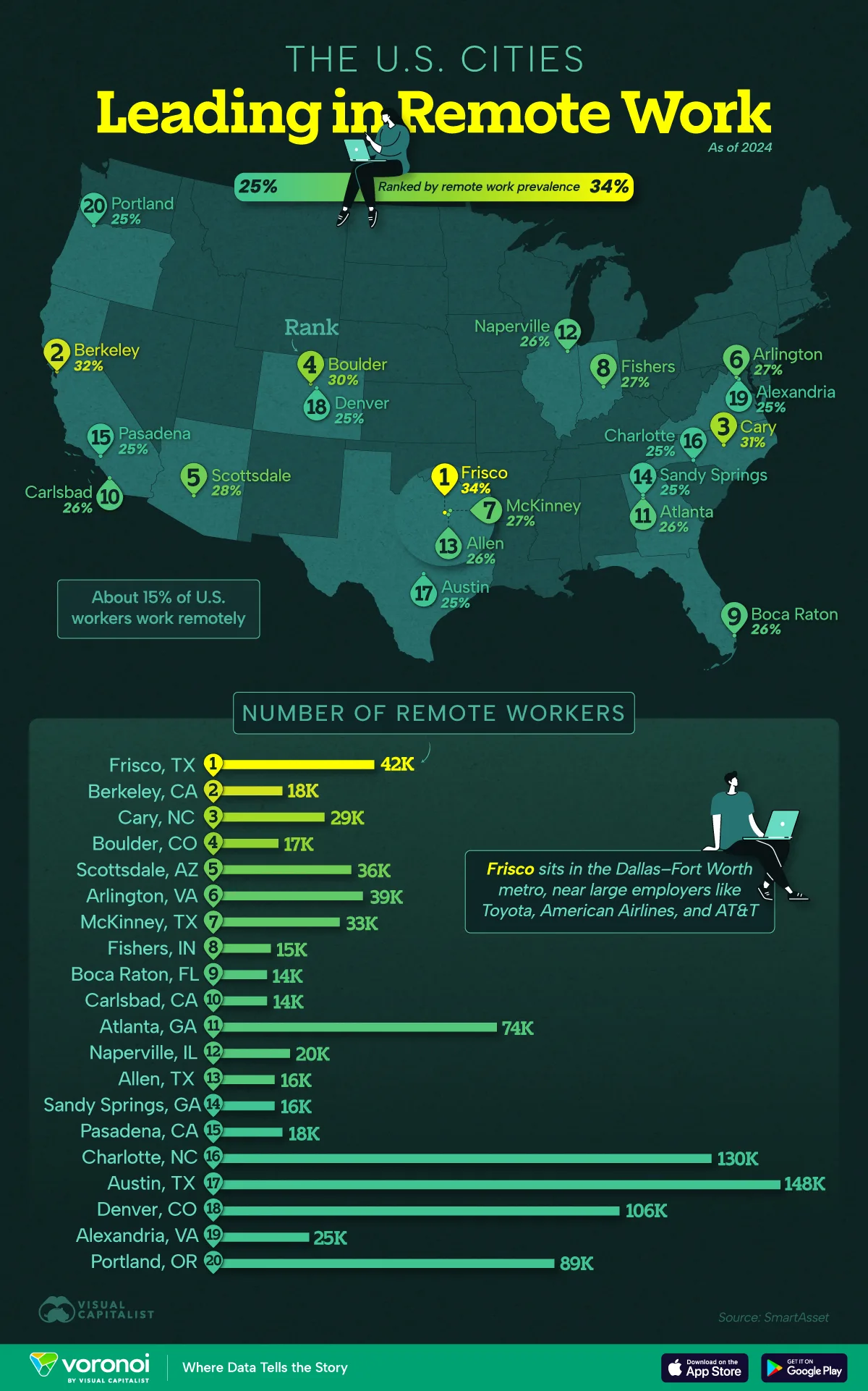
I. Remote Work’s New Winners Are Far From Silicon Valley
Frisco, Texas, leads the nation in remote-work prevalence, with one-third of workers operating from home. The rise of remote work has created new economic winners across the Sun Belt and suburban America while reshaping the entry-level job market for young graduates.
II. If AI Is The Wrong Suspect, These Jobs Are Still Under Investigation
Microsoft research ranks translators, writers, customer service representatives, journalists, and technical writers among the occupations most exposed to AI-driven disruption. While remote work may explain much of today's graduate hiring slowdown, AI's impact on knowledge work is only beginning.
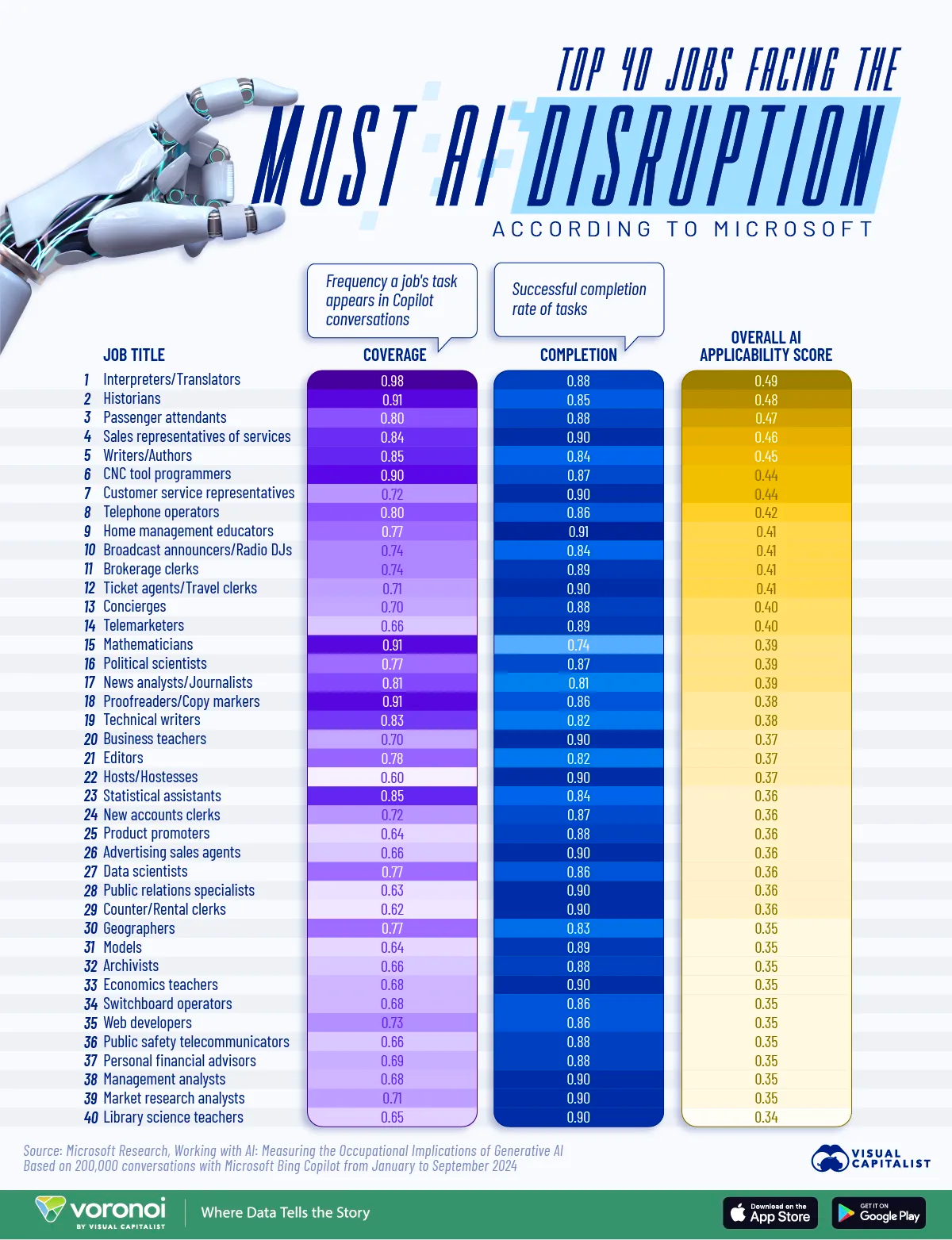
Source: Microsoft Research / Visual Capitalist
📊 Market Mood — Tuesday, June 2, 2026
🟩 Markets were steady as investors weighed conflicting signals from U.S.-Iran negotiations while hoping diplomacy can prevent a renewed escalation in the Middle East.
🟧 Oil prices eased but remained elevated, reflecting ongoing concerns that disruptions in the Strait of Hormuz could continue fueling inflation and slowing global growth.
🟦 The AI investment boom showed no signs of slowing, with Hewlett Packard Enterprise reporting record results and sharply raising its outlook on surging demand for AI infrastructure.
🟨 Big Tech's AI spending race intensified after Alphabet unveiled plans to raise $80 billion in fresh capital, underscoring the enormous investment required to compete in the next phase of artificial intelligence.
🗓️ Key Economic Events — Tuesday, June 2, 2026
🟧 10:00 a.m. ET — JOLTS Job Openings (April)
Forecast: 6.860 million vs. 6.866 million previous. Investors will watch for signs of cooling labor demand as the Fed assesses whether the job market is easing enough to reduce inflation pressures without tipping the economy into a slowdown.
Letters to the editor email: editor-tippinsights@technometrica.com
Subscribe Today And Make A Difference. Consider supporting Independent Journalism by upgrading to a paid subscription or making a donation. Your support helps tippinsights thrive as a reader-supported publication. Contact us to discuss your research or polling needs.
Reach our audience. For sponsorship and advertising opportunities, visit our Partner With Us page.