
Judge Anne M. Nardacci of the United States District Court for the Northern District of New York issued a rash and irresponsible decision by dismissing a lawsuit filed by the Trump administration over New York State's Green Light law.
The law permits New Yorkers to obtain a standard driver's license (not Real-ID compliant) regardless of citizenship or legal status, while severely restricting the sharing of DMV information with federal immigration authorities.
The Civil Division of the U.S. Department of Justice in Washington, D.C., brought the action as plaintiff against multiple New York State defendants: the State of New York itself, Governor Kathleen Hochul, Attorney General Letitia A. James, and Mark J.F. Schroeder, Commissioner of the New York State Department of Motor Vehicles. All individual defendants were sued exclusively in their official capacities.
In a significant preliminary ruling, Judge Nardacci dismissed all claims against Governor Hochul and Attorney General James on standing grounds, finding that the United States failed to demonstrate these officials had any role in enforcing or administering the challenged provisions of the Green Light Law.
The court determined that only Commissioner Schroeder, who oversees the Department of Motor Vehicles, possessed the requisite enforcement authority to satisfy the traceability requirement for Article III standing. The remaining claims against the State of New York and Commissioner Schroeder proceeded to the merits, where Judge Nardacci ultimately dismissed the entire complaint, finding that the federal government had failed to establish that New York's Green Light Law violated the Constitution's Supremacy Clause.
For the State of New York and Attorney General James, this could be a short-lived victory. We believe the decision cannot survive an appeal.
At the heart of the dispute lies the interpretation of 8 U.S.C. § 1373, which prohibits states from restricting the flow of information "regarding the citizenship or immigration status" of individuals to federal immigration authorities. Judge Nardacci adopted an exceedingly narrow reading, limiting this language to only direct statements of immigration classification—whether someone is a citizen, lawful permanent resident, visa holder, or asylum seeker.
When Congress chose the expansive term "regarding" rather than more restrictive language like "stating" or "identifying," it signaled a broader scope. A person's photograph, residential address, country of birth, place of employment, and foreign identity documents all bear directly on determining and enforcing immigration status.
Consider the practical reality: How does one locate an individual subject to a deportation order without knowing their address? How does one verify identity claims without photographs? How does one investigate visa fraud without employment information?
According to Judge Nardacci's logic, Congress created a mandate for information that is so limited as to be useless for actual enforcement purposes. She repeatedly emphasized that federal immigration law doesn't mandate state cooperation; New York may decline to assist. This reasoning, while superficially appealing, fundamentally misconstrues the constitutional issue at stake.
There exists a profound difference between passive non-cooperation and active obstruction. A state that declines to deploy its own resources toward federal immigration enforcement occupies constitutionally defensible ground.
However, New York's Green Light Law ventures far beyond mere neutrality. It doesn't simply allow state officials to remain silent; it prohibits them from sharing information. Worse, it actively warns targeted individuals that federal agents are seeking their records, effectively giving them a 3-day head start to evade enforcement.
Judge Nardacci dismissed this provision with minimal analysis, finding it doesn't constitute "harboring" under federal law and doesn't directly regulate federal operations. She ignored the distinction in real life: the distinction between choosing not to help someone find a suspect and actively alerting the suspect to approaching law enforcement while hiding them in your basement.
When Immigration and Customs Enforcement identifies an individual potentially subject to removal and seeks DMV records to locate that person, New York State law now requires the DMV to notify the target of federal interest immediately. The law transforms New York from a neutral bystander into an active participant undermining federal enforcement—a role states should not be permitted to play under our constitution.
The Certification Provision in the law threatens criminal prosecution for anyone who accesses DMV records and shares them with immigration enforcement agencies. The court concluded this doesn't regulate federal officials because it's formally directed at "any person or entity" accessing DMV records. Aren’t federal agents persons?
If they obtain DMV information through channels other than judicial warrants—perhaps from a cooperative state employee or their own database access—they may face state criminal liability. The fact that the statute doesn't explicitly say "federal agents may not" doesn't change its practical operation. This kind of formalistic analysis allows states to evade intergovernmental immunity principles through careful statutory drafting while achieving the same prohibited result.
Perhaps most troublingly, by Judge Nardacci's logic, states could systematically conceal vast categories of information relevant to any federal enforcement priority—tax evasion, securities fraud, terrorism—as long as they frame it as a refusal to cooperate rather than as active obstruction.
The Constitution's Supremacy Clause cannot tolerate such gamesmanship. Immigration enforcement is an exclusively federal function. New York's seemingly neutral language has one and only one target: federal immigration authorities.
A law prohibiting cooperation with "agencies that primarily regulate interstate commerce" would similarly discriminate against federal authorities despite neutral wording, since states don't regulate interstate commerce. Constitutional doctrine shouldn't reward such transparent evasions of straightforward language.
Should this case likely proceed to the Second Circuit and potentially beyond, appellate judges would do well to look past the formalistic distinctions that satisfied Judge Nardacci and examine the practical reality: New York has constructed an elaborate system to actively obstruct federal immigration enforcement, hide relevant information, warn enforcement targets, and threaten those who would cooperate with criminal prosecution.
The New York law cannot and should not survive constitutional scrutiny. It should be struck down immediately.
👉 Quick Reads
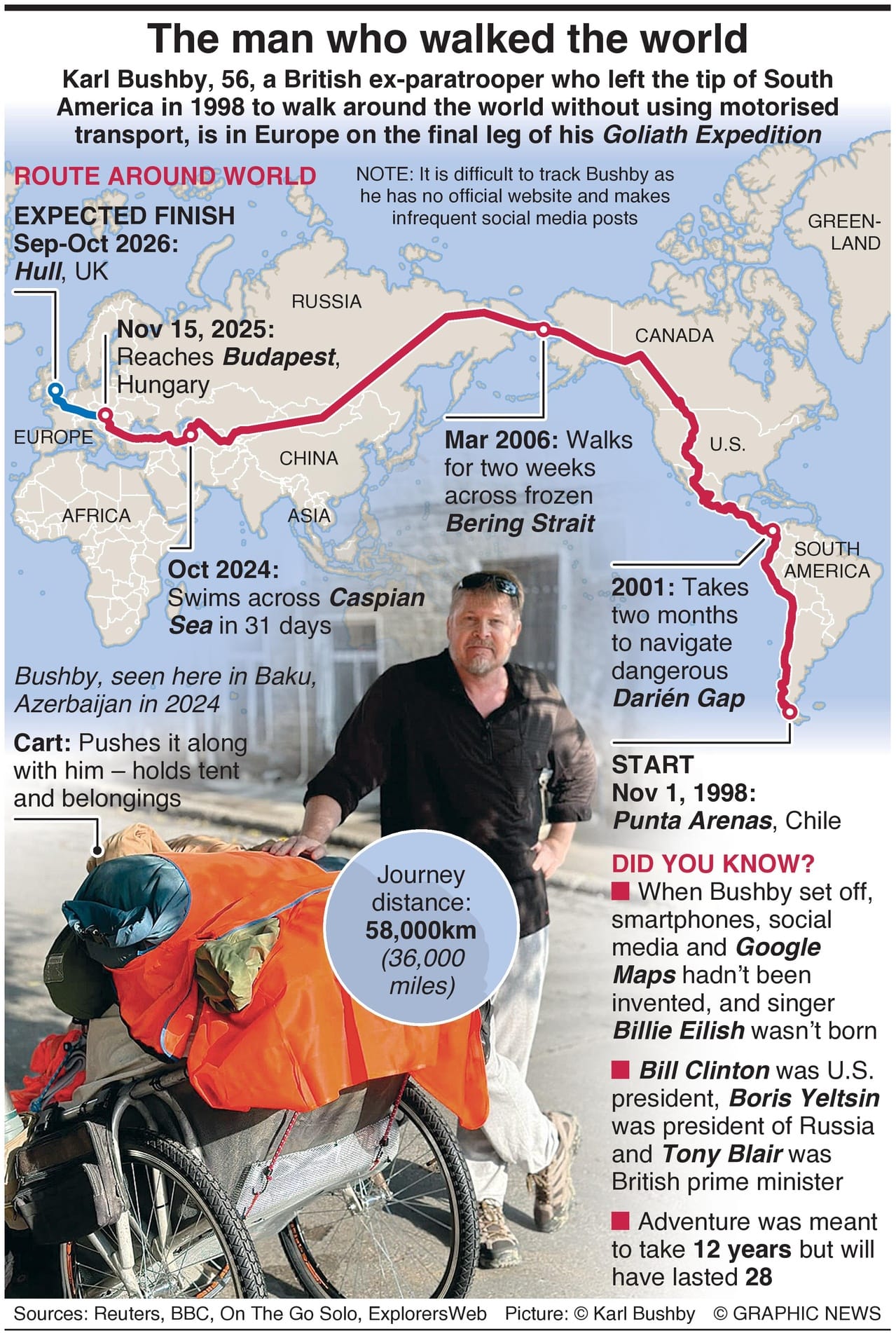
I. Adventurer Close To Finishing 28-Year Global Trek
Karl Bushby, 56, a British ex-paratrooper who left the tip of South America in 1998 to walk around the world without using motorised transport, is in Europe on the final leg of his “Goliath Expedition”.
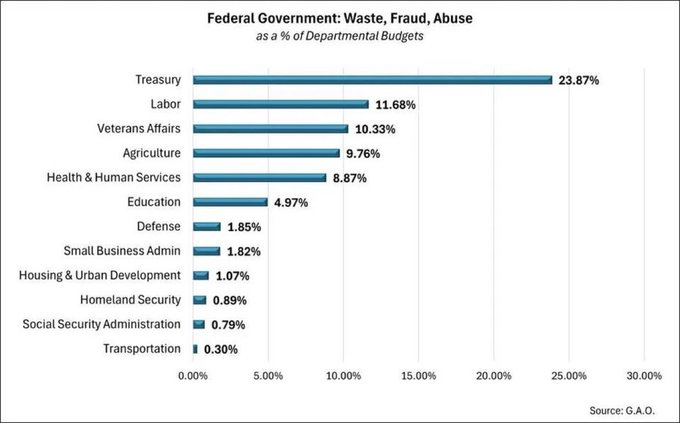
II. Where Washington Wastes The Most Money
The Treasury is estimated to lose nearly a quarter of its budget to fraud or waste, far more than any other federal department.
The TIPP Stack
Handpicked articles from TIPP Insights & beyond
1. Europe’s Panic Economy: Frozen Assets, Empty Arsenals, And The Quiet Admission Of Defeat—Gerry Nolan, Ron Paul Institute for Peace and Prosperity
2. The Left Framed Trump On ‘Affordability’ Crisis. Here’s What Trump Must Do Now.—Victor Davis Hanson, The Daily Signal
3. CCP Conducts Mass Arrests Of Christians Days Before Christmas—S.A. McCarthy, The Daily Signal
4. 5 Trump Moves From 2025 You Didn’t Hear About From Legacy Media—Elizabeth Troutman Mitchell, The Daily Signal
5. Trump Is Restoring Confidence to Military, Credible Threat To US Adversaries—Jarrett Stepman, The Daily Signal
6. FDA Chief Shares Attainable Holiday Health Advice—Elizabeth Troutman Mitchell, The Daily Signal
7. Supreme Court Won’t Let Trump Deploy National Guard In Illinois—Katelynn Richardson, Daily Caller News Foundation
8. Stephen Miller Bashes Birthright Citizenship As ‘Illegal’—Virginia Allen, The Daily Signal
9. Trump Bars Global Censorship Agents From Entering US—Elizabeth Troutman Mitchell, The Daily Signal
10. Federal Judge ‘Fully And Permanently Dismantled Gender Secrecy Policies’ In California—Tyler O'Neil, The Daily Signal
11. DEEP STATE CLEARS OUT: DOJ Staff Resignations Prove Harmeet Dhillon’s Real Worth—Tyler O'Neil, The Daily Signal
12. If Change Is Inevitable In Venezuela, Will Cuba And Nicaragua Soon Follow?—Teo Babun, The Daily Signal
13. 5 Chaotic Gubernatorial Races To Watch In The New Year—Anthony Iafrate, Daily Caller News Foundation
14. A Christmas Gift To The World? Wars And Conflicts Trump Says He Ended In 2025—Virginia Allen, The Daily Signal
15. Former GOP Sen. Ben Sasse Reveals He Has Stage 4 Pancreatic Cancer, Says He Is ‘Gonna Die’—Adam Pack, Daily Caller News Foundation
From TIPP Insights News Editor
16. Russia Warns Peace Talks At Risk After Alleged Attack Near Putin Residence
17. Trump Ramps Up Foreign Policy Gamble As Ukraine And Gaza Talks Intensify
18. Russia Claims Drone Attack Near Putin Residence As Ukraine Denies
19. Trump Says Ukraine Peace Talks Advance But Territory Dispute Lingers
20. Why Russia Says It Will Support China In A Taiwan Conflict
21. China Unveils New Electric Mobile Launcher With Stealth Missile Potential
22. China Launches Major War Games Around Taiwan After US Arms Deal
23. Trump Administration Slashes UN Aid From $17 Billion To $2 Billion
24. Taiwan Moves To Upgrade Air Defense As China Pressure Grows
25. GM Stock Surges Past Rivals In 2025 As Profits And Buybacks Impress
26. Trump Says US Hit Major Facility In Escalating Venezuela Campaign
27. Trump And Netanyahu Hold High-Stakes Gaza Talks At Mar-a-Lago
📊 Market Mood — Tuesday, December 30, 2025
🟩 Futures Flat in Thin Holiday Trade
U.S. futures are little changed as light liquidity and year-end absences mute market conviction.
🟧 Tech Profit-Taking Drags Stocks
Major indexes slipped again Monday as investors trimmed high-flying tech after December’s strong run.
🟦 Fed Minutes in Focus
Attention turns to today’s Fed minutes for clues on how policymakers see inflation, jobs, and the path to possible easing in 2026.
🟪 Santa Rally in Question
Seasonal optimism is fading as late-December softness casts doubt on whether the traditional year-end rally will fully materialize.
🟫 New Year Shutdown Looms
U.S. markets close later this week for the New Year holiday, keeping volumes light and moves tentative.
🗓️ Key Economic Events — Tuesday, December 30, 2025
🟩 9:45 AM ET — Chicago PMI (Dec)
A regional snapshot of manufacturing activity, offering an early signal on year-end business conditions.
🟧 2:00 PM ET — FOMC Meeting Minutes
Details from the Fed’s latest policy meeting. Markets will look for insight into how officials view inflation, the labor market, and the timing of potential rate cuts in 2026.
editor-tippinsights@technometrica.com