
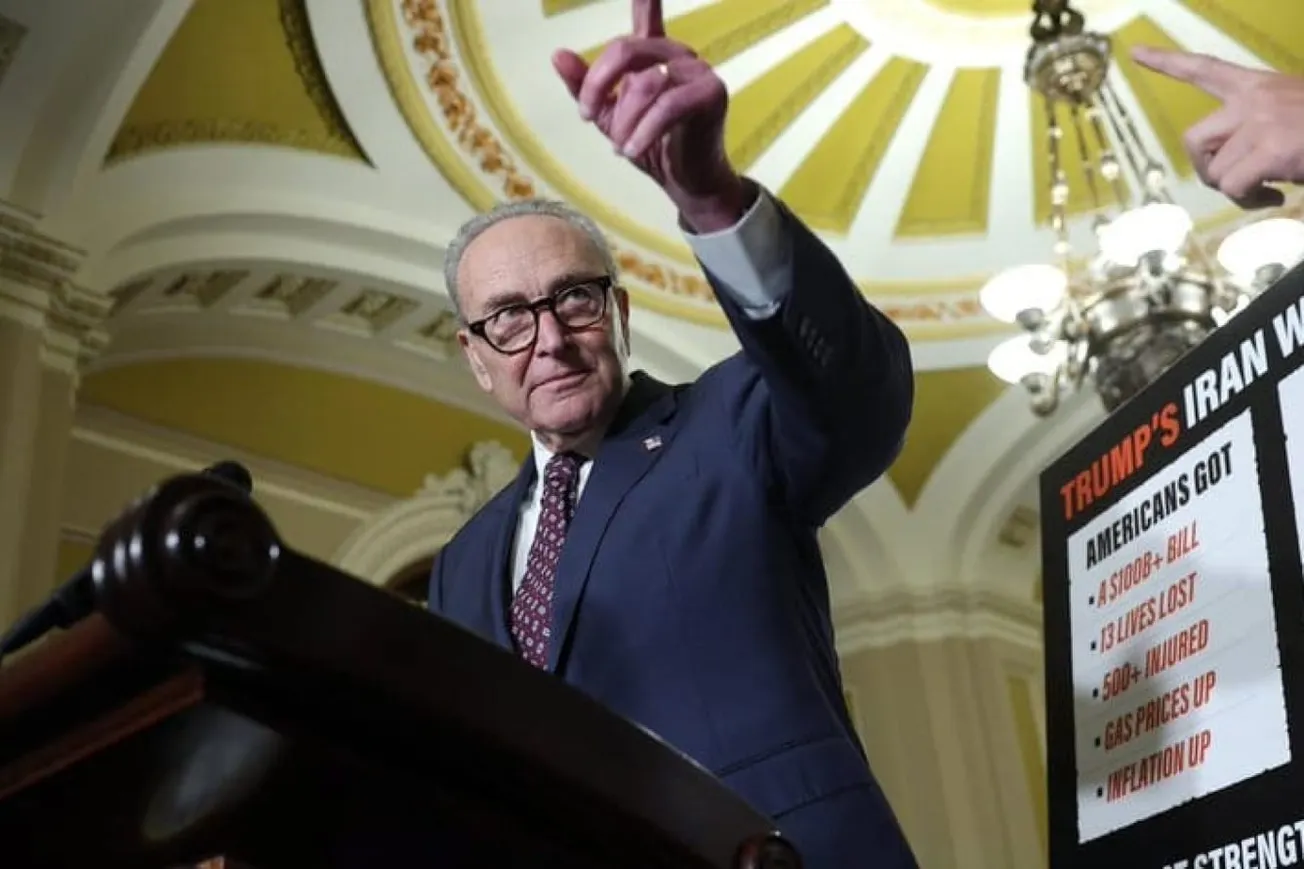
Senate Democrats blocked advancement of the annual National Defense Authorization Act, citing concerns over President Donald Trump's handling of the conflict with Iran.
According to the report, Senate Democratic Leader Chuck Schumer opposed moving the bipartisan defense measure forward, arguing that the ongoing war lacks a clear strategy or endgame.
According to the report, Senate Majority Leader John Thune changed his vote to preserve the option of bringing the legislation back for reconsideration.
The report added that Congress has repeatedly considered measures seeking to limit the administration's military authority in the conflict with Iran, while Defense Secretary Pete Hegseth is expected to continue discussions with House Republicans on separate defense funding proposals.
Related Tweet:
Senate Democrats blocked a must-pass annual defense policy bill from moving forward on Tuesday as they voiced opposition to the Trump administration's handling of the war with Iran. https://t.co/kRVjwg79V8
— CBS News (@CBSNews) July 14, 2026
Also Read:
 TIPP Staff