

By Hiroshi Mikitani, Project Syndicate
Japan has so far taken an “innovation-first” approach to AI governance, avoiding stringent rules or penalties that could stifle adoption or experimentation. Firms must make the most of this supportive environment to build the tools that can help offset the economic effects of population aging.
TOKYO – Pessimism about AI abounds, with many fearing widespread job losses, soaring inequality, and even the creation of deadly machines. In Japan, however, one finds marked optimism. We believe AI will help our country to overcome acute labor shortages, improve people’s daily lives, and recover global tech leadership.
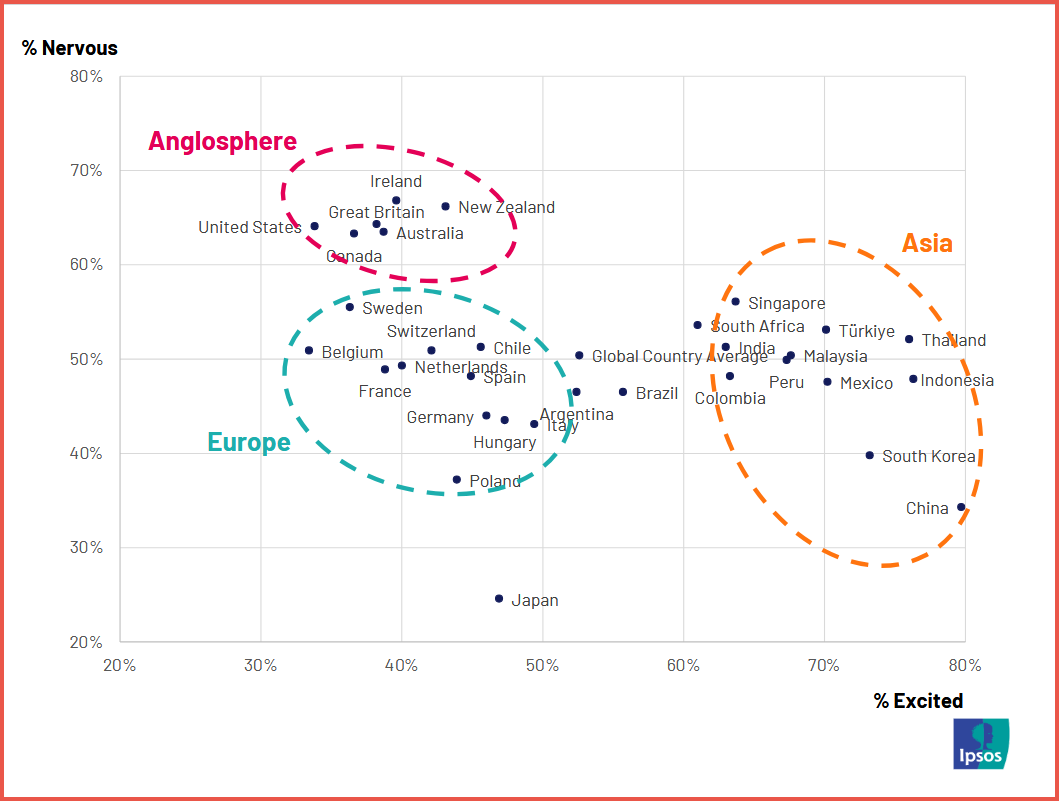
According to an Ipsos survey, a quarter of Japanese feel anxious about AI’s predicted impact on their lives – the lowest share of the 32 countries surveyed. Only about one in ten Japanese believe AI will make the future worse, a far cry from the more than one-third of Americans who are pessimistic about the technology.
This divergence reflects several factors, but one of the most important may be Japan’s long history of working with machines. It is easy for us to imagine AI-powered applications and devices that aid, not replace, humans. At a time when Japan’s labor pool is shrinking – 30% of Japanese are already aged 65 and older – AI labor savings will be key to boosting productivity and saving critical industries.
AI is reshaping everything. Are you keeping up?
Our AI collection goes beyond headlines to explain the forces actually driving the technology. Join TIPP Insights today for $99 per year.
It is with this future in mind that my company, Rakuten, has invested in developing both large language models and small language models optimized for the Japanese language and culture. We are using AI to transform critical services, such as mobile networks. Instead of the vendor-locked, hardware-centric networks of the past, Rakuten Mobile’s network makes flexible systems possible, enabling operators to mix and match components, while also minimizing energy consumption. Potential glitches are reported, reviewed, and fixed – all at a distance. Software upgrades are pushed out frequently. The network “learns” and makes fixes autonomously.
This innovation depends on an enabling regulatory environment. Fortunately, Japan has so far taken an “innovation-first” approach to AI governance. Japan’s AI Promotion Act, passed last year, imposes no stringent rules or penalties that could stifle AI adoption or experimentation, and creates space for close cooperation between the public and private sectors. As noted in a 2024 white paper, the goal is to make Japan the world’s “most AI-friendly country.”
This contrasts with the European Union’s focus on mitigating risks, reflected not only in its 2024 AI Act, but also in rules that limit access to data AI developers need. Other AI innovators lag behind Japan when it comes to establishing supportive environments. Some emphasize social stability and state-directed innovation, while others are bogged down by long legal battles between rights-holders and AI developers.
Japan’s AI-optimism translates into AI-friendly policies. Japanese courts interpret our copyright framework to allow the use of third-party copyrighted works for training AI models. This access to data attracts leading American frontier AI firms, such as OpenAI, to collaborative efforts with Japan-based companies like mine.
To be sure, Japan recognizes the importance of ensuring the safe development of AI. It was under Japan’s presidency that the G7 launched its Hiroshima AI Process, aimed at promoting “safe, secure, and trustworthy AI worldwide” and providing “guidance for organizations developing and using the most advanced AI systems.” But the resulting framework focuses not on stifling regulations or threats of fines. Instead, it aims to help companies design effective risk-management mechanisms and encourages transparent information-sharing and reporting.
If you care about China and AI, subscribe today — $99 per year.
We don’t just track the race. We explain what actually moves it, so you stay ahead of markets, policy, and technology.
Five recent reads to whet your appetite:
Energy Will Decide The AI Race—Vittorio Quaglione
Why China Can’t Win the AI-Led Industrial Revolution—Di Guo, Chenggang Xu
The Future of China’s “Electro-State”—Ludovic Subran
Let a Thousand AI Regimes Bloom—Angela Huyue Zhang
The AI Bubble’s Shaky Math—Carl Benedikt Frey
👉Subscribe now and stay on top of the forces shaping the next decade.
While Japan’s AI-friendly approach is already bearing fruit, there are pitfalls the country must avoid. For starters, Japan must encourage wider adoption of AI tools: as it stands, only half of Japanese firms are using generative AI, compared to more than 90% in the United States, China, and Germany.
Japan must also avoid getting so hung up on small-scale AI adoption that we lose sight of the bigger picture – namely, the critical importance of generating our own global AI leaders. We must strengthen our energy and cloud infrastructure, investing in electricity production (preferably from clean sources) and accelerating data center permitting. We should avoid being swept up by counterproductive notions of “digital sovereignty,” instead encouraging Japanese innovators to collaborate with frontier firms from the US and elsewhere.
With our highly skilled population, supportive regulatory environment, and openness to AI, Japan is well equipped to emerge as a global AI leader. Now the government and business community must translate these strengths into concrete results.
Mickey Mikitani is Founder, Chairman, and CEO of Rakuten Group.
Copyright Project Syndicate
👉 Quick Reads
I. The West Fears AI. Asia Embraces It.
Across 32 countries, people in the United States, United Kingdom, Canada, and Australia are far more likely to feel nervous than excited about artificial intelligence, while most of Asia reports the opposite, with excitement outpacing anxiety in places such as China, South Korea, and Indonesia.
II. Violent Clashes At Iran Protests
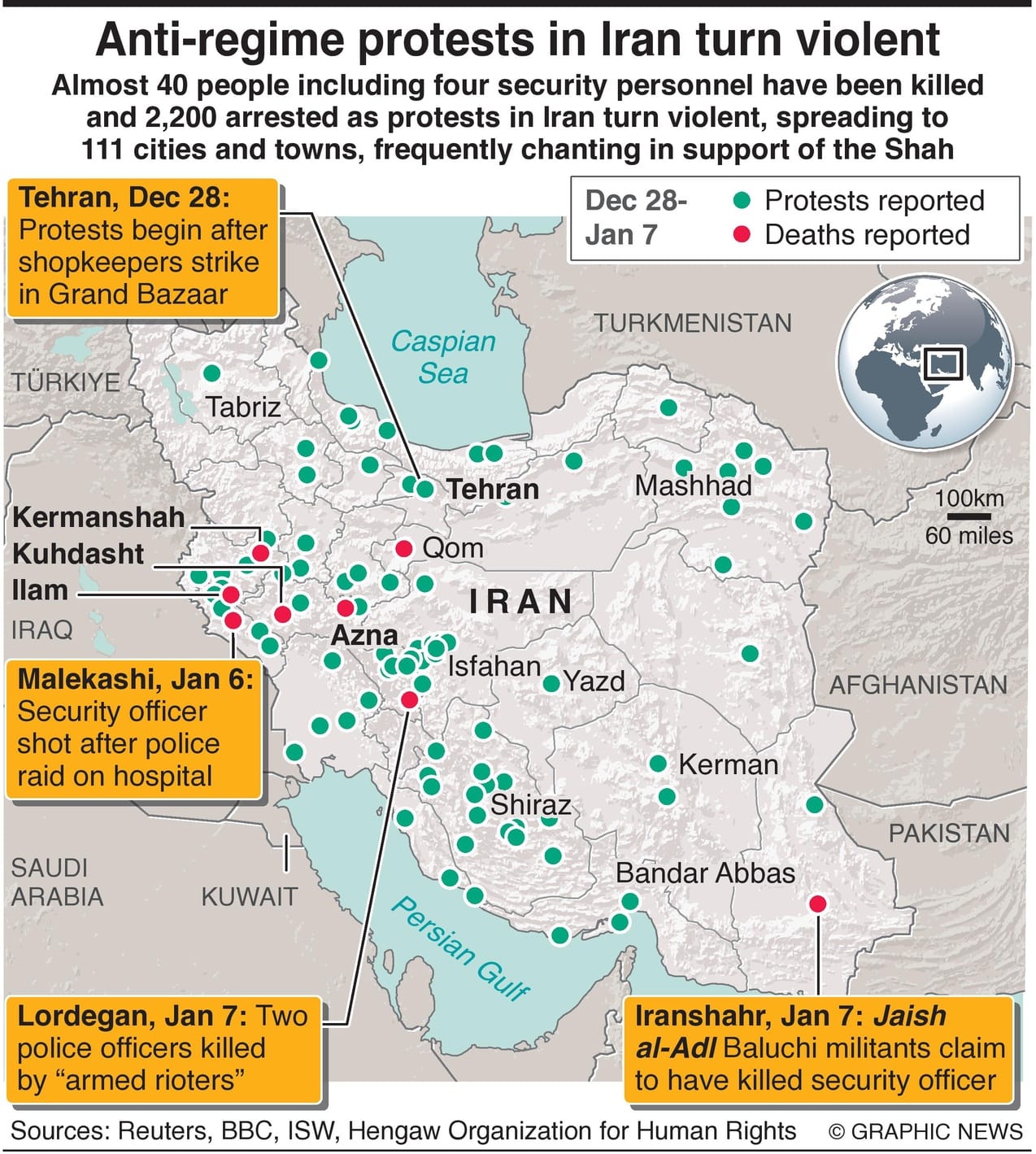
Almost 40 people including four security personnel have been killed and 2,200 arrested as protests in Iran turn violent, spreading to 111 cities and towns, frequently chanting in support of the Shah.
The TIPP Stack
Handpicked articles from TIPP Insights & beyond
1. Trump Admin Warns Mamdani Against Anti-White Discrimination—Jarrett Stepman, The Daily Signal
2. How The US Military Demonstrates It’s Tactically Flawless—Robert Peters & Andres Martinez-Fernandez via The Daily Signal
3. Pro-Life Leaders Push Back On Trump’s Advice To Be ‘Flexible’ On Abortion Funding—Elizabeth Troutman Mitchell, The Daily Signal
4. Venezuela Can Be A Model For Concluding Temporary Immigration In The US—Lora Ries, The Daily Signal
5. Conservative Lawmakers Unveil Blueprint To Balance Budget, Execute Trump Agenda—Rob Bluey & George Caldwell, The Daily Signal
From TIPP Insights News Editor
6. Russia Says Any Foreign Forces In Ukraine Face Military Strikes
7. Senate Moves To Curb Trump’s Venezuela Strikes With New War Powers Vote
8. Greenland Move Seen As Trump Effort To Block China’s Arctic Reach
9. Why Trump Withdrew U.S. From Dozens Of International Groups
10. Trump, Colombian Leader Hold Call As Tensions Ease
11. Japan Tourism Forecast Weakens Amid China Tensions
12. Lawmakers Press Ahead On Spending Bills To Avert Shutdown
13. Internal DHS Concerns Emerge After Minneapolis ICE Shooting
14. Fatal ICE Shooting Sparks Protests And Political Clash In Minneapolis
15. Paramount Stands Firm On Takeover Offer Amid WBD-Netflix Clash
16. Senate Votes To Rein In Trump’s War Powers
17. Americans Grow Pessimistic On Jobs, NY Fed Survey Finds
📊 Market Mood — Friday, January 9, 2026
🟩 Futures Flat, Nerves High
U.S. futures hug the flatline as traders brace for the December jobs report.
🟧 All Eyes on Payrolls
Nonfarm payrolls are expected to show modest job growth with the unemployment rate ticking down to 4.5%, a key input for the Fed’s next move.
🟦 Tariff Ruling Looms
The Supreme Court may rule today on the legality of Trump’s sweeping import tariffs, with major implications for trade policy and potential refunds.
🟪 Oil Execs to the White House
Trump meets major oil CEOs to discuss control of Venezuela’s reserves, keeping energy geopolitics front and center.
🟫 Mining Giants Talk Merger
Glencore and Rio Tinto reopen merger talks, sending Glencore shares sharply higher.
🗓️ Key Economic Events — Friday, January 9, 2026
🟧 8:30 AM ET — U.S. Jobs Report (Dec)
- Average Hourly Earnings (MoM) – Expected +0.3%, a gauge of wage-driven inflation pressure.
- Nonfarm Payrolls – Forecast +66K, a read on job growth at year-end.
- Unemployment Rate – Seen ticking down to 4.5%, closely watched by the Fed.
editor-tippinsights@technometrica.com