Editor’s Note
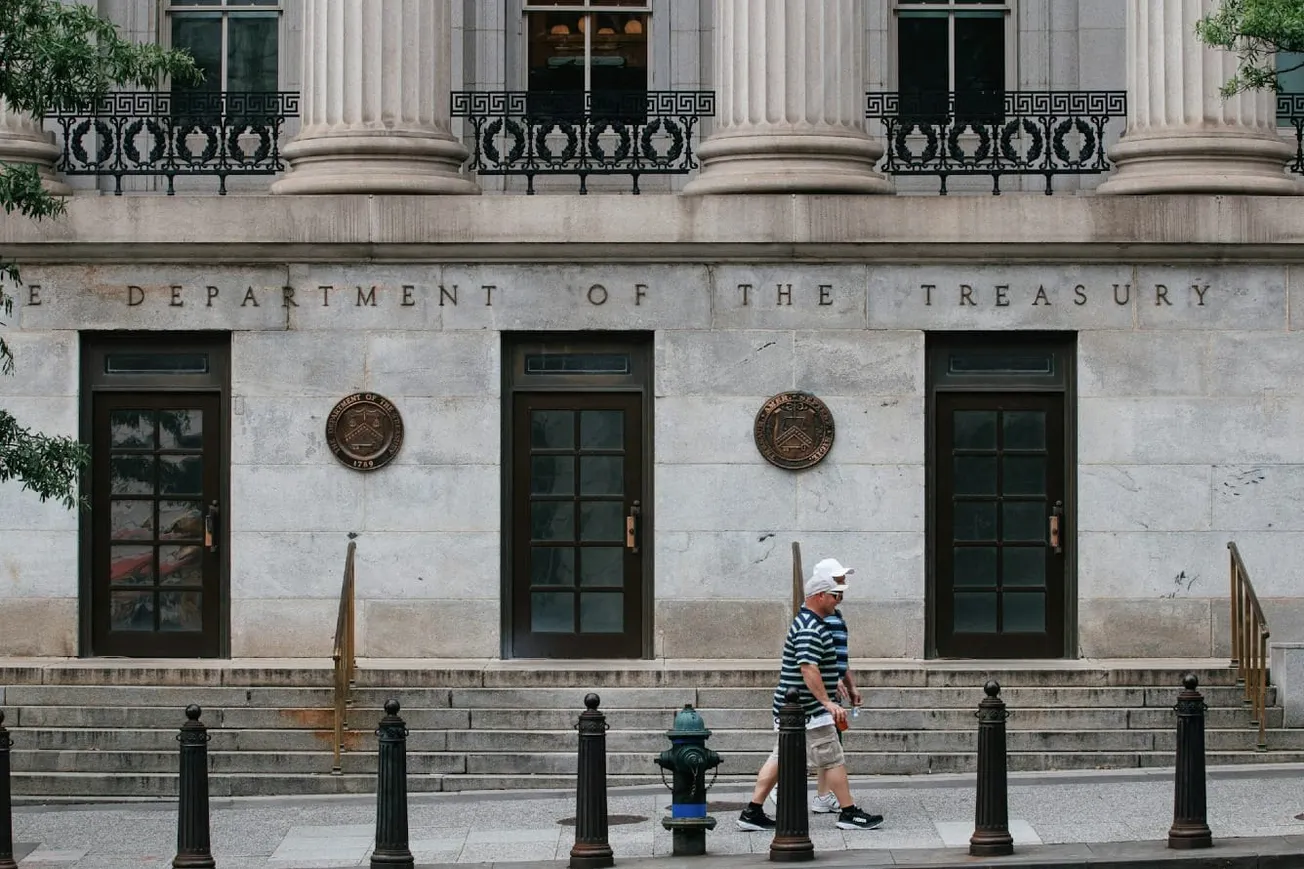
When the U.S. government spends more than it collects in taxes, it runs a deficit. To cover that gap, the Treasury issues bonds and sells them to investors. At this stage, no new money is created. Existing money simply moves from investors to the government.
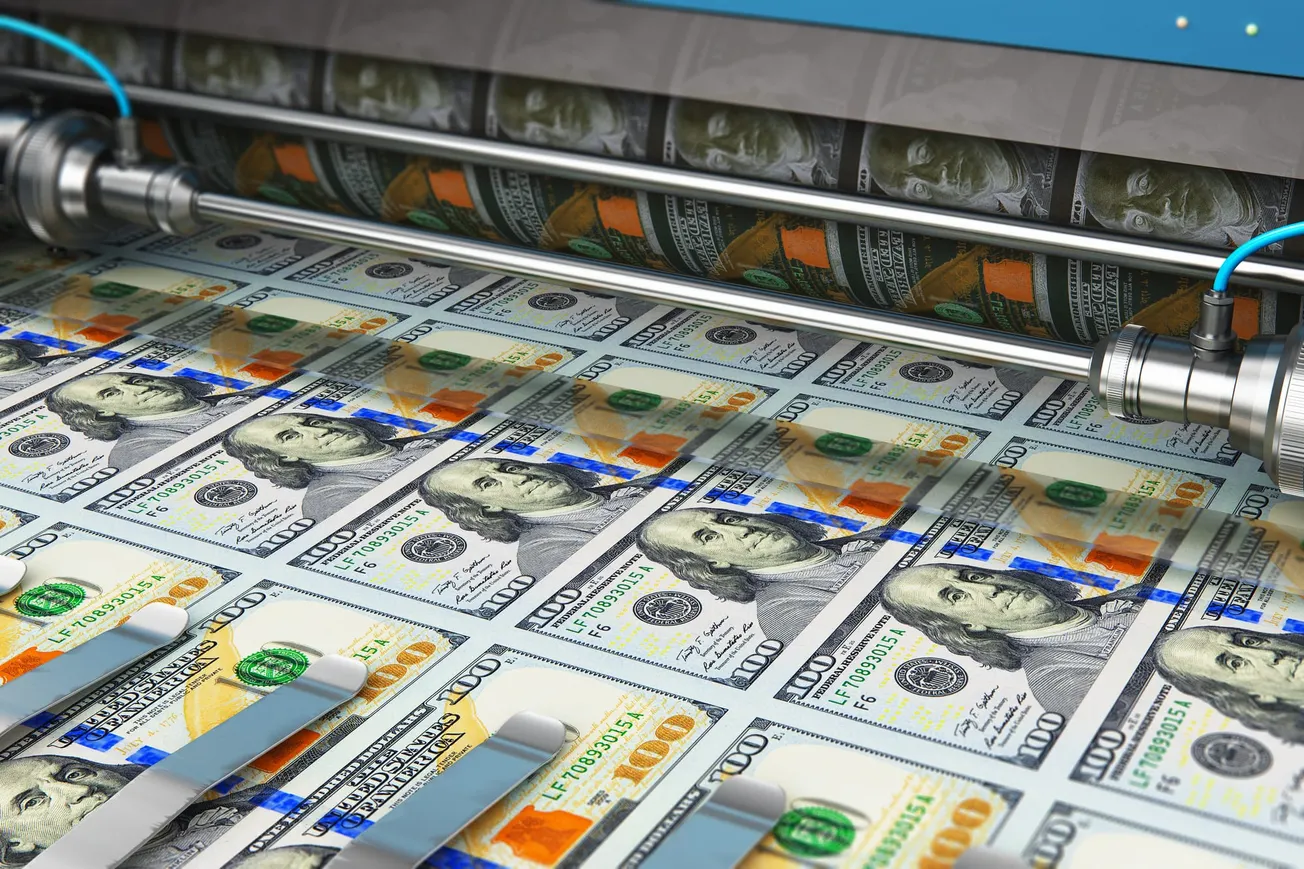
Later, the Federal Reserve often steps in and buys large amounts of those same bonds in the market. When it does, it creates new fiat money electronically and injects it into the financial system.
The result is that government deficits are indirectly financed with newly created money. This makes it easier for Washington to keep borrowing and harder for the Fed to control inflation without destabilizing markets.
By Raghuram G. Rajan, Project Syndicate | Jan 12, 2026
Recent developments suggest that the US Federal Reserve's bond purchases are no longer just a "monetary operation," but an essential component of the US government's fiscal financing. The sooner that the Fed and other similarly situated central banks recognize the trap they have created for themselves, the better.
CHICAGO – Japan, the United States, and other countries with sovereign debt at or above total GDP need to shrink their fiscal deficits to keep their debts from growing to terrifying levels. The problem is particularly concerning when a country faces higher real interest rates, since fiscal deficits rise further when the government refinances debt. But even more worrying is the possibility of a doom loop, with higher rates driving higher deficits that in turn produce yet higher rates as investors lose confidence in government finances.
To be sure, higher market interest rates could also be a salutary wake-up call if the government, fearing the doom loop, takes steps to cut the deficit. But fiscal consolidation requires painful austerity, and few politicians ever want to subject their voters to that.
In the past, some governments tried to postpone the pain by getting their central bank to buy their debt, which it financed by issuing reserves to commercial banks (a practice known, more colloquially, as printing money). In the process, though, commercial banks’ lending expanded, businesses and consumers spent more, and the ensuing boom pushed up inflation. To avoid galloping inflation, the central bank had to slow the economy sharply by raising policy rates well above the rate of inflation. The end result was a worse fiscal position, because the boom and bust damaged the economy, and the government was left paying higher debt-service costs. Eventually, these countries saw the light and prohibited direct central-bank financing of government deficits.
In recent years, however, such financing has been sneaking back into the policy playbook. Policy rates could not be cut much below zero after the 2007-08 financial crisis, so central banks decided to stimulate the economy by buying government bonds from financial institutions, paying with liquid central-bank reserves. The hope was that these financial institutions would replace the sold government bonds with long-term loans to firms, thus stimulating the economy. Moreover, the huge expansion in central-bank reserves was expected to dispel fears of illiquidity, further spurring lending.
Advocates of these programs, which came to be known as “quantitative easing” (QE), did not see them as central-bank financing of the government. Although the central bank did buy government bonds, it did not purchase them directly from the government. More important, the government did not really need the financing. QE was purely a monetary operation, they argued, and the central bank’s bond holdings could easily be sold through “quantitative tightening” (QT) when economic recovery took hold.
Unfortunately, while QE was easy to pull off, QT was not. After three rounds of QE between late 2008 and 2014, the US Federal Reserve’s holdings of Treasury securities grew from $800 billion to around $2.5 trillion. But when the Fed tried to reduce these through QT in 2018, markets eventually swooned, and the Fed started buying bonds again in September 2019. Then, as the US government spent enormously during the COVID-19 pandemic, the Fed was supportive again. By mid-2022, its Treasury holdings had grown to $5.8 trillion.
With the US economy buoyant today and inflation still high, now would be the time for the Fed to reduce its holdings. But not only has it halted its most recent QT with Treasury holdings still at $4.2 trillion (five times the 2008 level); it has also promised to buy more Treasury bills as warranted, starting with a $40 billion purchase in January. What was a monetary operation when inflation and government financing needs were low looks like fiscal financing when the opposite is true.
As a fig leaf, the Fed might say that it is simply supporting the economy’s liquidity needs, which have grown since 2008. But liquidity needs include indirect fiscal financing. The natural holders of long-term government bonds are pension funds and insurance companies, which have long-term liabilities. As a recent study by my Booth School colleague Anil Kashyap and his co-authors shows, these institutions find government bond yields unattractive and buy corporate bonds for the incremental yield. But since there are relatively few long-term corporate bonds, they buy shorter-term corporate bonds and add duration by buying Treasury bond futures.
To sell these institutions the huge quantity of futures they need, something resembling a Rube Goldberg machine emerges. Hedge funds take the other side of the trade, hedging themselves by buying government bonds, financed in the repurchase market with enormous quantities of short-term borrowing, which in turn is kept going with Fed-supplied liquidity. Given these dynamics, it beggars belief to suggest that the Fed is not a key player in government deficit financing, both through its own holdings and indirectly through its willingness to supply the liquidity hedge funds need.
No one would suggest a US doom loop is imminent. Yet, with government interest rates held below their natural level, Congress has little incentive to reduce the deficit, which raises the risk of this scenario. Moreover, since the Fed finances its own holdings of government debt with reserves that reprice every day, its own losses will mount quickly if interest rates move up, contributing to the doom loop. And with government bond rates unattractive to insurance companies and pension funds, hedge funds will continue financing more than a trillion dollars of long-term government bonds with short-term borrowing. That is hardly a recipe for stability.
The Fed is not the only central bank that is enmeshed in direct or indirect fiscal financing. The current situation raises troubling questions for central banks, including whether committing to supply the system with ample reserves increases the instability of government debt financing. For the sake of their economies’ long-term health, central bankers need better answers.
Raghuram G. Rajan, a former governor of the Reserve Bank of India and chief economist of the International Monetary Fund, is Professor of Finance at the University of Chicago Booth School of Business and the co-author (with Rohit Lamba) of Breaking the Mold: India’s Untraveled Path to Prosperity (Princeton University Press, 2024).
Copyright Project Syndicate
Catch up on today’s highlights, handpicked by our News Editor at TIPP Insights.
1. Iran Protests Escalate While Trump Ramps Up Pressure On Tehran
2. Trump Claims Title 'Acting President Of Venezuela' In Viral Post
3. Why Indonesia And Malaysia Banned Musk’s Grok
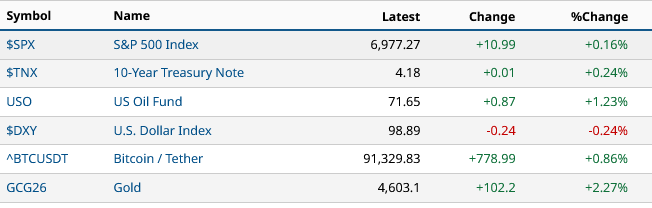
4. Gold Hits Record $4,600 As Fed Uncertainty And Global Tensions Rise
5. Japanese Companies Raise Alarm Over China’s Grip On Rare Earth Supplies
6. Supreme Court Declines Review Of $2.4B Boy Scouts Deal
7. Homeland Security Invests $115M To Guard FIFA World Cup From Drone Attacks
8. Paramount Files Lawsuit As Battle For Warner Bros. Discovery Intensifies
9. Ofcom Investigates X After Grok AI Deepfake Reports
10. Markets React As Trump Escalates Pressure On Fed Chair
11. Machado Set To Meet Trump After US Strikes Topple Maduro
12. Apple Taps Google Gemini To Power Next-Gen Siri
Market Pulse
editor-tippinsights@technometrica.com