The United States has a memorandum with Iran, a framework for Lebanon, and commercial ships moving again through the Strait of Hormuz. Those are diplomatic achievements, but they are not yet a strategy.
For 30 years, I have worked inside political, military, economic, and public pressure, where events move faster than the systems built to contain them. Governments usually crack long before they collapse on paper.
Trump faces three linked tests at once: Iran’s nuclear program, Hezbollah’s grip on Lebanon, and the security of the Strait of Hormuz. A bad day in southern Lebanon weakens the Iran track. A tanker attack near Hormuz raises fuel prices and forces Washington back into military crisis mode. A dispute over inspections gives Tehran more time and room to move leverage through its proxies. Lebanon, Hormuz, and Iran’s nuclear program now operate as one pressure system.
For 47 years, the United States has tried sanctions, diplomacy, military signaling, and partial containment against Iran. None has changed the central behavior of the regime, because Iran rarely absorbs pressure and instead transfers it. Sanctions become Hezbollah workarounds, inspections become delay, and shipping risk in the Strait becomes fuel prices, airline tickets, inflation, and politics.
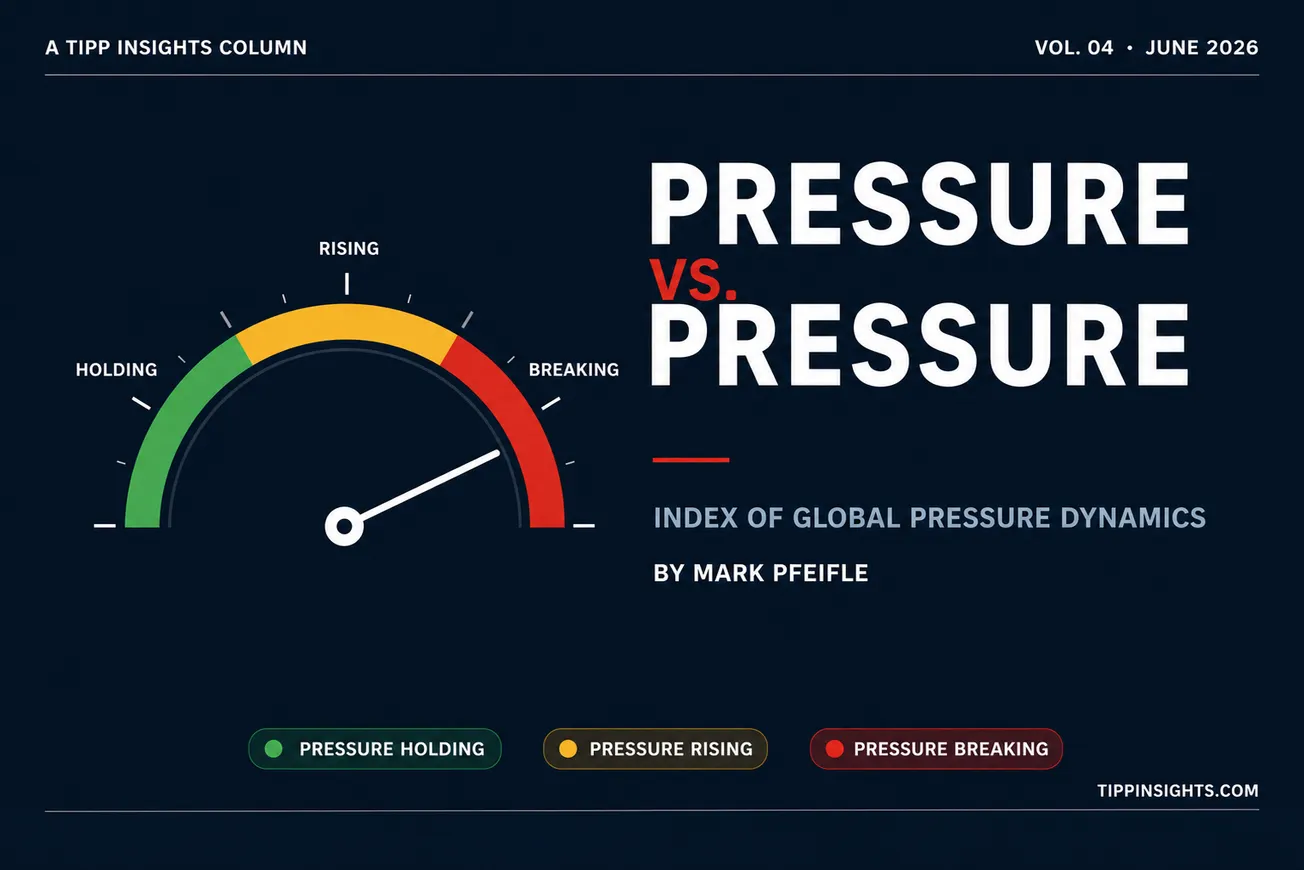
United States — Pressure Rising
Trump inherited three negotiations and now owns one pressure system. The White House needs to stop reacting to events and start managing leverage, the way Tehran already does. Iran delays inspections, keeps Hezbollah armed, and threatens shipping lanes, and every move forces Washington onto a different battlefield before the previous one settles. That is how Iran turns one agreement into three pressure points.
Every delay in the Strait of Hormuz eventually reaches an American driveway. Trump’s approval is stuck around 40 percent, Democrats lead the generic congressional ballot by about five points, and the national average for regular gasoline is near $3.88 a gallon. A foreign policy strain becomes a household problem fast. A government that applies pressure without preparing for counter-pressure gambles with the result.
Lebanon — Pressure Rising
The U.S.-brokered Israel-Lebanon framework gives Lebanon a path toward sovereignty. The Lebanese Army would take charge in the south, a coordination process would manage the transition, and Israel would withdraw in phases. Hezbollah rejected disarmament and called the deal surrender.
The framework matters only if the Lebanese Army replaces Hezbollah in the south. Hezbollah survives because it moves money, weapons, fighters, and information faster than the Lebanese state. Reverse that equation, and Hezbollah begins losing before the first shot is fired. Lebanon does not need another grant announcement; it needs border enforcement, Army capacity, intelligence support, financial tracing, and sanctions on anyone moving a penny to Hezbollah.
UNIFIL has 7,478 peacekeepers from 47 troop-contributing countries in Lebanon, and its final mandate runs through December 31, 2026. The mission should help the Lebanese Army replace Hezbollah in the south, or explain why it remains there. Blue helmets without enforcement authority are not enough. UNIFIL should publish what it controls, what Hezbollah still controls, and what the Lebanese Army needs. If it cannot help restore Lebanese sovereignty, those resources should shift into building Lebanese capability directly.
Trump should do in 47 days what America failed to do for 47 years: pressure Hezbollah every day until the Lebanese state can replace it. Intelligence, financial forensics, border enforcement, sanctions, and Army capacity must move together, not as separate programs.
Israel — Pressure Rising
Israel wants Hezbollah weakened, not frozen in place under a new document. The United States should press Israel for disciplined, proportional responses and clear public explanations. Every broad strike that kills civilians gives Hezbollah political oxygen. Every precise response tied to an actual Hezbollah violation strengthens the framework and puts pressure back on the militia. Israel should answer every Hezbollah violation with a military response, and every civilian casualty with a public explanation.
Iran — Pressure Rising
Iran is using three lanes at once: inspection delays, Hormuz attacks, and Hezbollah pressure. Reagan said “trust but verify” with the Soviet Union. With Iran, the rule should be verify first, and trust nothing.
Trump says inspectors are coming, while Iran maintains that inspections wait on a final deal. That fight will decide whether the memorandum becomes a real constraint or another pause Tehran uses to recover.
The International Atomic Energy Agency, led by Rafael Mariano Grossi, should stop negotiating access and start enforcing standards. The IAEA is an autonomous international organization inside the broader UN family, and this is the moment it earns its pay. The United States, the IAEA, Europe, and Gulf partners should publish the verification architecture now, including sites, access windows, chain of custody, cameras, samples, undeclared facilities, uranium movement, and consequences for denial. Iran can negotiate relief, but it should not be allowed to negotiate the rules of verification after the fact, and inspectors should be on the ground without further delay.
Hormuz — Pressure Steady
Commercial traffic has resumed, though normal commerce has not yet returned. Oil near $70 a barrel reads less as peace than as a discount until the next attack gets priced in. Every missile launched toward Hormuz eventually lands somewhere else, at the gas pump, in inflation, inside airline tickets, and eventually in politics.
At the G7 in Évian-les-Bains, France, the UK, Germany, Italy, Japan, and Canada backed a proposed multinational maritime mission to protect commercial shipping through the Strait of Hormuz. Macron said the coalition could move quickly, with surveillance aircraft and a frigate available within 48 hours and the Charles de Gaulle carrier group with mine-clearing assets available within two to three days. Trump should accept the offer. Nothing tests an alliance like asking it to do what it says it will do.
Allied assets should move into the Gulf, with insurance and shipping coordination hardened and a daily Hormuz operating picture tracking ships, threats, and delays. The message to Tehran becomes a practical one: cooperation buys quiet, while obstruction loses the fog that has protected Iranian leverage. Ships moving through Hormuz should not allow Washington to relax. The danger remains as long as every captain, insurer, trader, refinery, and cabinet minister is pricing the next Iranian move into tomorrow’s decisions.
United Nations — Pressure Steady, Capability Weak
The United Nations has two jobs in this picture. UNIFIL should help the Lebanese Army replace Hezbollah, and the IAEA should make Iran’s nuclear commitments measurable, inspectable, and enforceable. The work is operational rather than rhetorical, and the institutions will be judged by what changes on the ground.
Gulf States — Pressure Rising
The Gulf wants calm with Iran, but calm cannot mean financial oxygen for Tehran.
FDD analysts have described the UAE as a sanctions-evasion hub and critical node for illicit Iranian networks, including hawala channels, exchange houses, and shadow companies used to bypass financial restrictions, move oil revenue, and support IRGC procurement. After repeated missile and drone attacks, Abu Dhabi began tightening enforcement, detaining money changers and shutting down associated companies. Washington should lock that in and ask the rest of the Gulf to follow.
Photo opportunities with Iranian diplomats are part of the diplomatic theater, but the banking channels should close after the meeting ends. If Gulf states want American protection, they should help close Tehran’s financial escape routes.
Pressure Process
Washington built operating systems for terrorism, pandemics, and cyberattacks. It still has no system for geopolitical leverage.
Lebanon, Hormuz, and Iran’s nuclear program form one operating picture. If Hezbollah keeps its weapons, the Lebanon framework weakens. If Iran harasses ships, Hormuz stays under pressure. If inspectors do not get access, the nuclear track breaks. Washington tends to measure success by what it signs, while Tehran tracks what it can still move, hide, and threaten, and the gap between those two scorecards is where Iran has historically won.
America should stop measuring success by what it signs and start measuring what the other side can no longer do: Hezbollah moving weapons, Iran delaying inspectors, tankers traveling under threat, Gulf banks helping Tehran breathe, and the Lebanese Army waiting for permission to control its own south. Those answers will decide whether this week produced durable gains or another temporary pause.
Pressure does not disappear when a document is signed. It migrates to whichever pressure point remains unmanaged, and Washington has to track it there before Tehran does.
Mark Pfeifle, a member of the TIPP Insights Editorial Board, served as deputy national security adviser for strategic communications and global outreach at the White House from 2007 to 2009. He runs the crisis management firm Off the Record Strategies.
Loved it, hated it, or somewhere in between — tell us. Grade this article here and help shape what lands in your inbox next.
👉 More Pressure vs. Pressure Columns →
📊 Market Mood · June 29, 2026
How the trading day is setting up.
🟩 Markets opened the week on firmer footing as renewed U.S.-Iran diplomacy eased geopolitical concerns and supported gains in U.S. stock futures.
🟧 Investors remain cautious after June's sharp technology pullback, with growing scrutiny over AI valuations and the massive capital required to sustain the industry's rapid expansion.
🟦 Oil prices continued to cool, ending one of their biggest monthly declines in years as hopes grew for a lasting ceasefire and the restoration of energy flows through the Strait of Hormuz.
🟨 This week's focus shifts from geopolitics to economic data, with labor market reports culminating in Thursday's jobs report expected to shape expectations for the Fed's next move.
🗓️ Key Economic Events
On today's U.S. data calendar.
🟧 10:30 a.m. ET — Dallas Fed Manufacturing Activity (June)
Forecast: -8.0 | Previous: -11.3
A regional snapshot of factory activity that may offer an early indication of whether manufacturing is stabilizing ahead of this week's national ISM report.
🟧 Fed Speakers Throughout the Day
Focus: Inflation, interest rates, and the economic outlook.
Markets will listen for any fresh comments following the Fed's recent hawkish message, particularly with June employment data due later this week.
Letters to the editor email: editor-tippinsights@technometrica.com
Subscribe Today And Make A Difference. Consider supporting Independent Journalism by upgrading to a paid subscription or making a donation. Your support helps tippinsights thrive as a reader-supported publication. Contact us to discuss your research or polling needs.
Reach our audience. For sponsorship and advertising opportunities, visit our Partner With Us page.