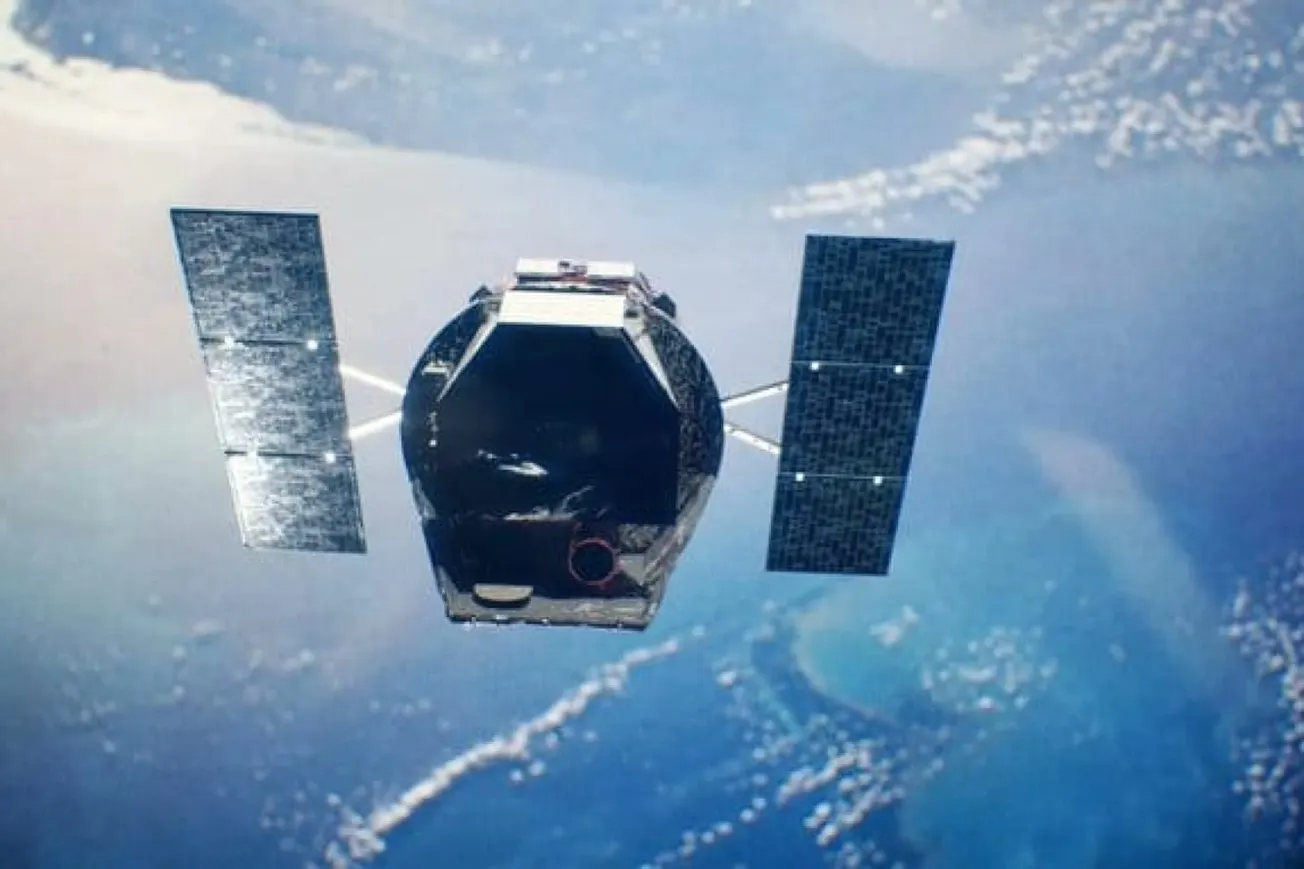
NASA is preparing an unprecedented mission to rescue the Neil Gehrels Swift Observatory, an orbiting space telescope whose long-term future is threatened by a gradual loss of altitude caused by increased atmospheric drag.
The Swift Observatory, launched in 2004 to study gamma-ray bursts and other high-energy cosmic events, remains an important scientific asset. However, heightened solar activity has expanded Earth's upper atmosphere, increasing drag on satellites in low-Earth orbit and causing Swift's orbit to slowly decay. Without intervention, the telescope could eventually reenter the atmosphere and be lost.
To prevent that outcome, NASA is supporting a pioneering mission involving a spacecraft known as Link, developed by Arizona-based Katalyst Space Technologies.
Engineers equipped the Link vehicle with advanced rendezvous sensors, reaction-control thrusters, and robotic systems capable of carefully approaching and securing the observatory without damaging its sensitive instruments.
The rescue craft itself weighs approximately 935 pounds and was developed on an accelerated schedule, highlighting the growing capabilities of commercial space companies in satellite servicing and orbital logistics.
Researchers rely on the telescope to detect and rapidly locate gamma-ray bursts, black hole activity, neutron star collisions, and other transient cosmic events.
Beyond preserving a valuable scientific observatory, the mission could demonstrate a new model for maintaining aging spacecraft.
Rather than replacing satellites once their orbits degrade or systems begin to fail, future missions may be able to refuel, repair, reposition, or extend the life of existing assets already operating in space.
Related Tweet:
Startup Katalyst Space Technologies is racing against time to save NASA's Neil Gehrels Swift Observatory, orbiting since 2004, from falling into Earth's atmosphere by launching a spacecraft meant to push it farther in space pic.twitter.com/wSGLp4dqOt
— Reuters (@Reuters) June 24, 2026
Also Read:
 TIPP Staff